







Why Gambling Is More Addictive for Teens Than Adults
- Category: On Our Radar
- Published: Wednesday, 28 January 2026 14:37
- SAY Scarsdale
 Reclaim the Game: Gambling and alcohol use impact the adolescent brain in the same way. In fact, teens who gamble and drink alcohol are more likely to develop mental health and addiction issues.
Love the Game Not the Odds or the Beer
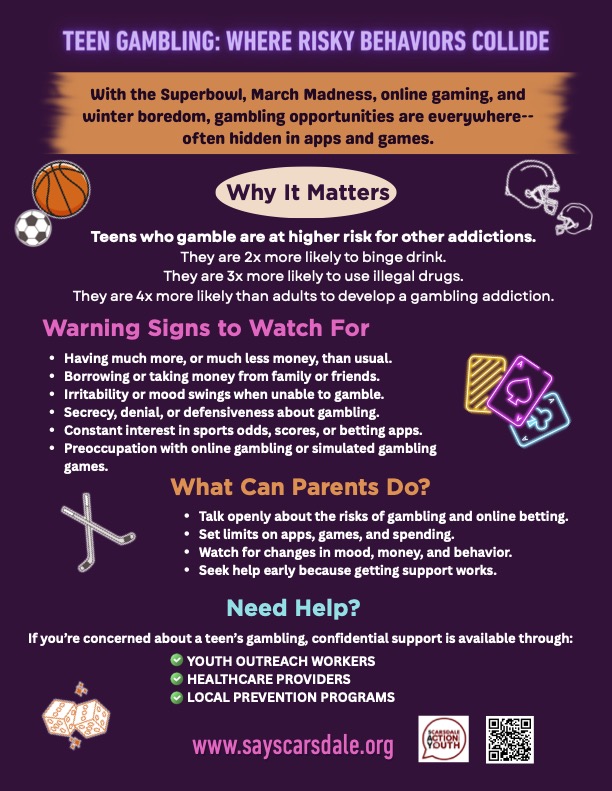
Gambling poses a much greater risk for children and teenagers than it does for adults, largely because of how the adolescent brain develops. During adolescence, the brain is still under construction, especially the prefrontal cortex, the area responsible for judgment, impulse control, decision-making, and assessing risk. This part of the brain does not fully mature until around age 25, and research shows that development typically occurs later in boys than in girls. As a result, teens are biologically less equipped to regulate risky behaviors, including gambling.
At the same time, teens are especially sensitive to dopamine, the neurotransmitter associated with pleasure, motivation, and reward. Gambling triggers dopamine release, creating feelings of excitement and thrill. Because adolescent brains respond more strongly to dopamine than adult brains, gambling can feel more intense and rewarding for teens. This heightened sensitivity, combined with a natural developmental tendency toward risk-taking, makes young people particularly vulnerable to addiction.
Gambling environments further amplify this risk. Many forms of gambling, especially online games and betting platforms, are fast-paced, visually stimulating, and designed to keep players engaged. Bright colors, quick feedback, and near-miss outcomes are especially appealing to young brains that are wired to seek novelty and excitement. Gambling also rewards rapid decision-making and encourages players to chase wins, but teen brains often lack the inhibitory control needed to stop once the thrill begins.
Early exposure to gambling can also shape long-term behavior. During adolescence, the brain is highly adaptable, meaning habits and coping mechanisms learned at this stage can become deeply ingrained. When teens experience gambling as a way to manage stress, boredom, or emotional discomfort, their brains may “learn” to rely on the thrill of gambling as a coping tool. Unfortunately, patterns established during adolescence are much harder to change later in life.
Gambling is also frequently linked to substance use among teens. Both gambling and substance use activate the same reward pathways in the brain and are connected to heightened risk-taking tendencies during development. This overlap increases the likelihood that teens who gamble may also experiment with drugs or alcohol, compounding the potential harm.
Understanding the unique vulnerabilities of the adolescent brain helps explain why gambling is not just a harmless pastime for young people. It is a high-risk activity that can interfere with healthy brain development and set the stage for long-term addictive behaviors.
For more information on teen gambling, please go to https://www.sayscarsdale.org/gambling