








Senior Annemarie Horn Celebrates 2500th Assist at Ursuline Game
- Details
- Written by: Jordy Love
- Hits: 5657
 The Scarsdale Raiders Varsity A volleyball team is fired up for an amazing season. On Thursday October 5th they played their rivals from Ursuline and swept them in three sets. Last season, the team lost to Ursuline twice in the regular season but the girls came back this year motivated and unwilling to let that happen again. The team has played a number of tough opponents this season and are pushing onwards hoping to earn a top spot in the league which will help them a lot during sectionals.
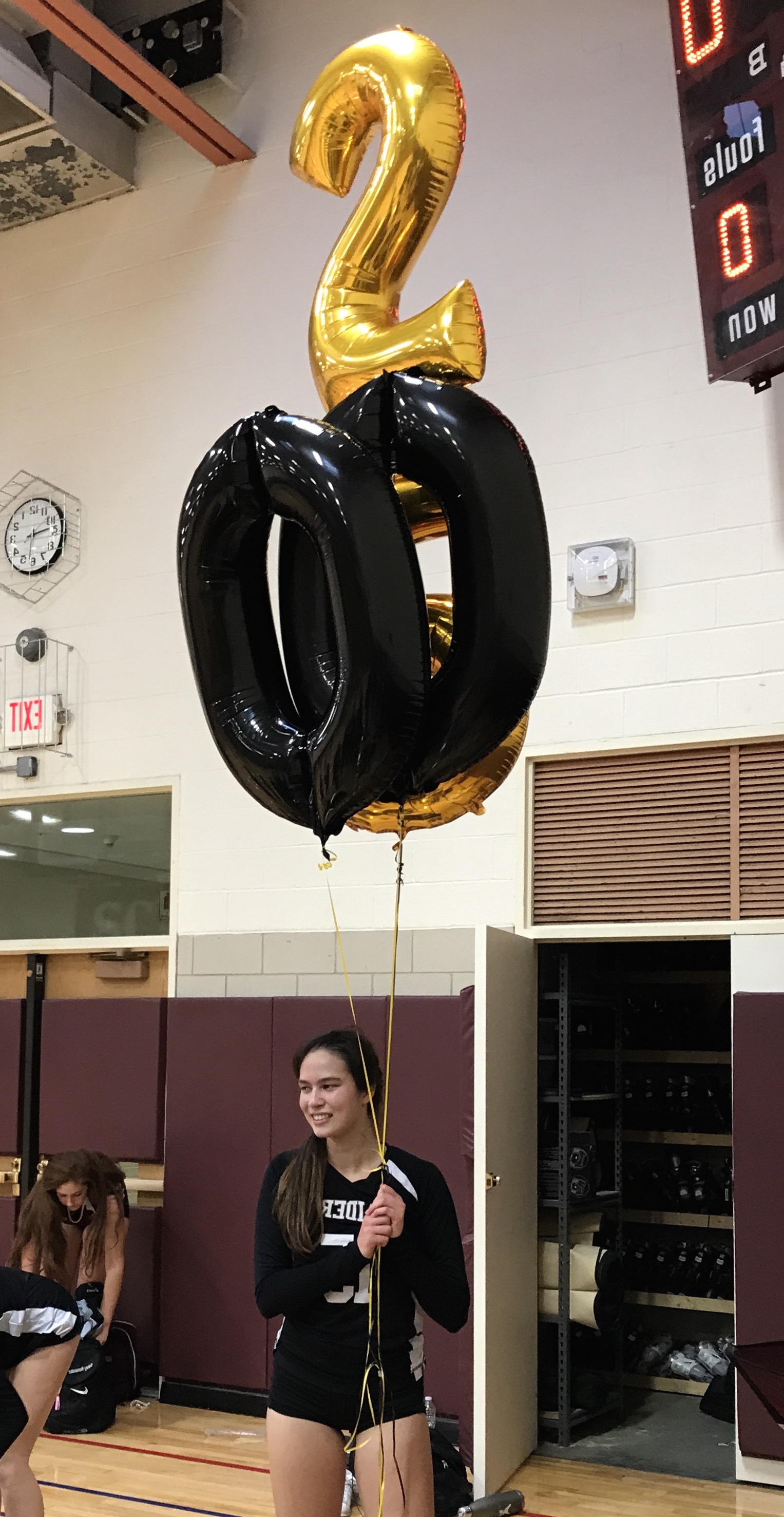
Senior Annemarie Horn, 4 year Varsity player and team Co-Captain, surpassed the 2500th assist mark and set a new school record of 2507 during the victory over Ursuline. Horn served her 163rd career aces and broke the record formerly held by Tatiana Tiangco (162). During the week of October 1st, Horn achieved double-double stat lines in digs and assists in all three games played. Her total stats for the week were as follows: 13 kills, 9 aces, 40 digs, 89 assists and 8 blocks.
The team celebrated their Co-Captain following the Ursuline match with cake and balloons. So far this season, the Varsity A team has only lost 3 games to New Rochelle, North Rockland, and Ossining. They hope to beat New Rochelle later in the season to secure a top spot in class AA post season.
Varsity A's busy schedule continues this week with games on 10/11 vs. Mt. Vernon at home, and 10/13 @ New Rochelle.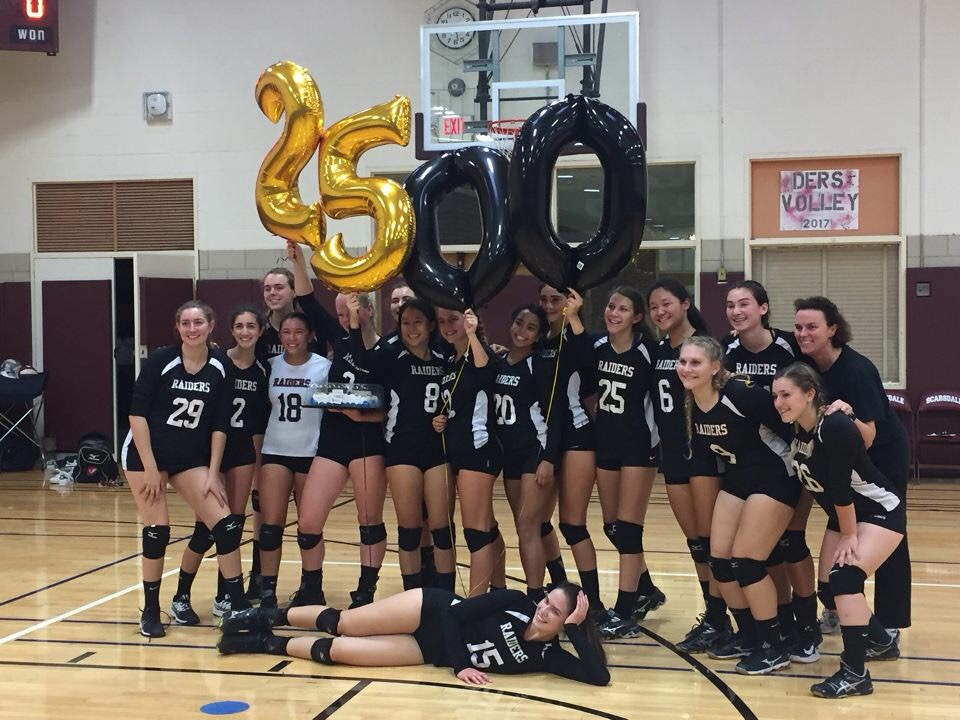
Freightway Steering Committee Hosts Public Workshops on Potential Development
- Details
- Written by: Jon Mark
- Hits: 5386
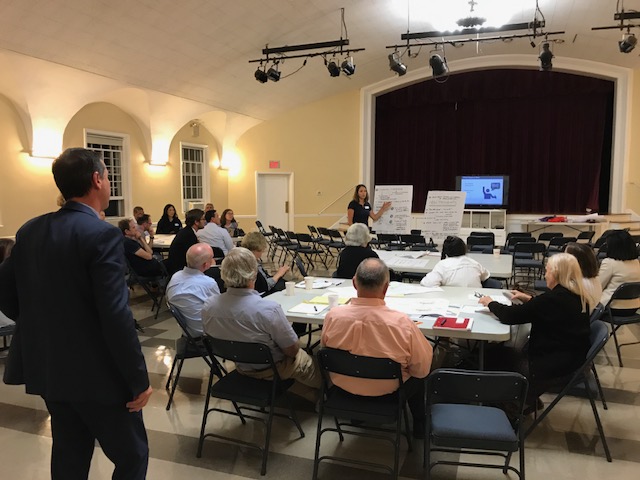 The Village of Scarsdale is conducting a visioning study to guide potential redevelopment of the Freightway site. Last night, the Freightway Steering Committee (FSC) a committee of residents appointed by the Village Board hosted its second public workshop designed at getting community input on what potential redevelopment of the Freightway site might be considered. More than 40 residents and others interested in the discussion attended the two and a half hour event which was held at the meeting room of the Scarsdale Congregational Church. The participants listened to an overview presentation by Jonathan Martin and Noah Levine of BFJ Planning, consultants to the FSC. After the presentation, participants divided into several roundtable groups tasked with discussing a variety of options for the site that might be considered in the future. Each discussion group then appointed one of their members to present a summary of their conversation to all participants. The meeting was recorded and a video of the event will posted on line on Scarsdale Public TV's web site and on the Village's web site.
The next working session of he FSC is scheduled for October 12, 2017 at 7:00 pm in the 3rd floor meeting room in Village Hall. The working session will be open to the public. In addition, another public workshop is scheduled for November 13, 2017, time and place to be announced.
The FSC is working to produce a report on its findings to be issued during the first quarter of 2018. Information about the FSC and its work is available on the Village web site link.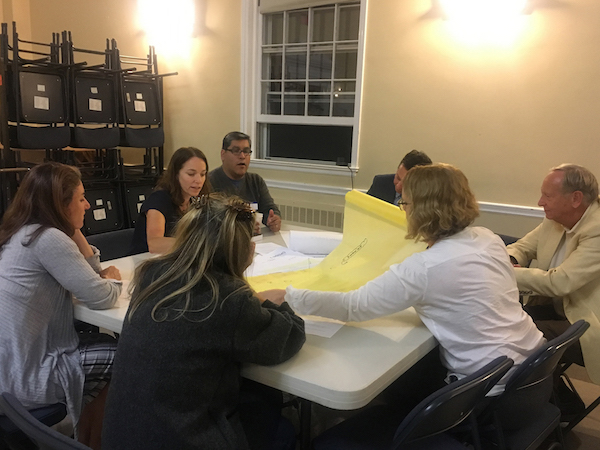

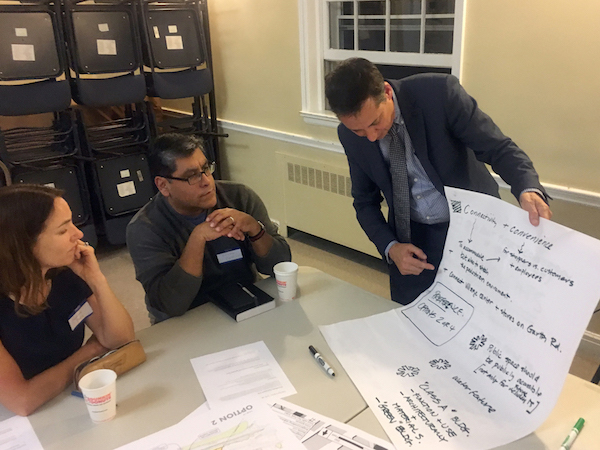
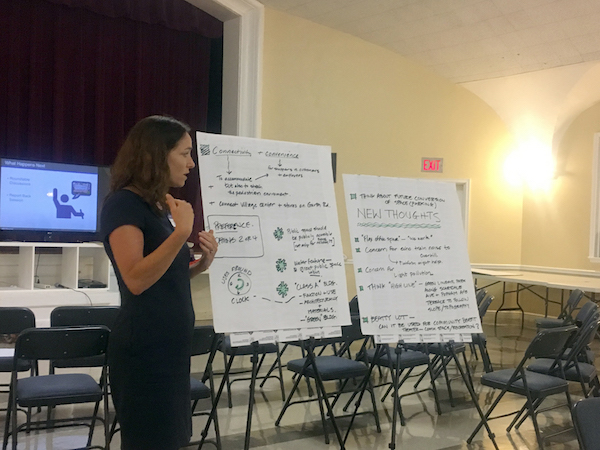
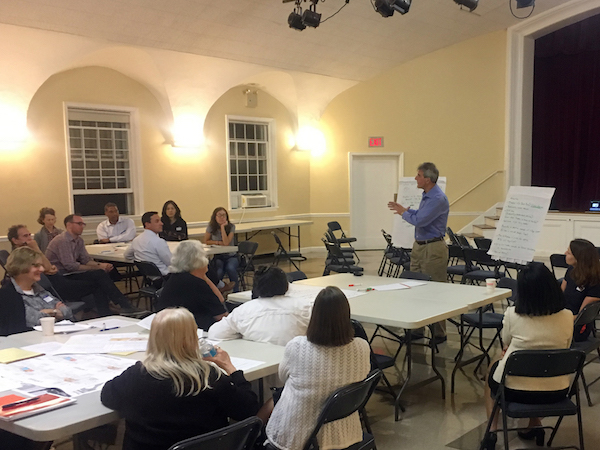
Photos by Jon Mark, Ingrid Richards, Noah Levine
Football and Soccer News
- Details
- Written by: Jordy Love
- Hits: 4993
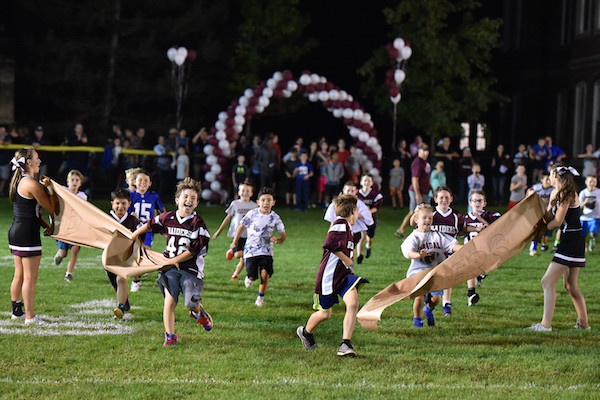 Football: As of Thursday September 28, the Varsity Raiders are now 4 and 0 for the season following Saturday night's victory over Mount Vernon. Before Saturday's game, Scarsdale High School celebrated their Seniors with a pre-game ceremony.
Spectators cheered as the football players walked through a Maroon and White balloon arch along with their parents. Mothers received roses and fathers were given hats embroidered with their son's jersey number. This year a new tradition took place. For the first time, SHS Varsity cheerleaders were included in the ceremony and led the procession.
The cheerleaders were thrilled to be included in the time honored special event. According to Senior Cheer Captain, Talia Abbe, "the cheer Seniors were all really happy about being included in Senior night and we love that cheer and football are working together and supporting each other. We can't wait to see what the rest of the season brings us!" The cheer parents had similar feelings and were very excited to be included in this season's festivities, including the weekly tailgates. The Raiders have another home game vs. Mamaroneck this Thursday at 5 pm.
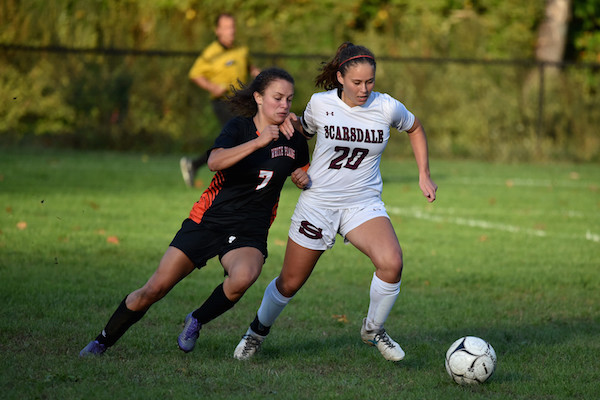
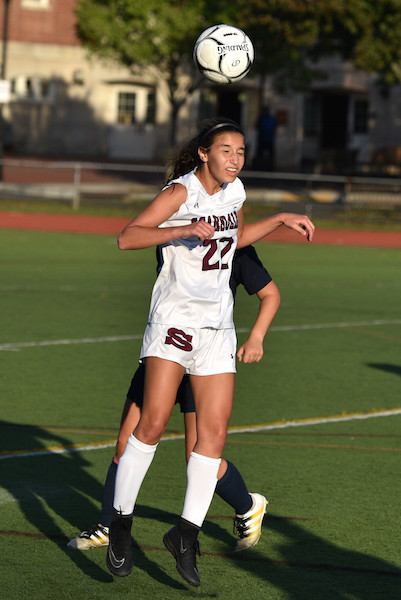
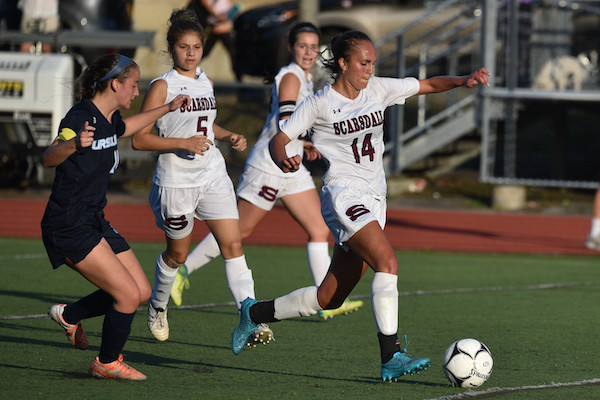
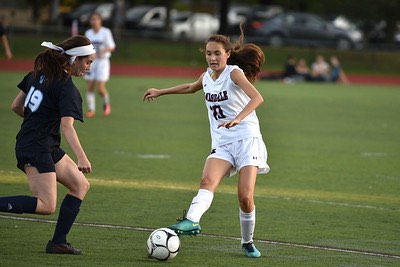 Soccer: The Scarsale Raiders girls varsity soccer team had mixed results this past week. After a spirited and hotly contested 1-1 overtime tie against a formidable team from Mahopac over the weekend, the Raiders dropped a disappointing 3-2 decision to league rival Ursuline on Tuesday, September 26. The 3-2-2 Raiders face division rival Mount Vernon on Thursday afternoon, September 28 as they continue to pursue their goal of reaching the section playoffs in October. Photos by Jon Thaler - see more here.
Girls Soccer Team Defeats Archrival New Rochelle, 3-0
- Details
- Written by: Jon Thaler
- Hits: 5572
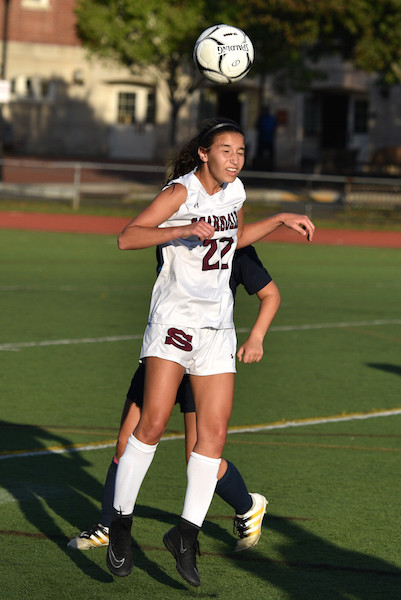 The Scarsdale Raiders Varsity A girls soccer team defeated their archrival New Rochelle 3-0 on Monday night, September 18 at Scarsdale High School before a crowd of raucous fans of both teams.
Heading into the game, the 4-1 Hugenots were coming off an upset win against highly ranked Suffern. The Raiders were 1-1-1 and recognized that the New Rochelle game would be critical in determining their path for the rest of the season.
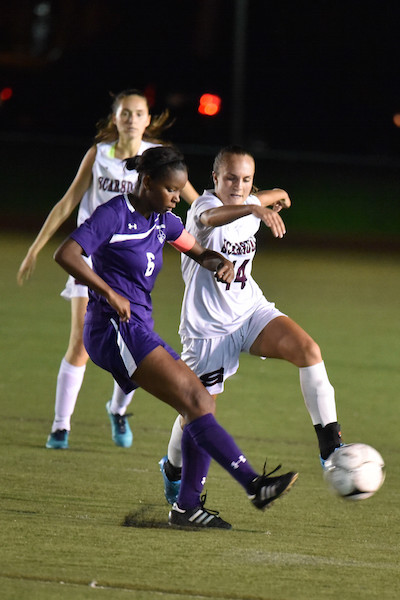 The game started with New Rochelle having the edge in possession but unable to penetrate the Raiders' defense. The tide turned at about the 15:00 mark of the first half, when sophomore forward Olivia Bryant received a pass down the left side, outmaneuvered two New Rochelle defenders and scored on a bullet shot into the top right corner of the goal. The play seemed to inject energy into the Raiders and from that point forward they dominated possession for the rest of the half, putting constant pressure on the Hugenots' defense. This led to two additional goals, one by Dana Papandreadis and the other by Riley Edlitz, each of which was assisted by Bryant.
At halftime Coach Mindy Genovese implored her players not to let up, and the team responded. There was no additional scoring in the second half even though the Raiders continued to dominate possession and had a number of good scoring chances.
The entire team played well. Of particular note was the play of Scarsdale's defense, led by center back and co-captain Sam Mancini and stopper Allison Stafford. Mid-fielder and co-captain Carly Rubin was key to the Raiders' success in maintaining possession and staying on the attack throughout the game. Scarsdale repeatedly prevented New Rochelle's talented forwards and mid-fielders from maintaining possession down the field, continuously intercepting passes and winning 50-50 balls. This resulted in no scoring chances for New Rochelle over the course of the entire game and few if any shots on goal.
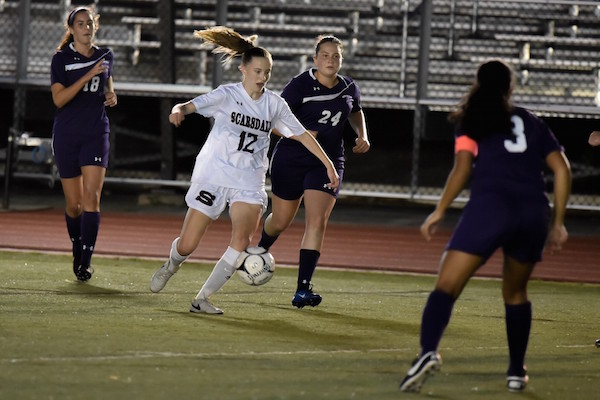
It was overall a dominating performance by the Raiders against a quality opponent and has raised expectations about the team's prospects for the rest of the 2017 season. The Raiders and Hugenots will meet again in early October and given the history of the rivalry, it's safe to assume that New Rochelle will be motivated to avenge Monday night's lopsided loss. After a weekday league game this week on the road against White Plains, the Raiders will play non-league opponent Mahopac on Saturday, September 23 at Scarsdale High School. Scarsdale10583.com will continue to report on the team's progress as the 2017 season continues to unfold.
Photos by Jon Thaler - see more here: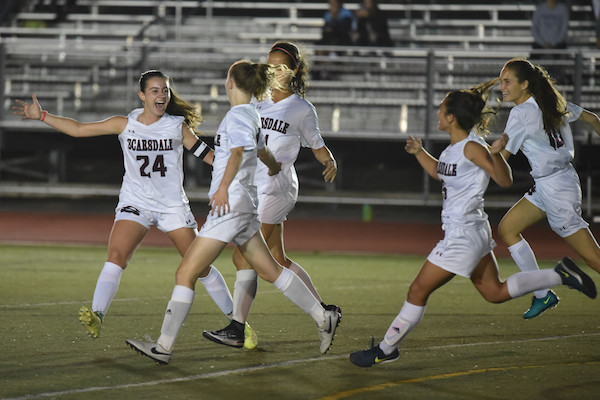
Farmers Market Off to a Great Start
- Details
- Written by: Joanne Wallenstein
- Hits: 6444
 This letter was sent to Scarsdale10583 by Corinna Makris, Market Manager of the Scarsdale Farners Market:
What an amazing opening day! The new Scarsdale Farmers Market opened last Thursday, September 7th and we were greeted by an enthusiastic crowd of shoppers throughout the day. We heard your comments and suggestions and we're working hard to bring you more of the best vendors in the area.
All the vendors from last week will be back, in addition to nine more weekly vendors, and we're confirming more as the season continues. This week: dog treats, bakeries, Mangalitsa Pork - the Kobe beef of pork, local honey, mozzarella and more prepared foods.
We heard that you enjoyed the live music. We're happy to say that jazz musician Alexis Cole will perform weekly through the end of the season. This week, September 14th, she'll be singing from 3:30 p.m. - 5:30 p.m.
See you Thursday!
Weekly Vendors
PickleLicious
Taliaferro Farms
DoReMe Farms
The Cheese Guy
Mind, Body & Bath
Irvington Delight - prepared Middle Eastern foods
New vendors joining us this week and every week going forward:
Hudson River Apiaries
Mozzarella4U
Nutmeg Cafe
Orwashers Bakery
Peace Love Jerky Treats for dogs
Dam Good English Muffins
Nutmeg Cafe - baked sweet treats, and prepared foods including hot soup
Mangalitsa Pork
Arlotta Foods - olive oil, vinegar, and artisanal pasta (beginning September 23rd)
Green Mountain Energy - information at their booth about how to use green energy in your home and office
Please note: Jack Jack Knife Sharpening - will not be at the Sept. 14th market but he'll be back Sept. 23rd.
Rotating throughout the season:
Will-YUM Spice Company - specialty fresh ground spices
Jeneric Bags - fine hand sewn quilted items
Alpacatrax - felt, fiber, and wool
Geaux Nuts - New Orleans original sugared pecans
Aunt Patty Cake - sweet treats