








Urinetown the Musical at Edgemont High School
- Details
- Written by: Joanne Wallenstein
- Hits: 6095
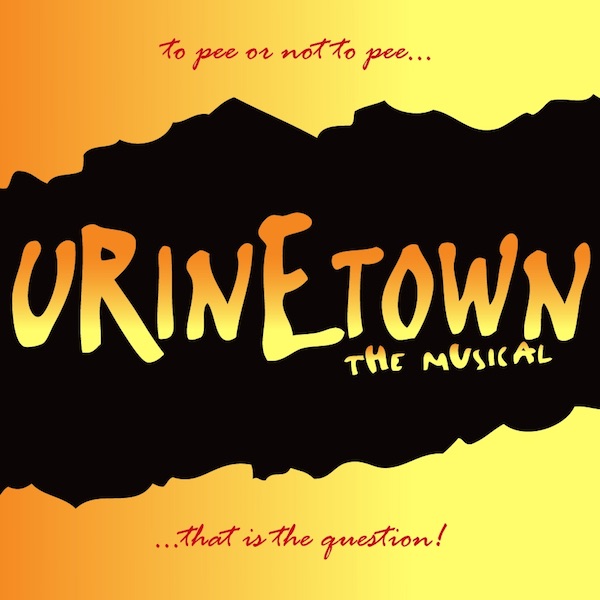 Urinetown the Musical: Don't let the title fool you! This musical is one of the funniest, laugh-out-loud musical comedies known to musical theatre. The show tells the story of a world plagued by draught that has caused a worldwide water shortage, thereby making private plumbing completely unthinkable! Citizens must now pay to use public bathrooms, and if they don't, they're taken away to a mysterious place called "Urinetown." This musical satirizes corruption, the legal system, police brutality, and ironically, several other musicals. While the subject matter may be inappropriate for younger elementary school students, everyone else is encouraged to come out and see what is sure to be one of the funniest musicals ever on the Edgemont stage.
Danny Bernstein, EHS class of 2010, is Director and Choreographer. Howard Kilik is Musical & Orchestra Director.
Urinetown will be performed at Edgemont High School (presented by special arrangement with Music Theatre International) on March 5-7, 2015. Shows begin each night at 7:00pm, and the matinee performance on March 7 starts at 1:00pm. Tickets are $15, except for the opening night performance, which is $20 (half of which benefits the Edgemont Scholarship Council). Email [email protected] for information on purchasing advance tickets.
What: Urinetown, the Musical
When: Thursday, Friday and Saturday, March 5th, 6th and 7th with performances at 7pm in the evenings with matinee performance on Saturday the 7th at 1pm.
Where: Edgemont High School auditorium, 200 White Oak Lane, Scarsdale, NY
Ticket prices: $15 for all performances except for opening night performance at $20.
Ticket information: [email protected].
Greenacres Students Spend a Night at the Alamo with Ben Stiller
- Details
- Written by: Joanne Wallenstein
- Hits: 5207
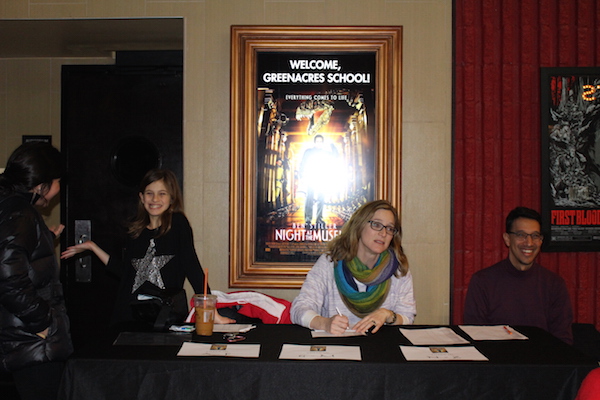 When Greenacres Elementary students had the day off for Martin Luther King Jr. Day on January 19 the Greenacres PTA took the opportunity to plan a special event. Students were invited to attend a private screening of Night at the Museum at The Alamo Drafthouse in Yonkers who donated the theatre for this unique community building event. The screening drew 150 parents and children who enjoyed the film as well as dinner or snacks which were served to guests in the theatre.
PTA president Isabel Finegold was thrilled with the results. "It was great having this event on a holiday! We had several entire families attend as both parents had the day off, so it was truly a family truly a family and Greenacres community event. And there were no lines for popcorn!"
Photo Credit: Midori Im
Scarsdale Forum Winterfest 2015 on Feburary 7
- Details
- Written by: Joanne Wallenstein
- Hits: 7684
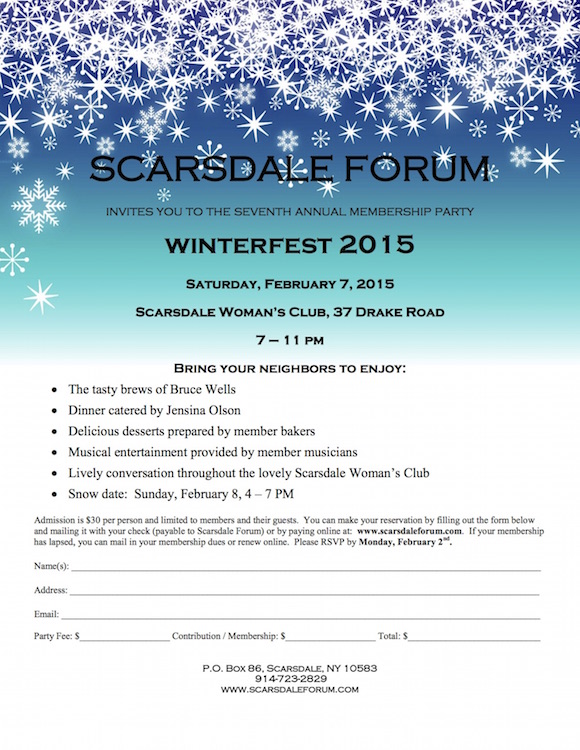
 The Scarsdale Forum will host its seventh annual membership party, Winterfest 2015, on Saturday, February 7th at the Scarsdale Woman's Club, 37 Drake Road from 7 to 11 PM. The snow date is Sunday, February 8th from 4 to 7 PM.
Members of the Forum and their guests can look forward to an evening of lively conversation and friendship to chase away the winter weather blues. A delicious buffet dinner prepared by Jensina Olson and the home-brewed beers of resident brew meister, Bruce Wells are some of the evening's highlights. Several member and guest pianists will set the mood in the music room. Guests may stroll throughout the beautifully appointed Scarsdale Woman's Club. Dessert will feature the home baked goods of member bakers and the donations of local vendors.
The Scarsdale Forum is a civic organization dedicated to improving life in Scarsdale. The Forum studies many issues affecting the Village and frequently provides input to governing bodies and elected officials on the local, county and state level via reports and statements prepared by its committees. Village of Scarsdale residents are encouraged to join the Forum and come to the best party in town! All profits from the event will be used for the digitization of the Forum's historical records and to support the public programs offered by the Forum throughout the year.
Admission is $30 per person and limited to members and their guests. Due to the popularity of this event, advance reservations are encouraged. Please RSVP by Monday, February 2nd.
Advanced reservations, membership renewal and joining the Forum for the first time can be done online at: www.scarsdaleforum.com or by mailing a check to Scarsdale Forum Inc., 24 East Parkway, P.O. Box 86, Scarsdale, NY 10583. For additional information regarding the event, please contact the Forum office by phone at 914-723-2829 or by email at: [email protected].
Shira and Friends Concert at Congregation Kol Ami
- Details
- Hits: 4548
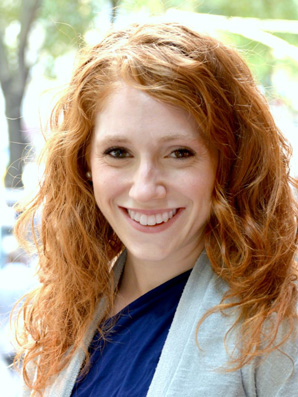 On Sunday January 25th at 1:30pm, Congregation Kol Ami invites you to a concert led by Shira & Friends, who believe that kids' entertainment should really rock!
Educator Shira Kobren learned to sing from her mom and dad when she was just a kid. Shira's dad always used to play songs on the guitar (like Johnny B. Goode and Beatles' songs), and Shira, her mom and her brother, Ari, would sing along. It was only a matter of time before Shira transitioned from singing in her living room to singing on stage.
A graduate of NYU's Tisch School of the Arts, Shira has performed on stage, on screen, and in commercials. She has sung on albums, all while teaching music and movement to young students throughout New York City. Shira & Friends was born when Shira decided to combine her love of performing with her love of being silly and creative with her students. Shira enlisted some of the best musicians she knows to be her "Friends", and all together, they make music that both kids and grown-ups can appreciate and enjoy.
Shira & Friends concerts are always rockin' interactive extravaganzas! Combining their own original tunes with classics, Shira & Friends plays a mix of hand-clap-able, sing-along-able, danceable, always smile-inducing music that has audience members of all ages becoming part of the show. Shira & Friends has performed in all sorts of venues including street fairs, nursery and elementary schools, children's activity centers, private dinners, stand-alone concerts, and many other special events.
This event is open to the entire community!
Tickets are $5.00 for adults and children 2 & older
Congregation Kol Ami
252 Soundview Avenue
White Plains, NY 10606
914-949-4717
www.nykolami.org
Scarsdale's Abigail Haber's Winning Essay: Who Tells Me Who I am Supposed to Marry?
- Details
- Written by: Joanne Wallenstein
- Hits: 10791
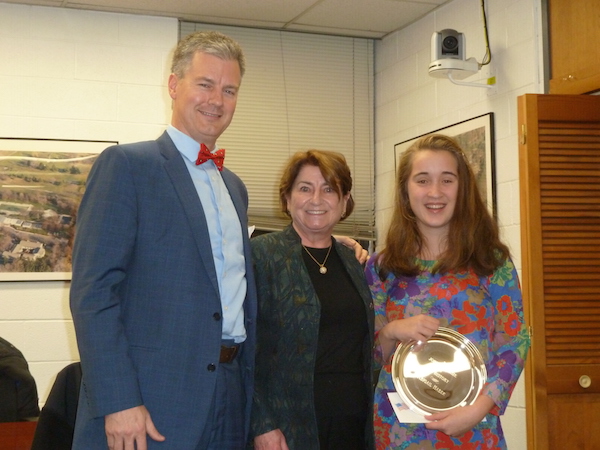 Scarsdale High School junior Abigail Haber has won the John Jay Prize in U.S. History. On behalf of the Scarsdale Republican Town Committee, Mr. Jim Burkee, a program director at Concordia College, gave a speech and awarded the prize to Abigail at a public ceremony on December 17th for her essay "Who tells me who I'm supposed to marry?".
Abigail entered her essay in the SRTC's first-ever essay contest "Engaging U.S. History: Scarsdale Student Essay Contest". Abigail was awarded a check for $500 and an engraved platter commemorating her prize. Abigail is an accomplished writer. She is the vice president of SHS's Creative Writing Club, is involved in the school newspaper, and has been published in several national literary magazines. Abigail also plays the clarinet and is a member of SHS's speech team. She is also a history buff.
During the award ceremony, Steve Mayo, a co-host of WVOX's The Steve Mayo Show, invited Abigail to appear on the show, which is 1460 on the AM dial and airs every Monday night at 6.
Here is the text of Abigail's award-winning essay:
Who tells me who I'm supposed to marry? Using Federalism in a historical perspective of the Constitution in order to shape modern understanding about same sex marriage
As the Revolutionary War drew to a close and the United States came out as victors, the people knew they wanted a government different from the despotic system of Great Britain. After first drafting the Articles of Confederation, the Framers realized there was a need for a strong central government that could control the states, but also a way for the people to be represented in order to preserve their liberties. From this system came the idea of Federalism, a political theory that is based on a balance of state and federal power. Just as many of the concepts established in the Constitution are derived from ideas of Federalism because they seek to clearly balance state and federal powers, the current issue of same sex marriage harkens back to Federalist ideals because of the debate about Federal versus state control of the issue.
Many of the laws and concepts defined at the Constitutional Convention of 1787 conform to an understanding of Federalism because the constitutional framework sought a balance between national and state government in an effort to prevent tyranny within the American government. One significant concept that was voted into law early on in the Convention was the idea of checks and balances. The Framers used the idea to mitigate despotism within the three branches of the American government: the legislative, executive, and judicial branches. The legislative branches would be composed of two governing bodies, the House of Representatives elected by the people, and the Senate . If a law was to be composed by one group, the law would have to be approved by the other group and the President in order to be passed into law. The judges of the judicial branch would be duly elected by the President and the Senate for a lifelong term . This system was designed to protect the Americans from the concentrated power of the King that they had just escaped from. While election of the President and the House of Representatives was by the people, the Framers made sure to have the Senate not be elected by the people. This struck a balance between complete absolutism, and the unchecked power of the masses. By putting power into many hands in the government, the Framers practiced the idea of Federalism. However, the delegates made sure also to exercise the ideas of Federalism by assuring power for state governments as well.
The idea of Federalism is clearly represented in the Constitution because the delegates clearly delineated the power of the central and the state governments. This idea, commonly known as "enumerated powers", is expressed in Article I Section 8 of the Constitution. This part clearly defines the power of the central government. These powers include borrowing money, declaring war, and collecting taxes . This limiting of power suggests that any other necessary legislation is in the hands of the state. However, Article I Section 10 forbids certain authority vested to the state. All states are prohibited to exercise certain power such as entering into treaties, lay duties on imports or exports, or enter into war with a foreign country . By defining the power of the central government and limiting that of the states, the Constitution was able to create a strong central authority economically, politically, and socially. However, the Constitution enabled states to create their own government by granting them certain powers and by giving them the ability to create their own state legislatures. This allowed a coexistence between the power of the state government and of the central government that would appease both the citizens who wanted to safeguard their liberties, and those in government who believed that the American people should have some restrictions. Despite this balance, there is still some ambiguity in the Constitution that is still under contention today. This lack of clarity is in the "elastic clause" of the Constitution which states "To make all Laws which shall be necessary and proper for carrying into Execution the foregoing Powers, and all other Powers vested by this Constitution in the Government of the United States, or in any Department or Officer thereof." In simpler terms, the U.S. government is allowed to pass any laws that are within the power stated in the Constitution. This uncertainty has sparked a debate today, about what powers are in the hands of the central government, and what powers belong to the states?
One issue that has brought up this debate about Federalism is same-sex marriage. In 1996, President Clinton signed the Defensive Marriage Act ("DOMA"), which only acknowledged heterosexual marriage, and denied many civil rights to same sex couples . States began to announce constitutional bans on same sex marriage in their constitutions. However, some states begin to legalize gay marriage, such as Massachusetts . There was a public call for the Federal government to reach a consensus on whether or gay marriage is constitutional? In 2012, a Federal court ruled California's legislation Proposition 8 to be unconstitutional, on the grounds that it wrongly excluded same sex couples because same sex couples were viewed as a minority without having proper rights. Finally, in the summer of 2013, the U.S. Supreme Court ruled that Section 3 of DOMA was unconstitutional. This repeal grants many more rights to same sex couples. However, any state has the right not to legalize or recognize lawful marriage from another state according to Section 2 of Doma . On October 6, the Supreme Court repealed bans on same sex marriage in five states , but did not provide a ruling on the national scope of the issue. As litigation against state bans on gay marriage continues to rage on, there is a question as to whether it is truly the responsibility of the national government to decide? While recent legislation from the White House, like the repeal of DOMA, has seemed to imply that the government is leaning towards a national legalization of gay marriage, there has been no explicit legislation so far. This push and pull between state courts and the Supreme Court has raised questions involving ideas of state and Federal power. In this sense, this modern issue is attempting to conform to historical ideals of Federalism. Rather than having a divisive balance between state and central power that was established in the Constitution, there is a debate about who has the authority to rule on this issue. Perhaps by deeply reflecting on the ideas of federalism, there will be a consensus on this controversial issue.
While the ideas of Federalism are so deeply ingrained in our nation's heritage, there are also some modern issues that the Framers did not address. Often, there is no clear-cut way to determine whether the federal government or the state government has the authority to rule on these issues. While it is difficult to determine where this power should be vested, it is our duty as a democratic nation to remember the idea of the political pendulum. If a government swings too far to one extreme, either too centralized, or too local, radicalized change will follow. If our government feels it necessary to go to these extremes, then it is essential to decide whether it might be time for America to undergo radicalized change.
Notes:
1-4) Alan Brinkley, American History, Twelfth Edition (Boston, McGraw Hill, 2007), 168.
5, 6, 8) The United States Constitution. Article I, Section 8, & Article I, Section 10.
7) US Legal. (accessed November 20, 2014)
9, 13) Gay and Lesbian Alliance Against Defamation: Frequently Asked Questions about Doma
10, 11, 12) Gay Marriage Pros and Cons: Gay Marriage Timeline.