








Jazz Concert in Chase Park and Festival Orchestra Concert in Purchase
- Details
- Hits: 5252
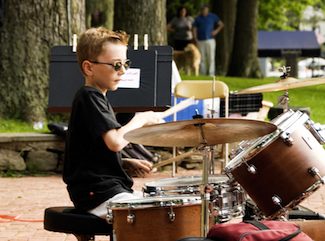 The Hoff-Barthelson Music School Jazz Department will present its final jazz ensemble performances of the year on Sunday, June 3 at 6 pm in Scarsdale’s Chase Park. The outdoor concert is always a big hit with local residents and members of the school community.
The program, under the direction of Ed Palermo, Coordinator of the Jazz Studies Program, is entitled All That Jazz, and will feature several of the Music School’s smokin’ student jazz ensembles. The ensembles will perform a delightful cross-section of American jazz standards as well as pieces composed and arranged by the students and faculty. They will be joined by jazz faculty members in a variety of jazz combos.
The public is invited to picnic and relax in the park while the ensembles perform.
Festival Orchestra at Purchase
On Saturday June 2nd, the HB Festival Orchestra will present its Finale Concert of the season in the Recital Hall, Purchase Theatres, 735 Anderson Hill Road, Purchase, on Saturday, June 2 at 7 pm with internationally celebrated guest pianist, Orli Shaham.
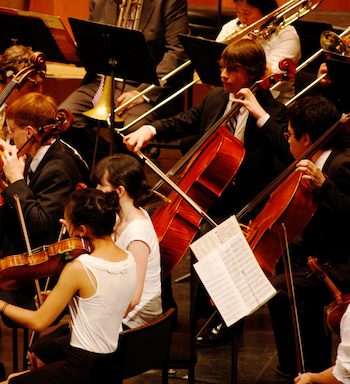
The Festival Orchestra, a full symphonic ensemble, has been lauded as one of the finest high school orchestras in the United States by the New York State Council on the Arts. The Festival Orchestra presents five full symphonic concerts each year, of which two concerts are performed with guest artists of international stature. The Music School uses an Orchestral Training Pyramid unique in substance, structure and quality to guide young orchestral players through increasingly rigorous ensemble training, until they are ready to audition for seats in the top-level Festival Orchestra.
At the June 2 concert the Festival Orchestra, under the direction of Jun Nakabayashi, will be joined in Beethoven’s Piano Concerto No. 3 in C minor by pianist Orli Shaham. The Festival Orchestra will also play Tchaikovsky’s Romeo and Juliet Fantasy Overture and Michael Valenti and Ron Spivak’s The Noisy Intermission, for which Mr. Spivak will make a guest appearance as the narrator.
 A consummate musician recognized for her grace and vitality, Orli Shaham has established an impressive international reputation as one of today's most gifted pianists. She has performed with most major American orchestras, as well as with the BBC Symphony Orchestra, Filarmonica della Scala, Israel Philharmonic Orchestra, Stockholm Philharmonic and the Sydney Symphony Orchestra, and is a frequent guest at numerous summer festivals from Mostly Mozart to Verbier. Her recital venues include Carnegie Hall, The Kennedy Center, and Amsterdam's Concertgebouw.
In 2011-2012 Ms. Shaham will premiere a piano concerto written for her by Steven Mackey, with David Robertson conducting the St. Louis Symphony. Her newest recordings include a CD of Hebrew Melodies with her brother, the violinist Gil Shaham; the Brahms Horn Trio; Schubert’s lied Auf dem Strom featuring Richard King; and Saint-Saens’ Carnival of the Animals with pianist Jon Kimura Parker and the San Diego Symphony. She hosts the two-hour weekly public radio series America’s Music Festivals, which is broadcast on more than 100 stations.
Ms. Shaham’s highly acclaimed classical concert series for young children, Baby Got Bach, provides hands-on activities with musical instruments and concepts and concert performances that promote good listening skills. She has taught music literature at Columbia University, and contributed articles to Piano Today, Symphony, and Playbill Magazines. Ms. Shaham has served as artist in residence on National Public Radio’s Performance Today.
Ron Spivak wrote, directed, and has performed — as narrator and singer — his symphonic concerts Bravo to Broadway and Richard Rodgers Re-vued with major orchestras across the country, and has sung with Steve Ross, Julie Wilson and other luminaries at Lincoln Center. He has played leading roles in Man of La Mancha, Guys & Dolls, Company, Damn Yankees, Annie, Godspell, Little Mary Sunshine, Gilbert & Sullivan's Ruddigore, The Mad Show and Jacques Brel is Alive and Well and Living in Paris. He co-starred with Andrea McArdle, Loni Ackerman, and Neva Small in the Off-Broadway revival of the musical Promenade. His directing credits include A Funny Thing Happened on the Way to the Forum, Man of La Mancha, Company, Next, The Bald Soprano and The Lesson.
At Samuel French play publishers, Mr. Spivak prepared the published scripts and scores for more than 50 musicals, including La Cage aux Folles, Woman of the Year, Little Shop of Horrors, and Dames at Sea, and also unearthed and cataloged the long-lost scripts and orchestrations to more than two dozen early Broadway musicals, including the Gershwins’ original version of Of Thee I Sing, which led to CBS’s acclaimed recording conducted by Michael Tilson Thomas. He has composed historical “liner” notes for Broadway cast albums, and has written for Show Music and Where New York magazines, among others.
Tickets will be sold at the door and are $13 general; $11 seniors; $5 for students under 16. Inquiries about the Music School may be directed to [email protected], www.hbms.org or 914-723-1169.
Art and Food at 13th Annual ArtsBash on May 18
- Details
- Hits: 4584
 Tastings from over 30 of Westchester’s top restaurants and the artwork of over 20 local artists will be the backdrop of an extraordinary night of Food, Fun and Fabulous Art.
ArtsWestchester’s annual ArtsBash a celebration of art and food that promises a full night of extraordinary artistic and culinary masterpieces from over 20 artists and 30 beloved local restaurants will be held on on May 18. This year’s event will roll out onto the street and inside ArtsWestchester’s historic 9-story building located at 31 Mamaroneck Avenue in White Plains. Tickets are $75 and can be purchased online at www.artsw.org/artsbash or by contacting Brittany Steinberg at (914) 428-4220 x328. All sales will support the programs and services provided by ArtsWestchester.
Food: ArtsBash is a Westchester foodie’s dream. Guests have the privilege of tasting exquisite signature dishes and cocktails from 30 of the county’s most revered restaurants as they partake in the night’s activities. ArtsBash’s 2012 Culinary Chairs, John Crabtree (Crabtree’s Kittle House) and Anthony Goncalves (42 The Restaurant) will be present to greet those sampling the fine wine and the wonderful assortment of “Boardwalk Bites”-themed plates. A champagne and spirits lounge on the 9th floor will provide a wonderful accent to the event. A list of the growing number of participating restaurants can be seen below.
Fun: Against the backdrop of food and art, guests will be entertained by musicians, cocktails, and the company of fellow art lovers. They are encouraged to enter for the chance to win prizes and relax with a complimentary massage. They can also imagine themselves cruising in the brand new Mercedes-Benz convertible displayed outside, satisfy their sweet tooth with delicious desserts and take a picture with Elton John and Katy Perry look-alikes!
Fabulous Art is at the core of ArtsBash. Art lovers will revel in the wide array of artistic talents made available to ArtsBash guests. The event will mark the last weekend to explore the current exhibition, featuring works from 20 local sculptors whose exciting and personal work is displayed in Sculpture: On and Off the Wall.
Guests can also meet the artists who create in our artist studios. Resident artists, including Scarsdale’s Carrie Belk, will open their studio doors for ArtsBash goers to view their works in progress as painters, sculptors and fashion designers. A list of participating Sculpture and Open Studios artists can be seen below.
This year’s ArtsBash 2012 will be followed by Family ArtsBash on May 19, a free day of fun for the whole family that includes children’s workshops, activities, treats and prizes.
For Information about ArtsBash or Family ArtsBash, contact:Mary Alice Franklin, [email protected], (914) 428-4220 x318
FOOD and TREATS
Participating Restaurants
- 42 The Restaurant
- Anthony’s Coal Fired Pizza
- Asian Temptation
- Benjamin Steakhouse
- Café of Love
- Captain Lawrence Brewery Company
- Chantilly Patisserie
- Chocolations
- Coffee Labs Roasters
- Crabtree’s Kittle House
- Crowne Plaza
- Don Coqui
- Elements
- Emma’s Ale House
- Full Moon Asian Thai
- Haiku
- Iron Horse Grill
- The Iron Tomato
- La Bocca
- Legal Sea Foods
- The Melting Pot
- Myong Gourmet
- Pane D’oro
- Pranzi Ristorante
- The Ritz-Carlton, Westchester
- Ruth’s Chris Steak House
- Season’s
- Sofrito
- Tastefully Yours Catering
- Tre Angelina
- Zitoune
2012 Treats
- Ben & Jerry’s at The Westchester
- Captain Lawrence Brewery
- Chantilly Patisserie
- Coffee Labs Roasters
- Lulu Cake Boutique
- Manhattan Beer Distributors
- Neiman Marcus
- Oasis Day Spa
FABULOUS ART
Sculpture: On and Off the Wall Artists:
- Emil Alzamora
- Nancy Bowen
- Jo-Ann Brody
- Susan Cox
- Gordon Fearey
- Sarah Haviland
- Christopher Kaczmarek
- Barbara Korman
- Martin Kremer
- David Licata
- Malcolm MacDougal III
- Clare Maker
- Susan Manspeizer
- Steven Millar
- Mari Ogihara
- Daan Padmos
- Barbara Segal
- B. Avery Syrig
- Craig Usher
- Eric Wildrick
Open Studio Artists:
- Bryan Greene
- Abigail Scanlan & Ita Pathak
- Dennis Hyland
- Roberto Figueroa
- Westchester Fashion Academy for Children / Denise Proctor
- Ball Park Prints /
- Plaine & Chamberlain
- Katherine Nix
- Alliance Francaise
- Red Leash Studio/
- Wanda Horrell
- Carrie Belk
- Teresa Hobson-McCabe
- Gail Freed
- Sheryle Wickman
- Patricia Spergel Bauman
- Eileen Stodut
- Christina Barretta
- Kiyoshi Otsuka
Mother-Daughter Night at the Movies: The Avengers
- Details
- Hits: 5726
 Is The Avengers your ticket for a fun night at the movies? Writer Deborah Skolnik and her daughter Clara Enders, 11, attended the press screening to find out. Here’s their mother-daughter review.
From Mom Deborah Skolnik: With all that Scarsdale has to offer — from glittering jewelry stores to world-class schools — there’s still one thing this town is woefully short on, and that’s stuff to avenge. The customer in front of you at Martine’s bought the last raspberry macaron? Waaah. You ended up waiting extra-long at the traffic light at the Heathcote Five Corners? Aggravating, but hardly cause to don a cape and shoot thunderbolts from your wrists. What you need, my civilized suburban friend, is the thrill of vicarious vengeance. And luckily for us all, that’s exactly what The Avengers is serving up.
The trouble begins when Loki, the villainous younger brother of demigod Thor, steals a glowing cube called a tesseract from a government lab. Aliens want the tesseract badly — so much so that they’ve offered Loki control of Earth if he’ll hand it over. Of course, we earthlings would prefer he didn’t, but Loki’s tough to deter, since he’s impervious to bullets and able to change opponents into mindless slaves with a simple tap of his scepter. Can anything possibly stop him?
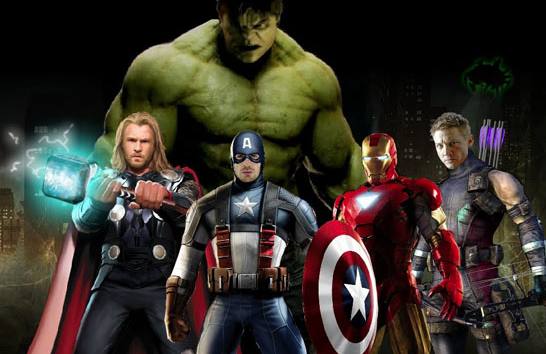
Enter the Avengers, a rag-tag assemblage of Marvel Comics superheroes gathered at the behest of fierce agency operative (Samuel Jackson, naturally, wearing an eye patch that’s never explained). He struggles to make a cohesive team out of Loki’s brother Thor; Iron Man (Robert Downey Jr., reprising his earlier role); Captain America, and The Hulk, green and rage-filled as ever. The team is ably assisted by two human tag-alongs — a soldier called Hawkeye, and a sultry spy nicknamed Black Widow, played by Scarlett Johansson. Her inclusion adds a much-needed shot of girl power to the lineup, making this a more modern Marvel. Plus, she’s hot in her black catsuit. Meow!
The special effects — mainly related to ground and airborne battles — are grip-your-armrests awesome. But an even bigger surprise is the whip-smart dialogue: These are no cardboard characters behind the steel masks. In their quieter moments, our heroes kibbitz about Pilates and needle each other in ways that would put any married couple to shame. And in a larger sense, they represent the clashing facets of our country itself. Thor tries clumsily to play Big Brother to not only Loki, but also the world; Captain America’s got patriotism but needs help channeling it; billionaire-playboy Iron Man’s a dead ringer for “the 1%”, and The Hulk, with his anger issues, is a prime candidate to occupy Wall Street…or anywhere else he’d prefer to be. Watching these disparate personalities pull together is, no doubt, the director’s message to us all about our agenda as Americans.
But if you don’t want to ponder deep messages, just sit back and enjoy the explosions. For us here in the metro area, there’s the added fascination of seeing familiar landmarks get blown to smithereens. Watching fireballs hurtle down Park Avenue — with my office building in plain sight — I guiltily found myself wondering, “If this really happened, would I get a day off from work?”
No matter: You’ll leave the theater feeling you’ve already had a great trip.
Note: Fun as it is, this movie has both violence and a running time of well over two hours, making it better suited to kids 10 and up.
Deborah Skolnik is a Scarsdale resident and a senior editor at Parenting magazine.
From 6th Grader Clara Enders: Before I saw this film, I only knew the Avengers as pictures in a Halloween catalog, but the movie brought the characters to life for me in fun and exciting ways. It is about a cube called a tesseract, an unlimited source of energy, which has gone missing. In the wrong hands, it could be very harmful to all of mankind. It turns out the thief is Loki, a villain from outer space who is looking to trade it for the chance to rule the earth. Who but the Avengers-Ironman, The Hulk, Thor, and Captain America-could somehow get the tesseract back in their possession?
It isn’t going to be easy, though, because the Avengers argue a lot and have different opinions. Half the fun is watching them fight and insult each other in humorous ways. The rest of the excitement comes from the action scenes and the jaw-dropping special effects. I still can’t manage to figure out how they made New York City be torn apart and yet I walked through it and hour later.
I thought it was an amazing movie. The Avengers would be appropriate for a fifth grader or a fourth grader with a long attention span (the movie is over 2 hours long). ComicCon fans and hipsters alike will all love The Avengers.
The Lucky One: A Mother-Daughter Review
- Details
- Hits: 7863
 Scarsdale’s Deborah Skolnick and her daughter Clara who is in sixth grade went to the premier of The Lucky One. Here is a multi-generaltional perspective:
Zac Efron is an actor with an identity problem. Having shot to stardom as jock Troy Bolton in the High School Musical movies, he’s long been a pin-up boy for the training bra and Tiger Beat set. Yet the 24-year-old wants (and needs, for the sake of his career) to stir the passions of a more mature audience. So perhaps it’s no shocker he was drawn to his latest role—a former military man plagued by identity issues of his own.
In The Lucky One, opening today, Efron plays Logan Thibault, a Marine recently returned home from Iraq. He survived three harrowing tours of duty aided by a talisman — a picture he’d discovered in the rubble of a raid, depicting a lovely blonde. Now stateside and emotionally adrift, he sets off cross-country to locate and thank the woman.
What he finds, in the bayous of Louisiana, is Beth Green — a quick-tempered dog trainer with plenty of other people in her own metaphorical picture. These include Ben, her adorably mop-topped son with her bullying ex, and ‘Nana,’ (played by Blythe Danner), the wry grandmother with whom she and Ben live. Gone but keenly grieved is the brother Beth lost in Iraq.
Will Logan stick around, and put down some much-needed roots? Will Beth’s bitterness melt under the gaze of Logan’s limpid blue eyes? Far more intriguing to ponder than the predictable plot is Logan’s fourth tour of duty: Operation Turn Zac Efron into a Grownup. Our boy…er, man, obviously pumped plenty of iron to bulk up for this role; it’s been reported he put on close to 20 pounds of pure muscle. Other edgy touches include scruffy facial hair and a smattering of badass tattoos. In one particularly memorable scene, he unsnaps a bra strap with a single hand. Bra-vo!
Yet the greater challenge remains unanswered: Getting us to totally buy him as sizzling-hot sheet meat. The hard sell, sadly, backfires. Leaden love-scene dialogue is no help – lines like “You should be kissed every day…every hour,” elicited more snickers from those around me than the concession stand could ever hope to peddle. Equally heavy-handed are the many allusions to chess, card games, and rickety bridges, representing the mysterious mixture of fortune and self-determination that guides our lives.
Viewers will be glad for the comic relief of Blythe Danner’s Nana, who gently goads Beth to give love a second try. Her koo-koo-ka-choo-Mrs.-Robinson winks and nods give the ladies in the audience—many of whom will doubtless be older than Efron—tacit permission to acknowledge that hey, he’s a hottie.
As I filed out of the theater, someone behind me told his companion, “Thanks for taking me to see this movie. I saw lots of previews and needed to confirm that it was as awful as I thought it would be.” Awww. But he was a man, of course. For women with a weakness for flowery love stories (and presumably there are plenty of us; the movie is based on a bestselling novel), this flick may be a satisfying journey. But I’m waiting for the day I see Zac Efron in a movie that showscases his talents to their fullest—something where he sings and dances, and romances in ways real adults actually do. That’s when I’ll feel like the lucky one.
From Clara Enders - Sixth grader at Scarsdale Middle School
The Lucky One was an interesting movie. The main reason I wanted to see it was to find out how Zac Efron has grown as an actor. The last time I saw him was in the High School Musical movies from Disney, which were amazing for me at the time.
The Lucky One is a love story too, but a different kind. It is about Logan Thibault, a marine who comes home after finding a picture of a girl right before there is an explosion. He believes that the picture saved his life, and the girl in the photo is his guardian angel. He makes it his mission to find her.
When he finally does, she is not who he thinks she is. Beth Green’s life is complicated: She is a single mom whose brother died in a war-as a marine. Her ex-husband is a total turtlehead. He makes it his goal to terrorize Beth, and threatens to take their son, Ben. Logan’s challenge is to find a place in Beth’s life, while putting his chilling war memories aside.
To be honest, I didn’t think highly of The Lucky One. I found the plot to progress too quickly and that caused it to not really make any sense. One day Beth hates Logan, then the next scene she’s madly in love. The ex-husband was such a one-dimensional bully that he didn’t seem like a real person. He even pulled a gun on Logan’s dog, which was just low. My favorite characters were Beth’s grandmother and Ben. Beth’s grandmother had some funny jokes, and kept Beth from taking herself too seriously. Ben was a really great actor, considering his age. He showed true emotion and acted with feeling.
I was especially disappointed by the movie’s ending because everything worked out perfectly. Overall, in its own twisted way, The Lucky One resembled a grown-up Disney movie.
Clara Enders is a sixth grader at Scarsdale middle school. Deborah Skolnik, her mother, is a senior editor at Parenting magazine.
Still Time to Sign Up for the PCF Battle of Bands on Thursday Night
- Details
- Hits: 4455
 Pediatric Cancer Foundation is rocking to ‘80’s flavored funk as well as songs by the Beatles, Clapton, and Stones, Thursday, April 19, 2012, from 7-11pm at Mamaroneck Beach and Yacht Club, 555 South Barry Ave., Mamaroneck, NY. Four bands including The Del Bocas; Not Dead Yet; The New Irrelevants and Route 9 are donating their time and music to benefit children with cancer.
The keynote speaker will be 17 year-old cancer survivor and vocalist, Bianca Muniz. This adult only, denim chic attire evening will include a silent and live auction. To register go to: www.pcfweb.org/battle or call: 914-777-3127. Cost is $175 per person.