







Survey Shows that Students' Substance Abuse is Trending Downward
- Category: Schools
- Published: Tuesday, 10 November 2026 14:35
- Joanne Wallenstein
 While high school students are still experimenting with substance use, overall usage is down in comparison to data reported in 2017 and 2021.
That was the good news in the presentation of the 2026 of the results of the Pride Survey, a study that looks at use of alcohol and drugs among Scarsdale students from 8th – 12th grades.
SHS Assistant Principal reviewed the data at a November 9, 2026 meeting of the PTC Council, which was followed by a panel discussion about teen substance use sponsored by Scarsdale Family Counseling Service and the SAY coalition, (Scarsdale Action for Youth)
The first survey was administered in 1982 and it has been done every three to four years since that time. It measures self-reported us of substances and identifies trends and patterns.
The survey is voluntary and this year they administered it the old fashioned way, with paper and pencil and got a better participation rate than when giving the survey online.
In 2026, 1483 students participated from 8-12th grade and 61% of SHS Seniors completed the survey.
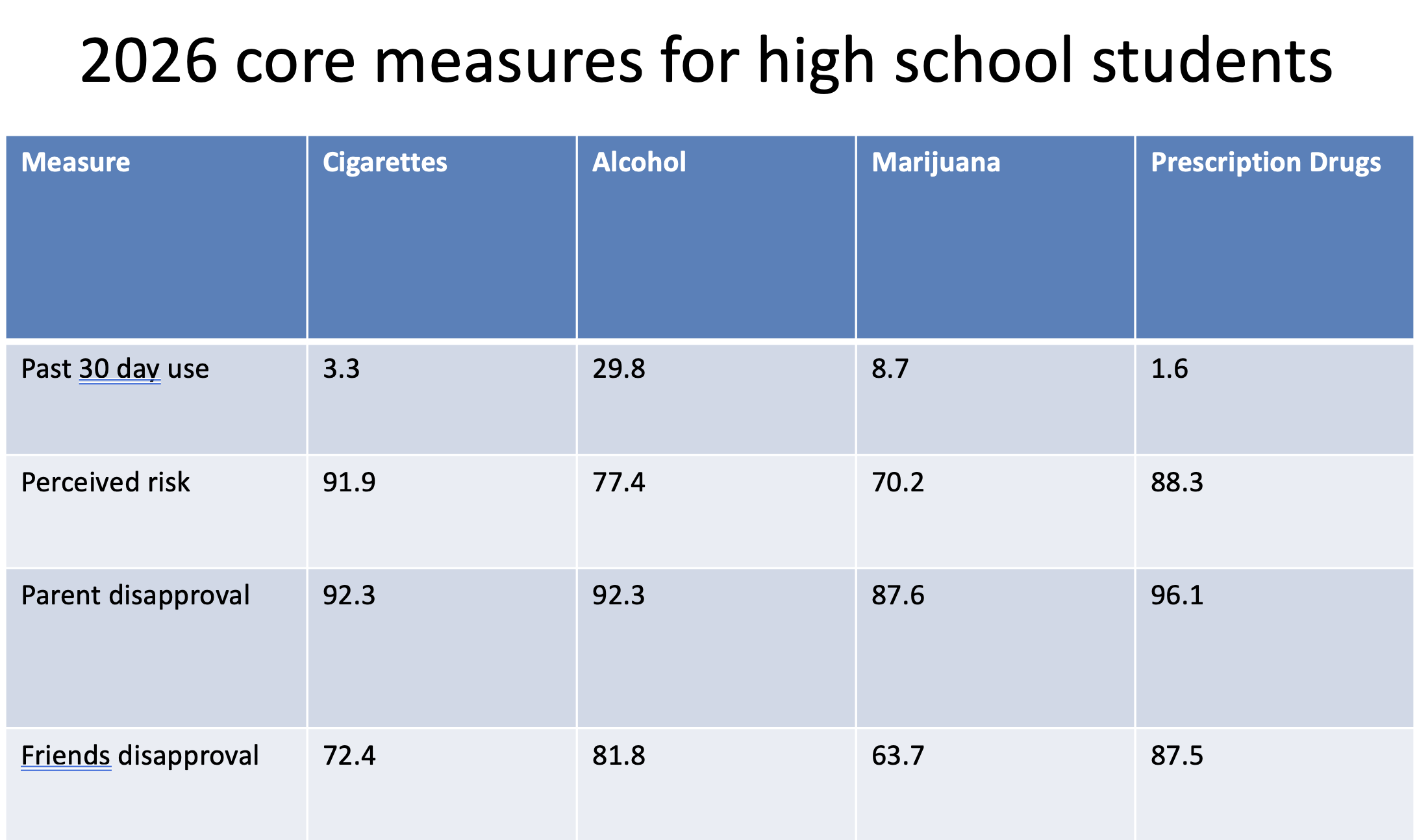
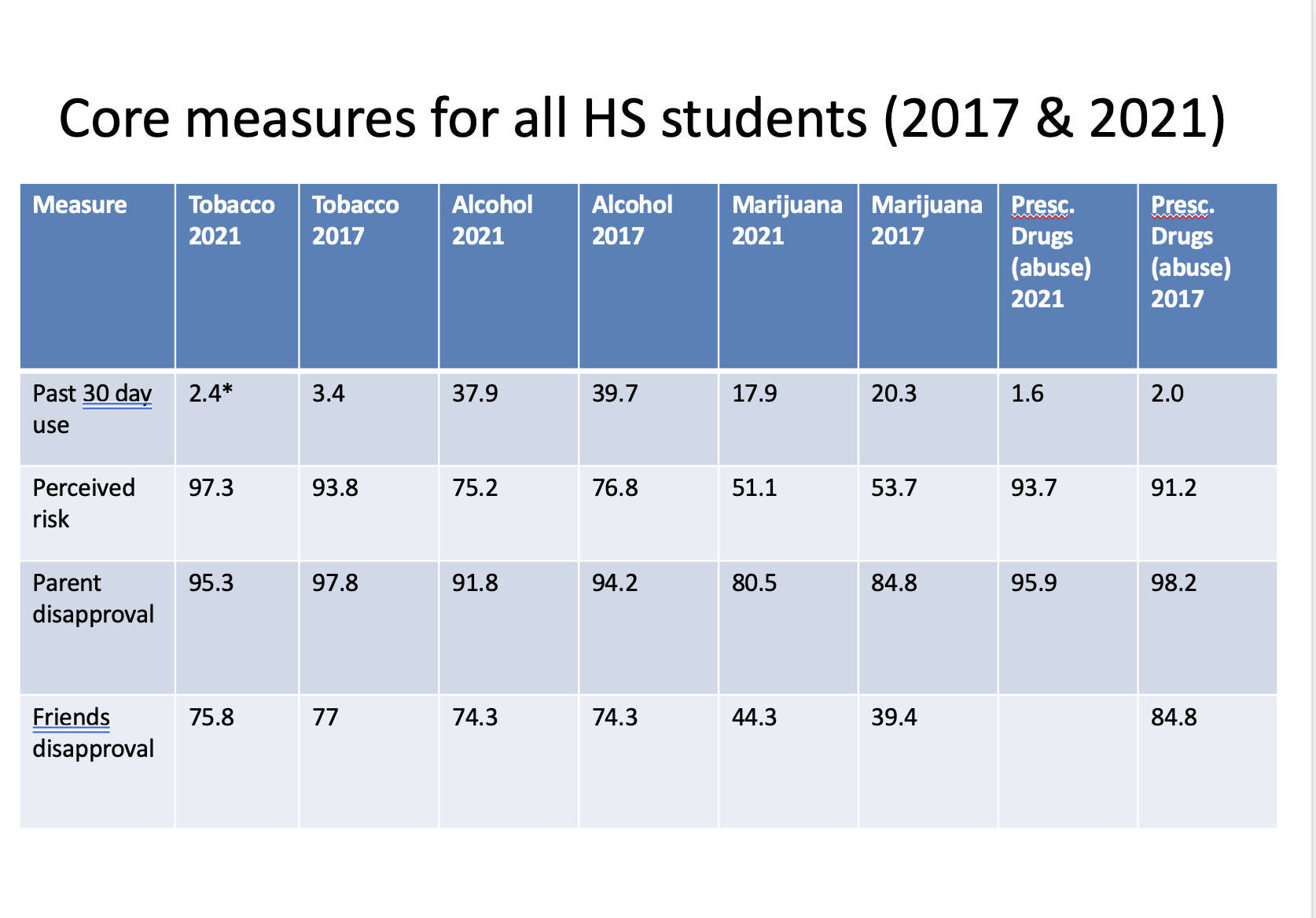
The good news is, that compared to the results from 2017 and 2021, usage is down. While in 2021, 37.9% of high school students reported using alcohol in the past 30 days, for 2026 only 29.8% reported alcohol use in the past 30 days.
In 2021 17.9% of respondents reported using marijuana in the past 30 days, and in 2026 only 8.7% of participants reported marijuana use in the past 30 days.
In terms of perceived risk, 91.9% report the risk of smoking cigarettes, while only 77.4% believe that consuming alcohol is risky.
Another interesting stat concerns where students are consuming substances, with 81% reporting usage at friends’ homes and 34% in their own homes.
And when are they consuming alcohol and drugs? 97% reported usage on the weekends, with only 9% on weeknights.
The survey also tracked usage of e-cigarettes – with 6.4% of high school students indicating that they have used an e-cigarette/vaporizer within the last 30 days.
Following the discussion of the data, there was a panel discussion about teen drug use and prevention with Melissa Mazer Chairperson of the SAFE Coalition, James Genova the Executive Director of Scarsdale Family Counseling Service, Detective Christopher Moleski from the Scarsdale Police Department and Melissa Diodate, Project Coordinator for SAY.
Mazer said, “While our numbers are good and we see favorable trends – we still have work to do in Scarsdale. We are seeing use of “gas station drugs” – dietary supplements, energy boosters and Kratom a stimulant that is high addictive. There is already a ban on it in Westchester County.”
Diodati explained, that Kratom has high rates of addiction and can cause severe withdrawal symptoms. It is a stimulant in low doses and in opioid in high doses. It doesn't show up in standard drug tests. She also warned about use of Delta 8/k2: which is marketed as "diet or light weed". It can be in the form of gummies, and in vapes. It can cause hallucinations, seizures, and loss of consciousness. More risks are posed by Nitazenes, synthetic opioids that can be more potent than Fentynal, and are often mixed with other products.
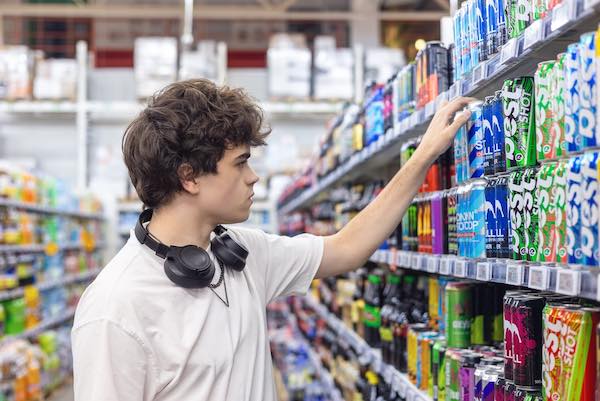
Where do teens get these drugs? She said, “These products can be found in gas stations and convenience shops and online retailers. They are unregulated products marketed as mood enhancers, energy boosters, and dietary supplements. These products often contain sweet, candy flavors and are bright and colorful.
What are some of the signs that your child might be using? She said, “Look for sudden change in behavior, or speech patterns – or if your child is protective of their backpack or their room or if you see pills,
Jay Genova was asked, “How should we talk to our kids about this? He said, “Parenting is not an easy job. Kids do not come with instructions. We are trying to help our kids navigate the tumultuous years we call adolescence."
To those who want to know how to teach kids to drink responsibly, Genova said, “There is no evidence to support that you can teach your kids to drink at home. In fact, this may result in binge drinking.”
Genova advised that conversation about substance use should begin as early as fifth grade. They should be relevant, developmentally appropriate and honest. He advised against using scare tactics and believes that families with a “no-use” policy have kids who drink less.
Officer Malecki discussed the good Samaritan Law that encourages people to call 911 in case of an overdose and protects the witnesses from being prosecuted. He warned parents about the legal risks of permitting kids to drink in their homes.
Genova discussed the increased potency of marijuana – which in 1988 had a THC concentration of 2.2% and now averages 15-20%. Even canned alcohol is more potent. A Bud Lite is 4.8% alcohol – but a Buzzballz, a pre-mixed cocktail in a can, contains 15% alcohol.
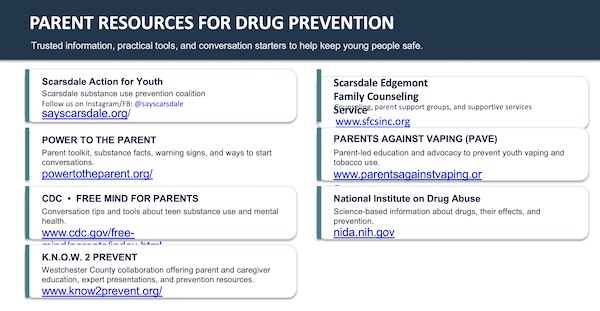
Overall, trends are pointing in the right direction – and it was an informative evening. See more resources below.