







Should the Westchester Ethical Cultural Society be Preserved?
- Details
- Written by: Joanne Wallenstein
- Hits: 2491
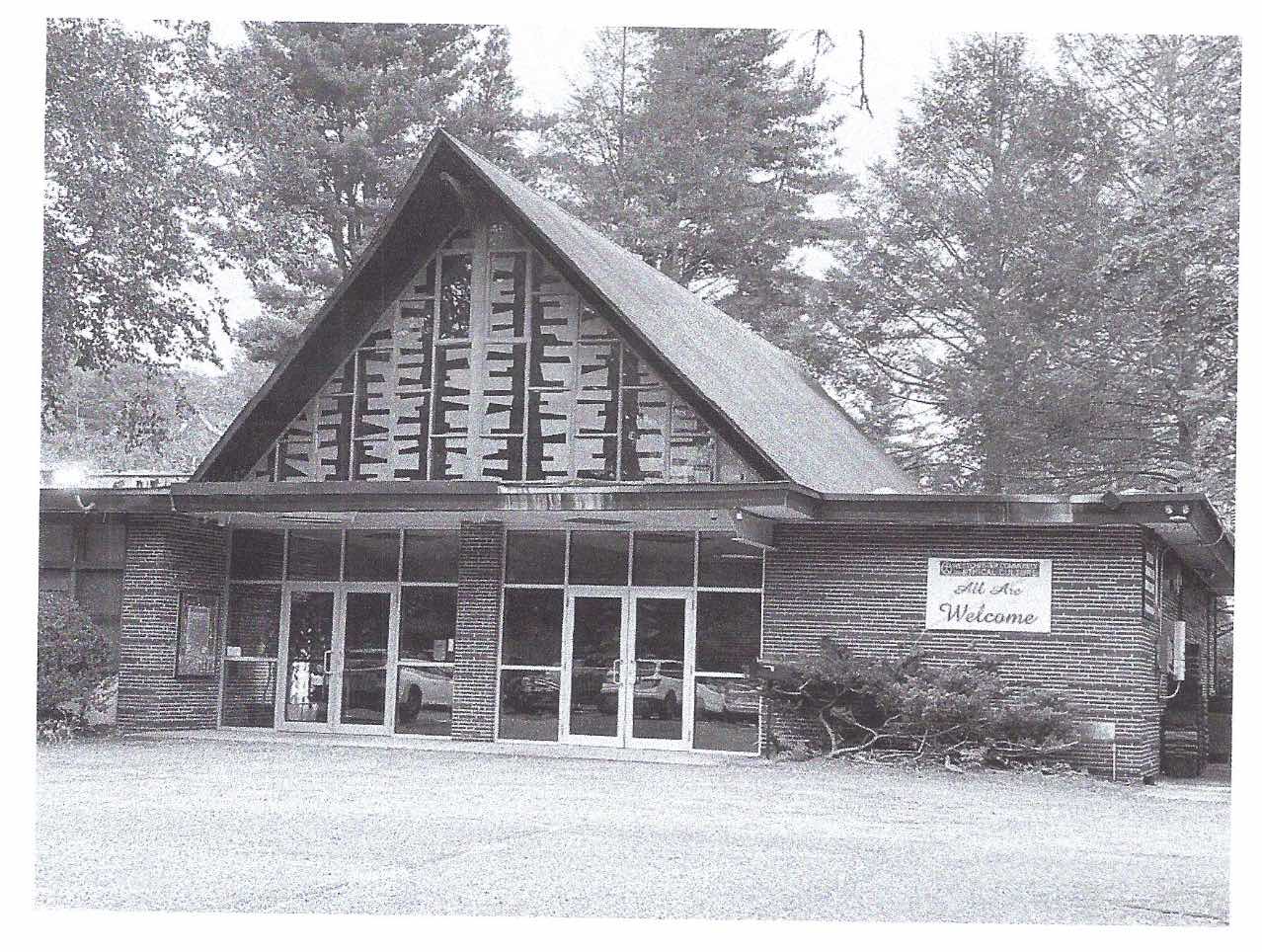 Westchester Ethical Cultural Society: Photo Credit: Andrew Dolkart
(Update: At their October 21, 2025 meeting, the Committee for Historic Preservation approved the application to tear down the Ethical Cultural Society)
Though I often drive by the A-frame structure on Saxon Wood Road, I did not realize it was primarily sited in Scarsdale, though it sits next to the Saxon Woods Pool. I did a bit of digging and found that though the entrance to the Westchester Ethical Cultural Society is from White Plains, the property is within the borders of Scarsdale and is now adjacent to the Ambassador Senior Living Center. And the Saxon Woods Pool, which opened in 1958 also sits on land owned by Scarsdale.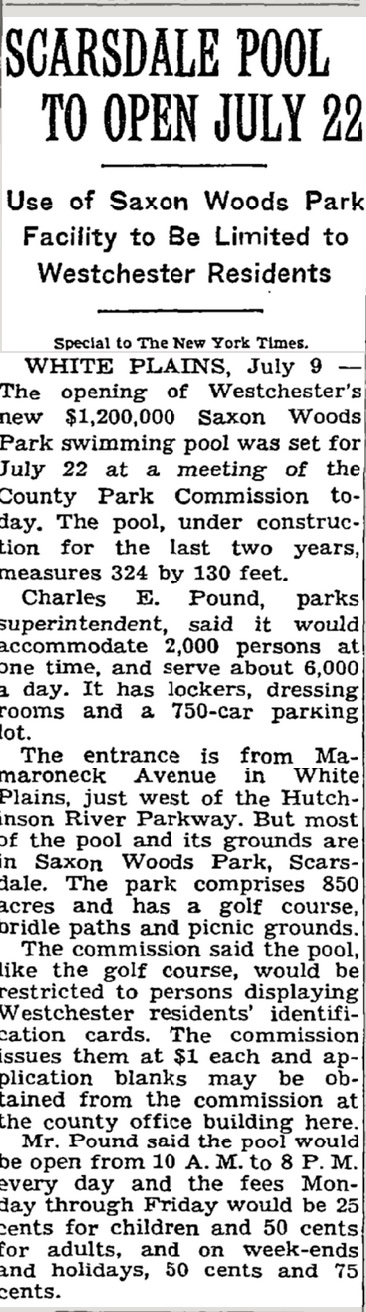 A 1958 clipping announcing the opening of Saxon Woods Pool.
Now the fate of the structure, built in 1963, hangs in the balance as an application has been filed by Sunrise Senior Living to raze the building and construct a 110 room senior leaving facility in its place.
The Committee for Historic Preservation considered the applicatiaon at their Spetember 16, 2025 meeting and requested the opinion of expert Andrew Dolkart on whether or not it merits preservation.
Below find Dolkart’s history of the building and the movement and his suggestion that the A-Frame portion of the building be incorporated into the structure of the senior living facility. Read below for some interesting local history:
(From Dolkart)
Westchester Ethical Culture Society, 7 Saxon Wood Road, Scarsdale: Preservation Assessment
As part of my contract with the Village of Scarsdale to review buildings for which a demolition permit has been requested and which may meet the criteria for historic status under the laws of the Village, I visited the Westchester Ethical Culture Society Building at 7 Saxon Woods Road in September 2025. I have also undertaken research on the buildings at the site, including an examination of the limited number of drawings in the Village records.
The site on which the Ethical Culture Society Building stands is located on a large plot of land at the eastern edge of the Village of Scarsdale, surrounded on three sides by Scarsdale's Saxon Woods Park. The site is accessible only via Saxon Woods Road in White Plains. The site consists of the Ethical Culture Society's A-frame auditorium, a long, one-story education wing connected to the auditorium, and a freestanding cottage. Construction of the Ethical Culture Society' auditorium and school wing took place in 1962-63 to the design of architect Harry Wenning. The cottage pre-dates this construction, but it was redesigned by Wenning.
The Ethical Culture Society was founded in New York in 1877 by Felix Adler. Adler, the son of the rabbi of Temple Emanu-El, was studying to become a rabbi himself, but became increasingly interested in ethical concerns that were not deist centered. He believed that individuals could lead a just life by following a code of ethics and that these ethical concerns could help improve the world. Adler's new organization focused on morality, social reform, and education. He preached "deed over creed." The Ethical Culture Society never had a large number of adherents, but it was influential in teaching ethics and in educational reform. In its early years, the Society was centered in large cities, but after World War I it grew in suburbs such as Westchester. It was a significant alternative to religious organizations, but like these religious organizations, it sponsored Sunday schools and other educational endeavors that taught ethics to children.
The Ethical Culture Society's building in Scarsdale was a significant part of the suburban development of the organization, consisting of an auditorium that seated 250 people and a school wing with twelve classrooms that could be combined into a single space when needed.
The Ethical Culture Society's building was designed by architect Harry Wenning. Wenning was born in Elizabeth, New Jersey in 1928 and educated as an undergraduate at William and Mary College and then studied architecture at MIT. After serving in the army, he established his architectural practice in Westchester, working primarily in the lower Hudson Valley, in Westchester, Putnam, and lower Dutchess counties. He designed a variety of buildings, including Modern houses, apartments, a garage, and the Ethical Culture building. His works were published in several newspapers and magazines, including articles in Popular Science, and an article about an all-electric house that was syndicated nationwide in newspapers. Several of his works are featured in the New York Times. He was a member of the American Institute of Architects, and its 1970 Yearbook notes his office in Hastings-on-Hudson and home in Fishkill. In the listing of his principal works (submitted by Wenning), the Westchester Ethical Culture Society is 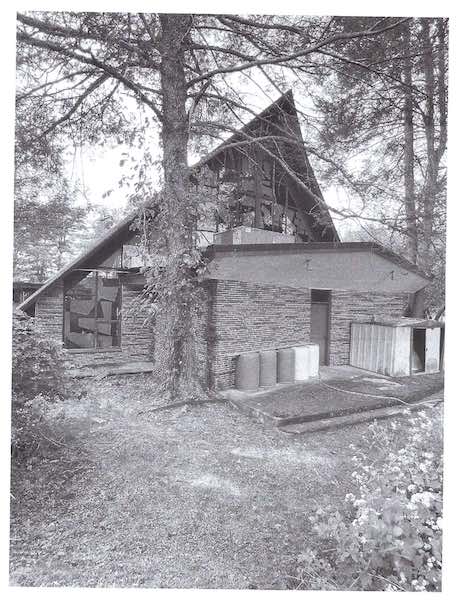 The rear facade: Photo Credit Andrew Dolkartthe first work listed, indicating the importance that Wenning placed on this design.'
The Ethical Culture Society's auditorium is an A-frame structure that was both stylish in the early 1960s and economical to build. This stylish modern character and the economy of building explain why A-frames were especially popular for religious structures (although the Ethical Culture Society was not a religious organization, it did hold meetings in the same way that churches and synagogues held religious services).
According to the architectural historian Gretchen Buggeln, an expert on A-frame design, the form was popular across the country, but especially in the Midwest in the decades following World War II.? The form was far less common in the northeast. The form is distinguished by a rigid triangular frame with a steeply pitched roof and, generally, has substantial windows at the front and the rear. According to Buggeln, the form "emerged out of a matrix of national and international historical and vernacular influences, economic necessity, and contemporary design." The form was modern, without being radical, served the needs of congregational meetings, and could be constructed in a cost-effective manner.
Cost was especially important for the Ethical Culture Society, which did not have a significant budget for its new building. The first two architects that the society met with presented proposals that were too expensive. Members of the society then spoke ot Hary Wenning who proposed the economical A-frame. When contractor bids were too high, Wenning suggested that the Society act as the general contractor and he worked with them to keep costs down.* One way to erect an economical A-frame was construction using glulam, a laminated timber product that was quite strong structurally. Glulam became popular in America after World War II. Construction was begun on the auditorium and school wing in 1962, and it was completed a year later.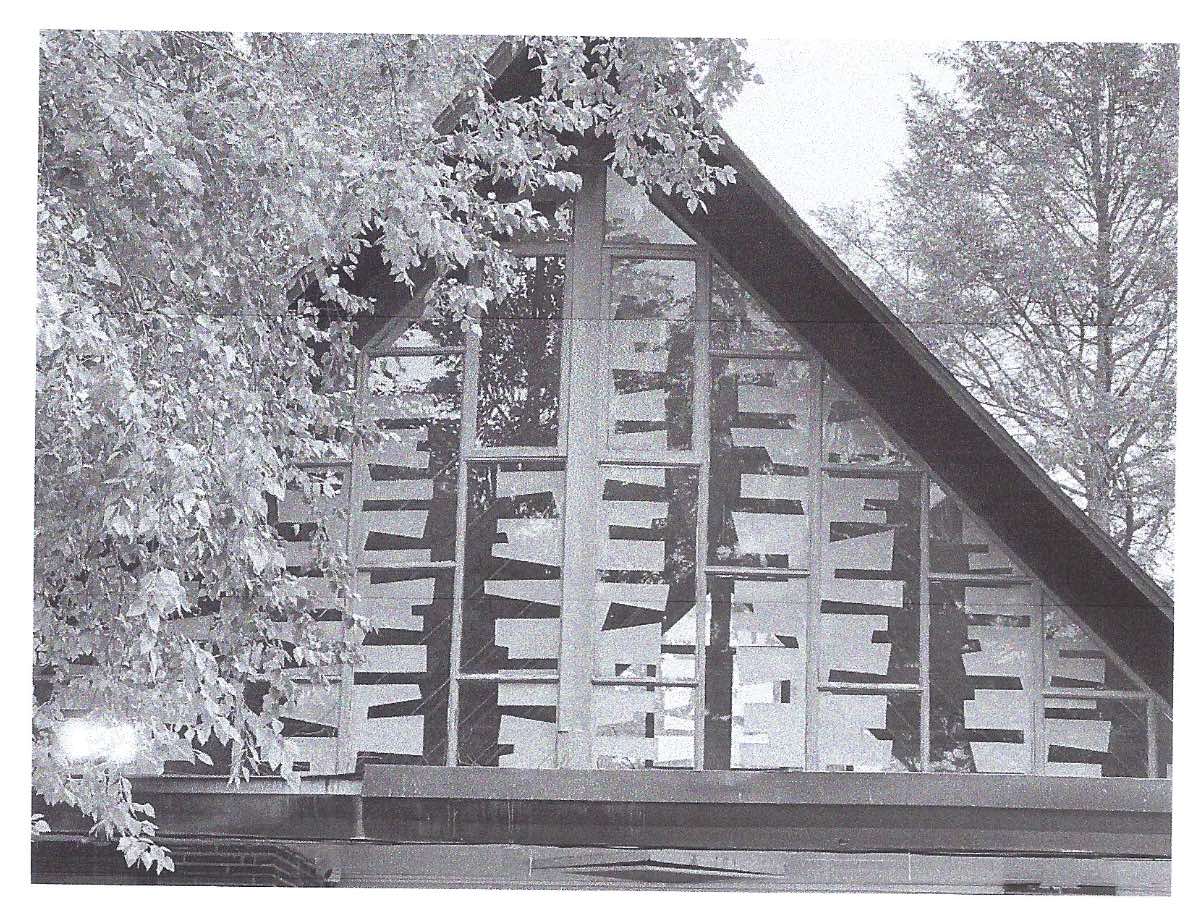 Ornamental glass: Photo Credit: Andrew Dolkart
Wenning designed an unusual building within the format of the A-frame. The front of the building, marking the location of the lobby and offices, is constructed of an unusual red brick. The bricks chosen were probably manufactured by the Belden Brick Company and were known as "tex-shadow" bricks (texture providing shadows). These are long and thin Roman bricks with a raised central horizontal band on each brick that has a rough texture. Some of the bricks project slightly. The texture and projections provide interesting overall texture to the lower facade. This front pavilion also includes the entrances, wide glass openings separated by a brick pier and capped by a canopy. The original entrance doors have been replaced.
The A-frame rises behind the entrance pavilion. On the front and rear facades, the large triangular window expanse is separated into two sections by a central vertical support. The glass is then divided by muntins into irregular rectangular shapes. These are filled with an unusual ornamental glass, with abstract patterns probably created by sandblasting. At the rear elevation, one section has a large star or sunburst. The glass echoes contemporaneous abstract art and is an especially notable feature of the building. One panel is missing on the front elevation. In an email Gretchen Bugge notes that she has never seen this type of blasted glass on an A-frame. At the side and rear elevations, the A-frame meets the ground in an unusual tent-like arrangement, not typical of A-frame construction. The tapering "buttresses" of the A-frame are anchored at ground level by concrete bases cast with a rough aggregate. This permits light to enter interior spaces.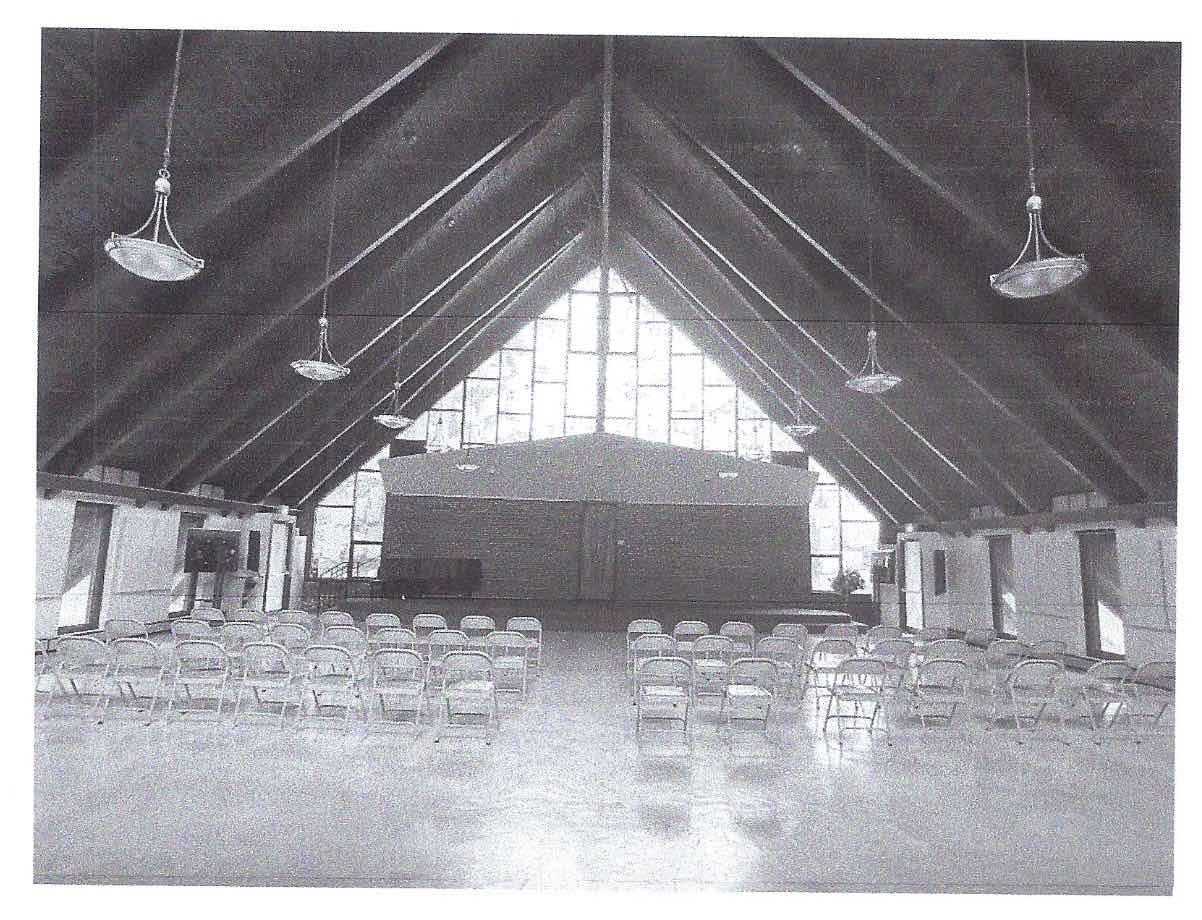 The Auditorium: Photo Credit Andrew DolkartThe interior of the auditorium is a large open space that is extremely flexible as befits the requirements of the Ethical Culture Society for a space to hold meetings and community events. The New York Times likened the interior to a concert hall. The glass is especially striking from the interior, linking the members to nature outside. Another interesting feature of the interior is the rear with the speaker's platform which includes a wall of the same brick used on the exterior and a central door with a beautifully carved tree design. The door leads out to an outdoor stage where the group could hold outdoor meetings (the land to the north has been sold and is now senior housing)
On the exterior, to the left of the entrance is an office with a row of windows. The office is separated from the school wing by an area of brick. The school is largely glass, with stucco panels below the windows and brick piers. The design is not significant although the use was important to an organization that stressed youth education and instilling ethical values in young people. The site also includes a cottage that predates the construction of the Ethical Culture Society's building but was redesigned with irregular ashlar stone facades by Wenning at the same time as the designed the main building. This cottage is not of major significance.
The current proposal calls for the demolition of all of the buildings on the site and their replacement with senior housing. I believe that the auditorium building meets the criteria for preservation and should be considered for preservation. I do not believe that the school wing or the cottage need to be preserved. The major criteria on which t h e conclusion for preservation rests is that the building "embodies distinctive characteristics of a type, period or method of construction that possesses high artistic value." The building si a significant example of A-frame construction, a type of construction that is relatively rare in the northeast as compared with the Midwest and far west. It has a number of significant material and artistic features, including the unusual brickwork, the sandblasted brick, and the carved door, as well as the beautiful sense of space and light on the interior. For a building to be significant, it does not need to be the first of its kind or a pioneering example. The fact that the Ethical Culture Society's building was erected a decade after the form first became popular and that it is not an early use of glulam in no way takes away from its place as a distinctive work of local significance.
The Ethical Culture Society site is quite large. With some creativity, I think that the senior housing could be pushed back on the lot, permitting the preservation of the auditorium and its conversion into a handsome, light-filled community space for residents of the new housing complex. There is extensive land to the rear of the plot, between the auditorium and Saxon Woods Park, as well as a large parking lot to the south.
Although I hope that this building can be preserved and I believe that it meets the criteria for preservation as set out by the Village of Scarsdale, if the Village Board opts not permit demolition, I hope that the Board will require that the building be documented to HABS (Historic American Buildings Survey) standards and the photographs be deposited in local depositories, such as the Scarsdale Public Library, the White Plains Public Library, and/or the Westchester Historical Society, where they will be available to future researchers.
Andrew Scott Dolkart October 2025
Annual Fire Prevention Fair - Saturday, Oct 18th!
- Details
- Written by: Joanne Wallenstein
- Hits: 1527
 The Scarsdale Fire Department is teaming up with the National Fire Protection Association, the official sponsor of Fire Prevention Week for more than 100 years, to host its annual Fire Prevention Fair. The event will be held at Fire Station 3, 56 Crossway, on Saturday, October 18, from 10:00 AM to 2:00 PM, rain or shine!
Live fire demonstrations will illustrate the dangers of unattended cooking and improper fire extinguishment. There will be antique and modern fire trucks on display, interactive lessons from the fire safety trailer, bounce houses, refreshments, and a firefighter read-aloud to guarantee fun for the whole family. The American Red Cross will be in attendance for those who wish to learn about free smoke alarm installations, emergency preparedness, and hands-only CPR. Guests are also encouraged to bring their own fire extinguishers from home for a complimentary inspection and hands-on training!
The Fire Prevention Fair is a great opportunity to meet our career and volunteer firefighters, who are eager to share key messages from this year's campaign, Charge into Fire Safety: Lithium-Ion Batteries in Your Home
Buy only listed products. Look for a stamp from a nationally recognized testing lab on the packaging and product, which means that it meets important safety standards.
Charge devices safely. Always use the cables that come with the product to charge it.
Follow the instructions from the manufacturer.
Recycle batteries responsibly. Don't throw lithium-ion batteries in the trash or regular recycling bins. Visit call2recycle.org to find a recycling spot near you.
For more information, please contact the Scarsdale Fire Department at (914) 722-1215.
Fall Fun at the Scarsdale Pool
- Details
- Written by: Joanne Wallenstein
- Hits: 1101
 About 225 parents and kids came to the Scarsdale Pool on Saturday October 4 to enjoy beautiful fall weather and the Scarecrow Making Hayday event, hosted by the Scarsdale Recreation Department. There was fall fun for the whole family.
The main attraction was scarecrow making. Families brought clothing, hats and accessories and built their own scarecrows with hay provided by the Village. The mood was enhanced by music from a DJ.

Also on hand was the Weinberg Nature Center who brought animals. Plus there was face painting, arts and craft and a raffle.

Thanks to the Scarsdale Recreation Department for a festive fall event.


Coyotes Scare Families in Quaker Ridge
- Details
- Written by: Joanne Wallenstein
- Hits: 3042
 What to do about a pack of coyotes that are frolicking on Bradford Road adjacent to the walking path to Quaker Ridge School? Click here to see the video.
Parents and pet lovers are expressing alarm about a group of coyotes who are tearing around Quaker Ridge yards, often while children are walking to school. Today one coyote had captured a squirrel and was seen tearing it to bits.
One mom called the Scarsdale Police to ask for their help, and police advised to “keep the kids and the pets inside!” That was little solace to those who use the popular walking path every day, some for walking kids back and forth to school. Apparently police only kill coyotes who exhibit threatening behavior or appear to be sick.
Another parent was so terrified that she considered sending her husband out with a bat while he accompanied his son to first grade.
Here is information from the NYS Department of Environmental Conservation about what to do if you see a coyote:
-Be aggressive in your behavior – stand tall and hold arms out to look large. If a coyote lingers for too long, then make loud noises, wave your arms, throw sticks and stones.
-Contact your local police department and DEC regional office for assistance if you notice coyotes exhibiting "bold" behaviors and having little or no fear of people, or if you see them repeatedly during the daytime in a human-populated area or near residences. Seeing a coyote occasionally throughout the year is not evidence of bold behavior.
-Do not allow pets to run free. Supervise all outdoor pets to keep them safe from coyotes and other wildlife, especially at sunset and at night. Small dogs and cats are especially vulnerable.
-Teach children to appreciate coyotes from a distance.
-Of course, if there is ever an emergency involving a coyote, please contact the Scarsdale Police Department at (914) 722-1200. A police officer will be dispatched.
-Please check the DEC website for further guidance and information. DEP Regional Office: 845-256-3000.
We reached out to the Scarsdale Police who said, "If a person sees a coyote, the person should avoid the area and call PD. Sometimes coyotes may be sick or dangerous and could pose a threat to the community. We will then respond to the area and monitor the actions of the coyote."
(Videos from Bradford Road, October 1, 2025)

Helping Kids Understand and Manage their Emotions
- Details
- Written by: Wendy MacMillan
- Hits: 1439
 Parenting is no joke, but sometimes it sure does help to laugh about it…especially when the humor is served up along with some sage advice. On Thursday September 19th, parents were treated to a lively and amusing discussion with bestselling author Alyssa Blask Campbell, where she shared practical strategies for helping kids understand and manage their emotions from her latest book, Big Kids, Bigger Feelings.
The event, sponsored by The Friends of the Scarsdale Library, was hosted by Caitlin Murray of Big Time Adulting. Murray, a brilliant and hilarious mind, not only brings a fresh perspective on the chaos of parenting, but she also brought her levity and wit to this important conversation with the authors.
 Rachel Stewart Lounder, co-author of “Big Kids, Bigger Feelings” joined Campbell and Murray for the event at the Scarsdale Public Library where they discussed parenting tips for the unique needs of children. The authors emphasized the importance of understanding individual responses through a nervous system lens and how to recognize each child's individual sensory needs and how to provide appropriate support and regulation.
While their book lays out an easy five step method for parents to follow, in Thursday’s conversation the authors highlighted the concept of “sensory sensitivity” and “sensory seeking” and described how different children react differently to sensory stimuli. They went on to stress the role of parents in providing a supportive and regulated environment for their children and encouraged parents to model appropriate self-regulation themselves.
Before taking questions from the audience, the trio covered a variety of parenting topics including the challenge of dealing with children's misbehavior at home compared to the positive reviews they receive at school, the importance of compassion and understanding children's emotions, the significance of giving children control and space to express their emotions, and practical tips for parents to help their children recharge and manage their sensory needs after a long day (just to name a few!).
Though certainly a serious topic, the authors had the packed room laughing out loud and nodding in recognition. Campbell, Lownder, and Murray connected with their audience not just by sharing their expert knowledge, but by also sharing their honest, personal parenting anecdotes…demonstrating that the trials of raising young children is a universal experience.
See here to buy your own copy of Big Kids, Bigger Feelings. From their website: “Big Kids, Bigger Feelings is the guide you need to help your child thrive during these developmentally complex and wonderful years. The social and emotional skills you provide your children with now will prepare them for a lifetime of self-advocacy and stronger emotional intelligence. Campbell’s revolutionary Collaborative Emotion Processing (CEP) method, used in preschool and elementary school environments, teaches you how to work with your children to help them understand how they are feeling and process their big emotions in healthy, constructive ways.”
Discover how to:
· Teach kids to handle unkind behaviors and set boundaries
· Help kids learn to regulate themselves when they feel angry, sad, or upset
· Manage technology use in a safe and healthy way
· Navigate puberty, body changes, sex, drugs, and other important topics
· Develop a deeper connection with your child
And to make sure you don’t miss their next fun-filled event, check out The Friends of the Scarsdale Library.
- Letter to the Editor: Proposed Garden Road Development Would Do Irreparable Damage to Neighbors and the Environment
- Applications Filed to Raze Seven Scarsdale Properties: Dolkart Says 21 Barry Road Should Be Preserved
- Yeonsoo Go Released on August 4, 2025 After Five Days of Fear and Uncertainty
- Hartsdale Couple and Nanny Charged in Connection with Brutal Kidnapping and Assault