






Remembering Tom Sobol
- Details
- Written by: Joanne Wallenstein
- Hits: 8853
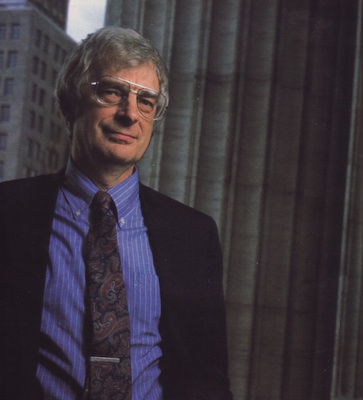 Visionary educator and Scarsdale resident Tom Sobol passed away at the age of 83 on September 3 from complications from Parkinson's Disease. Sobol was well known in Scarsdale where he served as the Superintendent of Schools from 1971 to 1987 before moving on to the state level when he was appointed New York State Commissioner of Education by Governor Mario Cuomo. Sobol was a highly influential educator who championed teachers, students and minorities and believed that local school districts should be given the latitude to decide what's best for their students.
In his memoir, "My Life in School," Sobol traces his humble beginnings from Boston where his father was a railway worker. Sobol attended the Boston Latin School, graduated from Harvard College, earned a graduate degree from the Harvard Graduate School of Education and a doctorate from Teacher's College.
Initially Sobol was a teacher and developed a passion for the profession. In his book he says, "Then I began teaching, and life exploded. I embraced my students with a passion beyond understanding. They and the literature I was teaching were everything to me; I flew into that vast new space winged and exalted. I had never felt such strength, such energy, such fire, never experienced such engagement, such completeness. Some people discover that they have the gift of singing, or dancing, or acting, or healing, or making money. I discovered that I had the gift of teaching. As I used it, I came alive, and it became who I am."
After three years in the army, Sobol taught and served as an administrator in Newton, MA, and Bedford, NY and was named the assistant superintendent for instruction in Great Neck, NY in 1969.
As a child of working class parents, Sobol was not totally comfortable serving privileged children in affluent districts. In a 2007 interview for a publication from Teachers College, Sobol says, "I've spent a lot of ruminating time trying to rationalize much of the work that I did in Scarsdale and, in effect, to apologize to myself for doing it," he says slowly. "Because I was this poor kid-'"the son of Joe Sobolewsky-'"who got a job in a rich community and who was trying to ease his conscience in a way that would do justice to the poor without harming the rich, and who now was supporting that on a statewide level. Who the hell was I for representing Scarsdale, anyway? So that when I became Commissioner, I felt that I was back where I belonged to begin with,'"representing the kids of all of the people and not just those of privilege."
During his tenure as State Commissioner, Sobol designed A New Compact for Learning which set learning standards for students at all grade levels, transferred policy making from bureaucrats to parents and educators and held the state accountable for financing education for students at all economic levels. Sobol was ahead of his time in calling for a de-emphasis on testing which today has resulted in an opt-out movement against state tests. He also appointed a panel of minority politicians and scholars to report on educational opportunities for disadvantaged and minority students in New York State. The report was so scathing that Sobol could not decide whether or not to release it, but ultimately decided to do so.
After resigning from the commissioner position, Sobol went to teach at Columbia's Teacher's College until 2010.
Writing in 2013, Sobol continued to advocate for more local control of education. He wrote, "The State is more likely to achieve its intended effect if it tells people what to achieve instead of telling them how they must achieve it. This straightforward principle applies to education governance just as it does to any other area. Children and communities are different from place to place, and a State should therefore allow local educators to adapt State goals to student-specific and community-specific needs."
Joan Weber, who recently retired as 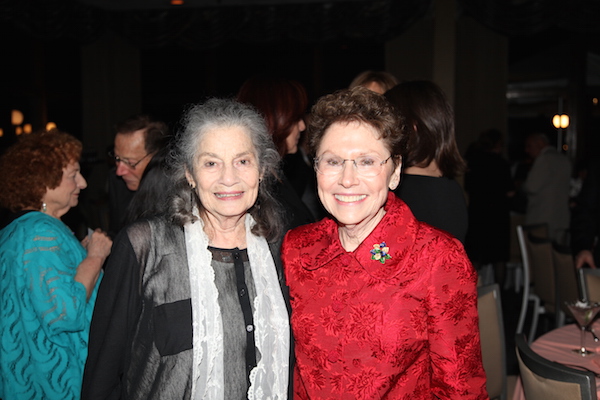 Assistant Superintendent of Schools after 32 years in Scarsdale, began her tenure here when Dr. Sobol took a chance on a novice and appointed her as Director of Personnel, right after she completed her doctorate. Weber said, "At the time, I did not know that I would be working with an iconic leader in the field." She said that when you worked with Dr. Sobol you knew you were with "a great presence" who laced his inspirational and thoughtful approach with good humor."
Weber said that Sobol "led with vision and inspiration and empowered and enabled others.... taking everyone to the next level with his high expectations."
Though Sobol found himself in Scarsdale, a district with high achieving students and parent support, he had a real concern for social justice and equity. During his tenure here this compassion led him to attempt to develop a partnership with the Mt. Vernon school district.
According to Weber, during his time in Scarsdale Sobol was extremely inclusive in the decision making process and appointed joint committees of stakeholders to consider initiatives and policy. These collaborative committees were the genesis of the Compact for Learning, which brings parents, teachers and the community together to share responsibility for high-quality education. Sobol took these principles with him to Albany.
Sobol coined the phrase, "Top Down Support for Bottom Up Reform," and believed that though districts should be accountable for educating their students, the curriculum should not be based on testing and assessments. He also championed the idea of the "wrap around community school," in urban impoverished areas, where in addition to educating children the school would provide after-school, social and medical services to the community.
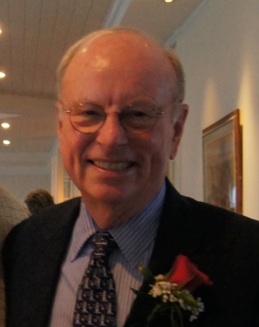 Former Scarsdale Schools Superintendent Michael McGill knew Sobol well, as a colleague and as a friend. We reached out to Dr. McGill and asked him to share some thoughts on his relationship with Sobol and the legacy Sobol leaves behind. Here is what he said:
1. How did you get to know Tom?
Tom Sobol was one of a handful of acknowledged giants in the field. So even before I met him, I knew him by reputation as a visionary and an intellectual heavyweight. When he became Commissioner, he introduced a series of initiatives collectively called "A Compact for Learning." Tom held meetings around the state for public comment and I went to one of them. Those kinds of events often draw speakers who resist any kind of change, so when I offered a more nuanced critique, Tom riveted his attention on me -- I remember how fiercely focused his gaze was -- and he listened intently. Soon after, he asked me to serve on a Commissioner's advisory council. The rest, as they say,was history.
2. How did Tom affect you?
Tom was a champion of children and particularly as Commissioner, a passionate advocate for educational equity and for public education in our democracy. When he became Commissioner, he periodically appeared on a public radio program where he'd answer reporters' questions. Like another one of the education "greats" of the late 20th century, Ted Sizer, he could offer fresh insight into difficult issues, and his perspective was always highly articulate, informed and authoritative. He had a deep, intuitive understanding of schools and the people in them. When he spoke, he often said what I as an educator thought, and much better than I could have said it. He also was one of a few truly charismatic leaders I've known. When he talked about education as a calling and about its importance to American democracy, teachers and school leaders left feeling better about themselves, feeling they were part of something important and bigger than themselves -- wanting to go forth and be great. And Tom had a sense of humor. He was funny. Those are all qualities I admire and have tried to emulate in my own way.
3. Why, after 28 years, do we seem to be in the same place that we were when Tom was Commissioner.
Tom had a deep understanding of education, schools, and what makes them excellent. As Commissioner, his key premise was that the state should provide "top-down support for bottom-up reform," which was both uncommonly common sense and seriously counter-cultural for an Education Department that had often operated magisterially in the past. He was dealing with a vast bureaucracy in a highly politicized state where the ideological headwinds were increasingly contrary.
At the start, Tom had a narrow window of time to test the idea that truly effective reform develops organically at the bottom with support from above. It was still possible to work on assessment programs that balanced standardized testing with other, more robust, forms of evaluation such as portfolios and oral demonstrations before expert panels. Educational and economic disparities -- and related racial inequality -- were serious problems, but starting in the 1970's, there'd been gains on the National Assessment of Education progress and the achievement gap had begun to close. Considering the importance of resourcing, Tom supported the Campaign for Fiscal Equity, which attempted to provide appropriate funding for children in low income communities.
In the 1990's, however, many politicians, corporate interests and groups like the Business Roundtable, as well as other influentials, were increasingly apt to think that a strategy of accountability, metrics, and competition was the solution to "the problem" of public education -- as if all public schools shared a single problem. In astonishingly short order, that view overtook New York state and its education department, leaving little or no room for the approaches Tom advocated. We've lived with the results for the last three decades: high-stakes testing and narrow, shallow curriculums; charter schools that take resources from regular district schools; an insistence that school is entirely responsible for children's performance, as if economic disparity doesn't matter.
What Tom believed is still true. Since public schooling broadly reflects public values, however, the policies of the last 30 years won't change significantly until numbers of parents and other community members demand it. The recent "opt-out" movement is one sign of dissatisfaction with those policies and what they've wrought. We may all hope and work for the day when his vision of educational equity and excellence becomes reality.
4. What was Tom's legacy?
Well, in addition to everything else I've said, Tom understood that although schooling and fields like medicine and business may be similar in certain ways, education is a unique domain with its own wisdom and unique dynamics. These deserve respect and are not to be tampered with lightly. He also had profound respect for children and for the adults who work with them. He knew that the encounter between teacher and student cannot and should not be reduced to numbers. Not that numbers are completely irrelevant, but that the process is in so many ways a mystery. As he said, the experience is not just about imparting skills and knowledge, but about helping people become fuller and more human, about helping them to feel good about themselves. He had an incisive intelligence and a sometimes cutting wit that valued interesting ideas and good literature and off-center insights. His sense of humanity, his love of creativity, his appreciation for idiosyncrasy, his impatience with sloppy thinking, his refusal to see education primarily in terms of systems, these are among his most important gifts to Scarsdale.
A Conversation with Scarsdale Board of Education President Lee Maude
- Details
- Written by: Joanne Wallenstein
- Hits: 5704
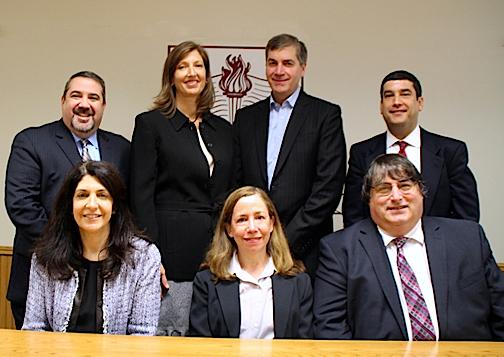 The 2015-16 school year has officially begun and the Scarsdale School Board has an ambitious agenda and some new procedures. We spoke to School Board President Lee Maude about what's in store and here is what she shared:
Now that you have assumed leadership of the Board, how will your role change? What new responsibilities do you have?
As President, my role is to be a facilitator and make sure the Board of Education works cohesively as a team. We will strive to listen to each other, staff and the community, and to respect each other views and come to consensus through mutual understanding and respectful dialogue.
What are the board's priorities for the 2015-2016 school year?
We have much work to accomplish this year. This year Dr. Hagerman and his cabinet with the board will be working on: the Scarsdale Transition Plan, the construction projects approved in 2014, consideration of further construction for 2019, the 2016-17 budget and of negotiations of the Teachers contract as well as other contracts.
Why have you moved some meetings to the daytime – how do you think that will affect attendance?
As community members, you will notice a number changes in the structure of our Board meetings. We have made these changes to have deeper conversations and listen to the community. These changes provide us with time to work with the administration on important changes to our educational programs. Let's review these changes.
One Wednesday morning each month we will meet to review any pending Board business. To the extent you have been or are unable to attend evening Board meetings, these morning meetings will give you the opportunity to attend and participate through the public comment opportunities. After pending Board business, the Board will work on various aspects of Dr. Hagerman's Transition Plan. The plan is divided into eight important areas of focus which we are calling Portfolios. We are excited about these areas of focus for the District and community for the next three years.
Curriculum Assessment and 21st Century Learning
Construction and Facilities
Communications, Community Involvement and Political Outreach
Budget and Finance and Negotiations
Human Capital and Leadership Development
Instructional and Informational Technology
Special Education and Pupil Services
BOE Development, leadership, succession planning and staff relationships
During each Wednesday meeting, we will review our progress on the Transition Plan. Following this review we will have an in-depth presentation and discussion about one or two of the eight Portfolios. The discussion will be led by a member of Dr. Hagerman's cabinet along with one or two Board members who have been assigned to these portfolios. The purpose of these meetings is to present information to the Board and the public and for the Board to assess and monitor the changes taking place at our schools. As members of the community we invite you to watch these meetings at the High School in Room 170-172 , on cable TV, or on our website.
Another change you will see in our Board meetings is that the three Assistant Superintendents will join us for discussion at the Board table. This will allow us to have meaningful, authentic, and collaborative conversation and reach consensus among the Board and the Cabinet.
One of our goals this year is to provide a more meaningful dialogue about teaching and learning outside of the budget process. Therefore, new education initiatives will be highlighted before the budget is presented. We believe this will give the Board and community more time to reflect on any proposed changes in our educational program.
There is ongoing controversy about the fate of the Greenacres School.  How will the members of the building committee be selected? What are your thoughts about the process.
We are adding three more residents and three more GA staff members to the GA building committee. The GA PTA will pick two and the GA Homeowners Association will pick one.
Are there any contracts up for negotiation this year? If so, which ones?
Yes see below:
STA -- Teachers & Nurses
SPA - Principals
ASTAA -- Aides
MADSA -- Middle Managers
Which board member will represent Scarsdale in Albany this year – what are some matters of concern to Scarsdale?
Suzanne Seiden and Art Rublin will be working on political advocacy, communications and outreach. We anticipate that the board will continue a dialogue with the State concerning issues such as unfunded state mandates, student testing and the Teacher APPR evaluation.
Anything else you would like to add?
This is an exciting year for the District. We invite everyone to watch our meetings and follow our progress on the Scarsdale School District Transition Plan.
We are relatively young board with most of us in our first three years of service. Our focus this year will be to listen to our constituencies, which include the Scarsdale School District students, faculty and administration and members of the community. Our goal for the coming year is to collaborate with Dr. Hagerman's team on the Transition Plan. We will endeavor to remain focused on those issues outlined in his plan.
Frank Gifford: The Scarsdale Years
- Details
- Written by: Joanne Wallenstein
- Hits: 35331
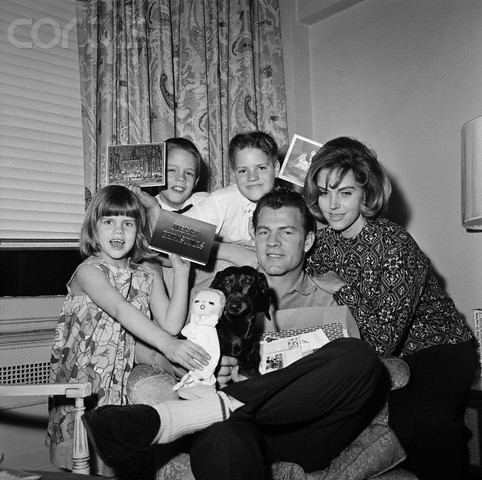 (Updated August 13) Though Frank Gifford was well known as a football player, television commentator and husband of Kathie Lee, many don't know that Gifford lived in Scarsdale and raised three children here with his first wife before moving onto Greenwich. Gifford passed away at age 84 on Sunday August 9th.
Gifford met his first wife Maxine at the University of Southern California where he played football and she was the homecoming queen. They were married in 1952 and had three children together, Jeff, Kyle and Vicki. The two boys both played football on the SHS team and Vicki was a cheerleader.
An article in the Boca Raton news in 1974 says that Gifford lived on an estate in Scarsdale on the site of a dairy farm near Winged Foot Golf Club where he played "as often as he could." He was a member of the club since 1961. Readers helped us to identify Gifford's former home that still stands on Grand Park Avenue.
Residents who grew up here remember that Gifford was a frequent fan at Scarsdale High School football games. The Scarsdale's sports booster organization, Maroon and White was founded in 1966, and at its first awards dinner honoring male athletes Frank Gifford addressed the group at Schraffts Restaurant in Eastchester. Frank and Maxine Gifford made an appearance in the 1968 film "Paper Lion," based on a 1966 book by George Plimpton.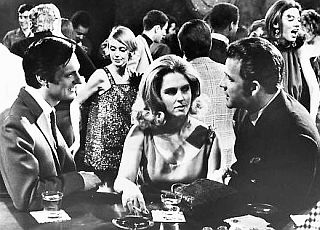
In an article from philly.com in 1993, Gifford said that after he retired from playing football, his TV work and traveling kept him away from home. Saying Maxine was very shy, Gifford writes, "When Maxine had to deal with my celebrity, that shyness really hurt her. Work became my narcotic of choice, my entire focus. And it destroyed my marriage." He divorced Maxine after 26 years.
Their youngest child Vicki was married to Michael Kennedy, a son of Ethel and Robert Kennedy in 1981. Michael died in a ski accident in Aspen in 1998. Michael and Vicki had three children and the marriage ended after it was alleged that he had an affair with the children's 14 year-old babysitter.
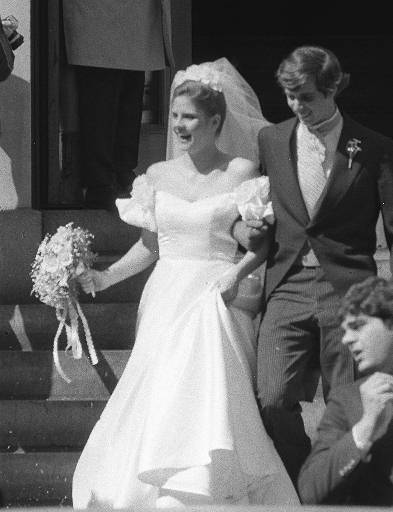 Though Frank and Kathie Lee were well known in Greenwich, their Scarsdale years have been largely forgotten. Share memories you have of Gifford in Scarsdale in the comments section below.
Rosalyn Binday, a longtime Scarsdale resident who runs Advocate Brokerage in Scarsdale sent in the following clarification:
"Los Bajos was NOT Frank Gifford's house. Because it is a Spanish style house, the Lowe's who purchased it around 1980, gave it the name "Los Bajos" as that is what "The Low's'" means in Spanish. Prior to that, the house was named "Shady Acres".
Frank Gifford's house was sandwiched in between "Hidden House" and "Shady Acres". The last I knew Steven and Barbara Kantor live in what used to be the Gifford house. As a point of interest, I am pretty sure that Maxine Gifford told me they had purchased the house from football star Kyle Rote, who also played for the New York Giants.
To better explain how I know this, the Gifford's were my next door neighbor and my family knew Maxine and the children. (Frank no longer lived there, as they had divorced.) We lived in "Hidden House", which we sold to Brandon Steiner, the founder and CEO of Steiner Sports Marketing. The name "Hidden House" preceded my ownership and had been the name of the house since the beginning of mail delivery. It was originally a Quaker farm. The deed stated "Now or formerly Rollins Farm" and what was to become the Gifford house was at one time the cow barn of the Quaker farm. We bought Hidden House from Mike Manuche and Martha Wright. Martha was an actress and singer. Mike Manuche owned a very successful steak restaurant, which was frequented by famous sports people of the day; specifically members of the NY Giants (like Frank Gifford). They were all very good friends."
Remembering Book Lover Mary Allen McAden
- Details
- Written by: Joanne Wallenstein
- Hits: 6239
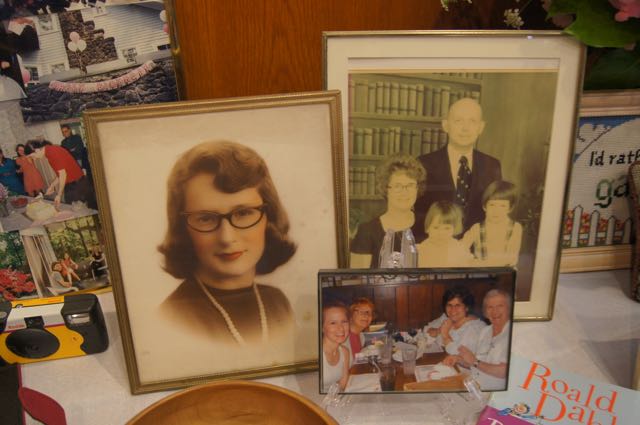 Family, friends, parents, librarians, teachers, students and book lovers gathered at the Scarsdale Library on Friday July 31 to remember an avid reader who shared her passion for books with so many in the Scarsdale community.
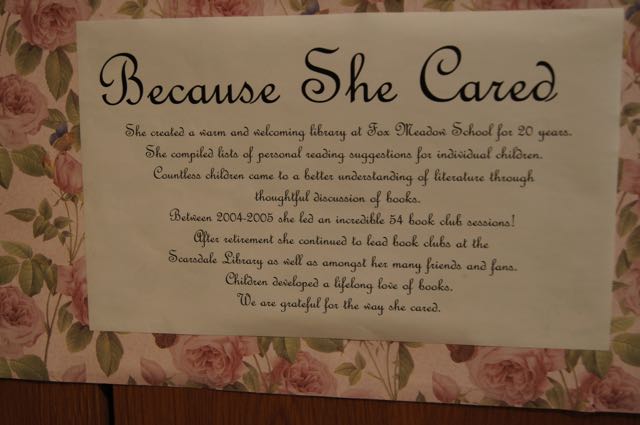
 Librarian Mary Allen McAden passed away on July 22 at the age of 78. McAden was the Fox Meadow School librarian for twenty years and according to one colleague she knew the name of every child in the school. Enthusiastic and animated she was a master at reading aloud to children and was able to recommend the perfect book for any reader. She retired from Fox Meadow in 2004 and then took a part time job at the Scarsdale Library and also led innumerable book groups for adults and children in Scarsdale.
Her children Abigail and Graham led a touching ceremony 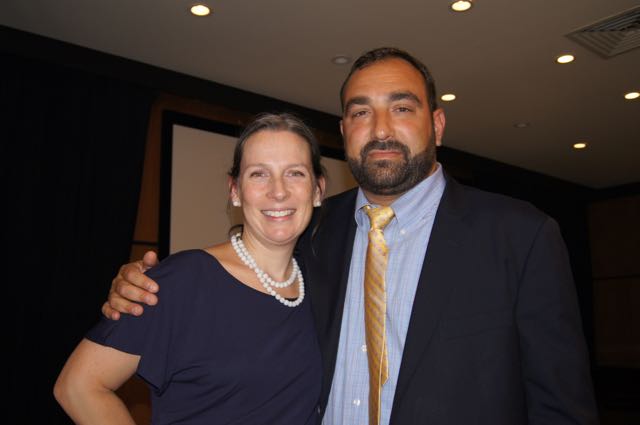 where they recounted her life story and shared their own memories of their mother and stories they gathered from others who knew her well. McAden grew up on a horse farm in Ohio and graduated high school as the valedictorian of her class. She graduated from Miami University in Ohio, taught high school in Ohio and moved to New York in 1963 where she attended Columbia Teacher's College. She taught at Mt. Vernon High School and then spent ten years at home raising her children, but ultimately returned to Queens College to get a master's degree in library science. From there it was onto 20 years as the Fox Meadow School librarian where she became a favorite of many in the community.
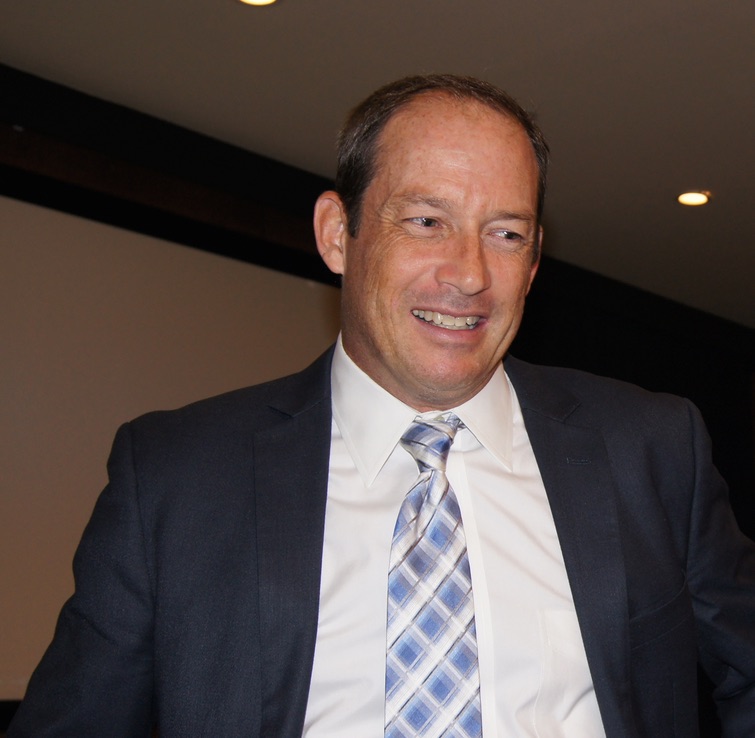 Friends called her "loyal, frumpy, smart as a whip, mischievous, tough as nails and wimpy too." Often repeated sayings included, "it's all good," "on her behalf", "for the greater good" and "a piece of work." In addition to books, McAden loved jigsaw puzzles, babies and her garden. Her friend and colleague Cheryl Higgins shared reading dates and lengthy phone calls, which McAden would open by saying, "I am calling today to take your emotional temperature." According to Higgins, their conversations always "got back to laughter."
Her son Graham said that his mother would "talk to anyone, anywhere. She had a unique ability to connect with people." He continued, "She loved books, and the stories of peoples' journeys, though her journey ended prematurely. She would have thanked you for sharing your journeys with her." He said that McAden moved to The Osborne in Rye for her last year where "she made many friends, welcomed newcomers and helped to ease people in." She told friends that "she was living it up at the Osborne."
Abigail, who is now an editor, said her mother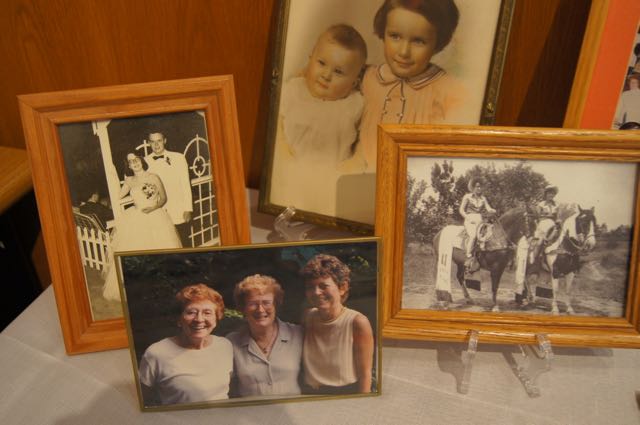 "Worshipped the library and books and read to us and did all the voices." She remembered hours passed at the Larchmont Library and said that her mother always had a bag of books and "nothing was off limits." Though her mother did not take to technology, the one exception was her Kindle which she took everywhere and stuffed with reviews and note cards. On her last trip to California, McAden asked Abigail to bring a copy of "The Wizard of Oz" which she wanted to start to read to her grandchildren.
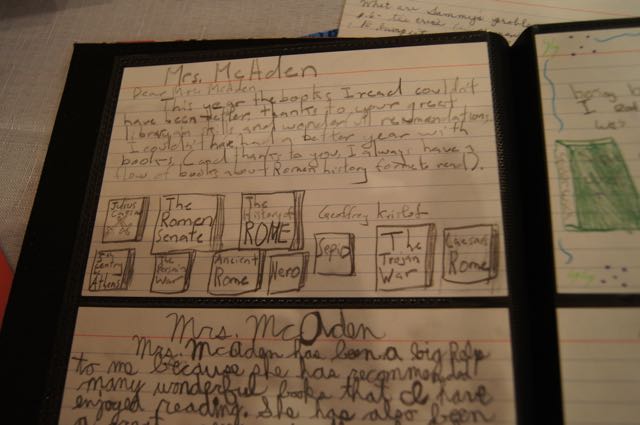
Abigail ended by asking everyone to leave a note card with the name of a book that McAden had introduced to them. A list will be compiled and shared.
The memorial was an inspiration and a reminder to read, share stories, laugh and, according to Mary McAden's mother, "Evaluate your choices and take that shot that looks most promising to you."
Remembering Nancy Sullivan and Carmino Ravosa
- Details
- Written by: Joanne Wallenstein
- Hits: 12908
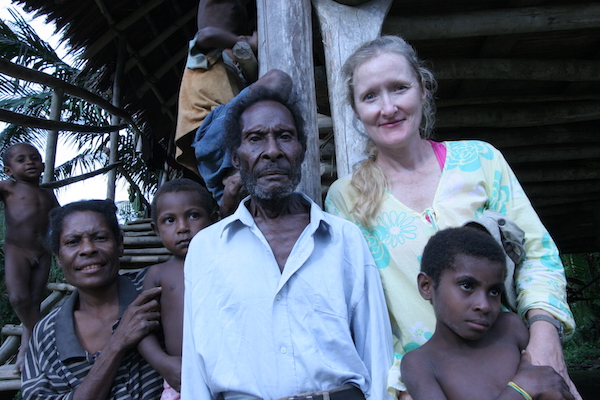 Two former members of the Scarsdale community recently passed away: anthropologist Nancy Sullivan and musician Carmino Ravosa.
Sullivan, a member of the SHS Class of '75 was a prominent anthropologist who spent 24 years living and working in Papau, New Guinea, following in the footsteps of Margaret Mead. She married a man from New Guinea and had children and grandchildren there. She died at the age of 57 in a one-car accident on the Taconic Parkway in LaGrange New York where she had come to visit family.
Sullivan was an accomplished academic who held an undergraduate degree from Princeton, a PhD from New York University and won awards including a Fulbright, a Guggenheim and a Rockefeller. A prolific author, in 2012 she published a memoir called, "Don't Make Me Over: Coming of age as an anthropologist in New Guinea." The essays in her memoir cover neuro-philosophy, gender studies, pop psychology, behaviorism and a raft of other pop science fields.
In an interview she gave following the publication of the book she was asked if where she grew up influenced her writing. She replied, "I grew up in the suburbs of New York. But I'd say it was more of a launch pad than an inspiration."
Discussing her book and her life she said, "This is a memoir about an unusual life, a life spent in another culture. Not just the conventional 'middle class girl marries a cannibal' story, though, because it has very reflective passages about social change, parenting, anthropology (as I am an anthropologist) and the whole idea of cultural collision in today's world (hint: nothing really collides). I had been writing small stories of my life in PNG, my different jobs, adventures, near-escapes, and all the episodes that challenge my graduate training in anthropology. Then I decided it was time for a memoir."
At the time of her death, Sullivan ran an anthropological consulting firm that did research, conducted surveys, wrote reports and did training for private and public entities. She also published a blog called "Nineteen Years and Counting in Papua New Guinea" where she chronicled the stories and photos of the people she met and worked with in New Guinea. It is a rich record of her academic perspective, her research, and the customs and mores of the native people. Those who read Lily King's fictionalized account of Margaret Mead's life in New Guinea, "Euphoria" will draw similarities between Sullivan's blog entries and the novel. In one post she compares her own childhood to that of the children in New Guinea and says,
"But I don't know: this kind of childhood is so far from my own, set against a volcanic island and beautiful people. Because it's school holidays, our days are more langorous than usual, but still the self-assurance and complex society of these kids makes me wonder what I did with friends at this age. I have Our Gang memories of long afternoons, but these Baluan youngsters are a much more resourceful community than I ever knew. What I had growing up was feigned Independence---all walkie-talkies, Schwinn bikes and Good Humor trucks nothwithstanding. These kids eat anywhere, sleep anywhere, and only get a scolding if they deign to interrupt intense adult concentration. Even then, no one sulks, and nothing is taken personally."
Speaking about the accident that killed Sullivan, a colleague from the Oceanic Discover said, "In a cruel irony, Nancy endured many hardships in PNG (Papua New Guinea) that would have broken most people. Serious illness, physical assaults and the often frustrating bureaucracy of life in remote PNG would have been too much for most fly-in-fly-out first world anthropological 'experts'. To have her life taken so abruptly in, what appears to be, an uncomplicated, single-vehicle road accident while on vacation in her home state of New York, just beggars belief. This same accident also seriously injured two of her much-loved adopted PNG children, one of whom remains in a critical condition."
 Carmino Ravosa Passes Away in Pleasantville
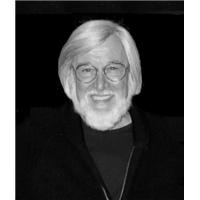
Musician Carmino Ravosa also died this week at the age of 85 in Pleasantville. He was a songwriter and composer who taught at Fox Meadow Elementary School and then went on to be a faculty fellow and composer-in-residence at Dalton and Edison. Ravosa wrote many historical musicals that are still performed by children today. He was beloved among both students and parents who continue to sing his songs long after the end of elementary school. During President Jimmy Carter's term in 1978, Ravosa was invited to the White House to perform his musical "Ghosts in the White House" for Jimmy and Rosalynn Carter and 600 guests at the White House Halloween Party.
Remembering Ravosa, a former Fox Meadow student said, "I was deeply sadden 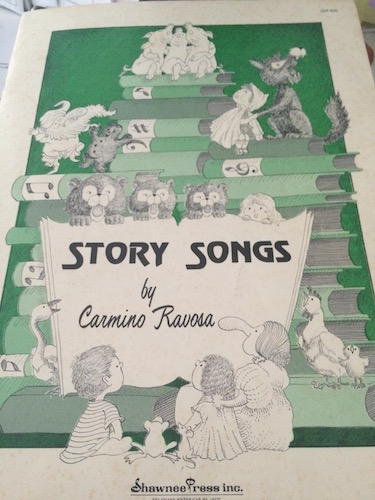 when I learned that my elementary school music teacher, Carmino Ravosa, had passed away. I remember the class plays that he wrote and directed and, as a student, I was happy to have a part in. I still recall songs from Seneca Falls which taught us about the History of Women's rights through music and Johnny Appleseed. Carmino was a gifted teacher who I will never forget."
Former Fox Meadow student Gaia Tommasi said, "Carmino stayed true to his passion for music and history throughout the years, spreading his love and joy for life! He'll have paradise singing in no time! His encouragement as my music teacher at Fox Meadow, starting from 3rd grade, inspired me to continue singing to a professional level! Thank you Carmino! Love and prayers to your family.
Trudy Moses, a music teacher in Scarsdale said Ravosa was very talented, full of life and energized by working with kids. He wrote historical mini-musicals and discussed their historical importance with the kids. She remembered that Mr.Grossman's fifth grade class at Greenacres performed Ravosa's play "Ellis Island."
Ravosa was a composer and editor for Silver Burdett & Ginn's popular music textbook series, "The Music Connection" and wrote music for popular children's television shows such as Captain Kangaroo and Romper Room. A memorial service will be held August 8th at 11am at Emanuel Lutheran Church in Pleasantville, NY.
Listen to Ravosa's song Mission Control here: