








Fox Meadow Elementary Celebrates 90 Years
- Details
- Hits: 5885
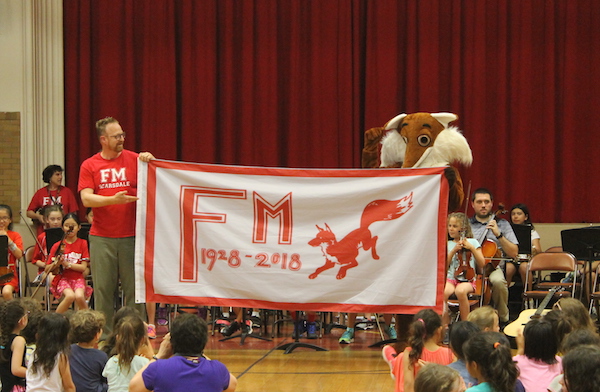 The 90 degree heat may have forced Fox Meadow Students inside for the 90th anniversary celebration but it certainly did not put a damper on the exciting event. Monday, June 18th, kicked off the year-long celebration of the elementary school with a special ceremony which featured the student band. The ceremony was run by Fox Meadow Principal Duncan Wilson who recognized Mayor Dan Hochvert for attending the event.
 As a start to this celebration, Wilson shared some Fox Meadow history as a way of keeping the spirit of the school alive. For Fox Meadow School’s first year the building was not ready on the first day of school, therefore, students who were supposed to attend Fox Meadow went to Greenacres until the building was finished. When the building was finally ready, the entire staff and student body walked from the Greenacres school to the Fox Meadow school for their official first day as Fox Meadow students.
The anniversary was also celebrated with music. Students gathered in the gyms and sang “Land that we Love” and “America the Beautiful,” two song that, according to Wilson, “show Fox Meadow’s values.” The celebration continued with the students singing Fox Meadow’s own song and a surprise visit from Foxy, Fox Meadows very own mascot. Foxy entered holding a plant, which Wilson explained was his family tree, symbolizing the family that came before him, all attending Fox Meadow as well.
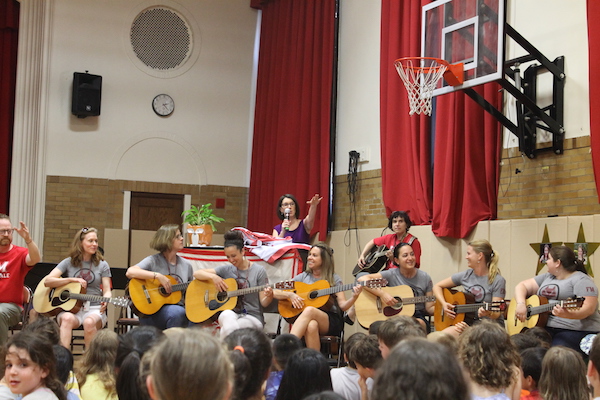 During the ceremony, the students were presented with a special Fox Meadow banner, a gift from the PTA, commemorating the school’s 90th year which will hang from the flagpole for the entire year. The ceremony concluded with another surprise gift from the teachers. A group of teachers had spent time learning to play the guitar for the celebratory day. The teachers lead the students in singing and playing “This Pretty Planet.” The celebration was a great way for students, faculty, and community leaders to come together and celebrate their school’s birthday through song and history.
Teens Taunt Police at Unsupervised Party
- Details
- Written by: Traci Dutton Ludwig
- Hits: 15104

At approximately 10:20 p.m., June 10, police responded to a noise complaint related to a party on Berkley Road. Patrol attempted to make contact with the homeowner, but there was no answer at the door. Patrol then followed the noise to the back of the house and observed a large gathering of approximately 100-150 teens, with a DJ playing music and a strong odor of alcoholic beverages. However, no alcohol beverages were immediately in plain view. Patrol had difficulty locating a person responsible for the party due to the crowd. Patrol ordered the DJ to turn off the music. After the music was turned off, a girl approached police. She said she lived at the house and her parents were not home. Patrol told her that due to the excessively loud music and the fact that her parents were not home, the party must be disbanded. As patrol was assisting in clearing kids from the party, patrol noticed a girl to be impaired by alcohol to the point that she was having difficulty walking and standing. In the interest of safety, patrol told the girl to sit down and call her parents for a ride home. She followed patrol’s instructions and sat down to wait for her parents. An additional officer was called to help ensure safety of the scene. While patrol was waiting with the intoxicated girl and also attempting to clear kids from the party, a group of teens surrounded the girl and attempted to physically escort her out of the party with them. Patrol advised the group of kids that the girl would not be able to leave the party until her parents arrived for her. The group of kids became hostile and confrontational with patrol. Patrol radioed for backup and directed attention toward the girl’s protection and safety. At one point, the group of kids surrounded patrol and the girl and attempted to escalate the situation with taunting words and, in the case of one boy, physical aggression. That boy then took out his cell phone, pushed it toward patrol’s face and began recording the incident. While he was recording, the boy used confrontational profanity and insults with patrol, attempting to escalate the situation. Patrol remained calm and professional while safeguarding the girl until her parents arrived.
As the girl’s patents and additional officers arrived, the girl was released to her parents and crowd control efforts resumed. The crowd of kids continued to be noncompliant while leaving the party. In particular, the same group of kids that had surrounded patrol and the girl stood in the street, shouting profanities and inciting disorder while continuing to record the incident. Patrol continued to clear the scene calmly and with professionalism. After extended efforts, police were able to restore all order, and all teens left without further incident. Shortly thereafter, the party hostess’s mother arrived home. She said she had no knowledge of her daughter’s party. After the party was over, patrol discovered numerous empty alcoholic beverage containers in the shrubbery on Berkeley Road.
According to a neighbor who witnessed the incident, about 20 kids in particular were “yelling at the cops, displaying belligerent, disrespectful behavior, taking videos and challenging police.” She said the boy who was taking videos of police and cursing said: “What about my rights? … It takes eight fuckin’ cops to break up a Scarsdale party?” The witness reported this kids’ belligerent behavior continued for at least 15 minutes while the police continued to encourage the kids to leave. “The kids continued to loiter on the block within one to two houses of the party – several appeared intoxicated and one was crying – but overall at least 10-15 kids remained and were engaged in a one-sided taunting and testing of the police. Despite this combative behavior, the Scarsdale police that we witnessed (all 6 of them) were calm, respectful, professional, respectful and exceptionally patient with the teenagers until they dispersed,” the witness said.
In reaction to the incident, Caption Thomas Altizio released the following statement: “It has always been the policy of the Scarsdale Police Department not to release reports to the media that involve juveniles and youthful offenders. We recognize that these youths cannot be held accountable for their actions like an adult, and that as juveniles, their judgment and decision-making are developing. We realize that part of maturing is learning from your mistakes. This Department deals with hundreds of juvenile incidents a year that are not publicized, and handled with patience and discretion with the juveniles and their families, in an effort to correct bad behavior.
In reviewing this weekend’s reports, I came across the [incident report and witness statement reported above.]. They have both been redacted to remove the names of all parties involved. This report shows the patience and professionalism of our Scarsdale Police Officers. It shows an Officer’s concern for the safety of an impaired juvenile, and a large group of unsupervised youths with access to alcohol. The Scarsdale Police Department is proud of the way our Officers responded to this call and dealt with these juveniles.
It also shows a more troubling aspect of the incident, where impaired Scarsdale juveniles were emboldened enough to challenge the lawful direction of a Police Officer, while a group surrounded the Officer and berated and recorded him, likely hoping for the next viral YouTube video. But the Officers remained calm, respectful and professional, and no one was arrested.
This is an example of the types of juvenile incidents our officers are dealing that you normally don’t hear about. The Scarsdale Police Department will continue to deal with these types of juvenile incidents with patience and professionalism, but any criminal behavior will not be tolerated.”
The British Are Coming (and Irish too) to the 40th Curtis Cup at Quaker Ridge Golf Club
- Details
- Written by: Joanne Wallenstein
- Hits: 4526
 Scarsdale’s Quaker Ridge Golf Club will be hosting the 40th Curtis Cup matches this coming weekend (June 8-10). It is only the third time in the prestigious event’s history that the Cup has come to New York. The best amateur female golfers from Great Britain and Ireland will be competing against the best from the United States. Many of history’s best female golfers have vied for the Curtis Cup before turning professional.
The event will not only have international competitors but will also have international spectators and a television audience from around the world. FoxSports1 (FS1) will be broadcasting the event live domestically while SkySports will broadcast it live in Europe. Live feeds will also be available online.
Quaker Ridge Head Golf Professional, Mario Guerra, said, “We could not be more honored to host this international event and excited to share our facility with the world. There are limited free tickets available for spectators and I hope our neighbors will join us to celebrate the best of golf.”
The Flag Raising and Opening Ceremony begins on Thursday, June 6 at 6 pm preceded by a concert by the West Point Band at 5:40 pm. Parking throughout the tournament will be at Manhattanville College, 2900 Purchase St. Purchase, NY. Complimentary shuttle buses will run between the satellite parking area and the tournament throughout the weekend. Please arrive at Manhattanville College no later than 5:15pm on Thursday in order be at the opening ceremony on time.
More information on the event including live scoring as well as registration for complimentary spectator admission can be found here.
Celebrate Your Graduate With a Gift to the Scarsdale Foundation
- Details
- Hits: 3644
 For almost 100 years, the Scarsdale Foundation has been supporting our neighbors in need with critical scholarship money, camp tuition, and much more. To continue providing such critical money for college students in need, the Scarsdale Foundation is asking for your help. Please lend a hand to students in need by giving to the Scarsdale Foundation.
In June, many are celebrating graduates and giving graduation gifts for high school and college graduates. Our goal is to raise $25,000 in June! These contributions will be significant as we make scholarship grant decisions at the end of June.
*$1000 helps fund a student’s tuition
*$500 funds a semester of a student’s books
* $100 pays for a student’s campus supplies
Every contribution helps! You can donate by clicking on the Make a Gift link here.
The Facts in Scarsdale
· College tuition costs continue to spiral with no expected letup in 2018-2019; thus, increasing the number of student applications for assistance
· The Scarsdale High School PTA Scholarship Fund for College provides scholarships for SHS graduates only for the freshman year of college. These students need help to fund their three remaining years of school.
· The Scarsdale Foundation helps offset college tuition expenses for eligible students entering their sophomore, junior, and senior years. Need-based financial stipends are awarded annually to deserving college students who have graduated from Scarsdale High School or were Scarsdale residents during their high school years.
· The Scarsdale Foundation has awarded nearly 1 million dollars, in total, to approximately 20 students each year over the last 10 years.
The Scarsdale Foundation is committed to continuing the tradition of helping students achieve their academic pursuits. With your gift, they can help provide brighter futures for our students.
Thank you for your generous support!
Sincerely,
Michelle Lichtenberg & Suzanne Seiden
Scarsdale Foundation Fundraising Chairs
"Scarsdale Foundation scholarship funding made all the difference to me and my family. Without the extra support, college would not have been possible. Thank you."
2017-2018 scholarship recipient
Sign Up Today for Curbside Food Scrap Pick-up
- Details
- Written by: Michelle Sterling
- Hits: 3943
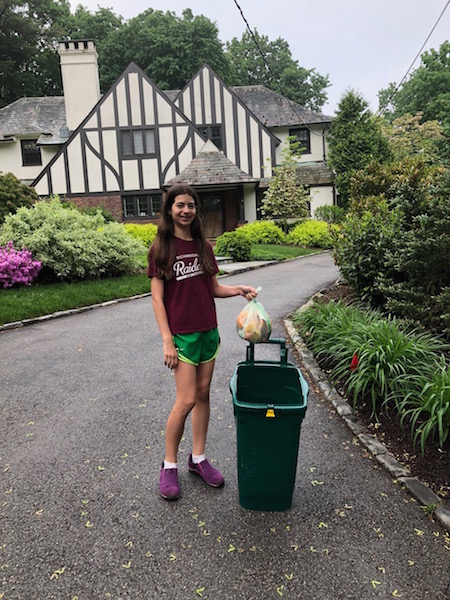 New Service: Curbside Food Scrap Pick-up
Starting the week of June 4th, the Village of Scarsdale will begin curbside residential food scrap pick-up as part of our continuing commitment to divert waste from incineration and increase recycling!
The new service follows our successful residential food scrap drop-off program hosted at the Scarsdale Recycling Center.
We are hopeful that the curbside pick-up enhancement will dramatically increase participation by making food scrap recycling a more convenient and feasible program for Scarsdale residents. The Recycling Center drop-off site will also remain available for those preferring that alternative.
Participation in the curbside collection program is easy and encouraged, but not required.
Please help to make the new service a success by familiarizing yourself with the Curbside Food Scrap Recycling Program. Some important program basics are featured below:
Sign-up is required and available at www.scarsdale.com/foodscraps.
Use of a Village-approved curbside bin is required. To make getting started and participating easy, the Village also offers Food Scrap Recycling Starter Kits and rolls of compostable bags for resident purchase, at cost, at the Recycling Center, 110 Secor Road, Monday through Saturday, from 8:00 AM – 3:00 PM. Payment is by check only.
Curbside pick-up will occur weekly on the same day as you r first trash pick-up; please refer to the Sanitation Calendar if you are unsure of your first weekly trash collection day.
Food scrap bins must be placed curbside by 7:00 AM on collection day; please do not place bins outside the night before.
Food scrap recycling questions or comments may be emailed to [email protected].