







How Gambling Can Affect Teen Mental Health
- Category: School News
- Published: Thursday, 04 December 2025 12:30
- Wendy MacMillan
 Gambling and sports betting may appear harmless at first glance, but even occasional wagers can carry significant consequences for teenagers, influencing their mental health, relationships, and decision-making. Recent scandals in professional sports have further spotlighted the real-world dangers of gambling, underscoring why proactive education is critical, especially for young people navigating an increasingly digital landscape.
Middle school and high school educators, along with parents here in Scarsdale, have reported a noticeable rise in student gambling, driven in part by the easy access to online betting platforms. In response, the district organized a special presentation for 10th-grade students at the high school on December 3, aimed at raising awareness and supporting healthy choices.
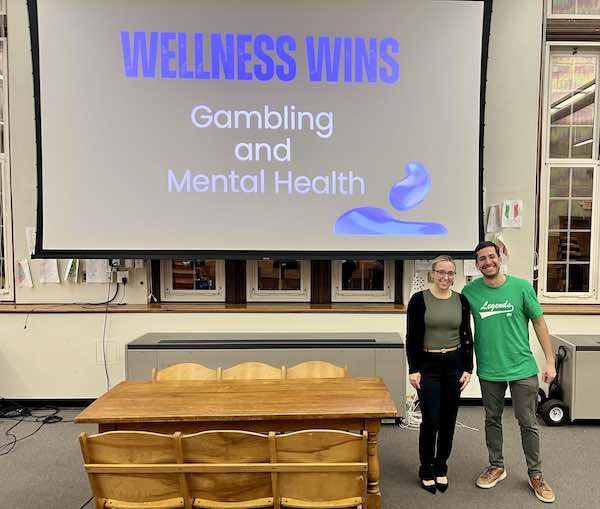
To help families engage in this important conversation, parents were also invited to hear from the presenters at a program held on December 1st. The session offered an overview of the student presentation, explored the connection between underage gambling and mental health, and provided strategies for fostering informed, healthy decision making at home.
The program was facilitated by John Tessitore, Founder of the JCK Foundation (an organization dedicated to promoting mental health awareness and resilience) and Monique Tricarico, a Licensed Mental Health Counselor and Underage Gambling Prevention Coordinator at Student Assistance Services Corporation, a nonprofit specializing in youth prevention and education.
The presentation combined expert psychoeducation with John Tessitore’s compelling personal story. Together, the facilitators aim to help students understand how gambling can affect their mental health, influence their choices, and shape their lives. In addition to increasing knowledge, the program encourages students to think critically about their decisions and opens the door for meaningful conversations between parents and teens.
Some of the highlights from the thorough presentation include:
-Parents should make sure they understand how modern gambling works and that it includes forms of gambling such as: Fantasy Football Leagues, some forms of video gaming, poker games, on-line sports betting and so much more.
-It is beneficial for parents to understand how gambling can impact the developing brain and that gambling, like drugs and alcohol, affects the “reward pathway” of the brain.
-Some reasons youth gamble include: Fun, excitement, social pressure/influence, escape from stress/feelings/emotions, winning money, and FOMO (fear of missing out).
-Some warning signs that gambling has become a problem include: Mood changes after losing, spending more money than planned/borrowing money, losing sleep to play or bet, hiding from parents, feeling irritable or anxious when you stop, sudden interest in sports, sports odds or betting apps, defensive reactions when asked about money.
-96% of people who struggle with a gambling disorder also have a mental health diagnosis. Gambling can affect school, family, relationships, sleep, focus, mental health and is correlated with a risk for suicide and addiction.
-It is important for parents to talk to their teens about the risks of gambling and to establish space for healthy dialogue and non-judgemental communication.
The presenters suggest that a good way to start a conversation about gambling is to ask questions like, “what do you know about gambling?” and “Do you or any of your friends like to gamble?”
Parents seeking guidance on how to talk with their children about gambling can visit You Decide NY https://youdecideny.org/, the Student Assistance Services http://www.sascorp.org/ or the JCK Foundation https://www.jckfoundation.org/
If you are worried that you, or someone you know is struggling with gambling, you can call the NY HOPEline at 1-877-8-HOPENY (467369).