







Middle School Students Encouraged to Stand Up and Be the Change
- Details
- Written by: Wendy MacMillan
- Hits: 3216
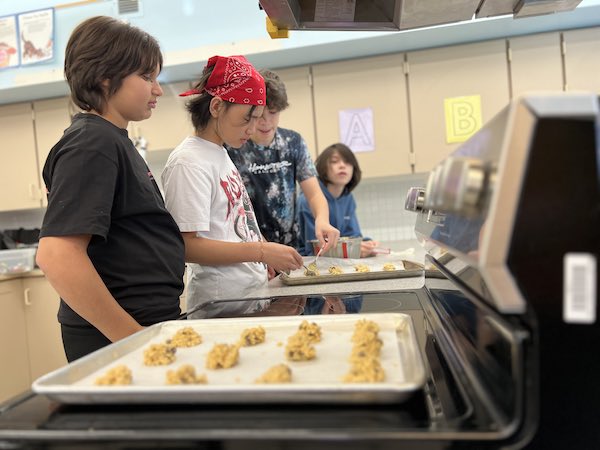 On November 18th students at Scarsdale Middle School took part in a powerful day of learning when the school held its 19th annual Human Rights Day. The day was filled with meaningful human rights based activities, workshops, and keynote speakers all centered on this year’s theme of “Stand Up and Be the Change.”
As the co-chairs of the event Meghan Lahey, Popham 7 Social Studies teacher and Marci Rothman, Fountain 7 Social Studies teacher explained:
“The 6th graders heard from Brian Williams as their keynote speaker. Brian “is on a mission to inspire kindness movements in schools across the nation. His message is one that calls students to action and creates change.” In their quarterly classes, the 6th graders sorted and bagged candy from our candy drive for Hope Community Services in New Rochelle, learned how to be an upstander from 7th graders who participated in a leadership workshop through the HHREC, created art for Creative HeARTS and White Plains Hospital, or met Sandra Neuschotz from MyFace who shared experiences about being bullied due to facial deformities much like Auggie in the book Wonder.
The 7th grade welcomed David Edward Garcia as their keynote speaker. His presentation was “half stand-up, half inspiration, and all POSITIVE!” His objective is to help students celebrate uniqueness in themselves and in others. In their quarterly classes, students sorted and packed the thousands of food donations with Nancy Lyons from Feeding Westchester, learned about Grassroots Grocery - a produce rescue and delivery program based in the Bronx, created art for Creative HeARTS and White Plains Hospital, or met Alia Seraj who spoke about refugee experiences and her work with IRIS CT.
Finally, the 8th graders heard from Duncan Kirkwood as their keynote speaker. Duncan addressed issues relating to social media, self-confidence, and resilience in his funny but honest presentation. In each House, the House Counselors led follow up discussions and activities. In quarterly classes, students heard from SHS students in the Amnesty International Club, learned about social media and cell phone use at the high school, created art for Creative HeARTS, or talked about the importance of healthy relationships with Kayla Stevens from Hope’s Door.”
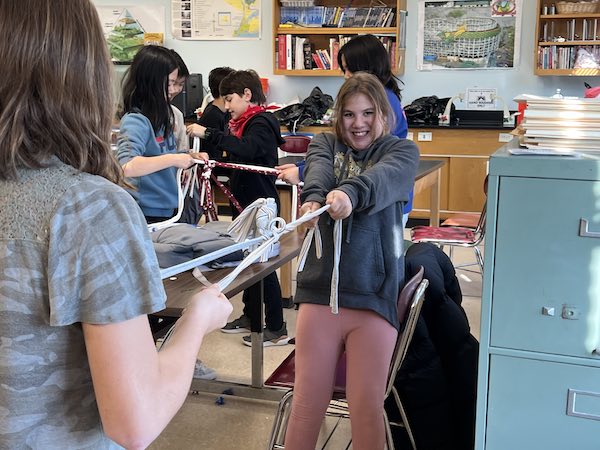
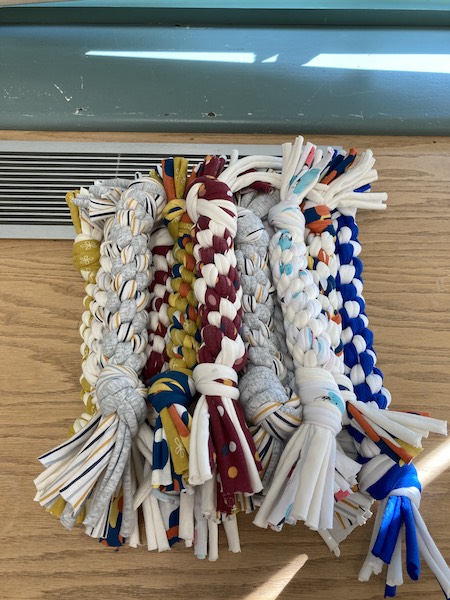 Sixth graders made dog toys to send to Paws Crossed, an animal adoption shelter in Elmsford.With the help of the PTA Community Service Committee and all of the SMS faculty, the co-chairs were able to deliver a truly inspirational day of learning for our middle school students.
Wendy MacMillan is a former teacher and now a proud mom of two, school aged children. With a background in psychology, education, and mindfulness, Wendy has long been passionate about wellness and helping others.
Scarsdale Schools Use a Multi Dimensional Approach To Teaching Students to Read
- Details
- Written by: Wendy MacMillan
- Hits: 5196
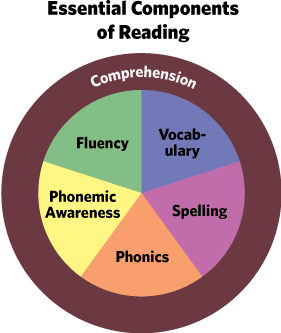 Earlier this year, Lucy Calkin, a professor of education at Columbia University’s Teachers College, made headlines when her approach to teaching reading and writing to elementary aged children was called into question in a report published by the nonprofit educational consulting group Student Achievement Partners (SAP). While the report found many strengths in Calkin’s Unit Of Study approach, it also concluded that it "would be unlikely to lead to literacy success for all of America's public schoolchildren,"
These findings highlighted in articles in the NY Times, Forbes, and more had some Scarsdale parents calling into question our district’s partnership with the Teachers College and our use of the Units of Study approach in teaching literacy. On Thursday evening, in a presentation hosted by CHILD, our district leaders took the time to address these concerns and make clear the thoughtful, well-researched, multifaceted, and ever-evolving approaches to teaching literacy and identifying challenges, utilized by our district’s elementary school teachers.
The panel of presenters for the evening included:
Dr. Edgar McIntosh- Assistant Superintendent for Instruction/Co-Director, The Center for Innovation
Eric Rauschenbach - Assistant Superintendent for Special Education and Student Services
Sue Luft - Elementary ELA Coordinator
Michelle O’Donnell - Elementary ELA Coordinator
Dana Khani - Teacher In Charge of Special Programs
Nick Miller - LRC Teacher
Sarah Tucker - Reading Specialist
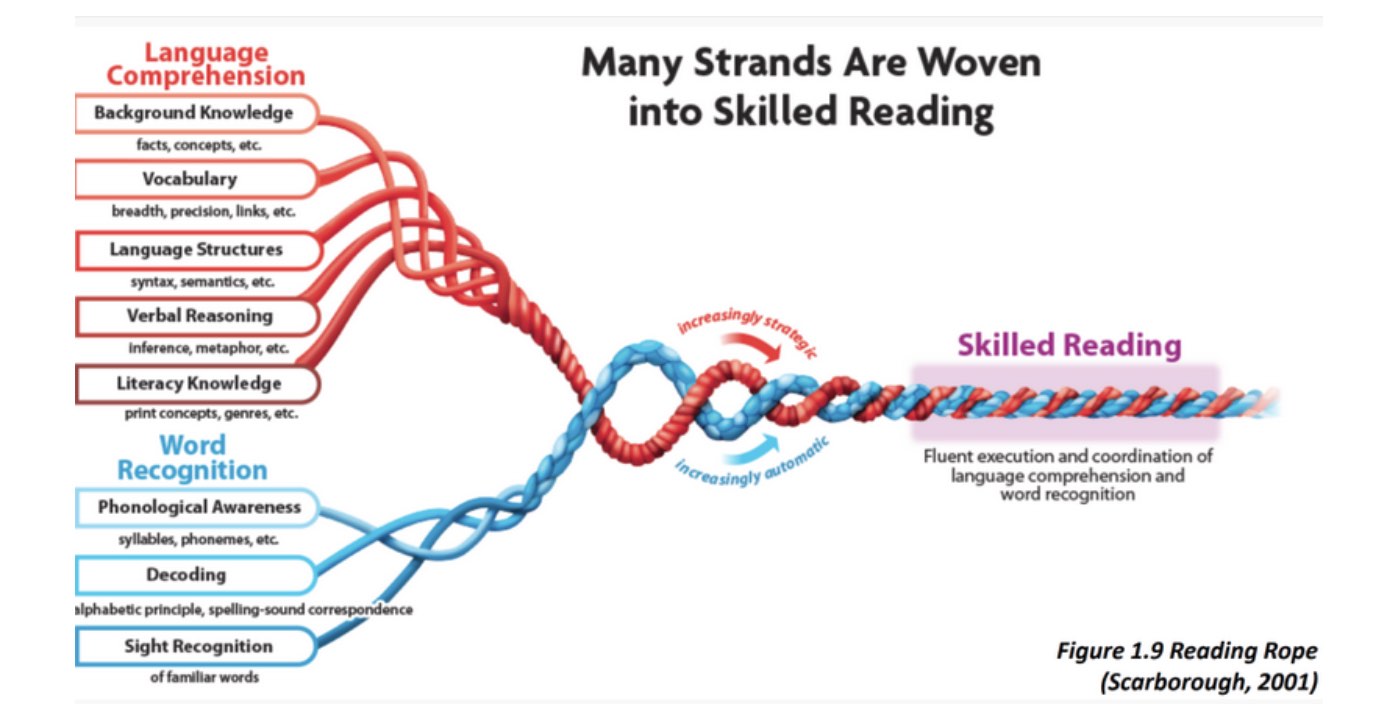
The presentation began with Michelle O’Donnell explaining that Scarsdale’s approach to teaching reading has many prongs and is based on a balanced, multi dimensional model that blends many strands together to accomplish skilled reading over time. Ms. O’Donnell also stressed that this model is continually evolving and growing as they constantly assess their practices to make sure all components are working to best meet their students’ needs. The following image illustrates how all of the various elements work together to help students attain their reading goals:
A quick look at our district’s website describes “The pillars that represent our District beliefs in the teaching of literacy are as follows”:
Students benefit from the components of a balanced literacy model. That model includes rich mentor texts, explicit instruction, guided practice, inquiry, and the creative, student-centered meaningful opportunities that a learning workshop structure provides.
-Students and teachers benefit from instructional/curricular flexibility that invites and encourages integrative curriculum design, responsive instruction, and authentic student-centered inquiry.
-Students and teachers benefit from curriculum articulation that includes shared vocabulary, coordinated content, and common structures with horizontal and vertical alignment in the elementary grades.
-Students benefit from worthy and rigorous learning outcomes, which guide our work beyond the State standards.
Dr. Luft explained that to help achieve these goals, teachers rely on a comprehensive literacy framework that includes the following components:
-Reader’s Workshop
-Word Study Phonics, Spelling, Vocabulary
-Interactive Read Aloud
-Writer’s Workshop
-Small/Group Reading and Writing
-Shared Reading and Writing
Dr. Luft went on to detail the parts of a Reader’s Workshop (just one component of the comprehensive program):
-A 10 minute Mini Lesson where “The teacher delivers the information in a clear, logical manner and sends the readers off to apply skills while reading independently. Mini-lessons fall into three main categories: lessons on management of the workshop; lessons on literary analysis; and lessons on skills and strategies that readers use.”
-Independent Reading where “Student choice allows readers to take ownership of their learning by choosing appropriate high-interest books. Students and teachers confer to monitor progress and set goals. Students are provided with regular, extended periods of time to practice skills and strategies taught in the workshop and to increase their reading stamina. They are also given opportunities to discuss, share, and write about their reading. At times teachers may offer students decodable texts to use during their independent reading time to practice specific phonics skills.
-Partnerships and Book Clubs in which “Students are given many opportunities to discuss, debate and reflect upon text with their peers.”
-Conferring and Small Group Work “Teachers often confer with students individually about their reading to address specific needs and goals.” In addition, small group work allows for “Strategy lessons [that] are brief heterogeneously, or homogeneously, based groups that focus on a specific skill or behavior. Strategy groups help readers move forward on a learning progression towards individual reading goals. Groups can be formed to either solidify a skill, offer remediation, or expose readers to a new genre. Instructional level small groups can be held with varying levels of support, from the most heavily scaffolded (guided reading) to lightly scaffolded (series or level introduction).”
-Mid Workshop Interruption “The teacher uses the mid-workshop interruption as an opportunity to build on and revise prior teaching.”
-Sharing/Closing which “gives an opportunity for readers to internalize and reflect on their reading process.”
In all of this work, teachers are continually assessing and monitoring each student’s reading progress. Some of the assessment tools include:
-STAR
-Foundational Skills
-F&P BAS
-Writing On Demands, Performance Assessments etc.
As the District website notes, “Analysis of these assessments allows us to differentiate student instruction and plan for multiple student access points. This is an ongoing process in which teachers identify the progression of students’ development along the continuum of literacy learning.” A more thorough description of each assessment tool can also be found on the District’s Website.
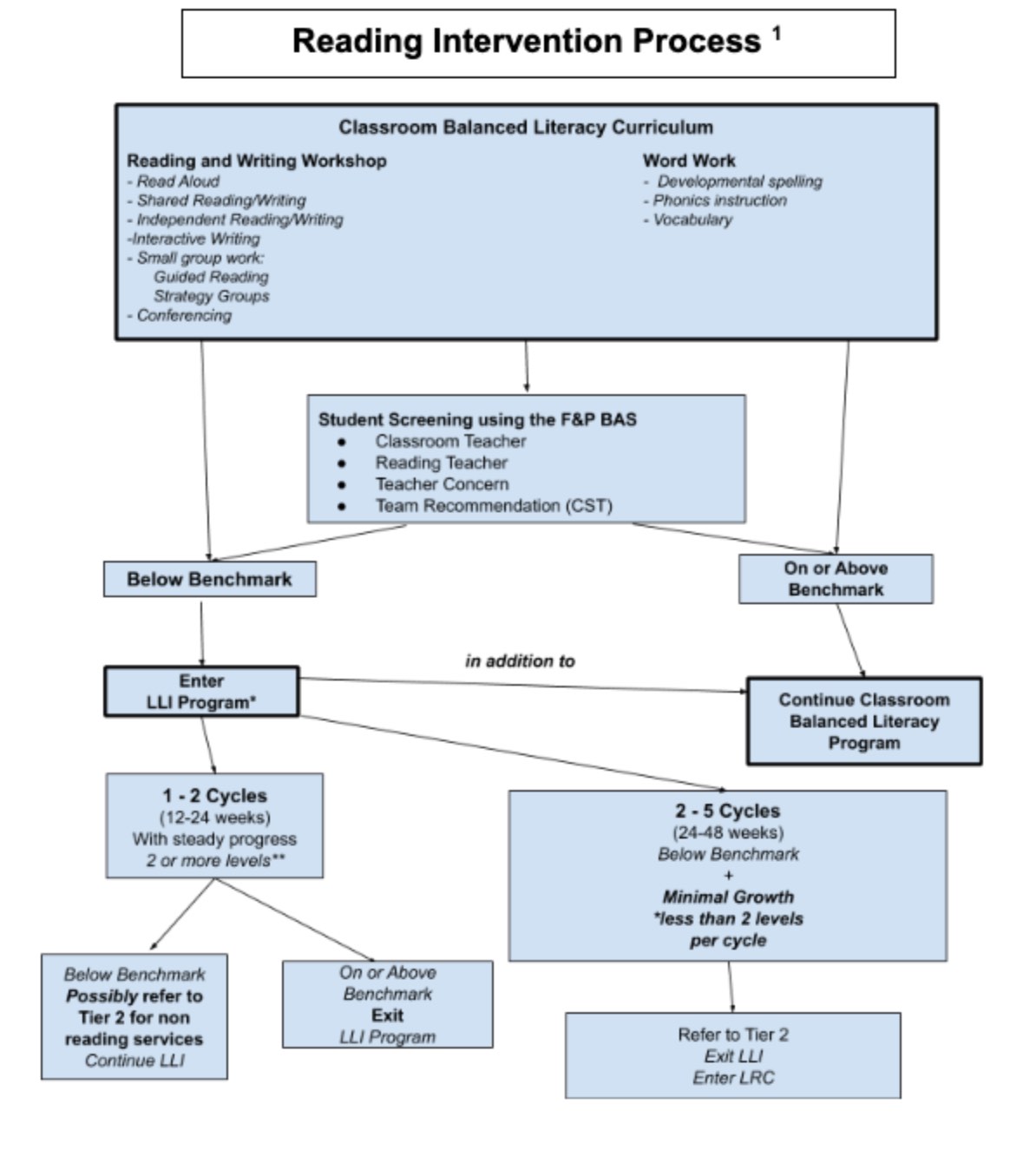
Nick Miller described the multi-tiered system of support for a student who is identified as struggling to read on benchmark, having difficulty decoding, or having a tough time during writing. First, three steps are taken:
Step 1: Student is assessed and did not meet Benchmark of Fountas and PInnell Benchmark System
Step 2: Student receives additional daily instruction in comprehension, phonics, fluency, vocabulary during one reading cycle (12 weeks)
Step 3: Student meets benchmark and exits after 1-5 cycles
If a student needs stronger or more specific reading support, they will be referred to the Learning Resource Center. Here students are frequently assessed both formally and informally which allows the LRC teachers to alter instruction to best meet the student’s needs and determine if the additional (LRC) support should be increased or decreased. Also, in the Learning Resource Center students benefit from a variety of powerful learning tools and strategies such as charts/graphs, graphic organizers, sequencing activities, retelling, jotting down questions/observations, and are helped to focus on the 5 W’s. In LRC, teachers use scientifically based programs that encompass the multisensory Orton-Gillingham method to decoding. Students utilize letter tiles, sky writing, chunking words/syllabication, specialized games, and so much more to support their learning and hopefully return them to learning in a General Education classroom.
As Dana Khani explained, if a student has been formally evaluated and it is determined by the Committee on Special Education that they need specialized instruction and to have an Individualized Education Plan (IEP), our district aims to educate that student in the least restrictive environment possible. A student’s IEP would include specific goals and there are a variety of ways teachers would address the student’s needs. In an ICT program where students with special needs are instructed using the general education curriculum, a special education teacher in the classroom would be responsible for supplementing the curriculum with specially designed instruction to address the unique needs of the student. Literacy instruction would include two Orton Gillingham programs, The Wilson Reading System and Spire.
Towards the end of the presentation a slide was shared with these three important points about Individualization and Progress Monitoring:
Students are monitored closely to ensure they are making progress towards their individualized goals. Students who show particular weakness in breaking the code are also provided multisensory instruction in addition to the regular curriculum.
In the lower grades (K-2) all students receive instruction in word study (phonics). Some students receive Teachers College word study instruction while others may receive Wilson’t word study program called Fundations. Some of the Kindergarten ICT classes weave in the Heggerty phonics program which just focuses on phonemic awareness.
All classes have a wide range of learners especially in the ICT. Differentiation, small group stations, parallel teaching, and individualized support are all used to allow all students an access point to the curriculum.
The presentation was followed by a Q and A segment where the first question was in relation to the use of the Teachers College curriculum in our general education classrooms. Edgar McIntosh and Eric Rauschenbach both contributed to this answer by first reminding the audience that Teachers College Reading and Writing Project (TCRWP) is not the only component to the District’s approach to creating successful readers. They also pointed out that like almost all curriculum, TCRWP has grown and evolved and responded to places of perceived weaknesses by adopting a more integrated approach.
After the program, Dr. McIntosh added, “There seems to be some confusion about how we are using Teacher's College (TC) materials in our elementary classroom. We have used, and continue to use the TC units of study as one of the tools we engage to teach reading comprehension, which includes vocabulary, verbal reasoning, language structure, essential background content, and literacy knowledge. The NY State Standards-aligned units are useful resources and provide students with common and vertically aligned language and strategies as they move through the elementary grades. Within these units, there are opportunities for educators to adjust and adapt their instruction and pace to meet the needs of the students in their classroom. It is important to note that alongside the comprehension work, students are taught the skills connected to word recognition, including phonological awareness, phonics, and sight word recognition. We know from years of research that both comprehension and word recognition teaching are essential to developing skilled, flexible, and joyful readers. Recently updated TC units of study have integrated more word recognition skills with comprehension work. We appreciate these updates and look forward to continuing to use TC tools as an important part of our Comprehensive Literacy Framework. Here is a link to our literacy website for those interested in exploring further the methods, tools, and research we use to guide our work with students.
There have been recent articles/podcasts that have fueled this confusion, by focusing on programs that may use comprehension tools, without including essential word recognition work. That is not Scarsdale.”
Another parent in the audience asked about the assessment tools used in Scarsdale and how often our students are monitored for progress. Mr. Rauschenbach said that in addition to the formal assessments outlined during the presentation (such as the F&P Benchmark Assessment System that students take part in 3 times a year), teachers also formally and informally assess students on a daily basis. Mr. Rauschenbach made clear that Scarsdale’s approach to teaching reading is not to teach to attain certain test or assessment results, and feels that only focusing on percentages makes elementary school feel very different. Instead, the assessments used in our schools are seen as a tool to help inform a teacher's instruction, find gaps, be responsive, and to offer additional support if needed.
How much training our teachers receive, also came into question. Mr. Rauschenbach explained that each type of teacher (general education, reading specialists, and special education teachers) have different levels of training. While all have continued training from the Teachers College and other institutions, some teachers have specialized training in programs like Wilson and Spire. After the program, Dr. McIntosh had this to add, “Our special education teachers (including those in ICT classrooms) are trained in multisensory approaches (i.e. Orton-Gillingham) to address the needs of students who require more intense support in reading. Our reading specialists use a variety of tools to support students, working in small groups with a focus on the 5 Pillars of Literacy (Phonemic Awareness, Phonics, Fluency, Vocabulary, and Comprehension). They monitor students' responses to the reading intervention to determine whether they require a multisensory approach. While general teachers explicitly teach decoding strategies, the multisensory approaches are delivered by educators who have additional training. One of the big "takeaways" we wanted for our meeting was for parents/guardians to feel assured that there is careful monitoring of student reading progress and that there are many levels of tailored instruction that support and meet the needs of our diverse learners.”
Yet another parent asked about the latest ELA results from NY State testing. This parent had taken the data to calculate the 5 year Compound Annual Growth Rate (CAGR) for ELA proficiency results. She was surprised to find that each school progressed at fairly the same rate except for Greenacres, which seemed to have exceptional improvement compared to the others. This parent wondered if Greenacres is doing something differently. Dr. McIntosh explained that the NY state tests are a very blunt, general tool and that it is important to look at schools and fluctuations over time. He went on to relate that each school is its own unique cohort and that schools tend to move up and down from year to year. He doesn’t believe that Greenacres’ results were statistically significant, but certainly believes that part of having a growth mindset is to look into discrepancies for greater understanding and will do so in regards to Greenacres. Later, Dr. McIntosh added, “The interpretation of NY State Assessment "snap-shot measures" that lead to generalizations about schools, grades, and instruction is misguided. We are reassured that our students continue to demonstrate high proficiency despite the mitigations from the last two years- and in comparison to other high-performing districts. I provided a slide during the assessment presentation that followed five years of elementary proficiency percentages. The purpose of this was to underscore that our schools are all well above state and lower Hudson averages- and have historical fluctuations of percentage points between schools. The reason for fluctuations that have happened predictably from year to year can be explained through the learning needs of a particular cohort, the number of students assessed, and other factors. As there are anomalies or trends, we take a closer look at the data. These assessments should not be interpreted to be a measure of instructional quality or pedagogical methods at any given school, regardless of current “order".”
Still another parent asked if there are resources for parents to utilize to help their child at home. The answer was a resounding YES! The District website is teeming with helpful information and important links to an array of resources. Check it out here:
If you have questions about your child’s reading progress, their classroom teacher would be more than happy to discuss your concerns.
Halloween Breakfast for the SHS Class of 2023
- Details
- Written by: Joanne Wallenstein
- Hits: 4698
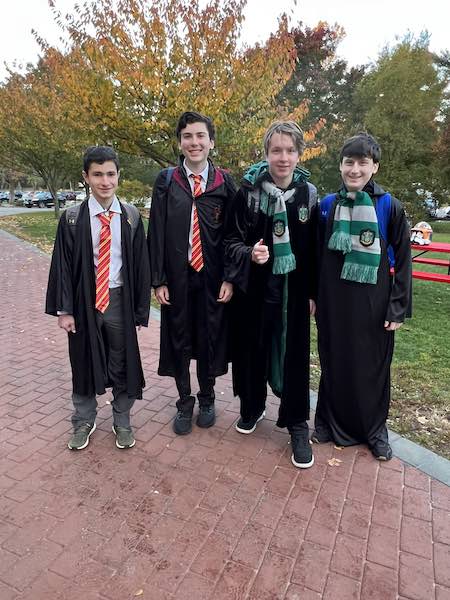
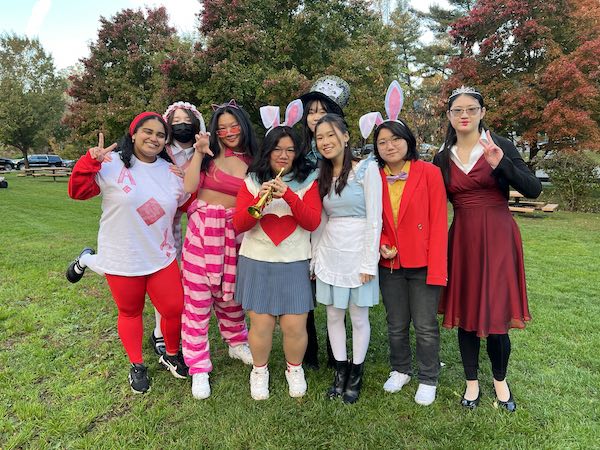
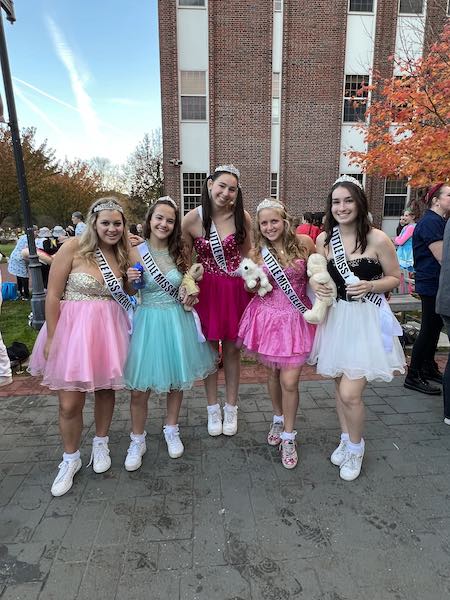
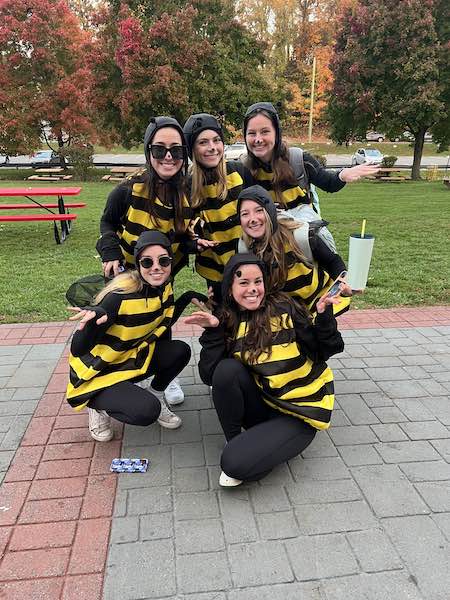
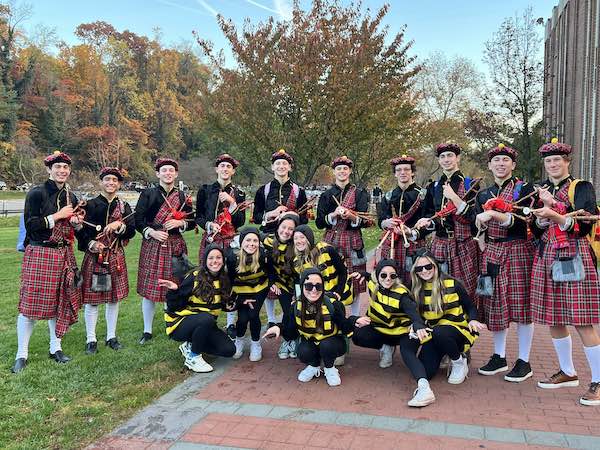
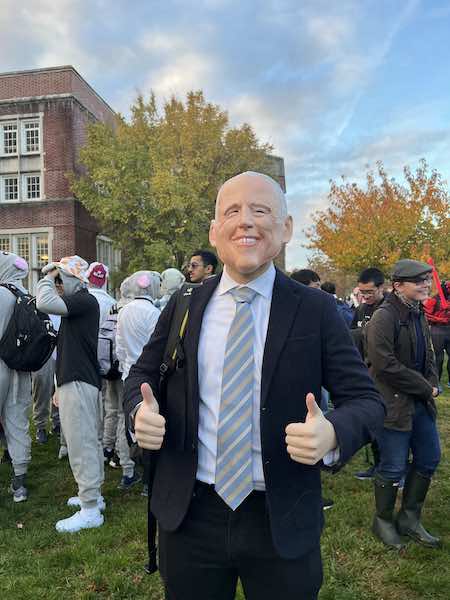
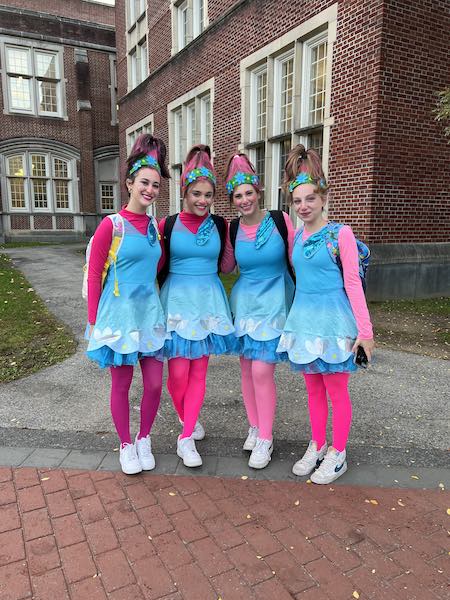
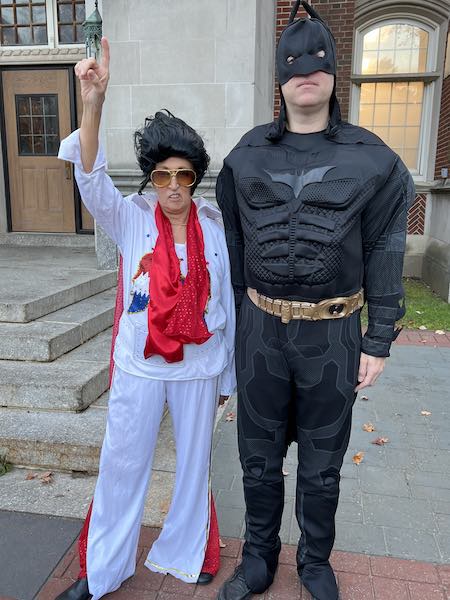
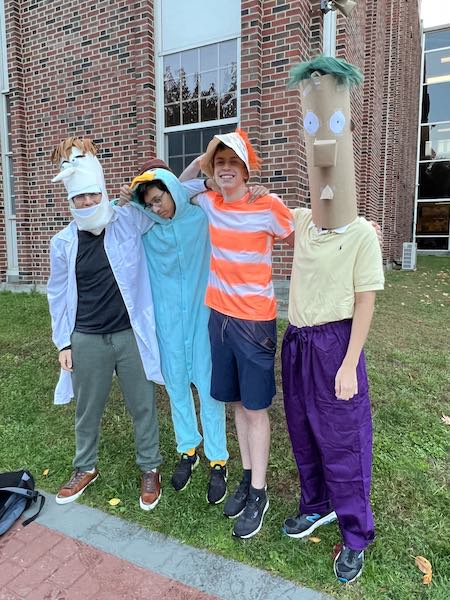
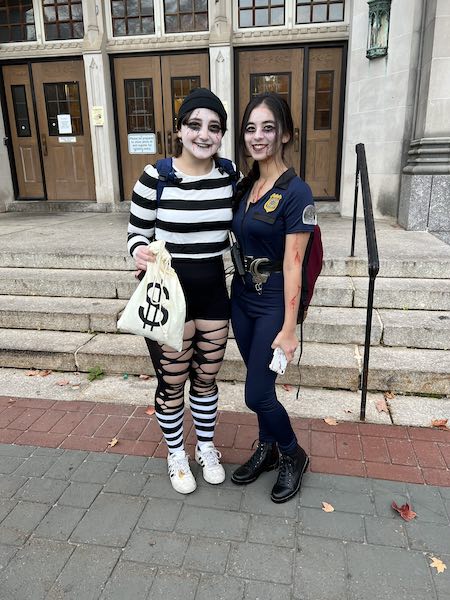
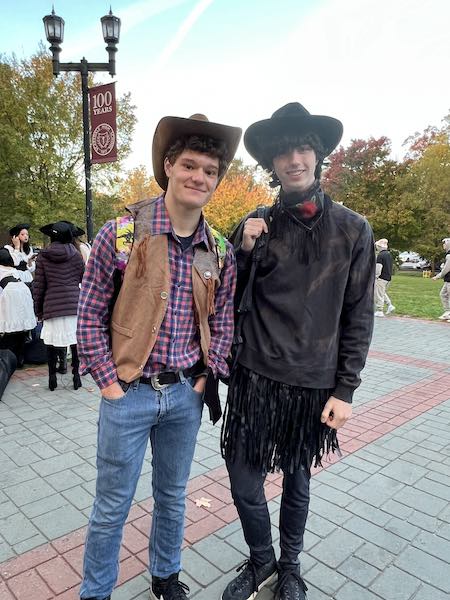
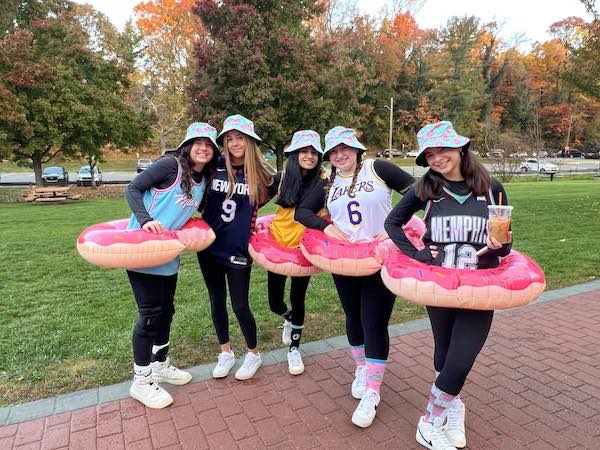
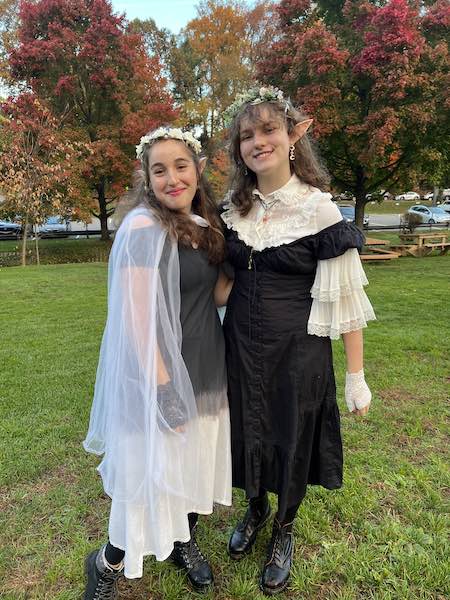
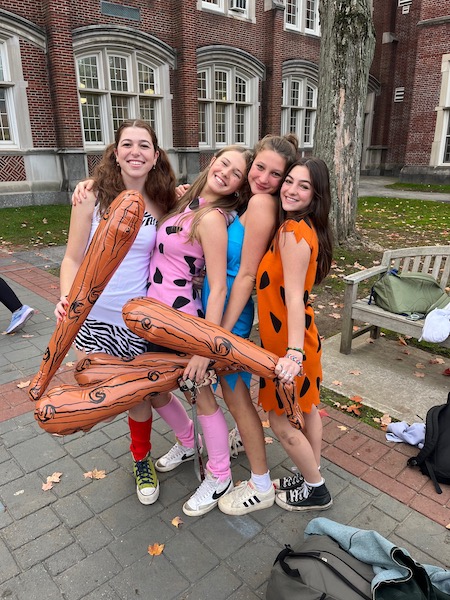
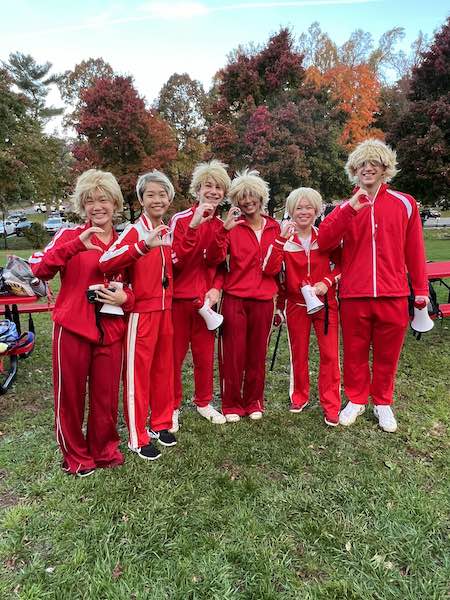
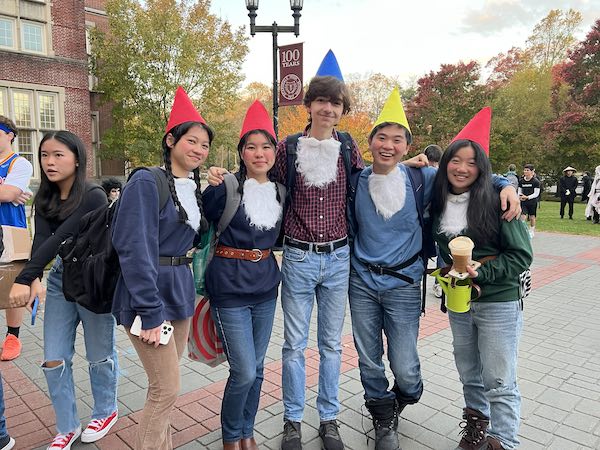
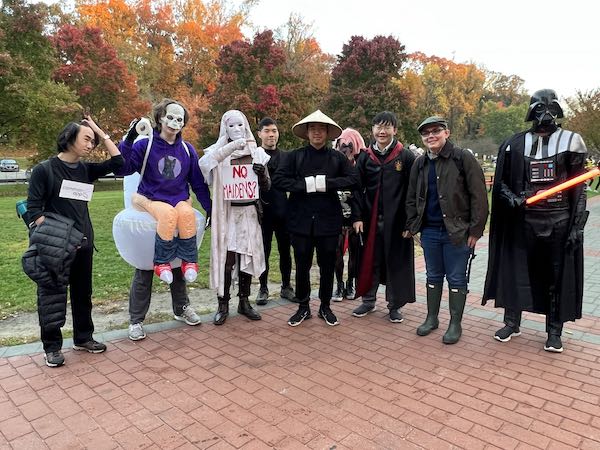
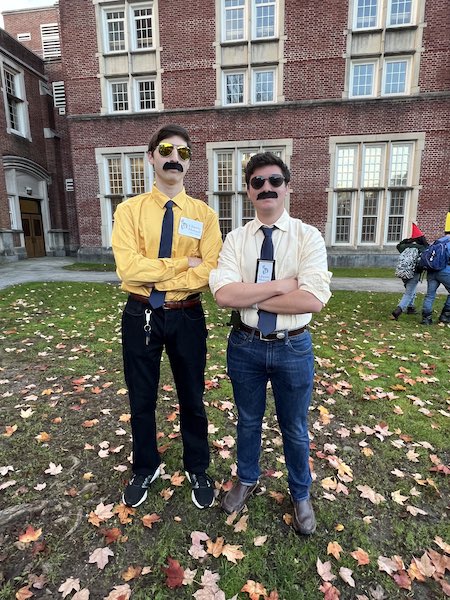
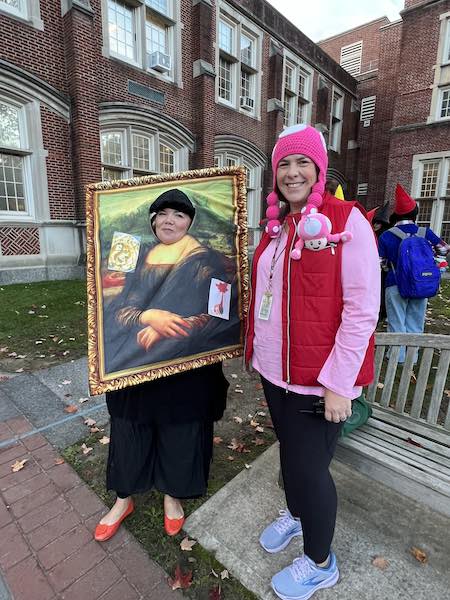
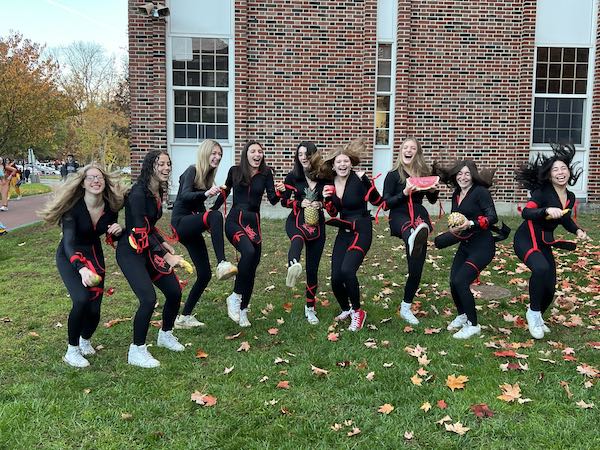
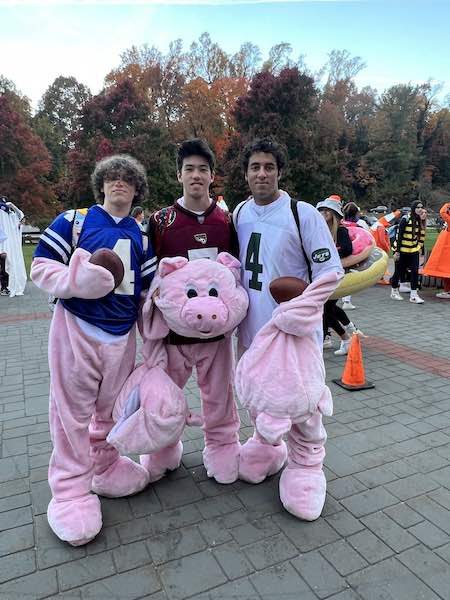
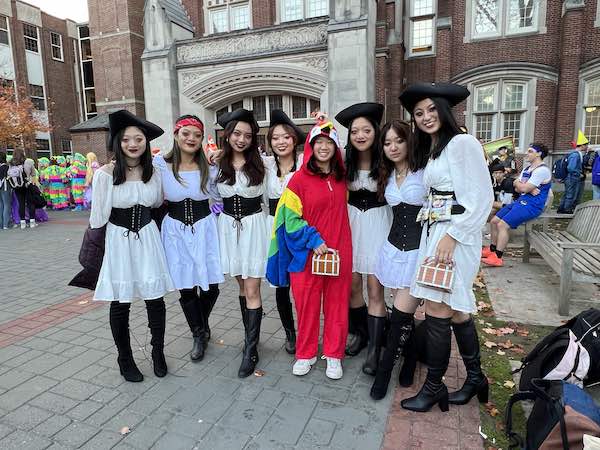
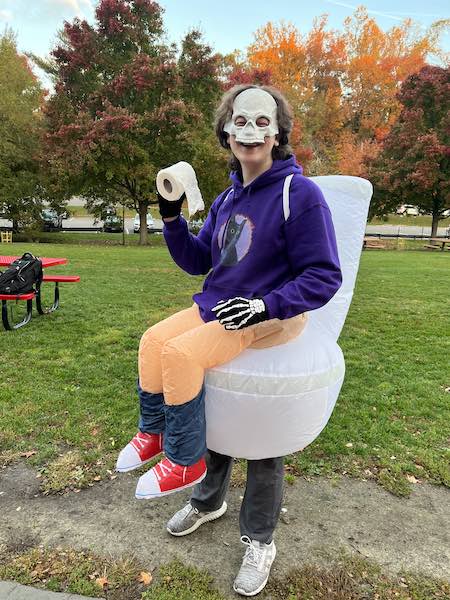
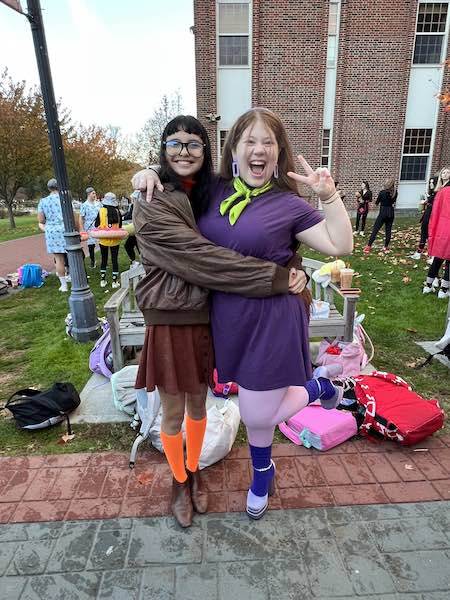
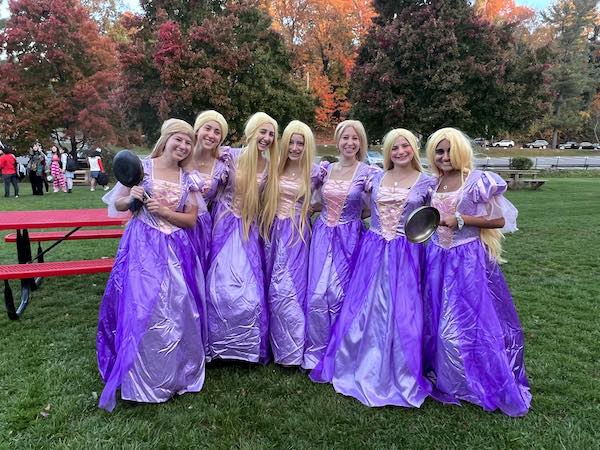
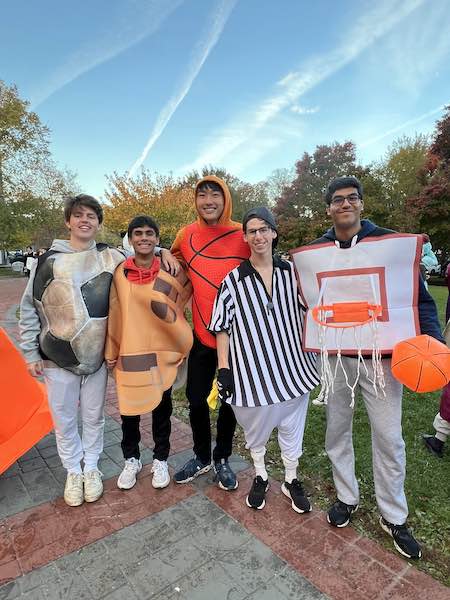
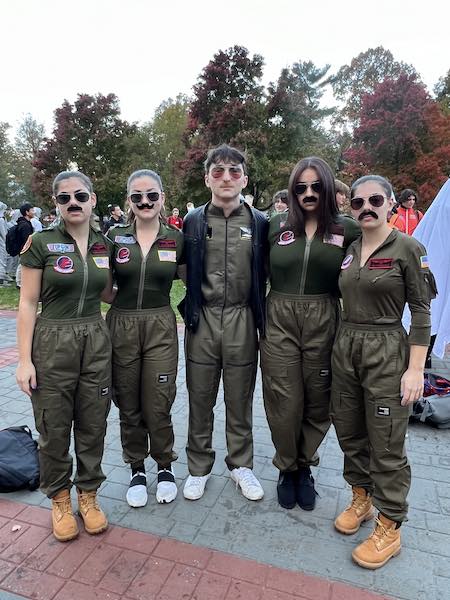
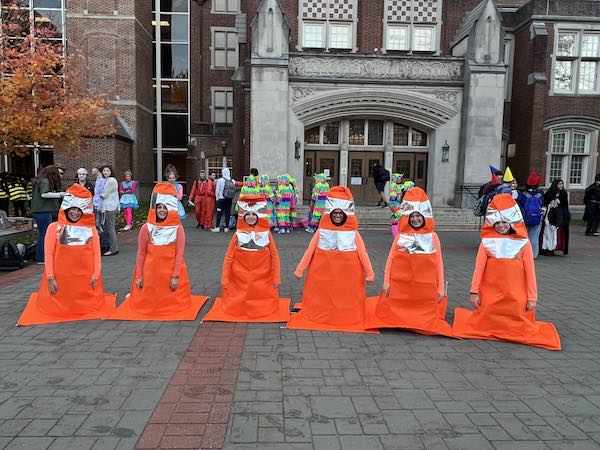
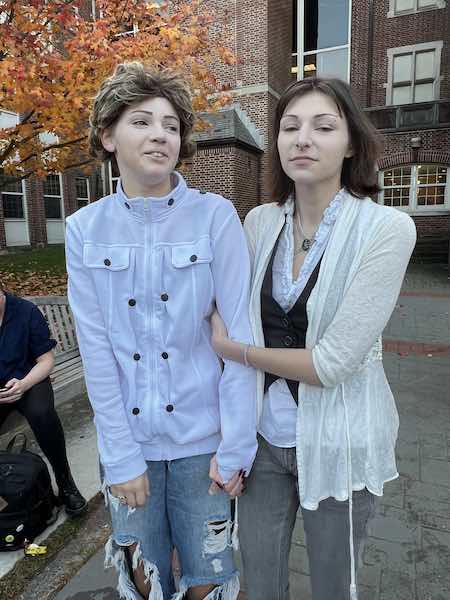
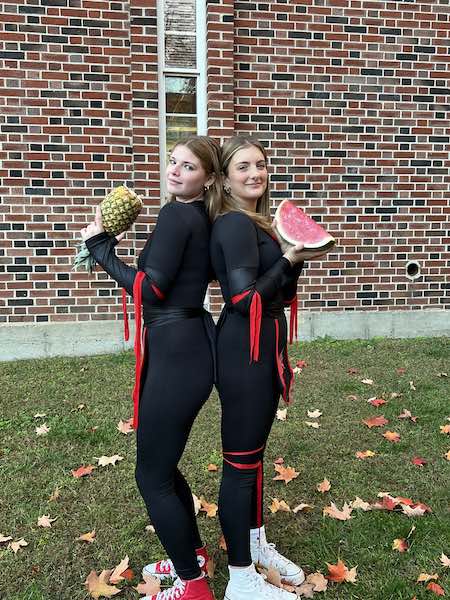
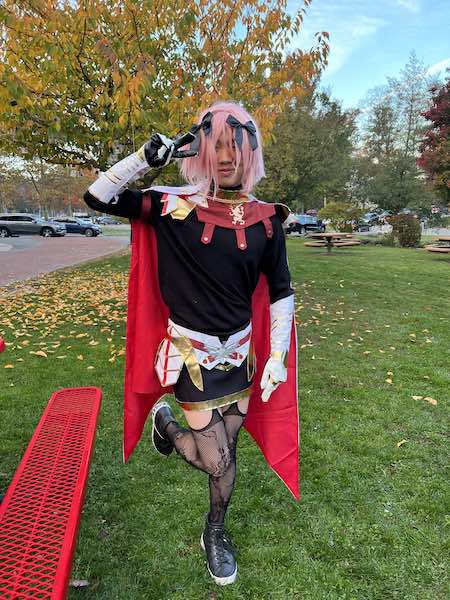
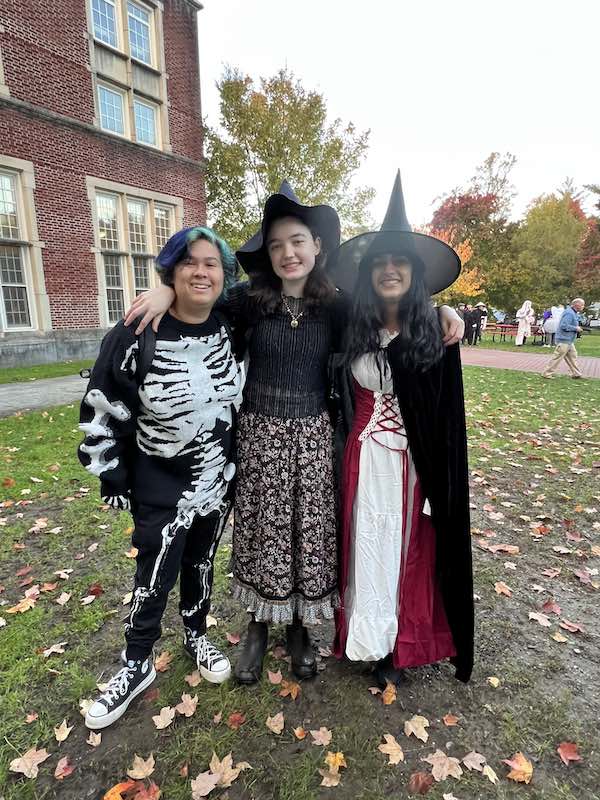
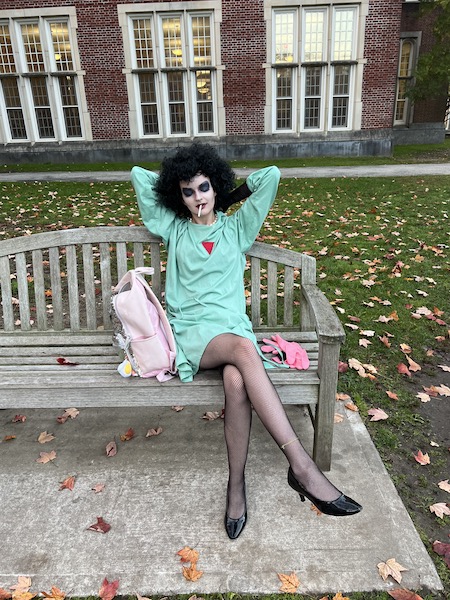
 Finally it was their turn. The spirited SHS Class of 2023 turned out in costume early Halloween morning to prance and pose at the Brewster Road entrance before enjoying a Halloween breakfast.
We spotted Ninjas, Justin Biebers, cops and robbers, the casts of the Grinch, Twilight and Alice in Wonderland along with bagpipers, top gun pilots, elves, pandas, pigs, penguins, donuts, bumble bees, cowboys, Joe Biden and the star of the Rocky Horror Picture Show. Teachers and administrators got into the act too, with one posed as the Mona Lisa. A good time for all! Take a look at their colorful get ups here. If we missed you, send your photos to [email protected] to include in the gallery.











Varsity Girls Tennis Team Headed to Billie Jean Tennis Center for State Finals
- Details
- Written by: Joanne Wallenstein
- Hits: 3469
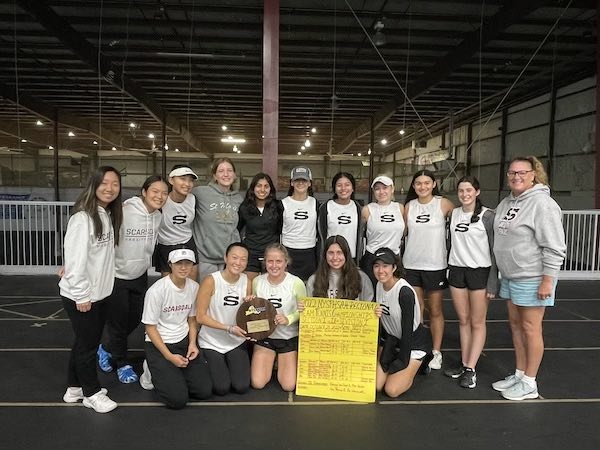 Team posed after their victory in Goshen with Coach Jennifer RoaneA second stellar year for the Scarsdale High School girls tennis team. In 2021, for the first time in Coach Jennifer Roane’s 27 years leading the team, the girls went all the way to the state finals at the USTA Tennis Center and won. This year, the question was, could they do it again?
And to everyone’s delight, they are headed to the state finals again. They will play their Division 1 semifinal at 11 am on Friday November 4 at the USTA Billie Jean King National Tennis Center in Flushing Queens.
Though the team has five new freshman and sophomores, they had an outstanding season, finishing undefeated, 16-0.
After completing the regular season, the Raiders beat Harrison Hight School 4-0 to capture the Sectional title. From there they went on to play in a sub-Regional match in Binghamton on October 20 against Ithaca High School who was undefeated in their section but no match for Scarsdale, who defeated them 7-0.
On the road again, they advanced to the Regional Finals in Goshen, NY near Woodbury, on Sunday October 22, 2022 where they played Monroe Woodbury. In order to win the match the team had to win on four of the seven courts, playing three singles matches and four doubles matches. When the first four courts went to Scarsdale, the other three matches were suspended.
Playing singles for the team at Goshen were Natalie Hu in first, Giana Marks in second and Katie Kendall in third singles.
Doubles teams were as follows: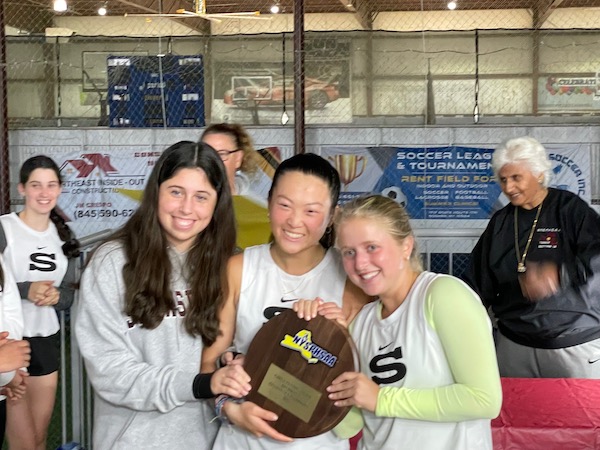 Campbell Alin, Natalie Hu and Maya Cukierman
First Doubles: Emma Ha and Maya Cukierman
Second Doubles: Maya Vora and Yelena Sahakyan
Third Doubles: Natasha Pereira and Emily Hyman
Fourth Doubles Carly Alin and Jalyn Ryu
See the scores below.
Commenting on the season, senior and team co-captain Natalie Hu said, "The regional match was a routine win for the team as we swept. My match was tough because the girl I played, Maeve Cassidy, plays tournament year round like me. I was winning 6-4 3-2 when the team won, but I knew I had to bring my best game that day. I was very happy to take the first set because Maeve has been the best player in her section for the last five years. I think I shocked some people when she lost the first set to me."
"Going into the semifinals of states we are very excited. We’ve had an amazing season so far and we want to continue it to the end. It’s a little heartbreaking knowing that us seniors only have two more matches left in our high school careers, but we are going to give it everything we have to defend our state title. There will be a lot of pressure on us to win, but we are in a great position to do so. Nothing is guaranteed, but our team is looking very strong. We will be playing Bethlehem in the semifinals, which is a team that we scrimmaged against in the beginning of the year and beat 6-1. If we win, we will most likely play the winner of section 11 (long island). They will be playing their section final on Tuesday (Port Washington vs Syosset). No matter who we play we are just taking it one point at a time."
The NYSPHSAA Final 4 will be held on Friday November 4 at the USTA National Training Center in Flushing, Queens. Scarsdale will meet Bethlehem for the Division 1 semifinals at 11 am. If they are successful, they will play in the finals at 4:30 pm.
Go Raiders!
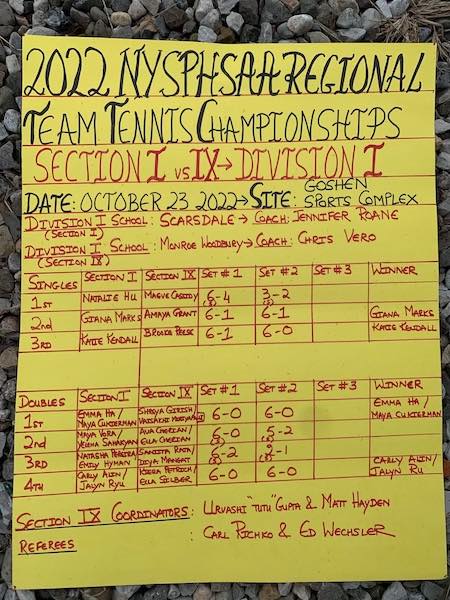 The scoreboard from the match in Goshen.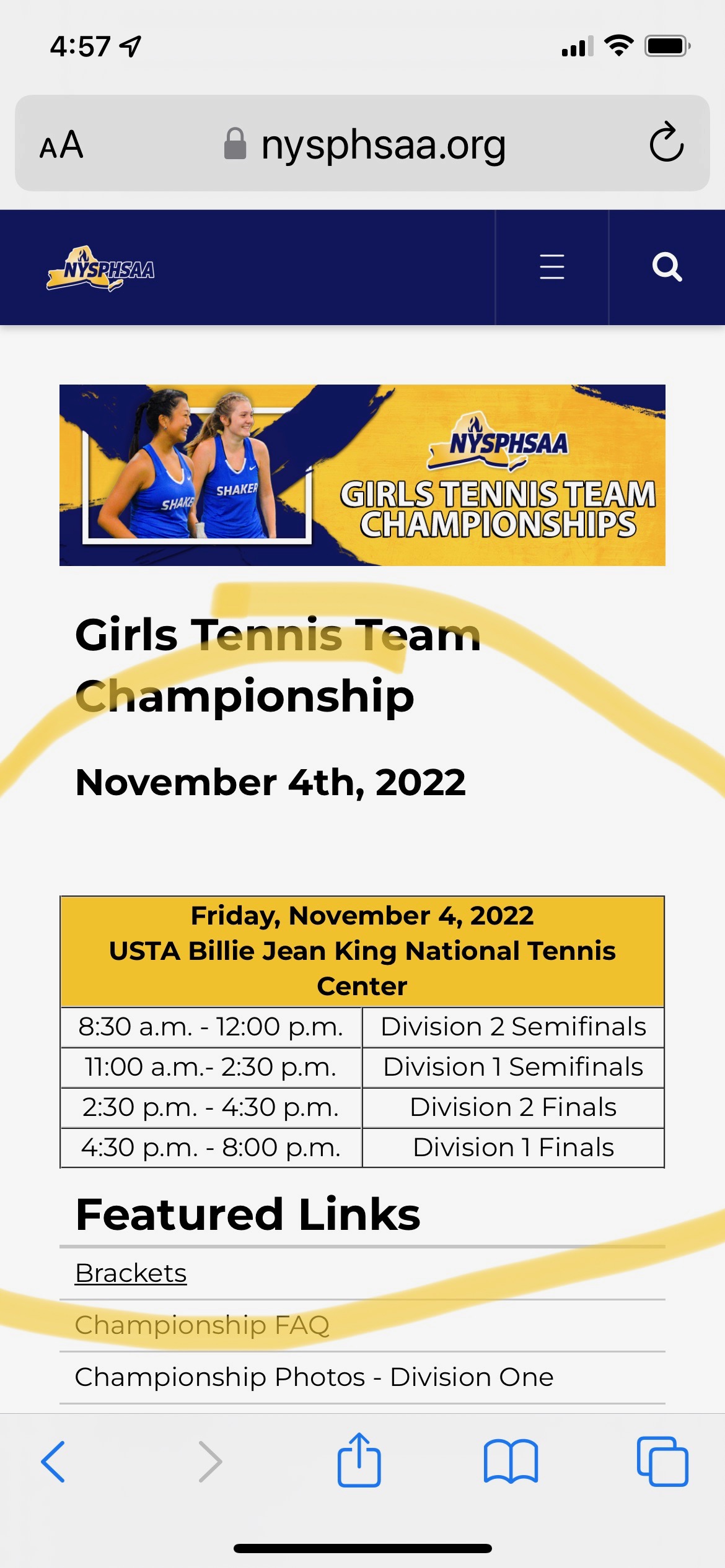
School Board to Review Auditor's Report on Tax Issue
- Details
- Written by: Joanne Wallenstein
- Hits: 3192
 (Updated October 12, 2022) The Scarsdale School Board continues to unwind from prior years's trouble when errors were made in the payment of the Scarsdale School District’s payroll withholding taxes. The errors, made in 2020 and 2021,caused an upheaval in the management of the schools and a loss of confidence in the district’s management. These errors resulted in the assessment of penalties, fees and interest against the district which led to a $1.7mm lien against the schools. The issue was concealed from the Board of Education and ultimately Superintendent Thomas Hagerman resigned in May 2022. The district hired attorneys to appeal to the IRS, and after months of appeals, the lien was lifted and the majority of the funds were recouped.
To address the situation and prevent it from happening again, on Monday June 6, the Scarsdale Board of Education agreed to engage new auditors, Nawrocki Smith, to review internal controls and to make recommendations to prevent errors in the future. The auditors released their finding and recommendations in September 2022 and this report will be the subject of a special meeting of the Board of Education on Tuesday October 11, 2022. At the meeting the auditors will present their report.
The report has been included with the board agenda and can be viewed online here:
The firm investigated what errors were made, and found the following:
“We analyzed the federal and state payroll withholdings from January 2020 through April 2022 and confirmed the three (3) clerical errors that resulted in the IRS notices of a federal tax lien filing against the District. Based on our analysis, we noted that two (2) clerical errors pertained to selecting the incorrect quarters and one (1) error pertained to entering the incorrect amount on the online EFTPS system.”
In the report summary, they list their observations and make recommendations for improving processes in the future. They point to limitations in district guidelines, oversight, reporting and reconciliation and suggest ways that all of these processes can be improved.
Here is what they say:
Based on the work performed, we made the following observations regarding the District’s internal controls over payroll withholdings:
-The Business Office has not developed documented guidelines pertaining to payroll withholdings.
-There is limited oversight of the payroll withholding calculations prior to payment processing.
-There is limited oversight of the payroll withholding amounts reported between the SMARTS financial application and Schedule B of Form 941.
-The Business Office utilizes multiple Excel Spreadsheets that result in duplicate data entry processes and increase the risk of clerical data errors.
-The District Treasurer’s electronic signature is accessed by the Payroll Clerk and Accounts Payable Clerk.
-District’s payroll bank accounts have outstanding checks pertaining to payroll withholdings unclaimed since 2016.
Areas where we recommend improvement in processes include:
-Develop documented guidelines pertaining to payroll withholdings.
-Establish a review and reconciliation process of the payroll withholdings reported within the SMARTS application, EFTPS, and Form 941 prior to processing or submitting payments to the IRS.
-Explore the full capabilities of the existing financial application, SMARTS, to implement a process wherein the payroll withholdings are accurately calculated, tracked, and reported to the IRS.
-Consider assigning the Claims Auditor to conduct a thorough and deliberate audit of online ACH payments and wire transfers related to payroll withholdings.
-Limit the check printing and signing authority to the District Treasurer as this position is not responsible for preparing accounts payable or payroll checks within the financial application system.
-Conduct due diligence in contacting the rightful parties before the old unclaimed payroll withholding funds are written off from the District’s balance sheet.
The district’s Treasurer Jeff Martin retired in September and Lisa Zareski, formerly with the Mahopac Schools, has taken his place. She will undoubtedly be charged with implementing some of these procedural changes if the Board votes to adopt the report at the meeting on October 11, 2022.
Update: At their meeting on October 11, 2022, the Audit Committee, which includes all Board Members, unanimously approved recommending the report be approved at by the Board of Education. Since the Board was meeting as an Audit Committee, the final approval of the report will be voted on during a Board of Education meeting. The administration indicated that they are already looking into adopting some of the measures. Watch the meeting here: