







Retiring Faculty Members Say "Thank You Scarsdale"
- Details
- Written by: Alex Wilson
- Hits: 8380
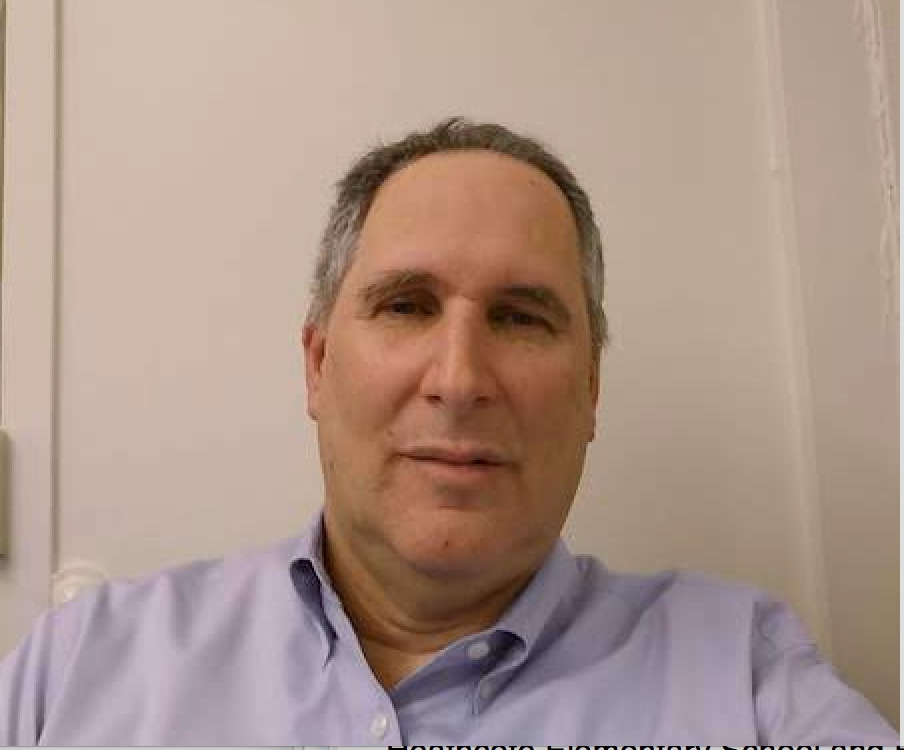 Mr. Larry ChatzinoffThis year, Scarsdale is losing many beloved faculty members. We spoke with a few of them to hear their thoughts on retirement and their plans for the future:
Larry Chatzinoff is retiring after 20 years of working in education. He spent his first year as a math teacher at Woodlands Middle School and the following 19 years working as a math teacher, math department chair, and eventually vice principal at Scarsdale Middle School. Over the years, he’s cherished “working with highly motivated students and collaborating with passionate teachers that work hard every day to provide the students at SMS with a world class education,” and attending many sporting events, concerts, talent shows, school musicals and more.
Some of his favorite memories involve working and bonding with students from the Student Organization, especially the day he volunteered for “Pie in the Face” at the “Challenge the Teacher” event. “The joy, that’s an understatement, that the students got from throwing a sponge with shaving cream in my face was priceless,” he said. He has also appreciated the support he receives from teachers to promote his ideas; one of which is his creation of Family Math Night, where students teach their parents how to solve difficult math exercises, which has become a successful event.
Chatzinoff feels touched by the supportive response he’s received from fellow faculty members upon the announcement of his retirement. “It has been a privilege and an honor to work at Scarsdale Middle School for the past 19 years. I have worked with an amazing group of teachers, support staff and administration throughout my tenure. Most of all it came down to working with incredible children that motivated me each day to be at my best. I have thoroughly enjoyed watching my students excel in activities outside of the classroom,” said Chatzinoff.
Linda Rich is retiring after 38 years as a math teacher, 32 of which she spent at Scarsdale High School. Within those 32 years, Rich spent the first 23 in the Alternative School, and the last nine in the high school. “My favorite part of teaching is feeling like what you do gives you a stake in the future, whether it’s helping students to appreciate math, be better problem solvers, or getting them to consider other perspectives and feel supported,” said Rich.
She looks back fondly on her memories from Scarsdale, such as putting a choreographed lip sync performance together at the A-School talent show with her fellow teachers and watching her students perform as well. Another time, she was moved when a former student of hers was being interviewed by Westchester Magazine as a local entrepreneur, and he named Rich as a teacher who influenced him. As a results, they reconnected and even did a photo-shoot together. “You don't always get to know the positive effect you have had on your students, so when that happens, it is quite satisfying,” said Rich. She’s grateful for all she has learned from her students and fellow faculty members. “Thank you, Scarsdale!” she concluded.
Elizabeth Ungar is also retiring from her position as math teacher after working at Scarsdale High School for fourteen years 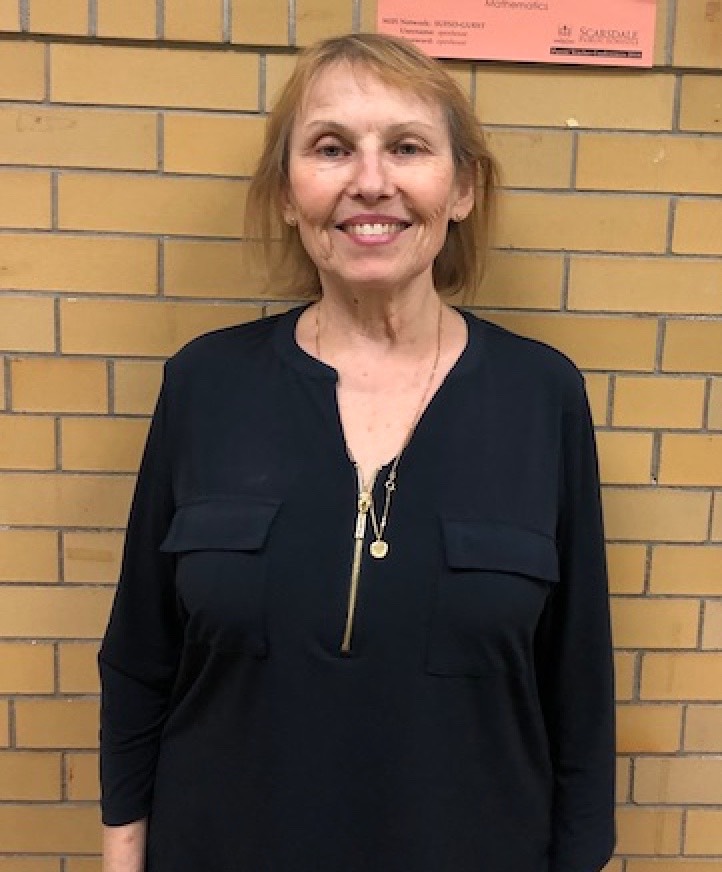 Ms. Elizabeth Ungarand the Bronx High School of Science for six years. This was Ungar’s third career after working as a full-time mother and a computer programmer. In her time here, she’s found getting to know her students as fulfilling as teaching them and seeing them learn. Ungar understands that “many of them [her students] are carrying burdens,” making her a kind and understanding teacher and mentor. As for her retirement, “I have many projects that I have in mind… things that I’ve always wanted to do but never get to, like go to a matinee in the middle of the week.” Ungar will miss being in the classroom, but she also is looking forward to the possibilities her life holds in her retirement.
Other Scarsdale faculty members retiring this year include Deborah Krisanda of Greenacres Elementary School, Kate Krahl of Scarsdale High School, Lisa Onofri and Cheryl Higgins of Heathcote Elementary School and Edgewood Principal Scott Houseknecht.
District Responds to Questions on the Proposed 2019-20 School Budget
- Details
- Written by: Joanne Wallenstein
- Hits: 5085
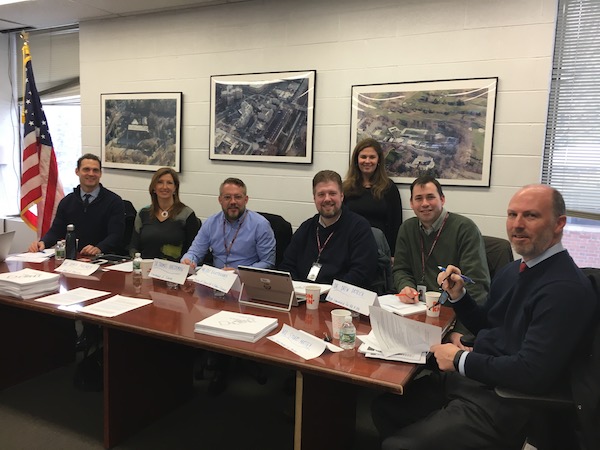 From left to right: Edgar McIntosh, Pam Fuehrer, Thomas Hagerman, Eric Rauschenbach, Leah Dembitzer, Drew Patrick and Stuart MatteyThe League of Women Voters of Scarsdale held a School Budget Information Session on Monday, March 4th. Members of both the District Administration and the Board of Education answered questions concerning the proposed budget. The 2019-20 school budget is now estimated at $160,782,597 which is a 1.86% increase over the prior year’s budget and will mean a 2.27% increase in the tax levy.
Here are some of the questions posed and responses from the administration:
What is the dollar amount of tax increase for the average Scarsdale homeowner as related to the proposed budget for 2019-20, using an average property value of $1.5 million?
The School Taxes for 2019-20 for the Average Assessed Home (we use $1,595,700 as the average) will increase to $25,446 from $25,039 or a $407 increase, representing a percentage increase of 1.63 percent.
What is the projected 2018-19 surplus at this time?
The projected surplus for FYE is $2,57,172 which can be found on page 61 in the budget book or in the most recent budget presentation. Does the use of surplus to reduce the tax levy impact tax calculations for the following year? Please explain the budget implications. Yes it does if 1) they are used for recurring expenses and 2) a surplus of the same amount is not achieved the following year and used to offset the tax levy in a like amount. If this is not accomplished then expenditures must be reduced or other revenues increased (including tax levy) or utilization of reserves or a combination of all three in order to achieve status quo.
In light of the discussion regarding student social/ emotional well-being, please specify the ways in which the implementation of increased security staffing, enhanced protocol and procedures has taken into account student and school community social/ emotional well-being. What does the current research say about how lockdown drills and enhanced security procedures affect social/ emotional well-being?
We are unaware of any studies that would directly correlate to the Scarsdale student and community experience. Most studies that look at the presence of highly visible security features (police, metal detectors, extensive cameras etc.) are focused on inner-city and high crime schools. It is important to note that deliberation surrounding all improvements that the District is considering, from any one of the three prongs as discussed in Budget Session #1, take into account any impacts on the social-emotional well being of our students. The National Association of School Psychologists has published a paper called Rethinking School Safety: Communities and Schools Working Together, which is indicative of the District’s thinking around the balance required in the implementation of School Safety and Security.
As part of the discussion regarding social/ emotional health, stress, student safety, and the importance of trusted adult relationships, has the District reviewed the potential impact of the increase in the number of students per dean at the high school?
While the SHS ratio is on the higher end of comparable Districts (range ~1:115 -~1:200), it is far lower than many other school districts in Westchester. When discussing the ratio of guidance counselors to students, the conversation must include what other mental health professionals are in the building. SHS has 2.2 psychologists serving the general population, 1 psychologist for the Scarsdale Support Program, and 2 Certified Social Workers provided through the Youth Services Project. The ratio for students to mental health professionals in the building with the addition of these resources is 1:117 (this does not take into account the Scarsdale Support Psychologist as she has a restricted caseload within the program). Currently, the District feels we have an appropriate ratio to address needs. However, we have seen an increase, generally, in social/emotional needs and we will be assessing our needs regularly.
What is the status of potential kitchen projects at Fox Meadow and Edgewood?
Initial plans for these projects and others were discussed during the 2018 Bond Development. These plans were eventually put aside. The architects are now exploring other opportunities to thoughtfully provide kitchen services to these buildings. These plans are in the early stages of development.
Would the Con Ed gas moratorium affect or delay new construction projects, including possible kitchen projects?
No, Con Ed has been alerted to these projects and the District has been assured that there will be no impact.
Does the 2019-20 budget support any specific program and/ or curricular initiative beyond that of last year’s budget? If so, please explain the nature of those initiatives.
This budget reflects an increase in the area of sustainability to increase support for gardens across the District. We are building internal capacity in our area of interdependence/global competencies and are, therefore, releasing an outside consultant. This trade-off has contributed to a relatively flat budget.
If this budget does not include any additional or enhanced curricular initiatives, then discuss the rationale behind this decision as well as the district strategy for keeping Scarsdale Schools on the forefront of public education.
Rather than layer on additional curricular initiatives at this time, we are focusing on supporting and nurturing current and important work in the area of innovation, shifts in “next generation standards,” personalized learning, literacy, global competencies, critical thinking, research, and problem-solving.
Educational Visionary Arthur Levine Visits Scarsdale
- Details
- Written by: Joanne Wallenstein
- Hits: 4991
 According to Dr. Arthur Levine, the United States is in the throes of profound change –- that is impacting the way we work and live – and is having far-reaching effects on how we educate our children.
Invited to Scarsdale by Dara Gruenberg, Dr. Levine’s talk on Thursday, February 28 was jointly sponsored by the Scarsdale Forum, the Scarsdale PT Council, the Scarsdale High School PTA and the Scarsdale Library. As Gruenberg said, “We are best as a community when we work together.”
Dr. Levine is a recognized expert in the field of education. He is the sixth president of the Woodrow Wilson Foundation and is a former president and professor of education at Teachers College, Columbia University. He is the author of many books, articles, and reviews, which often appear in The New York Times and The Wall Street Journal. He has received 25 honorary degrees, Carnegie, Guggenheim, and Rockefeller Fellowships, and the Educational Press Association’s Annual Award for writing three times and is also a member of the American Academy of Arts and Sciences.
Levine outlined three major forces that are driving change in the education landscape: the economy, technology and demographics.
He explained that the US has gone from an economy focused on the production and distribution of material goods to a digital information economy powered by minds and knowledge. This shift has caused the loss of jobs in fields like mining and construction in exchange for jobs in information technology and has resulted in struggling cities in the rust belt and booming development in places like Silicon Valley, Austin and Seattle.
Advances in technology have also had profound effects on the job market with many jobs requiring a college degree and some an advanced degree. Students need higher-level skills to compete in today’s economy as many unskilled workers are being replaced by automation which has proven to be more consistent, flexible, reliable and efficient that human workers. Levine predicted that jobs such as cashiers, clerical workers and administrative assistants would be replaced with automation – and even doctors, lawyers and journalists could find that computers could outperform them.
What does this mean for education?
Levine said in this new paradigm, “Digital natives are being taught by digital immigrants,” and the two groups operate in different fashions. He highlighted the differences between how traditional schools work and how students in the digital age learn:
For example: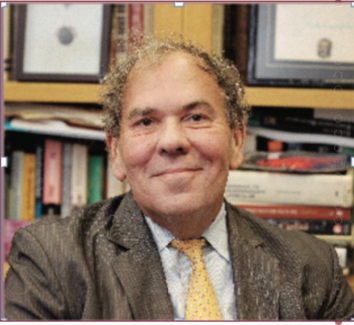
-While our schools operate on fixed time schedules, the kids who attend operate 24/7.
-While schools are location-bound, kids today learn anytime and in any place.
-Programming in class is determined by the teacher and the school, while today’s kids are educational consumers who seek out their own learning materials and media.
-While education is abstract, today’s generation are concrete learners.
-While schools generally use analog media, kids use digital media.
-While today’s schools focus on individuals, kids today are collaborative and group oriented.
-While school curriculums focus on depth our kids are focused on breadth.
Furthermore, Levine explained how the technological revolution is impacting education as we know it. Big data, artificial intelligence and virtual reality will change the way kids learn and what they will need to learn.
Virtual Reality
He predicted that for many, traditional college classes will be replaced with online learning experiences that utilize virtual reality to create personalized learning experiences without attendance on a college campus. In fact, due to high demand for admittance to college, the state of California has created a virtual community college to accommodate all the people they can’t take into their system. The virtual college will offer courses in job skills and retraining, granting those who complete the programs certificates or badges – but not college diplomas.
The availability of customized digital media will replace the need for printed textbooks allowing kids to learn at their own pace. Levine conjectured that individualized learning would mean the end of uniform course lengths and traditional measures of success, with students rewarded for competency in a certain discipline rather than completion of a prescribed curriculum.
Demographics
The changing demographics of the countries population are already impacting the market for education. People coming into the country from abroad will cause the white population to drop and by 2025 whites will be in the minority.
The fastest growing groups of students are those with which our system has been least successful and the country will need to find economical ways to educate them. Levine said that some states are already moving toward providing the first two years of college for free as the value of a high school education decreases.
This population shift will also cause the closure of small liberal arts colleges as there will not be enough students with the means to pay the tuition. In turn, access to remaining top tier schools will continue to shrink as demand grows.
What kinds of education and skills will kids needs to succeed? Many of these competencies are already built into the Scarsdale curriculum. Levine predicted that students will require training in critical thinking, problem solving and fact detecting and will need to be collaborative, communicative, creative and flexible. They should be literate as well as adept at using technology. He also called for students to be citizens of the world, and to learn about global economics, politics, religion and cultures.
He ended by posing a question that’s on the minds of many Scarsdale parents who grew up in a different era … Should students pursue a liberal arts education or seek professional skills in college?
Levine said that though students with professional or technical skills earn higher starting salaries, those who augment a liberal arts education with an internship or additional training also thrive.
Listening to Dr. Levine, one quickly realizes that the future is now – and we are already living through the changes he sees in his crystal ball. With Scarsdale’s emphasis on critical thinking and problem solving and its adaptation of STEAM at every grade level, the district is already preparing students for this brave new world.
Commenting on Levine's remarks, Edgar McIntosh, Assistant Superintendent of Curriculum, Instruction and Assessment at the Scarsdale Schools said, "It was exciting to hear Arthur Levine speak last week. I've long admired his emphasis on creative and critical thinking and the importance of providing authentic and meaningful learning experiences for students. I was also reassured in many ways. Scarsdale is a learning environment that is dedicated to making structural and instructional changes to meet the evolving educational needs of our students. This is illustrated nicely by the recent work the district has embarked in design thinking, STEAM, and social entrepreneurship."
Watch the talk in its entirety here:
Prize-winning storytellers join Westchester locals on stage for a night of Revealing True Tales sponsored by the Scarsdale Adult School
- Details
- Written by: Joanne Wallenstein
- Hits: 4709
 On Thursday, March 14 at 7:30 p.m. at Heathcote Elementary School, Scarsdale Adult School will host its third Tales from the ’Dale and Beyond: An Evening of Live Storytelling. The format will be in the style of NPR’s “The Moth” radio show and will feature original stories from individuals that span the generations.
According to Executive Director Jill Serling, “this year’s lineup, carefully curated by Board Co-Chair Leesa Chalk Suzman, will feature storytellers from greater Westchester who will recount true stories with humor, charm, and emotion.” Emceed by Moth StorySLAM winner Sandi Marx, the event will include entertaining vignettes from local residents, Scarsdale School District teachers and alumni. Audience members can expect engaging anecdotes from:
● Micaela Blei, two-time Moth GrandSLAM winner, co-founder of the Moth's Education Program for high school students, popular keynote speaker, and former third grade school teacher in Brooklyn
● Rabbi Jonathan Blake, Senior Rabbi at Westchester Reform Temple, regular columnist for the Union for Reform Judaism, and featured in the indie documentaries 51 Birch Street and 112 Weddings
● Wali Hairan, Afghanistan native who spent his early childhood at a refugee camp in Pakistan weaving Afghan rugs, speaker of seven languages, and current student at Connecticut College studying computer science with secondary focus on Chinese and neuroscience
● Fredrick Smith, Scarsdale STEP student from Memphis and current 12th grader at Scarsdale High School
● Paul Warhit, Westchester native, longtime volunteer in several Jewish organizations, and proud parent of three, including a son who served in the Israeli armed forces
● Victoria Assa, Soviet immigrant, Scarsdale resident, and repeat performer, introducing one of her new poignant tales
● Jennifer Rosenzweig, Scarsdale High School graduate-turned-Scarsdale High School English teacher
● Will Maldarelli, Scarsdale Middle School social studies teacher, coordinator of the annual Scarsdale Middle School speech contest, and faculty advisor to Scarsdale High School’s student speech and debate club
“No matter your age or stage in life, there is always something that can be learned from hearing other people’s stories,” says Leesa Chalk Suzman, co-chair of the Scarsdale Adult School Board of Trustees along with Ann Sacher. “There’s a raw honesty that comes through when a true tale is told on stage without notes. The hope is that these stories will create a sense of community and remind the audience of their shared humanity.”
To purchase tickets ($20 per person), please visit scarsdaleadultschool.org. Students 18 and under enjoy free admission. Auditorium seating is unassigned. Please contact SAS at 914-723-2325 or email [email protected] at least a week in advance if you require special assistance. Doors will open at 7 p.m. and advance registration is recommended.
Scarsdale Adult School Announces Spring 2019 Special Events
- Details
- Written by: Joanne Wallenstein
- Hits: 5343
 Scarsdale Adult School, an award-winning non-profit organization, is a proven source of quality adult education. This coming semester includes several “hot topic” headliners and visiting authors in addition to a wide array of humanities, technology, foreign languages, writing, career development, personal finance, arts and crafts, photography, fitness, card and board games, cooking, health/wellness, and hobbies and edutainment classes.
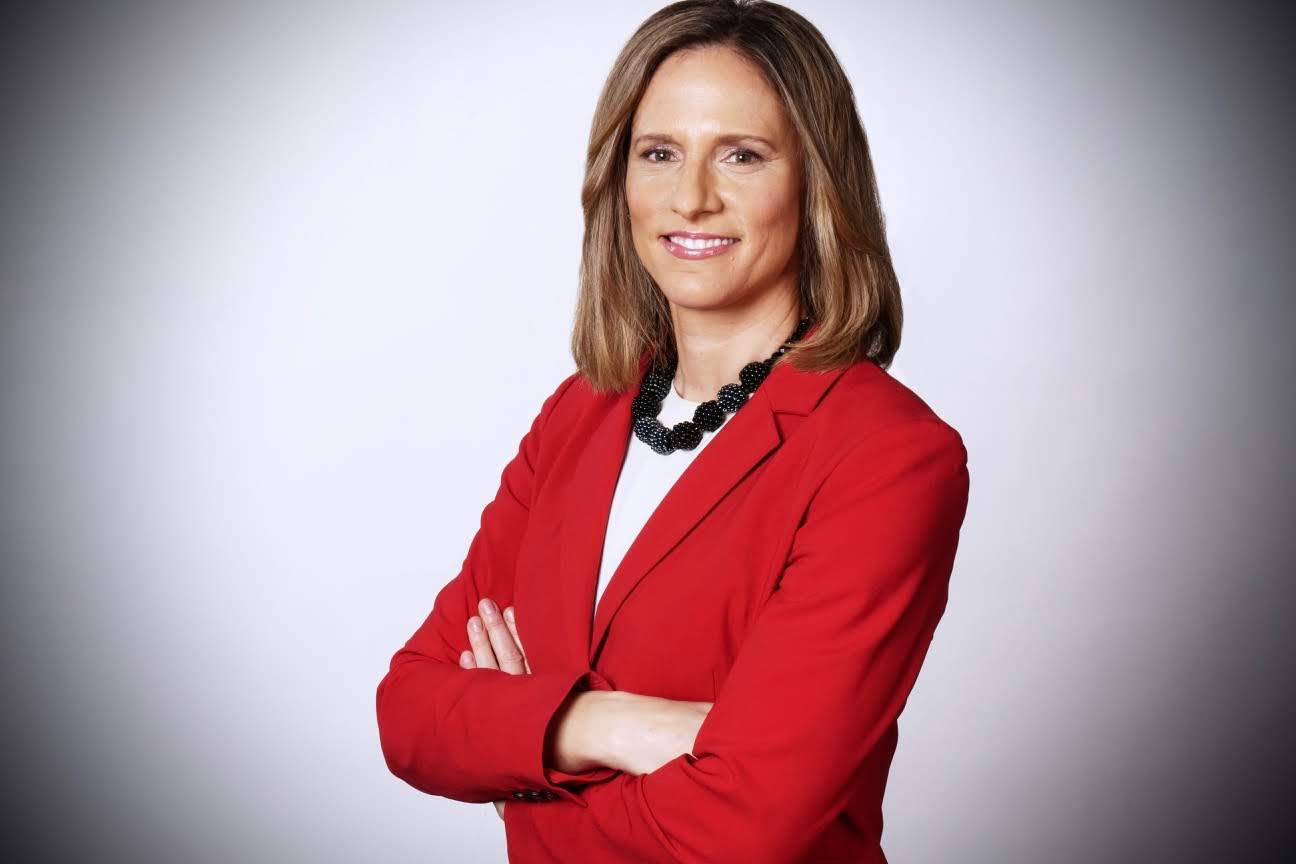
And Justice for All: An Evening with Mimi Rocah has just been rescheduled to Tuesday, May 21, 2019, at 7 p.m. at Scarsdale High School. Please note the change from the printed calendar. This special night will be filled with insightful commentary about today’s charged headlines. Rocah, a Scarsdale resident, former Assistant U.S. Attorney for the Southern District of NY, and one of MSNBC’s newest legal analysts, will reserve ample time to answer audience questions.
On Thursday, April 4, 2018, at 7 p.m., medical journalist Randi Hutter Epstein will discuss the history and science of endocrinology. With wit and entertaining anecdotes, her new book, Aroused: The History of Hormones and How They Control Just about Everything (2018) contrasts quackery with legitimate research in detailing the history of hormone research.
CBS business news analyst and Scarsdale High School graduate (class of 1983) Jill Schlesinger returns to her home town on Tuesday, April 9, 2019, at 7 p.m., to discuss The Dumb Things Smart People Do With Their Money: Thirteen Ways to Right Your Financial Wrongs, just published this month. Schlesinger will explain how to break bad habits and follow pragmatic and accessible rules for managing finances responsibly.
On Wednesday, May 29, 2019, at 7:30 p.m., SAS presents Author Visit with Jonathan Haidt: The Coddling of the American Mind: How Good Intentions and Bad Ideas are Setting up a Generation for Failure (2018). Haidt, a social psychologist and Scarsdale High School graduate (class of 1981), will elaborate on the downsides of shielding young adults from words and opinions that make them uncomfortable. Terms such as micro-agressions and trigger warnings have become commonplace on campuses around the country; “safe spaces” have come into existence to protect students who are presumed to have extraordinarily fragile psyches. Haidt will discuss why such efforts, in the name of emotional well-being, are disastrous for the development of critical thinking skills and for the mental health of those who are supposedly being protected. Drawing from the research and best-selling book that he co-wrote with First Amendment expert Greg Lukianoff, Haidt will challenge us to reconsider how we are currently raising and educating the next generation of children in an age of fearful parenting.
Visit www.scarsdaleadultschool.org to register, to sign up for the bimonthly electronic newsletter, or for additional information. Classes are open to all, regardless of residency, and fill on a first-come/first-served basis. Call (914) 723-2325 or email [email protected] with questions.