







Scarsdale Schools 2016-17 Budget Season Begins
- Details
- Written by: Melissa Hellman
- Hits: 6570
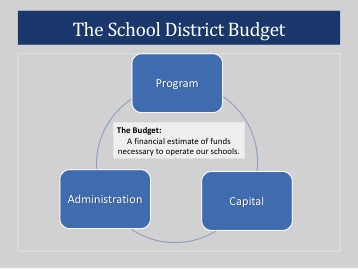 The Board of Education (BOE) kicked off its annual series of budget study sessions on February 8 reviewing proposed staff additions as well as transportation and debt service costs in the budget. Stuart Mattey, Assistant Superintendent for Business, led the presentations on these topics with no surprises as staffing requests have been discussed extensively at previous meetings and transportation and debt services costs are relatively fixed as compared to other areas of the budget. An overview the entire 2016-2017 proposed budget (including information about tax impact) was not introduced and is planned for the next meeting on February 24.
The meeting began with a review of the staffing requests including:
• 2 new hires for Special Education to establish an emotional disabilities support program at the high school.
• 1.6 new hires for World Languages. This includes a Mandarin teacher for the middle school, but if there are not the requisite numbers of 6th grade students signing up for this language the number of new hires in World Language will be reduced.
• 1 STEAM teacher in the high school.
Also included is a physical education teacher for the second half of next year, changes/additions to support in the Technology, Curriculum and Physical Education offices as well as placeholders for new hires to adhere to compliance with District guidelines with regard to class size for a grand total of 8.8 full time equivalents at a cost of approximately $1M. Dr. Hagerman stated that new staffing went through several iterations and began with requests for 14 new positions and was reduced to this number. Although these requests have been discussed at previous meetings, the Administration was seeking final concurrence from the Board that they should be included in the first draft of the budget. Board members spoke individually and all agreed to move forward with these personnel recommendations.
Mattey then turned to the areas of transportation and debt service. When discussing transportation he highlighted that there will be no changes to the District busing policies. Some purchases of new vehicles were included to maintain a healthy fleet. The budget-to-budget increase in transportation is just over 1% ($47,378), reflecting transfers of some transportation related utility expenses into the transportation budget (in order to generate State aid). Also, there is no request for a transportation efficiency study as was raised as a possibility during the discussions of expanding District bus service earlier in the school year. Mattey explained that the department has decided to do internal reviews and possibly include an outside study for 2017-2018.
Debt service obligations require a budget-to-budget increase of less than 1% ($5881) and the lease purchase programs, which support the District's technology plan such as Chromebooks and iPads in the classrooms, require a budget-to-budget increase of 5.82% ($122,589). The detailed technology plan will be presented on February 29.
Mattey presented the following slide to illustrate the District's debt position going forward. There is a significant drop in the year 2020 that will likely be filled by a new very large bond issue in the 2016-2017 timeframe to address significant facilities concerns such as the Greenacres School and other needs through out the District identified by the building survey studies.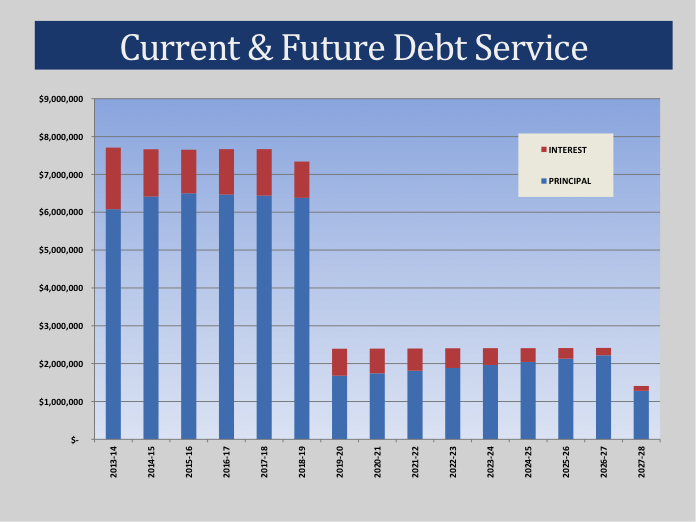
The budget meeting calendar is shown below. The public is encouraged to attend all budget meetings and submit questions to the BOE. There will be a designated section on the District website for all budget related presentations and back up documentation including the Board's written responses to questions from the community.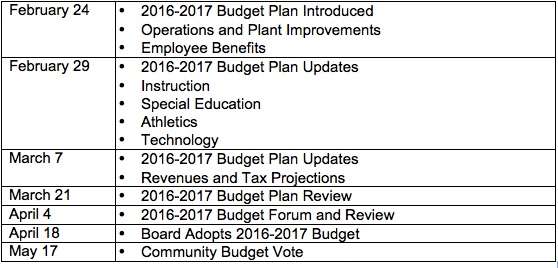
View the meeting in its entirety on the BOE's Video-on-Demand website.
Schools to Assess Interest in Mandarin Among Incoming Sixth Graders
- Details
- Written by: Joanne Wallenstein
- Hits: 6170
 The Scarsdale School administration surprised the community by reversing their decision on the inclusion of Mandarin in the middle school curriculum. At a morning meeting on Wednesday February 3 the administration announced their recommendation to survey the parents of incoming sixth graders on their children's language selection for sixth grade. The survey will offer a choice of Spanish, French or Mandarin. If at least 48 students say they will sign up for Mandarin, the school will hire a Mandarin teacher for the 2016-17 school year. Furthermore, if the program is a go for this fall, the school will commit to hiring a total of three teachers in the future to teach Mandarin for sixth, seventh and eighth graders.
There will be no leveling of instruction – meaning there will be no advanced Mandarin language instruction offered. In addition to adding Mandarin, the sixth grade language program will be changed so that language is taught everyday, rather than everyone other day in the spring semester. This will give students more time to speak, listen and practice their language skills.
Following the administration's recommendation, the Board voted on the measure. Everyone voted yes with the exception of Chris Morin who asked how the decision to hire three language teachers would impact the districts' hiring of faculty for the STEAM initiatives and coding program. Upon learning that the district's language coordinator was leaving he asked why it would not be up to the new hire to evaluate the district's language program and recommend changes.
Commenting on the decision Mayra Kirkendall-Rodriguez said, "The Mandarin in the Middle School Initiative Team thanks the Scarsdale administration for its leadership, flexibility, and willingness to listen to the Scarsdale community. The academic literature supports the cognitive and math benefits to taking Mandarin. There is significant demand for Mandarin speakers in the US government, defense, national security agencies, education, and in all parts of the private sector. We are thrilled that Scarsdale will be able to help the United States meet that demand. We urge fifth grade parents to consider signing up their children to take an enriching language as is Mandarin."
Teen Center: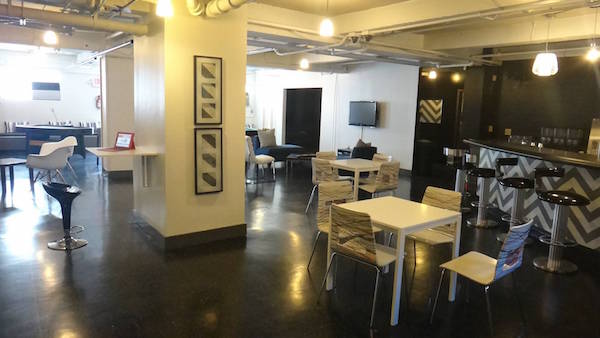
Following the discussion at the previous meeting the Board was asked to decide if they wanted to continue to include $65,000 in funding for the Teen Center. Funding for the Teen Center is now split between the Village and School Boards. In the discussion Board members said that they felt it would be better if the Teen Center were funded through one board and could be accountable to one, not two boards. Some felt it should be under the aegis of the Recreation Department. Board member Suzanne Seiden said that the Teen Center "was founded 17 years ago to provide a safe, drug-free, alcohol-free place for kids to feel safe from academic pressure and stress." She continued, "We have a history of supporting programs that support a small number of children, and I support it."
Bill Natbony expressed his ambivalence about the program but voted to include the funding in this year's school budget. Morin voted no, saying, "I don't fee that it falls under the jurisdiction of the schools.... I believe it would be a great benefit to the teen center to have it supported by a single entity."
The balance of the board voted in favor of the funding and it will be included in the first draft of the school budget.
Comfort Station at Middle School Tennis Courts:
Though Mandarin instruction 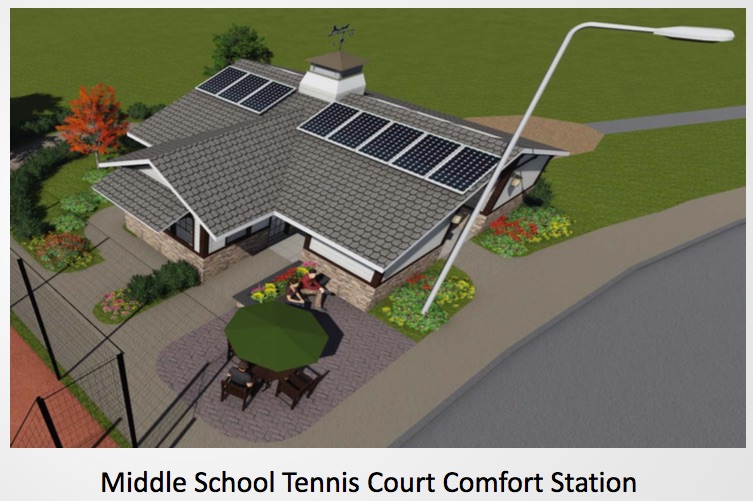 and the Teen Center gained approval, plans for bathrooms next to the tennis courts at the middle school were nixed by the board. The original plans for the comfort station called for $50,000 in funding for the bathrooms from the School Board with an equal contribution from the Village Board, who would manage the construction. However, it later came to light that since the comfort station would be located on school property, plans would need to be approved by the State Education Department and managed as part of the school's capital project plan. The revised estimate is $65,000 from the school board with an additional $35,000 contingency fee.
In discussions about the $100,000 allocation to the school budget for the comfort station, several school board members said they were in agreement with spending $50,000, but that $100,000 was too much. They discussed the need for a bathroom in the Choice building and concerns about adding this project to the long list of capital projects requiring management from the school administration. In addition, Board members expressed a desire to evaluate this project in the context of other needs and not have it "jump the line."
They ultimately voted to eliminate funding for the comfort station in the upcoming budget.
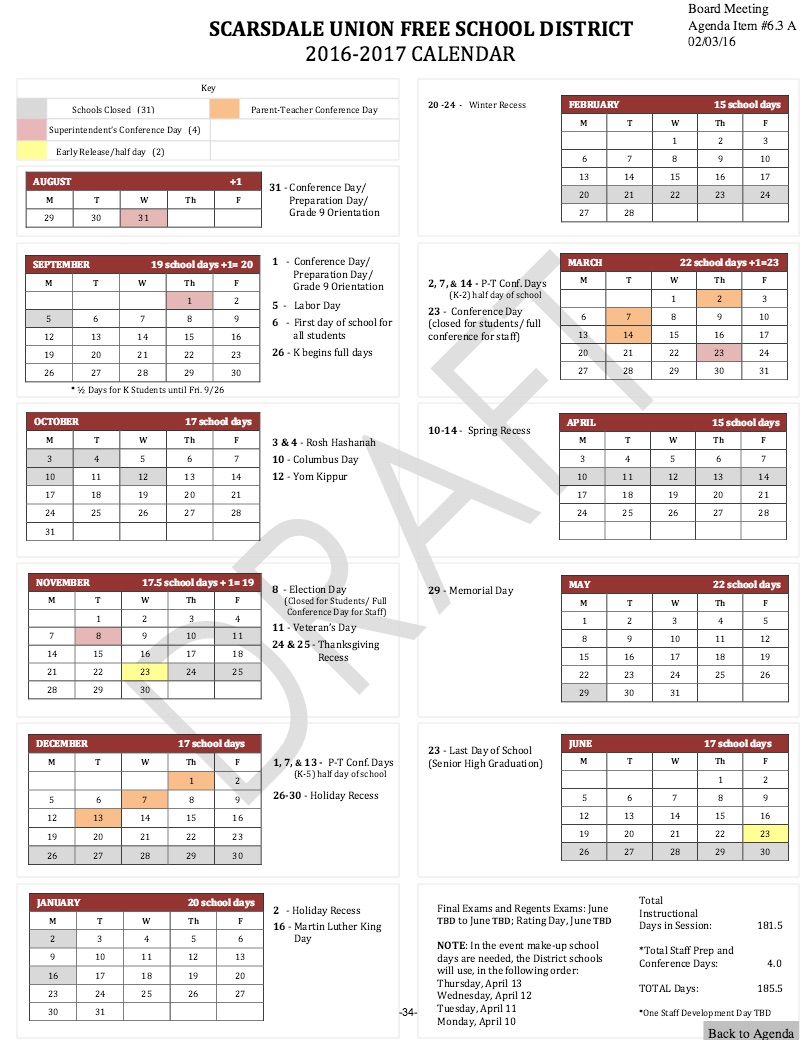
2016-2017 School Calendar
Superintendent Hagerman then presented the proposed academic calendar for the 2016-17 school year. He said, "We receive more calls about this than anything else."
The proposed calendar meets and exceeds requirements for a minimum of 180 school days and the required number of instructional minutes. School will begin on September 6, the Tuesday after Labor Day. It will be closed on October 3 and 4 for Rosh Hashanah and on Monday October 10 for Columbus Day and Wednesday October 12 for Yom Kippur. There will be a half-day on Wednesday November 23 before Thanksgiving.
Schools will be closed for just 6 school days at Christmas, from Monday December 26 through Monday January 2, reopening on January 3. There will be a winter recess from Monday February 20 to Friday February 24 and an April break from April 10 through 14. Graduation will be held on the last day of school, Friday June 23rd.
There are additional days off for Veterans Day, Thanksgiving, Martin Luther King Day, Memorial Day and Conference Days.
Check out the proposed calendar below:
Special Education:
Eric Rauschenbach, Director of Special Education alerted the board to the potential need for two special education Kindergarten classes for September 2016, rather than one. He said the district may have more kids than in the past coming into kindergarten with special needs, including international students and out of district placements. These classes are capped at 12 students, and since some move from regular to special classes after the school year begins, he recommends starting the year with extra space to allow for this.
Sustainability
In the public comments portion of the meeting, Ron Schulhof of the Conservation Advisory Council said, "The sustainability aspects and signage developed for the ECO Comfort Station at the Scarsdale Middle School can be used in other school building projects. Signs were created for many sustainable building aspects by Scarsdale High School that can be used to highlight these sustainable building designs."
The Board will hold their first budget study session on February 8 at 6:30 pm in the Board of Education room at Scarsdale High School.
Teen Center Future in Peril and Other Budget Items Under Discussion
- Details
- Written by: Melissa Hellman
- Hits: 5544
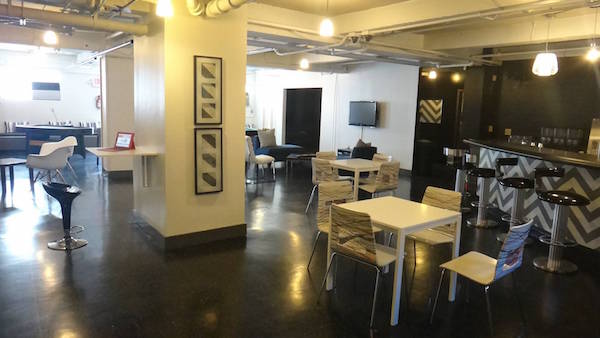 The Board of Education (BOE) discussed several budget items including the proposed emotional disabilities program at the High School as well as plans for a comfort station at the middle school tennis courts and spent a significant amount of time on The Center@862 (formerly known as the Scarsdale Teen Center) at their January 25, 2016 meeting. No funding decisions were made on any of these topics as the BOE continues its budget studies over the next few months and seeks input from the community.
Prior to the meeting, the BOE submitted a list of questions to The Center@862 on issues such as the District's relationship with The Center, rationale for continued funding, utilization numbers, financial information and long range plans. Representing The Center at the meeting was Ellen Tiven-Moore, Executive Director of The Center for the last 5 years, and BK Munguia, President of the Adult Board. Tiven-Moore opened with a statement about The Center that read in part:
"In its 17th year of operation, The Center@862 continues to fulfill its mission to offer the teens and tweens of Scarsdale a safe, substance-free place for them to socialize. The Center is a real life setting where they can practice the social skills encouraged by their families and school. The Center belongs to a network of organizations created over the years to ensure the well being of Scarsdale youth. The Center continues to provide the youth of this community with programs and activities that are fun and engaging and provide a supportive educational component."
She went on to describe many of the programs offered and organizations served by The Center including Escape the Room, Citizens Police Academy, Red Cross babysitting training courses, SAT & ACT prep classes, open mic nights, sports team-bonding nights, moving up parties for fifth graders, Young Men in Leadership activity nights, chess club tournaments, Mad Science workshops, Guiding Eyes dog training, fencing workshops, back to school events, Jack and Jill Club of Westchester events, and Soap Box Derby.
Following her remarks, BK Munguia, who has been involved in The Center since 2001, spoke about its current needs highlighting the following:
"In response to the decreased publicly funded dollars and the rising cost of operating over the past five years, the Center's Board has approved use of surplus funds to meet the shortfall. These funds represent over seventeen years of fundraising including contributions from the early Visions of Community event, state and county grants, and revenue generated from rentals and program and event fees. They are near depletion. Even if all operating costs remain flat, should public funding remain at the current 2015-2016 level, The Center will be hard pressed to continue to operate in 2016-2017. Loss of public funding by the School Board will make it impossible. "
District funding for the Teen Center currently stands at $65K (reduced from $87.5K five years ago). The other major source of public funding is the Village ($87.5K). The center runs a very lean operation relying on state grants, volunteers, private donations, and revenue from rentals and programs as described in Munguia's statement above.
The BOE's line of questioning both in their written request and follow up at the meeting indicates that they are seriously considering whether continued funding is an appropriate use of school tax dollars. While no one disputes the merit of the services provided to the community, as Board member Chris Morin said:
"I struggle with understanding the appropriateness of our funding something that functions the way you do regardless of how valuable what you do is. I don't see that we could make a grant to the United Way, for example, under our authority."
Several people spoke during the public comments period in support of The Center. Their were personal stories of how meaningful the place has been including one from Miriam Beveridge of Circle Road who spoke fondly about her son participating in team sports' dinners at the Center as well as performing in their haunted house. Beveridge, who is a Service Unit Manager in the Scarsdale/Edgemont Girl Scout organization, also talked about the critical role The Center has played in providing a meeting place for Girl Scouts as the Girl Scout House on Wayside Lane is shared by many troops and it's increasingly difficult to get space there.
Scarsdale resident Lisa Furgatch submitted a letter to Board President Maude that concluded with the following statement:
"The Center at 862 serves as a safe gathering place where young people enjoy positive experiences with their peers. It provides support for the social activities of adolescents, whether they are testing out a stand-up comedy routine in front of their friends or speaking out for a cause. Having a place to engage in positive actions encourages teens to strive toward a dedicated life rather than one of substance abuse or despair. I think the Center at 862 plays an important role in shaping our kids' futures and I hope you will continue to fund it."
In addition to whether or not it should be funding The Center there was some concern expressed by BOE members that even with District funding, The Center did not have the reserves to keep operating through the end of the next budget year. The Center's financial statements were distributed as part of the agenda packet for the meeting and can be viewed here.
Comfort Station at SMS Tennis Courts
Another budget item discussed at the meeting was the proposed comfort station at the Scarsdale Middle School tennis courts. As background, it was agreed for the 2015-2016 budget that the District would contribute $50K to the project and the Village would also contribute $50K. The construction cost of the proposed facility is now estimated to require $65K from each entity and Stuart Mattey is proposing the BOE also include a $35K reserve for the project. Important to note is that although it was verbally agreed upon, due to an oversight the line item never made it into the budget for the 2015-2016 year. Therefore, the entire amount would be a new line item included in this year's budget. Further, the property on which the comfort station is to be built was thought to be Village property, but is actually District property. This means that State Education Department approval would be required necessitating additional time and regulatory requirements than originally anticipated when the project was first proposed and agreed to by the BOE.
Emotional Disabilities Program
Also raised for discussion was the proposed emotional disabilities program at the high school. This program had been presented by Director of Special Services, Eric Rauschenbach, and discussed at the January 13 BOE meeting. In brief, it would provide services at the high school for a select group of students identified with emotional disabilities who may have otherwise required placement outside of the District. The program calls for the hiring of a Psychologist and Special Education teacher to focus solely on these students. The Board did not have any further questions about the plan at this time. During the public comments period Leanne Freda, Chairperson of Children Having Individual Learning Differences (CHILD), read the following statement in full support of the program.
"CHILD supports the new initiative proposed by Eric Rauschenbach, Director of Special Education to begin a comprehensive, therapeutic intervention program for students suffering from Emotional Disabilities at Scarsdale High School. We applaud Eric Rauschenbach and the Administration for recognizing the trend that an increasing number of our middle and high school students struggle with these debilitating conditions.
The emotional disabilities that this program seeks to address are not the situational, short-term, emotional issues that most of us have experienced, but rather pervasive, excessive, overwhelming and long-term emotional issues that interfere with a student's educational performance.
The class of students with these types of emotional disabilities is not necessarily a finite or predetermined group. While research has demonstrated that many students with learning disabilities also develop some emotional difficulty associated with their learning struggles, they are not alone. As we have seen here in Scarsdale, students in honors and Advanced Topic classes can suffer from emotional disorders that will impact their ability to access their education and adversely affect their performance.
While we are aware that this new program requires the addition of two full time positions, a special education teacher and a clinical psychologist, and possibly a part-time teacher's aide, we ask that the Board be mindful of the ultimate cost savings to the budget by substantially reducing the need to send our students to an out-of-district placement in order to meet their emotional needs. We do not expect nor would we advocate for a complete elimination of the out-of-district placement which can sometimes be the only successful program for certain students and as always will have to be determined on a case by case basis. However, having a program such as this, would also make it possible for those students to transition back to their home school with the proper academic and psychological support this program would provide.
In addition to considering the financial consequences of this program, we ask that the Board also consider the impact that sending a child to an out-of-district placement has on an emotionally fragile adolescent. As one parent whose child was placed out of district said: "moving an adolescent out of their hometown and into a new environment can be traumatic. They already struggle socially and you are requiring them to make new friends in a new community".
Many other parents have responded positively to this proposed program as well.
When asked for feedback about this initiative another parent said: "This is wonderful. So many kids in our community need this. If your community can embrace a child with emotional needs, it is the best thing for that child – and for the community".
Thank you for this opportunity to address the Board on this budget issue and for considering this new initiative. CHILD enthusiastically supports this new program and we urge the Board of Education to include this new initiative for high school students in the 2015-2016 school budget. "
Other portions of this meeting include an overview of Scarsdale's educational vision titled Scarsdale Education for Tomorrow presented in the 7:00-8:00pm hour by Superintendent Thomas Hagerman with Lynne Shain and Gerry Crisci. Also, Bernard Josefsberg announced that he had received notice of 19 retirements effective at the end of the school year. Faculty names were not provided but were promised at one of the next two BOE meetings. The entire meeting can be watched on the BOE's Video on Demand site here.
The Teen Center and the comfort station will be discussed at the next Board of Education meeting on February 3. Community members should let the Board of Education know their thoughts on these two issues. Scarsdale residents (adults and teens) who would like to get more involved in supporting The Center@862 at this very critical time should visit their website and/or contact members of Center's Adult Board of Directors.
School Board Weighs Options for Greenacres and District Facility Needs
- Details
- Written by: Melissa Hellman
- Hits: 10367
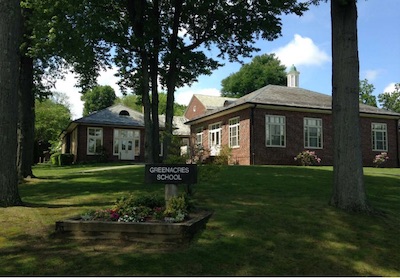 The Board of Education heard the findings of the Re-convened Greenacres Building Committee on the morning of January 13 during its regularly scheduled meeting. Russ Davidson from KG&D Architects provided the background, process overview, evaluation criteria, cost estimates and finally the group's recommendation that the Board should only give further consideration to Option B1 (renovate current building with an addition) and Option C (construct a new building on the playing field across from the school). Davidson also presented the District's Building Conditions Survey which served as a reminder that Greenacres Elementary School is just one facility with a high level of need among a group of buildings which all require some attention.
When the Re-convened Greenacres Building Committee began their review process in October 2015, there were 4 options under consideration. These options have been previously been reported here:
In summary,
1. Repair building "as is" without any program related improvements.
2. Option A - renovate interior to educational model standards. No additions to the building.
3. Option B – renovate interior to educational model standards, plus build a three level addition at the north corner (Putnam Road) of the building.
4. Option C – build a new school on the open field area across the street and convert existing site into playing fields.
In the process of evaluating these options, a new version of Option B evolved (now called Option B1) in response to concern over the need to provide temporary classrooms during the proposed Option B construction period. In addition to interior renovations, Option B1 supplies an additional six classrooms and several small group instruction spaces in a two-story addition on the north side (Huntington Avenue) of the building. This addition could be built while classes go on in the existing rooms. When the new classrooms are complete, students would move into them while the existing classrooms are reconfigured and brought up to educational model standards. In the Committee's view, this option provides the benefits of original Option B with a lot less disruption. Therefore, the original Option B was eliminated from the discussion.
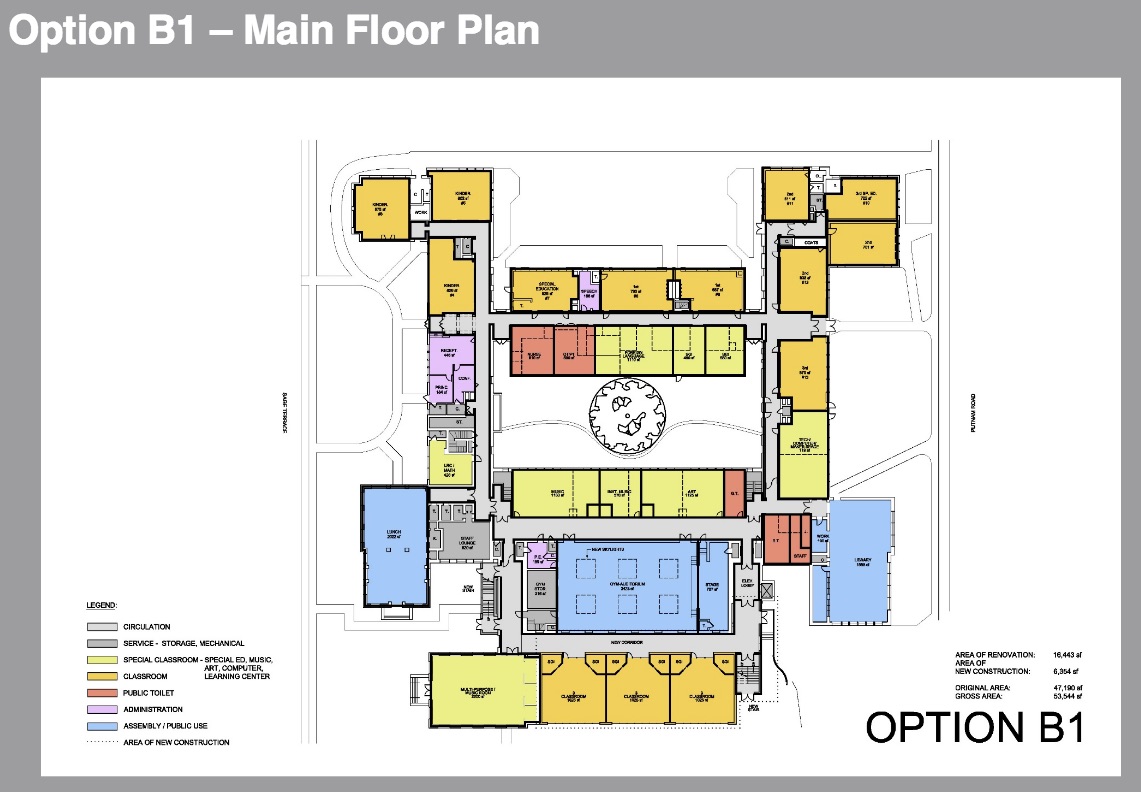
The Committee identified evaluation criteria and defined the following eleven assessment factors which are listed in order of importance as ranked by the Committee:
Educational Adequacy – compliance with model program standards and flexibility for a 21st century educational setting.
Building Condition Evaluation – overall condition of the building and quality of completed construction including ventilation, air conditioning, and overall interior environment.
Safety and Security – ability to provide a safe and secure experience for students and staff including arrival and departure and transit to outdoor spaces.
Historical and Community Significance – value of the historic aspects of the project and the configuration of fields and open space.
Operational Issues – total cost of the project over its entire life including maintenance, utilities and financing costs.
Disruption During Construction – extent to which normal operation of the school is disrupted.
Aesthetic Considerations – quality of the overall interior/exterior appearance of the building, site, landscape design and fit within the neighborhood character.
Initial Construction Cost - $$$
Sustainability – consideration of environmental footprint.
Accessibility – ability of the project to provide for those with disabilities.
Future Expansion Capabilities – the ability to add additional capacity.
The Committee went on to vote on how each option performed against each criterion and also identified the preference of community members and staff separately within each evaluation area. The architects and Board of Education members on the Committee did not vote. The results were tabulated and shown in graphs such as the one below on Initial Construction Cost:
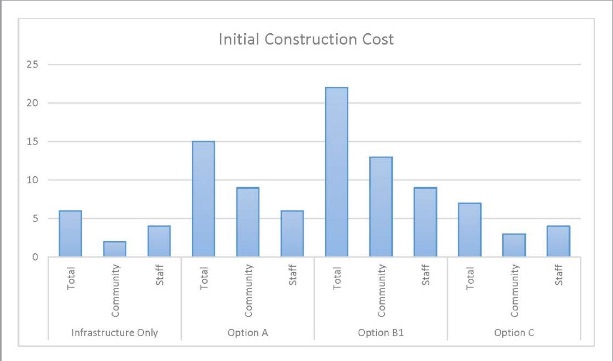
There is a similar graph for each area of evaluation that can be accessed along with the entire presentation here:
The Committee recommended that Option B1 and Option C offer good solutions to all criteria measures. The estimated cost for Option B1 is $49.4 million and the estimated cost for Option C is $56.4 million. Other recommendations from the Committee include recognition of the need for additional community input, and further study on the closure of Huntington Avenue (a complicated procedure last attempted in 2011-2012 requiring petitions to the New York State Legislature) independent of the building project planning process. The very detailed Committee report can be found as part of the meeting agenda packet here.
The first public forum on the future of the Greenacres school building is scheduled for February 1, 2016. Community members are encouraged to familiarize themselves with the work that has been done to date and bring their views to the forum. The current timeline calls for this work to be incorporated into the District Wide Facilities Master Plan in May so that it may be reviewed in the context of the entire District's needs in the June-November timeframe.
On the heels of the Greenacres discussion, Russ Davidson presented the Building Conditions Survey that will serve as a major piece of input to the District Wide Facilities Master Plan referenced above. The survey report is a detailed description of the District's facilities needs and related costs for repairs and improvements. It is required by the New York State Education Department (SED) and forms the basis for the Five Year Capital Plan and Executive Summary also required by SED.
Facility needs identified by the survey fall into 4 categories:
Priority 1: Urgent work required for safety or to prevent imminent facility damage.
Priority 2: Health and safety work required by current building code.
Priority 3: Replacement of aging building systems, general maintenance and efficiency improvements.
Priority 4: Desirable improvements related to appearance, functionality and curriculum.
The estimated costs of work identified by the report are broken down by priority category below:
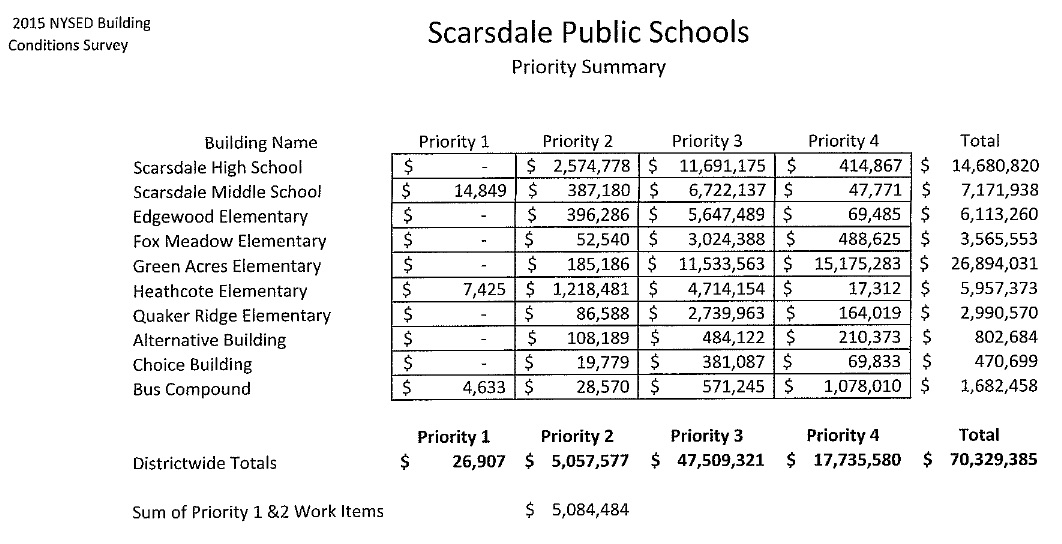
The line item details and breakdown by school are available as part of the agenda packet distributed for the meeting here. It includes needs for repair or replacement of items in each building such as roof work, HVAC systems, lighting, stair rails, doors, windows, fire alarm systems, masonry work, and aesthetic and program related improvement items large and small across the facilities.
Of importance to note is that the total cost of priority 1 and 2 items is $5 million reflecting the well-maintained condition of the District's buildings. Also important is that the cost of the Greenacres facility "as is" option ($26 million) is included in this total number. Further, no one should interpret the above chart to mean that the District needs to immediately undergo $70 million of facilities remediation. As was stated by BOE member Pam Fuehrer "I don't think any of us can expect that we are going to tackle the $70 million from that survey now or in two years or in four years" describing it as more of a long term plan.
Whatever work is selected to be completed either out of necessity or aspiration would be financed by a few different sources (i.e. the yearly capital improvements budget) but primarily with the bond issuance being planned for 2017. The bond financing that would be available at that time without any tax impact is projected to be about $62 million dollars and the Board of Education will have to balance how much of this money would be allocated to the Greenacres school building versus other facilities' needs.
Board Member Suzanne Seiden reminded the Board and Administration that although it may seem that Greenacres would be receiving a disproportionate amount of the proceeds from the proposed bond, part of the reason for this situation was an intentional decision by the Board to handle Greenacres as a separate matter given the scope of the work required there. Facilities improvements to Greenacres were deferred during the discussion of the 2014 bond issue for this reason. Seiden's tenure on the Board will be ending this year. Her reminder was crucial as the Board is possibly in a position where they will be asking the community to vote in May 2017 on a very large bond issue (as a comparison the 2014 Bond was $18 million) to primarily finance needs at a single elementary school. The public may not have the institutional memory to consider what was discussed or decided in previous years when it comes time to pull the lever.
In the context of balancing the facilities needs of the entire District, the Board will have a discussion at the next meeting as to whether or not it will be reasonable to consider Option C for Greenacres. Although the difference between the total costs of the two options is projected to be at $7 million, Option B1 is structured so that it could be implemented in phases spreading the cost out over time and changing direction if necessary. Option C is all or nothing. The Board was clear that it was not going to come to any resolution on this topic prior to getting input from the community at the February 1 forum. However, Board members also expressed concern that it would be false to go into the forum with both options on the table equally if in fact the current information available regarding the District financial position precludes giving Option C reasonable consideration.
During the comment period Barbara Wenglin of Greenacres spoke in support of Option B1 and in support of the upcoming community forum. Amy Hosseinbukus of Greenacres asked the Board to give serious consideration to Option C. She expressed that the difference in projected cost of $7 million was not so high considering the prospect of an entire new state of the art building versus the old building renovated with an addition. She said that she hoped the very vocal group of Greenacres residents who opposed the location of the proposed new building did not dissuade the Board from entertaining this option. She stated that she herself felt intimidated about speaking her opinion because of the perception of supporting Option C as an unpopular view in the Greenacres community.
These two topics represent only a portion of an over three hour meeting covering updates on the Transition Plan, a proposed Special Education Program for Emotional Disabilities at the high school and a preliminary review of new personnel requests to be considered for next year's budget. View the meeting and discussion in its entirety at Scarsdale's Video on Demand Site here. The next regularly scheduled Board of Education meeting is Monday, January 25 beginning at 6pm.
No Mandarin Instruction at SMS in 2016-2017
- Details
- Written by: Melissa Hellman and Joanne Wallenstein
- Hits: 6949
 In a marathon meeting that ended at midnight, The Board of Education discussed and voted against adding Mandarin to the middle school language offerings for the coming school year. A passionate group of parents raised the issue during the 2015-16 budgeting process, which led the Board to include a world language review in their 2015-18 Transition Plan. In order to assess interest in adding Mandarin to the curriculum, the administration sent out a series of surveys to Scarsdale parents in October. Though the surveys indicated strong interest in adding Mandarin, the administration and board agreed that more study was needed before implementing a new program at the middle school level.
The meeting was standing room only with many community members who have spoken in support of Mandarin returning to the microphone to make their case before the Board vote. During a lengthy period for public comment many residents and a few students spoke fervently about the district's language offerings. Quite a few of the parents appeared to be speaking English as a second language and were not necessarily proficient in Mandarin. However, all agreed about the importance of teaching Mandarin in the schools. They acknowledged that many children from Chinese families attend afterschool or weekend Chinese language programs and that the program in the Scarsdale schools would benefit a wider group. Parents argued that the Chinese economy is second in the world, that learning Mandarin widens students' global perspective and that Scarsdale was falling behind other districts where Mandarin is already offered. They emphasized the need to begin instruction at a young age.
Superintendent Thomas Hagerman provided the rationale behind the administrations recommendation not to add Mandarin at the middle school at this time.
He reviewed language choices at the high school where a four-year Mandarin program has failed to garner significant enrollment. According to Hagerman, at SHS Latin is taken by 3.65% of students, Mandarin 4.78%, French 22% and Spanish 70%.
He continued, saying, "This is not about adding a class and a book. There are real challenges ... we would need a rigorous curriculum review process and we would need to hire the right staff. We have a set number of kids and would need to adjust the staffing. He then restated the administration's recommendation to "uphold our position that any successful implementation of Mandarin requires the following: A wider understanding of student interest and participation, a deeper consideration of a Middle School developmentally appropriate program sequence, as well as a clearer sense of related staffing and system considerations."
He discussed the challenges of implementing a new program and the shortcomings of the current Mandarin program at SHS. He said, "We need a highly qualified teacher with a specialty in curriculum development with good English who understands middle school kids. We started off with 50 kids in the high school program, dropped to 18, then 16, and then rebounded to over 20 students. There is so much variability. We have had kids tackle the most difficult courses in the sciences, but have not had the same experience with Mandarin in the high school."
Hagerman contended that more information was needed from students and parents and that the school needed to learn more about how many students would actually enroll in Mandarin classes and why participation is now so low at the high school. He also said that the elementary school PTA's offered Mandarin as an afterschool club, and though there was initially high interest, it waned.
Other obstacles include the difficulty of the learning the language, scheduling around the four-house system in the middle school and the potential need for daily rather than alternating day language classes and a language lab.
Each Board member spoke individually on the issues and all were in agreement that research was needed to determine the best way to teach this difficult language and to determine the optimal grade at which instruction should begin. Board members mentioned several times during discussion that this budget year will be very challenging given a tax cap projected to be at or near zero as well as a desire to fully focus on the goals laid out in the 2015-2018 transition plan.
Board members cited concern about the ability to bring a quality, fully sequenced curriculum to SMS in such a short time frame, whether the demonstrated level of student interest justifies the addition of Mandarin, concern about lackluster participation in the high school program, challenges to implementing the program within the existing house system and 6th grade alternate day language instruction schedule, the desire to focus finances, intellectual capital and resources on more developed programs to which the district already committed (and in some cases have physical space designed and built around) such as STE(a)M, coding, and early literacy initiatives.
They all acknowledged the participation and work by community members to bring the question to the board and indicated that the administration would continue to study how best to teach world languages to all district students.
Suzanne Seiden, who is serving for her sixth year on the board said, "I appreciate your input, participation, and your passion on this issue. Thank you for speaking up and out. We have listened to your views and you have made a great case. Our job is to listen and weigh the information. I was on the board when we added Mandarin to the high school. It takes years. We want to do it right. We have more work to do before adding Mandarin at the Middle School. Now is not the time to do it. We are implementing the superintendent's transition plan and the STEAM curriculum. I support the administration's recommendation to create a world language committee and incorporate those recommendations into the next strategic plan. I encourage you to keep participating and pushing us to make it happen."
William Natbony said, "The reports and emails from the administration and the community have been well researched. I have carefully reviewed all the information.
I have a fiduciary responsibility to the community and I must balance diverse interests when considering issues such as this one.... There is no denying the importance of Mandarin today ... and no disputing that it's tough to teach and to learn.... It has to be taught in the right way, otherwise it will be a careless waste of our resources. I believe that it will be a part of our program, but that doesn't mean that we should rush to add it next year. It must be evaluated in light of the program as a whole. I encourage the board to work collaboratively to reach the right answers.
We should not rush a program through for the middle school for next year. One of our goals is a district-wide review of world language program....The new committee will allow consideration of the broader issues. My view is that we should not move forward at this time.
Chris Morin said, "I support adding Mandarin when we have student driven demand, commitment and excellence so I don't support moving forward next year. Many of the initiatives we have planned involve 4000 students, not 60. This is the wrong time to shift priorities."
Scott Silberfein said, "I believe we should better prepare our students for the future, not just in world language but in all areas. .. As a parent I would say yes to Mandarin. But as a board member we have to worry about what would make the most meaningful impact on all of our students. I would ask the administration to plan for the future."
Pam Fuehrer reviewed the curricular goals in the transition plan and said, "The stated goals of the transition plan are paramount. Nothing but critical situations should remove district leadership from this work plan. Reviewing the world language is a goal, but adding a Mandarin is not. The rush could easily compromise quality."
Art Rublin: Thank everyone for their input and for Ms. Maude responding to each of the emails the district received.... When it comes to significant decisions, the buck stops with the board. I find the argument to add Mandarin compelling, but I find that it is premature to add it. I agree with the administration's questions.
Board President Leila Shames Maude outlined her reasons for supporting the administration's recommendation not to add Mandarin in the Middle School for the 2016-17 academic year. She said, "It's not clear that we have demonstrated interest in Mandarin, given the "tepid results from rollout in the high school." She added, "I am not sure we know how to properly teach this language. ...I hope we can determine when is the right time to begin instruction...I don't want to see us set up to fail. It's going to take more time and it's time well worth spending to do it right."
The Board and Administration acknowledged the importance of Mandarin in the current world economy and their desire to be able to provide a high quality Mandarin program in the middle school pending further research. To that end, the Administration has proposed the formation of a World Language Team to study Scarsdale's language programs, and with regard to Mandarin provide more details on implementation if added. Any recommendations for changes, new language offerings, etc. would be part of the next Transition Plan for 2018-2021.
Following the vote, the disappointment in the room was palpable, with the issue coming to closure after many months of lobbying by a very committed group of Scarsdale parents who were hoping for a different outcome. Julie Zhu wondered what will change by the time Mandarin is considered in the board's 2018-2021 plan. She said, "Mandarin will still be a difficult language to learn, the house system will still be in place, and it will still be difficult to hire Mandarin teachers."
Mayra Kirkendall Rodriguez wrote in an email, "The Mandarin in the Middle School Initiative Team and I are very disappointed that yet again implementing Mandarin in the Middle School has been delayed. We thank the Board for reading our memo and parents' letters, and for individually explaining to the Scarsdale community why each one voted against Mandarin inclusion for the Fall of 2016. We urge the Administration to publicly state when this new world language committee to study all language instruction will be assembled, what foreign language fluency objectives it will analyze, who will be in the committee, and what foreign language fluency level the members will have. It is very important to include a multilingual parent in the committee. Transparency from the administration in the new committee's objectives and Mandarin implementation timeline is critical to the Scarsdale community."
Bob Berg also contributed his view supporting the administration's decision:
"I was happy to see the very large number of Chinese and other Asian residents (as well as many others) who attended the meeting and spoke eloquently and from the heart in favor of extending Mandarin down to the Middle School. As Dr. Hagerman noted, most School Board meetings are attended by a "faithful few" members of the public. It is important to engage many segments of the population in school matters, especially groups which have not, in the past, been outspoken in the public discourse. That being said, I agree with the Administration's decision not to implement Mandarin in the Middle School next year. Too many challenging, unresolved issues remain – the Mandarin program in the high school is faltering, with a high drop out rate; no one really knows the extent of student and parent interest in a long term commitment to studying this very difficult language; we don't really know yet how best to teach the subject; and the costs of the expansion are not insubstantial . Moreover, the Administration has a full platter of challenges right now – major renovations and construction at the schools; figuring out what to do about the Greenacres elementary school; and putting together an acceptable budget that comes in below the tax cap in a year with zero inflation, among other major issues. So, even though the Board's decision last night not to proceed on the Mandarin front was painfully disappointing to many in attendance, it was the right decision. While many in attendance may think that the Board just kicked the can down the road again, I believe that the Administration and the Board will study the issue deeply and in good faith, in the context of reviewing and improving our entire foreign language program. Those in favor of the Mandarin expansion should engage with the Administration, and the Administration should welcome the insights and wealth of knowledge of our Mandarin-speaking community members."
The details behind the Administration's recommendations can be found as part of the meeting agenda packet available here. The entire meeting with community comments and each Board member's individual statement on these issues can be viewed on the Scarsdale Schools' video-on-demand site. The next Board of Education meeting is scheduled for Wednesday, January 13, 2016.
A Dobbs Terrace father told the board that this was his third meeting on the topic of Mandarin, in the same room with the same people. He drew a laugh when he said, "One of my favorite movies is Groundhog Day." He warned, "Unless you give them what they want you will hear the same thing over and over."