







Global Citizenship Day and STEAM Day
- Details
- Written by: Joanne Wallenstein
- Hits: 5395
 On Thursday, October 8, Scarsdale High School will host its Global Citizenship Day. The purpose of the Day is to foster awareness of various problems facing the planet on an economic, environmental and political plane. The Day also seeks to enlighten students as to important global trends. Finally, the workshops also seek to promote student critical-thinking and involvement in addressing these global issues.
Workshops are held during the day with speakers from the local community, professors, teachers and/or student groups on a wide variety of topics, ranging from Climate Change to Sustainable Agriculture to Educational Equity to Protest Art to Scarsdale in the Nation's Service to LGBT rights to a host of other topics relevant to our world today.
This is a great opportunity for students to think critically about their world. For more information contact Maggie Favretti at 914-721-2567.
STEAM Day
The Scarsdale PT Council is excited to announce that its first STEAM Day will take place on November 14th from 9am until 12pm at the Scarsdale Middle School for 4th through 6th graders.
The workshop catalog can be found on-line here:
The morning will begin with a keynote address by Don Luistro, a science instructor at the New York Hall of Science. Mr. Luistro will give demonstrations on the phases of matter. Students will be amazed at how they can make ice in 30 seconds, shrink balloons without removing the air inside, and crush a can without touching it. Mr. Luistro will then be joined by more than 25 amazing individuals spanning the spectrum of STEAM disciplines who will share their talents with the students through small hands-on workshops. The format of the day will follow that of the ever successful Young Writers' Workshop - each student will have a chance to experience two of our workshops which they will choose during the registration process.
Registration will take place on-line beginning October 15th, 2015. A link to registration will be provided to you as we near the opening of registration.
Support this exciting and inspiring district-wide event. Contact the Co-Chairs with any questions.
Ophira Cukierman ([email protected]) and Amy Goldstein ([email protected])
STEAM Day 2015 Co-Chairs
Scarsdale Teachers Use Summer for Curriculum Innovation
- Details
- Written by: Melissa Hellman
- Hits: 10369
 How did Scarsdale's teachers spend their summer vacations ..... creating exciting opportunities for students in the fall. The Board of Education study session on September 21 was devoted to summer curriculum work and its impact on student learning.
Assistant Superintendant for Instruction Lynne Shain introduced the topic by reiterating the goals of summer curriculum work:
• Examine Current Curriculum (what are we doing?)
• Enhance Current Practice (how can we improve?)
• Imagine Possibilities (what might be?)
The six presentations that followed provided excellent examples of these guiding principles.
Early Literacy
Susan Luft and Trent DeBarry, the newly appointed ELA helping teachers, discussed summer work in support of the district's early literacy initiatives. Throughout the summer, Scarsdale Elementary School teachers joined educators at Columbia University's Teachers College to study methods of teaching literacy. Noteworthy authors, world-renowned teacher educators, and experts in the field of literacy and learning were on hand to support teachers in the development of best practices.
Luft and DeBarry also addressed how to ensure that reading specialists applied methods consistently across all elementary schools. They selected a common assessment tool as well as an intervention program from literacy experts Fountas & Pinnell that will identify who needs help and assist struggling readers through an intensive pull out program. Teachers are being trained in this program and every first grader is now being assessed.
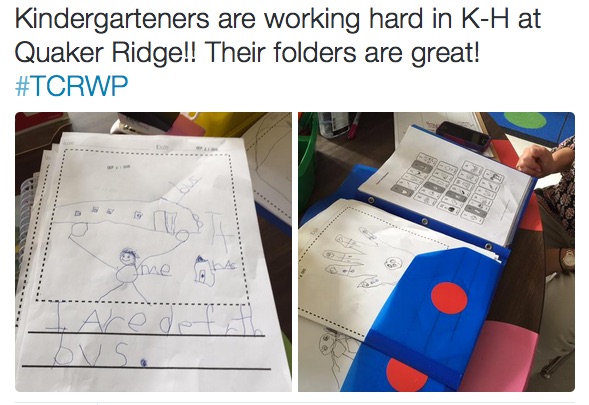
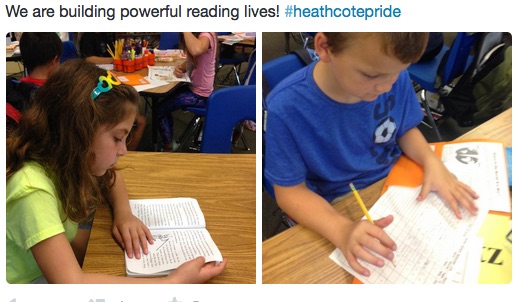 The ELA helping teachers have their own section on the district website and you can follow their efforts on twitter @ScarsdaleELA to see the program in action in the classroom.
Here is an example of a recent tweet:
High School Physics
High school science teacher Joe Vaughan offered a demonstration of how physics instruction would build on its existing basic circuitry unit to further student knowledge to the level of complex circuitry. Vaughan had to provide a bit of history (as well as a physics lesson) in order to bring the room up to speed. 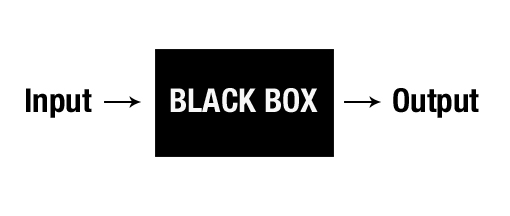 He explained that students enjoy the basic circuitry unit but general instruction has not gone beyond this level to date. The goal was to design a hands-on piece of equipment that students could use for a "black box" experiment. In science, computing, and engineering, a "black box" is a device that can be observed in terms of its inputs and outputs, without any knowledge of its internal workings. Mr. Vaughan distributed teacher-built circuitry boards with light bulbs and switches that students can toggle, then observe results and ultimately diagram the circuit. Although complex circuitry is not a NY State required part of the curriculum, the processes of experimenting, indirect observing and testing hypotheses support the higher order thinking skills Scarsdale seeks to foster among the student body.
High School Environmental Science
Shain prefaced this presentation from science teachers Richard Clark and John Neering by announcing that this project was in the category of "Imagine Possibilities". The idea is to give teachers latitude to think outside the box and develop a "what if" scenario. Unlike Mr. Vaughan's circuitry tool that will be used in the classroom this year, it is uncertain where these ideas will lead. Rather, these are brainstorming opportunities that could inform curriculum development in the future and are part of the professional development culture that keep Scarsdale schools innovative and ahead of the curve.
Clark and Neering imagined a greenhouse built in the high school courtyard as an extension of the forthcoming Design Lab. They discussed the various ways it could add to the environmental science curriculum allowing for study of such topics as solar power, water purification, bio-fuel energy systems, green building materials, the impact of chemicals on fish and waterways, the impact of climate change on sea levels, aquaculture and hydroponics, and vertical farming.
Technology in the Elementary School
Paul Tomizawa, Head Computer Teacher at the elementary level, discussed a summit meeting of 4th and 5th grade teachers to evaluate the 1to1 model (each student has a Chromebook) that is underway in these grades. It was an opportunity to share expertise and develop best practices. They reviewed the management software that allows teachers to monitor student accounts and also discussed the development of digital literacy elements such as blogging and creating on-line digital portfolios.
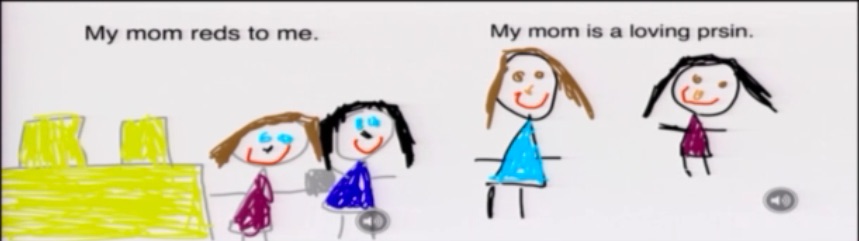 Also convened was an iPad training day for teachers in K-3 with a focus on how to integrate iPad technology and tools into the curriculum. For example, kindergarten students are using the iPad camera to take pictures of math concepts in their school buildings. There are also publishing tools available such as an application called "Book Creator" which students are using to create eBooks.
iPads in the 6th Grade Math Classroom
Erik Arfsten, 6th grade math teacher, described the development of the 1to1 iPad program in sixth grade math classes. Teachers worked over the summer to integrate this tool into the classroom in a way that would not become a big distraction for students. One day was spent researching applications that would supplement the curriculum and offer additional practice for students. Teachers also looked at applications that would provide deeper content knowledge as enrichment for students who may be ready to move ahead on a subject before the majority of the class. An additional day was spent on the concept of creating a paperless classroom. Arfsten is now piloting this program and reported that his classroom is almost entirely paperless with the exception of exams. Students can type or take hand written notes on their iPads and save them on Google drive making them accessible from any Internet enabled device.
STE(A)M in the High School
The final portion of study session, presented by Lisa Yokana, Art Teacher, and Jeremy Szerlip, Science Teacher, was on developing the STE(A)M course sequence at the high school. For some background on this initiative you can read our coverage here. Their summer work focused primarily on the two introductory level courses with emphasis on making sure the courses were consistent in terms of mindset, design thinking and documentation. They concluded the courses should be project based, contain open-ended problems with multiple solutions, connect the work to science/engineering principles and foster creative confidence in students. Yokana and Szerlip also mentioned that an important goal is to create an appealing entry point to the STE(A)M field for both boys and girls and making sure that the selected projects appeal to both sexes. They consulted with Engineering teachers from the Science Leadership Academy who are currently in the second year of delivering their program.
The first course, Introduction to Design and Fabrication, will expose students to design thinking, tool use and the importance of documentation. Potential projects are to take apart and repurpose old electronics, build a balloon powered car with a 3d printer, design a book bag, design and build a chair-then flat pack it. The second course, Introduction to Engineering, will expose students to different types of engineering with potential projects such as wearable technology and bridge building. There are currently 13 students prototyping these projects who are getting independent study elective credit for their participation. These courses are currently scheduled to begin in the fall of 2016 as electives that will meet two days a week.
These six presentations were samples of the important work that takes place over the summer to maintain and create the rich curriculum offerings for which Scarsdale is known as a model school district. The study session can be viewed in its entirety on the Board of Education's Video on Demand site.
PT Council Urges Regents to Turn Down New Teacher Evaluation Plan
- Details
- Written by: Joanne Wallenstein
- Hits: 8040
 Dear Community: Last June, the NYS Board of Regents approved a temporary 90-day teacher evaluation plan that placed more weight than ever before on standardized tests. Under this plan test scores can comprise roughly 50% and in some cases 100% of a teacher's overall evaluation score. This test-heavy plan could unduly stress children, and encourage teachers to spend more time on tested subjects like Math and English, and less on the rest, like Science, Social Studies, Art, etc. Teachers could feel obliged to "teach to the test" because their jobs are dependent on it. The plan appears to have no basis in research or studies.
Dr. Hagerman, the Scarsdale Board of Education,and the PT Council, in partnership with the Scarsdale Teachers Association, and joining thousands of education stakeholders across New York State all made statements opposing the passage of this 'APPR' legislation. Opponents have been working hard to slow down implementation and there is still another chance to make a difference.
The plan is now up for a vote to make it permanent, and we can ask the Regents to vote "no" at their Sept 16-17 meeting. The June vote on the temporary plan was 11 yes to 6 no. We are hopeful that with enough outcry, this plan will be defeated, and a better, research-based plan can be created and adopted instead.
A sample text and all the Regents' email addresses are posted on our website -- please consider this action today!
Lisa Eisenstein and Diane Greenwald
Co-chairs, PTC Legislation Committee
School Board Reviews Transition Plans and Progress on Buildings and Facilities
- Details
- Written by: Melissa Hellman
- Hits: 5166
 The Board of Education has been busy all summer preparing to lead Scarsdale through the 2015-2016 school year with two newly elected Board members, Pamela Fuehrer and Arthur S. Rublin, and a new Board President, Lee Maude. The first regularly scheduled school year meeting occurred on Wednesday morning September 9, 2015. The morning meeting time and mid-week day is part of a new scheduling format introduced this year to offer an opportunity for participation to community members who have been unable to attend Monday evening Board meetings. Also new this year is participation of the Assistant Superintendents (Bernard Josefsberg – Human Resources, Stuart Mattey – Business, Lynne Shain - Instruction) at the Board table for discussion. The benefit of this arrangement, according to Maude is that it "will allow us to have meaningful, authentic, and collaborative conversation and reach consensus among the Board and the Cabinet. "
The Board introduced an operational framework titled "Three Year Transition Plan" from which they will work to complete educational goals and initiatives, complex planning, vast administrative management duties and advocacy. The plan designates eight areas of focus, or Portfolios, as shown below.
- Curriculum, Assessment, and Instruction/21st Century Learning
- Construction and Facilities
- Communication, Community Involvement and Political Outreach
- Budget and Finance and Negotiations
- Technology
- Special Education and Pupil Services
- Human Capital and Leadership Development
- BOE Development, Leadership, Succession Planning, and Staff Relationships
Each Portfolio group has a leadership team, sub-goals, timetables, measurements and deliverables. For more detailed information, review the entire document can be here and read our recent interview with Dr. Hagerman here:
At each meeting, after discussing Board administrative business, the Board will work on various aspects of the Transition Plan. During Wednesday morning meetings, the Board will review progress on the Transition Plan followed by an in-depth presentation and discussion about one or two of the eight Portfolio topics. This week's meeting provided updates on work completed over the summer in each Portfolio area followed by a presentation on Construction and Facilities by Stuart Mattey.
Mr. Mattey is new to the district having just taken over the business position from long-term employee and repository of institutional knowledge Linda Purvis. He faced a tremendous amount of work and little time to get up to speed in his new role. He did an impressive job covering the facilities issues, demonstrating familiarity of district history and a firm grasp of the work requirements ahead.
Mattey highlighted a number of important subjects during his presentation including:
• Current and future construction projects with schedules and budget statuses.
• Formation of the District Construction Committee. Membership solicitation letter to community has been sent out. The deadline for applications will be extended in response to requests from community members for more time.
• Personnel additions to the Greenacres Feasibility Committee from school staff, neighborhood association, and PTA for a total of 8 new members (total committee membership will be 18).
• Detailed back-up documentation for the Greenacres Feasibility Study on building conditions, classroom standards and demographics, comparison to other buildings in the district, and general research on classroom size will be made available on the Board of Education website in the next week or two.
• Concerns about the lengthy State Education Department approval process of construction projects and potential adverse impact to current implementation plans.
• A district-wide building condition survey to be completed by architects KG&D over the next few months to become key component for a five-year capital plan.
A final note on Greenacres; the Board acknowledged that there is a lot of community concern and desire for involvement in the decision making process. Once again it was stressed that no decisions have been made about the future of the Greenacres School and the situation will continue to be reviewed in collaboration with all the interested stakeholders.
This meeting can be viewed in its entirety on the Board of Education Video on Demand site here. The next Board of Education meeting will be held on Monday, September 21, 2015.
Superintendent Hagerman Outlines District Roadmap
- Details
- Written by: Joanne Wallenstein
- Hits: 8101
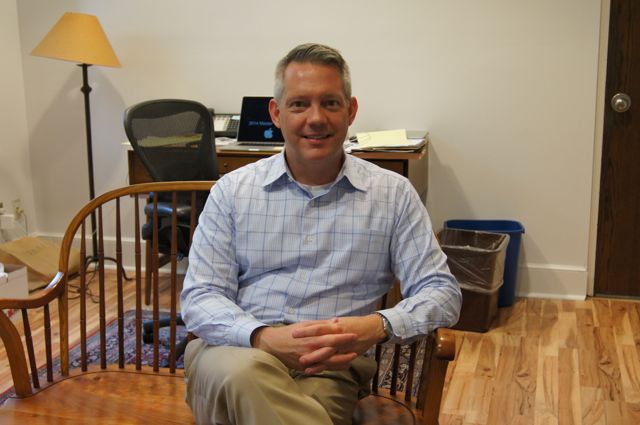 As the 2015-16 school year begins, we checked in with Scarsdale Schools Superintendent Thomas Hagerman to find out what his priorities are for the new year. We started out with some specific questions, but in response, he also shared his broad strategic plan for the district, which is included below.
Hagerman's three-year road map addresses the curriculum, the facilities, finances, professional development, political advocacy and the roles and responsibilities of the district leadership and the Board of Education. It's a far-reaching plan to address both the philosophical questions and the nuts and bolts of running a large school district during a time of transition in leadership and the transformation of the physical plant.
Though there is much to review, here are a few issues that I found of interest in the plan:
At the elementary, middle school and high school, the administration will  examine the integration of the STEAM curriculum. Now that maker spaces are available in the elementary school and new areas for design thinking and collaborative learning are planned for the middle and high schools, the administration will need to clarify how to develop "pockets of innovation" in the school and embed design thinking into the learning process.
The plan calls for the implementation of a new professional development program for elementary school teachers, to enrich their teaching skills in "balanced literacy, Singapore Math, and inquiry science." Specifically, it says, "Create Scarsdale's Teacher University (name? TBD) as an intensive professional development opportunity for P1-P4 teachers that focuses on balanced literacy, Singapore Math, and inquiry science by coordinating efforts between our current STI, Helping Teachers, Mentoring Program and Teachers-In-Charge."
The administration will examine the process of how formal and informal feedback on student progress is given to both students and parents at all levels. At the elementary school, the report card will be reviewed and revised.
 For those calling on the district to add Mandarin instruction at lower grade levels, the plan calls for a World Language Review to "Establish process to determine whether to add language(s) Examine any appropriate language options (including Mandarin) and to implement, if appropriate.
In terms of personnel, the district has hired an interim Assistant Superintendent of Personnel to fill in for Joan Weber, while a formal search for her replacement is underway. The plan calls for the creation of a "modified entry plan for the new Assistant Superintendent of Human Resources, and for a search for a permanent replacement.
As if this was not enough, the teachers' contract expires in June 2016, so the plan calls for the district to "Collaborate on and take part in collective bargaining" on four expiring contracts with the STA, SPA, ASTAA, and MADSA.
On a lighter note, with "Snow Queen" Linda Purvis in retirement, the administration will review their inclement weather policy and practices. New procedures on the two-hour delay and snow closings could be in the works!
Below find questions and answers from Dr. Hagerman, as well as the complete outline of the plan for 2015-16.
Did you get any time off this summer? What did you do to rest and rejuvenate?
I took a little time off; mostly to move from my rental in White Plains to my new home in Hartsdale. Not too much resting or rejuvenating though.
Now that the final school registrations figures are in, do we have any elementary school classes that are above the maximum enrollment?
We won't have a final count until kids actually arrive later in the week. On paper, we look good right now.
How do you think the construction projects will affect the educational agenda for the coming year?
I'm not sure I completely understand the question. The educational agenda (along with health and safety) are the drivers for most of the construction projects. So, in this respect, we are working to improve our programs through creating better learning environments. If you mean whether construction will interrupt teaching and learning, then that is likely true, although we continue to try to minimize any disruption to the extent we can.
There is ongoing controversy about the fate of the Greenacres School. What are your thoughts on the process? How can you ensure that all views are heard and fairly evaluated?
We are building off the feedback that we have received from the last building meeting, architects, community members, and the staff. We are in the process of redoubling our building committee work, and establishing a District committee to manage both Greenacres work and broader projects that may be included in a future bond.
Any major process like this will engender different ideas and opinions. This is not a bad thing. It does require open dialogue and active listening on the part of everyone.
State test results are out. What are your thoughts about the performance of Scarsdale kids?
I am going to defer this to Lynne (Shain).
Will the district continue to fight for more local control of curriculum and testing–are there any specific initiatives in the works at the state level that we are evaluating?
Yes. We have a three-pronged approach for this work: the BOE (through Portfolio group goals), PT Council and PTA advocacy, and through our teacher engagement with their various organizations. APPR is a huge focus of our energy right now as it continues to be unclear and unfair evaluation of teacher performance or effectiveness. The State has also made the determination that every teacher will have assessments for every content area (SLO process). This is untenable, and we are working to bring a more realistic view of State assessments and what their roles should be vis a vis our students.
What are your priorities for the 2015-2016 school year?
We have a very comprehensive transition plan that breaks our work down into 8 Portfolio areas.
Transition Plan Goals, 2015-2018
Board of Education & Administrative Team
Designation of Work Portfolios & Guiding Goals
Portfolio Areas & Administration/BOE Leads
- Curriculum, Assessment, & Instruction/ 21st Century Learning
(Shain/Jerry/BOE Member)
- Construction & Facilities
(Stuart/BOE Member)
- Communication, Community Involvement, & Political Outreach
(Thomas/ BOE Member)
- Finance, Budget and Negotiations
(Stuart/HR/ BOE Member)
- Human Capital & Leadership Development
(Bernie/Boe Member)
- Instructional & Information Technology
(Jerry/Rachel/BOE Member)
- Special Education & Pupil Services
(Eric/BOE Member)
Board of Education Goal:
- BOE development, leadership, succession planning, and staff relationships (BOE P & VP)
Extended Goals
- Curriculum Assessment and Instruction/ 21st century learning: To continue to improve curriculum and instruction by focusing on assessment practices that inform instruction; utilizing student feedback in meaningful ways; preparing students for 21st century learning and life in a global community; and including quality staff development that promotes the highest levels of achievement for each student.
Elementary:
- Clarify structure and guiding principles of STE[A]M implementation:
- Incubators (pockets of innovation)
- Evolution & Metamorphosis (innovation ideas that expand across a school or schools)
- K-12 Curriculum (innovation that become formally embedded in our curriculum)
- Coalese elementary principal team across five schools Create Scarsdale’s Teacher University (name? TBD) as an intensive professional development opportunity for P1-P4 teachers that focuses on balanced literacy, Singapore Math, and inquiry science by coordinating efforts between our current STI, Helping Teachers, Mentoring Program and Teachers-In-Charge.
- On board one new and one second year principal
- Clarify TIC roles and responsibilities as instructional leaders
- Enhance Balanced Literacy:
- Implement TCRWP Initiative with fidelity across all five schools
- Develop common understandings of appropriate assessment practices to inform instruction, and build a culture that values and uses differentiation to meet the needs of all students:
- Work toward a consistent approach of RtI in Tier 1 to Tier 2 across all schools
- Utilize multiple points of evidence
- Review and Revise Elementary Report Card
- Elementary PE/Health
- Develop and implement a formalized plan
Middle School:
- Clarify structure and guiding principles of STE[A]M implementation:
- Incubators (pockets of innovation)
- Evolution & Metamorphosis (innovation ideas that expand across a school or schools)
- K-12 Curriculum (innovation that become formally embedded in our curriculum)
- Define how Technology Education and Computer learning outcomes are in synch and are revised to reflect more advanced knowledge/skills of incoming
High School:
- Clarify structure and guiding principles of STE[A]M implementation:
- Incubators (pockets of innovation)
- Evolution & Metamorphosis (innovation ideas that expand across a school or schools)
- K-12 Curriculum (innovation that become formally embedded in our curriculum.
District Wide:
Clarify Professional Development and roles and responsibilities of various supports:
- Personal growth (STI & Outside resources)
- Building needs (STI, Mentoring, Helping Teachers, Staff Meetings and committee work, and STU)
- District initiatives (STI, Mentoring, Helping Teachers, District Meetings and committee work, and STU)
Curriculum consistency
- Clarification on differences in teacher autonomy and common experiences and assured experiences for students
Feedback on student progress
- Formal and informal feedback to students
- Formal and informal feedback about students to parents
Coordination of Health and PE
- On-Board new Director
- Establish short term vision & goals (next two years)
- Establish long term vision & goals (next three to five years)
World Language Review
- Establish process to determine whether to add language(s)
- Exam any appropriate language options (including Mandarin)
- Implement, if appropriate
Center for Innovation: Next steps….
- Conceive, develop and implement Scarsdale Education for Tomorrow, 2.0
- Renew our focus on Entrepreneurship
Global Learning Alliance
- Renew our commitment to this work
- Work with global partners to inform SET, 2.0
- Construction & Facilities: To provide students with an appropriate and well-maintained 21st century learning environments while continuing to be good stewards of community resources.
- Complete 2014 capital projects on time and on budget
- Conclude design process for all projects and create the District construction committee
- Review staffing needs in light of enhanced facilities and increased space
- Complete 5 year Building Condition Survey
- Prepare 5-year Capital Plan after receipt of Building Condition Survey
- Communication, Community Involvement & Political Outreach: To provide clear, appropriate, and timely information to staff, parents, and the broader community in order to ensure all stakeholders are informed about our students, programs, and progress. Moreover, we recognize that it takes the support of the full community to ensure our collective success, and, as such, that volunteering and political advocacy are critical elements of local control and influence in school life in Scarsdale.
- Create a comprehensive annual communication plan and calendar
- Clarify steps in the problem-solving process and continue to share this with parents and staff
- Include all stakeholder (including teachers) voices in curricular, programmatic, staffing, and construction decisions
- Establish priorities for BOE & Staff work on political advocacy
- Reconfigure BOE to capitalize on necessary work and community involvement
- Reconfigure administrative meetings to capitalize on better understanding building needs and instructional practices
- Use the District and school-based Compact Committees to address issues of wellness, conservation, and sustainability
- Clarify inclement weather policies and practices
- Budget & Finance and Negotiations: To on-board the new Asst. Supt. of Business and to ensure that the District’s finances and budget reflect the values, beliefs, and priorities of the Board of Education, Superintendent, staff, parents, students and community while continuing to be appropriate stewards of taxpayers dollars.
- Create and implement an Entry Plan with the New Asst. Supt of Business
- Include Entry Plan goals into broader Superintendent Transition Plan
- Create a five year, rolling, financial plan to align goals to practice
Budget & Finance:
- Evaluate the Budget process and propose improvements
- Evaluate the adequacy of the Finance system for long term use
- Develop a rolling five year financial plan
- Make a determination on a 2018 Bond Referendum (GA, HS, Dist. Master Plan, Roofs/Boilers)
Negotiations:
- Collaborate on and take part in collective bargaining
- Contract expirations, June 2016: STA, SPA, ASTAA, MADSA
- Contract expirations, June 2017: SAES, STU, CSEA
5. Human Capital & Leadership Development: To recruit, hire, support, and retain the highest quality staff using best practices in Human Resource management and to nurture and develop leadership capacity across all staffing groups.
- Create and implement a modified Entry Plan with the New Asst. Supt of HR
- Conduct a search to find a permanent replacement
- Collaborate on and take part in collective bargaining
- Contract expirations, June 2016: STA, SPA, ASTAA, MADSA
- Contract expirations, June 2017: SAES, STU, CSEA
- Automate and digitize HR functions
- Implement Aesop as the District’s subfinder process
- Ensure Affordable Care Act compliance
- Establish written procedures and guidelines for recruiting, hiring, retention and
Leadership Development
- Clarify the mentoring process for administrators and teachers and ensure all new hires have appropriate mentors
- Develop and implement appropriate evaluations for District admininstrators
6. Instructional & Information Technology: To ensure that technology appropriately supports District and building operational and informational needs, while, at the same time, is seamlessly embedded into curriculum, instruction and assessment practices appropriate for 21st century learners.
Instructional Technology and Innovation:
- Develop a new Technology Plan
- Create the SMART Schools plan
- Ensure alignment of K-12 coding and STEM expectations
- Formalize technology professional development program
- Develop CFI grant proposals & future plans
- Launch website and communications plan
Information Technology:
- Propose and implement Infrastructure and wifi upgrades
- Integrate administrative & instructional technology team
- Expanding technology support using our electronic ticketing system
- Implement online help desk system District-wide
- Purchase and install IP Phone System
- Implement online student & Census registration
- Evaluate Finance/Personnel systems and propose recommendations, if any, for changes
7. Special Education & Pupil Services: To ensure that all students are academically and programmatically supported based on their individual needs, that parents are active partners in this work, and that staff are appropriately trained to ensure high level of fidelity with differentiated supports.
- Establish a secondary Emotional Support Program (HS, followed by MS)
- Develop processes to improve alignment in special class curriculum and an ongoing model for placement of the special classes
- Create an administrative staffing structure (primary/secondary CSE Chairs) with appropriate role and responsibility delineation
- Formalize communication structure with parents
- Collaborate with colleagues to create meaningful Professional Development for special and general education teachers tied to District level goals
8. BOE development, leadership, succession planning, and staff relationships (Pres. & VP): To best serve as trustees of the District by supporting the full school community through policy development, macro-level governance, individual and Board development, and appropriate succession planning.
- Develop protocols and meeting structures to determine the appropriate data and analysis needed to make decisions, time to process and ask questions and deal with issues
- Build trust and relationships with the superintendent, administrative team, teachers and other staff, along with parents and community members by through active engagement, soliciting feedback and responding appropriately and in a timely manner
- Establish a process and criteria for BOE development and succession planning
- Utilize Work Sessions and other meeting structures to ensure that the BOE is striking the right balance between operational and instructional focus.