







Funding for Special Ed, Debt Service and the Teen Center Reviewed at Budget Study Session
- Details
- Written by: Joanne Wallenstein
- Hits: 5923
 During the third budget study session on February 10 the Scarsdale School Board and administration reviewed funding for special education, employee benefits, debt service and the Scarsdale Teen Center.
Special Education:
Retired Special Education Director Michael Mendelson who has returned to the district for the balance of the year, reviewed the $11mm special education budget. Mendelson said that this funding was necessary to supply the required services to students with special needs. He projected that the 2014-15 Special Education budget would be flat with this year and did not anticipate any significant changes in enrollment or staffing that would require an increase in the budget. He also noted that there was a $500,000 savings in salaries in the special education budget between the 2013-14 adopted budget and the estimated 2013-14 actual budget. This saving was due to retirements as the retiring staffers earned more than their replacements. Mendelson anticipated a few more retirements for next year and said there would be more savings in that budget line. In order to continue to receive grant funds from the state for special education, the budget needs to be either even with or greater than the previous year's budget.
The Board discussed the proposal to eliminate a position for a full-time physical therapist and retain a contractor (s) to provide this service to the district. The anticipated savings would be approximately $40,000 and there seemed to be general agreement to eliminate this position.
Teen Center:
Board Member Leila Shames Maude said that the Teen Center was running at a significant deficit and asked how much they had in reserve. Bill Natbony said the Center was going through their reserves quickly and at the current rate, could only survive another year and a half. He said the Center was underutilized and that the Center's Board was struggling with some significant challenges. "I know they are making a concerted effort to bolster the use," he said ... "However, recognizing the constraints we have in other areas .... I recommend that we leave funding at the current level. Board members Lewis and Gose supported maintaining funding at $65,000.
Undistributed Expenses:
Purvis explained that as a result of financial turmoil in 2008, investment returns for the state run employee's retirement fund (ERS) and the teacher's retirement funds (TRS) have been depressed. The state uses five years of data on returns to determine district contributions. For 2014-15, it is estimated that the district's contribution to ERS will be 20.1% of salary, or 3.8% less than last year. In 2013-14 the district's contribution to TRS was 16.25% of salary and in 2014-15 it will be 17.53% of salary. There is a projected savings of $130,000 over the original projection and the budget includes a planned surplus of $1.85 million in this budget line.
Health Insurance Budget:
The proposed budget includes a projected increase in health insurance of 5.8% for 2014-15 to $15,473,000. However since the health care reserve has been eliminated, this could pose a risk to the district. Dr. McGill and Linda Purvis suggested that the $130,000 savings from the TRS and ERS budget be added to the healthcare budget to hedge against a short fall as the district no longer has a reserve. Board member Jonathan Lewis asked whether it would be better to use the $130,000 to purchase more stop loss insurance or to add the $130,000 the budget. The Board asked the administration to make a recommendation on this.
Debt Service:
Total debt service for 2014-15 is projected to go up to $9,726,411, which is $139,216 higher than the 2013-14 estimated expenditure of $9,577,843. If the district does not pass a new bond referendum this year, the debt service budget for 2015-16 will be reduced by $1.7 million. If the district refinances a portion of the debt, Martin projected a savings of $65,000.
Public Comments:
BK Munguia spoke as a representive of the Board of the Scarsdale Teen Center, of which she is currently the President. She said, "I do note that in 1999 public funding for the teen center was $175,000 split between the Village and the School Board. For the past three years the school has approved less than that. ($65,000). The Center's mission has not changed, but due to inflation, the costs to provide services has gone up. Even if the operating costs remain flat if there is no increase in funding, the center will close it's doors at the end of the 2014-15 school year." She continued, "We too are a positive force responding to a need that has not changed. We already offer a community space for other community endeavors. We are asking for the school board to continue their support at a level that recognizes the rising C.P.I."
Teen Center Director Ellen Tiven Moore also spoke and said, "Older students use the space to organize their own events.... We look for ways to collaborate to offer unique programming.... The Center is used by a variety of community groups to host events.... Over 2,000 people attended the Halloween Haunted House. We continue to connect with the youth of the community. For example, police broke up an out of control party and suggested that the kids move to the Teen Center – and they listened and came to the Teen Center where they had a safe party."
Board Debates Funding for Technology and Innovation at Second Budget Session
- Details
- Written by: Stacie M. Waldman
- Hits: 6167
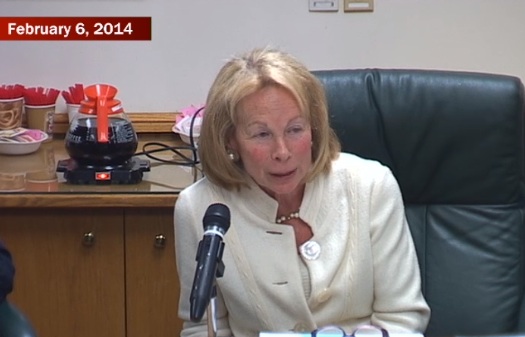 Originally scheduled for February 5th, the ice storm caused the second of four Scarsdale School Budget Study sessions to be moved to February 6th.
Suzanne Seiden, School Board President opened the session with a reminder about the importance of the budget discussions, especially in light of the rejection of the proposed budget in May, 2013 for the first time in 40 years. Seiden said, "I urge community members to look at the budget that is available on the school website. Keep in mind that it's only the beginning of a proposal and there are many more budget meetings in the future, so let your voice be heard." She pleaded for respect between people with opposing viewpoints and asked the board to be fiscally responsible and efficient while also preserving the high quality of education in Scarsdale.
According to Seiden the budget study sessions are working sessions where various budgets will be considered and evaluated. She reminded people that although the board will listen to and consider input from the community and school administrators, "...the board serves as the community's stewards and we will do what we will think is best and this will require compromise from all of us."
Dr. Michael McGill, Superintendent of Schools, reviewed the first budget study session. Linda Purvis, Assistant Superintendent for Business, followed and advised that all current budget numbers are estimates. She emphasized that the pension contributions range from 17.25%-17.75%, and were likely to remain on the higher end.
Lynne Shain, Assistant Superintendent for Instruction, presented program improvement funds in the budget. Though there will be no cost increases over last year, the plan will enhance education and services through professional education and staff development, support for curriculum development and renewal and for practices that give teachers the opportunity to offer individual attention and to innovate. She discussed professional development for the teachers and said that federal money for this is area is decreasing annually. "The quality of teaching has the biggest impact on student learning," she underscored. She reviewed many of the Center for Innovation initiatives including "Hack Scarsdale," site visits and speakers. Shain said, "What has CFI done? It has opened doors in our district, and we have been asked to make presentations about the program here and abroad." She stressed the importance of program improvements and said that passing the budget will ensure that these programs remain in place and continue to be enhanced.
Seiden spoke to the benefits of professional development referring to a presentation by Lisa Yakona (art teacher) and Maggie Favretti (history teacher) on the impact of the Scarsdale Teachers Institute (STI) and the Center for Innovation (CFI) on learning and enrichment. Seiden asked Lynne Shain, "How can we preserve this, even with the same amount of money?" Shain replied, "We will continue to bring in speakers, we will continue to make visits. We think there is promise in the existing projects. Each one has the potential to spread further." Discussing the Makerspace project she said, "It's starting in one small area in the school, but we hope it will expand physically to classrooms in the school. With $25,000 we will not fund new projects." Bill Natbony asked, "Would some small increase make a difference in what you could do this year?" Jerry Crisci, Director of Technology, responded by saying that they spent the $25,000 wisely and documented the first year of projects. He thinks that $25,000 in additional funds would help to fund two to three additional projects and would be put to good use.
Board member Leila Shames Maude had a concern about the arts and education initiatives such as Lincoln Center. She wanted to know how many students those programs touched. Shain responded that many kids are impacted by visiting performances and arts programs. She has tangible data to back up the positive impact of these programs on students' education.
At this point, Suzanne Seiden proposed that an additional $25,000 be added to the Center for Innovation budget. Lew Leone expressed reservations about CFI and didn't think the CFI projects were very innovative. He said, "We don't need a Center for Innovation for speakers and trips.... How innovative is a Makerspace when you see them all over the place? I haven't seen the results." He was in favor of keeping the funding at the previous year's level unless new funds were used to bring speakers to the Scarsdale schools. Dr. McGill responded by saying, "Scarsdale is a progressive community, but there are large numbers of people in the community who do not expect us to be doing radical experiments in instruction." However he added, "One way you get people to think about change is to sew the seeds by making visits, hearing speakers, and reading books that push the edges of practice." Shain added that the faculty has seen progress with CFI, and Bill Natbony added that he was in favor of increased funding for the Center. Mary Beth Gose spoke about what she called the Center's "lack of accountability" at this time and thought it best to keep funding at the present level until a formal evaluation of the program has been completed. Lynne Shain disagreed, saying that an e-journal was published in September detailing the results of the eight original CFI projects. In October, the Scarsdale School's Foundation awarded CFI an additional $90,000. "It is now February and we have started using that money, meeting with teachers and monitoring the projects closely. The next report will be in September, as projects need time to grow and develop. I would take issue... we have reported."
Jerry Crisci stepped up next with an updated technology report. "The board's goal is for information, media and technology fluency for students," said Crisci. Technology has been growing in Scarsdale schools each year. The technology program has grown without increases in staffing and the technology program budget has been reduced without sacrificing progress. The technology budget includes administrative technology and audiovisual and technical services. A staffing proposal includes hiring one network specialist (as proposed but rejected last year following the defeat of the first budget.) There is a proposal for an additional $300 per month to significantly increase bandwidth. There is no net budget increase for instructional technology. The success of the fifth grade Chromebook pilot project has led to a proposal for elementary wireless installation, fourth grade Chromebooks, and computer lab upgrades. At the middle school, Crisci is proposing computer lab upgrades and increases in the number of mobile carts. The high school technology proposal includes upgrading the digital media lab, upgrading desktops, and adding mobile carts. Crisci's recommendations are:
1. Fund (within the lease/purchase budget) a complete elementary wireless project (approximately $300,000)
2. Replace network components with a bond or an increase in future lease/purchase budgets (at a cost of over $850,000).
He reminded the group that, "The technology platform is the learning platform."
During the discussion, Lew Leone asked if technology had facilitated savings and efficiencies in the school district as it does in the business world. Purvis said, due to technology "we are light years ahead for data and record keeping." Leone continued, "For example, can the teacher handle an additional kid in the class because of our investment in technology? We want it all. Is there a way to modify the tutorial system so that teachers can teach another class due to technology?" Crisci responded, "I understand what you are saying. Schools are highly regulated and structured in terms of what we can do. Education will be and is being transformed by technology." Lynne Shain said we have "many examples of enhancements due to technology that upgrade the whole operation." She continued, "Will we get to the point where students sign up for online courses, reducing the staff load? This is not going to happen in the next two years."
Dr. McGill added his thoughts on cost-savings offered by online learning at all levels. "Where could there be targets of opportunity? At the elementary school level, how many can see a meaningful way to educate elementary school children that does not involve an adult in the classroom with the kids? I can picture it but I am not sure I would propose it for Scarsdale. It takes us back to the SRA boxes. At the middle school we are required to have a certain number of hours, classes and tests. Do I want to see 12 and 13 year-olds doing computerized activities in the absence of teachers given the psycho-social issues of kids that age? I have a hard time picturing that. At the high school, we have had kids take online courses. We learned that kids don't stick with those, and the level of learning is not equivalent to a course taken with a real human being. I don't see models that would allow me to be confident in this." He recounted an experiment in individualized learning that the district undertook in 1939. After it failed he said, "The board determined that in the future it would study new perspectives but give way to the tried and true." He continued, "I am sympathetic. I would love to see the future. I haven't seen the future that works."
Mary Beth Gose agreed that elementary school kids need an adult in the room. However she saw opportunities at the high school for interactive online courses with accountability. Principal Ken Bonamo said that online learning works when there is a favorable student/teacher ratio of 1 to 20 as we currently have in the classroom. Dr. Joan Weber suggested that technology could be used to save funds for tutoring homebound students.
Next was a transportation update from Linda Purvis. She reported that 1,900 (40% of) Scarsdale students are transported by bus. Two-thirds of the transportation budget goes to sending 340 kids to private, parochial, or special education schools due to the number of different schools these kids attend. Purvis reported that the only budget request for transportation was for the purchase of three large replacement buses for around $100,000 each. She also noted "Bus purchases are outside the tax cap, as they are considered a capital purchase." Mary Beth Gose asked, "What's the life of a bus?" and Purvis responded, "Buses don't last as long as we'd like them to because of salt-induced corrosion. Big buses last longer than small buses, and we are really in need of 2-3 additional large buses." Gose added that she was concerned about safety and would therefore like to keep the request for three new buses in the budget, but Purvis said, "It's not as much a safety issue as it is an issue of too many buses expiring all at the same time. Two buses are having major, consistent problems, so we need two but would like to request three at this time."
Last, the session was opened up to community comments. Claudine Gecel from the Fox Meadow PTA spoke about class size. An informal survey at Fox Meadow showed that there were some classes already at maximum size and asked that the board consider that in light of the decision not to include an unassigned teacher in the budget.
Watch the entire session online on the Scarsdale Schools website here:
School Board Nominating Committee Seeks Candidates:
The Scarsdale School Board Nominating Committee (SBNC) is seeking candidates for nomination to the Scarsdale Board of Education. In the next few weeks, the SBNC will nominate two candidates to the School Board. Jonathan Lewis has recently announced that he will step down this year and will not seek re-election to a second term. An additional seat is available to fill the position currently held by Sunil Subbakrishna, who is completing his first term and is eligible for re-nomination. The SBNC invites all residents to propose candidates for the Board of Education. A candidate must be at least 18 years old, a U.S. citizen, a qualified voter, and a resident of the Scarsdale school district for at least one year prior to the school board election date in May. Candidates should complete a biographical information form and submit it via email to the SBNC Chair, John Clapp, at [email protected] as soon as possible, but no later than 5:00 PM on February 25, 2014. Forms are available at www.scarsdalesbnc.com. For more information on the SBNC, including the governing Resolution, information on the non-partisan system and a list of the current SBNC members, please visit the SBNC website or contact the SBNC Chair.
School Administrators Unveil First Draft of 2014-15 School Budget
- Details
- Written by: Joanne Wallenstein
- Hits: 7634
 In between the two snowstorms this week, the Scarsdale School administration presented the first proposed school budget for 2014-15 to the Board of Education and the community on Tuesday February 3. Board President Suzanne Seiden emphasized that the budget draft is a starting point for a conversation between the administration, the Board of Education and the community and it is expected that items will be added and taken out before the final budget proposal is voted on in May.
Setting the stage for the first budget review Seiden made a plea for the community to come to consensus. She said, "We are a community in transition ... and the (budget) "conversation has pitted neighbor against neighbor." She said the Board is "the steward of the community and will decide what is best," and asked residents to "please bring light, not heat to the discussion."
This proposal was for a total budget of $148,731,524 for 2014-15, which is 3.36% higher than 2013-14 and would mean a 4.40% tax increase. For 2014-15 the administration proposed using $3.8 million in surplus funds from the prior year, a reduction of $422,000 from the $4.3 million in surplus funds in the 2013-14 budget.
The adjusted tax cap would be 4.18%, which means that the current proposed budget is $278,993 or .21% above the cap and would require a 60% approval rate by voters. The tax cap was calculated beginning with the 1.46% figure from the state, plus 1.59% in real property growth in Scarsdale in addition to the adjustment for capital improvements.
This initial budget includes additional elementary and high school teachers and capitol improvements but no new programs or course offerings. Five additional teachers will be needed at the elementary schools to maintain class sizes at a maximum of 22 students for grades K-3 and 24 students for grades four and five. With the addition of the five teachers the average elementary school class size is projected to be 20 students – and the new staffers will prevent oversized classes like the ones that occurred at Greenacres and Edgewood this year when a surge of new students signed up for school in late August.
At the high school, the budget includes three additional teachers in math, science and social studies. Currently about 20% of classes at SHS are above 25 students – and the addition of these three teachers will bring class sizes in line with historic norms. This budget also included an additional gym teacher, but after considerable discussion at the meeting that position was eliminated.
The proposed budget includes maintenance and repairs at district schools, and renovation of the science rooms at the high school to accommodate more students in chemistry and physics classes. A larger ninth grade class this year, and an expected increase of 32 students next year necessitate more laboratory facilities.
Proposed facilities improvements include:
Fox Meadow:
Expansion of the kindergarten playground and a new fence to increase the size of the play area- $20,000
Upgrade to the fire alarm that is currently not in compliance with code - $288,000
Greeancres
Replace condensate station - $35,000
Relocate the school office so that it is next to the entrance for security reasons: $150,0000
Heathcote
Exterior painting $40,000
Fence replacement at Innes Road and kindergarten playground $15,000
Quaker Ridge
New oil tank concrete pad- $20,000
Middle School
Cooper House exterior stair replacement -$291,000
High School
Renovation of science rooms - $551,000
Carpet VAT abatement (8 rooms)- $130,000
District wide roof repairs -$325,000
Other costs that are driving the budget increase include:
- $1,108,680 increase for the teacher and employees retirement funds
- $847,612 increase for employee health insurance
- $400,000 for special education out-of-district placements
- $369,900 for increases in employee benefits.
During the discussion period, Board Member Lew Leone asked the administration to look at the elementary school staffing again. "Would it be possible to move people around,," he asked? Have we considered staff children? "Given that we know that the population will decrease over the next five years we should look carefully at adding five heads."
Joan Weber replied "these numbers are carefully calculated. We would have to change our policy to accommodate more children with fewer faculty members."
Referring to the high school, Leone asked if teacher course load could be increased rather than hiring additional teachers. He said, "This year at the middle school, one teacher was out and they had the remaining math teachers each teach an additional sections."
In a discussion about teacher course load, Seiden said that increasing teacher course loads would "cut into the time they spend with individual students." Dr. McGill said, "Increasing course load would be a big change and is something that the Board needs to discuss." The Board agreed that this was a policy decision and Jonathan Lewis asked that it be placed on the agenda for the fall.
Other items that were discussed included a proposal to cut a full-time physical therapist and utilize outside consultants instead, the merits of the position of the purchasing agent in the district office and the decision not to restore the second librarian at the Middle School.
The discussion continues Thursday night February 6 at 6:30 in rooms 170-172 at Scarsdale High School.
Administration Sets the Stage for 2014-15 School Budget Discussions
- Details
- Written by: Joanne Wallenstein
- Hits: 25080
 This year, anyone who says they don't know what drives the school budget in Scarsdale can only blame themself. The Scarsdale School Board and district administration have made an all-out effort to offer thorough analyses of key areas of the upcoming 2014-15 school budget, even before the first budget is presented next week. They provided presentations on the elementary, middle school and high school programs, technology, staffing, transportation, staff development and special education, anticipating and answering questions, months before they could be posed by the community.
These presentations were televised on the Scarsdale Schools channel and also available in the video on demand section of the Scarsdale Schools website. So if you have questions, you only need to look as far as your home computer.
This month, Assistant School Superintendent Linda Purvis delivered "TED style" talks about the district's "modified zero-based budget" approach as well as an explanation of fund balances and reserves, at two meetings, one at night and one during the day.
Taking their cue from issues that arose last year when the first budget was defeated, the administration provided details and the rationale behind each of these budget cost drivers. In a discussion about district staffing, Linda Purvis warned potential critics saying, "there are sound reasons for all the positions listed in the budget. We have material on each and analyze all budget items."
Though some in the community have urged the Board to ignore the tax cap and present the best budget for the Scarsdale Schools, for now, the district does have this number on their radar. According to Purvis, the nominal tax cap, as determined by the Consumer Price Index, is 1.46%. However, given real property growth from development in Scarsdale, this figure can be adjusted upwards by 1.59%, bringing the cap to 3.05% before allowances for capital improvements, debt service and purchases such as school buses. Though this increase seems generous, the district has less available reserves to add to the budget and mandated costs continue to rise. For instance, the district's contribution to the NYS Teacher and Employee Retirement System will go up 7.5% this year.
Other items up for discussion are the number of teachers to be added to accommodate an anticipated enrollment increase of 57 students district-wide and to decrease the size of some over-populated classes in the elementary school and high school. The district would like to add 5 elementary school teachers to keep class sizes at 22 students for grades K-3 and 24 students in grades 4 and 5. At the high school, 4 new teachers are needed to reduce class sizes in math, science and social studies, where currently 20% of classes have more than 25 students. An additional gym teacher has also been requested. A proposal to introduce the Chromebooks program, currently offered to fifth graders, to the fourth grade as well, would require a new technology staffer to support the program.
Though no formal proposal has been made, at one meeting Purvis mentioned that the district will need to spend about $500,000 to renovate the science labs. The increased in enrollment in the current ninth grade will require more lab space for chemistry and physics classes.
What else? The district's $1.5 million health reserve fund, set up to shield them against large claims from their self-insured health plan, was found to be out of compliance by auditors. Therefore, $750,000, or half of the fund, was moved to undesignated reserves and the other $750,000 was put into the general fund. This $1,500,000 will help to reduce the tax increase for the coming year but will leave a hole in the future.
Speaking of the future, one of the discussion points at these meetings has focused on dwindling reserves and  what that will mean for the district in subsequent years. Purvis explained that the total fund balance has been reduced from $18 mm in 2010 (14% of the budget) to a projected $8 million in 2014-15 (5% of the budget). By law, the district is allowed to hold 4% of the budget in a reserve fund, but this year the district was operating with an undesignated reserve of only 3.5% before the transfer of $750,000 in health care reserves. In 2008-2012 the district included about $6 million in reserves in each of the subsequent year's budget, but this was reduced to $4.3 million in 2012-13 and is estimated to be only $2.2 million for 2014-15. Purvis projects that we will exhaust these reserves in the next three to five years, and without these funds, the Board will be forced to either ask for bigger tax increases or cut the educational program to balance the budget.
At the budget forum, parents brought up some of the staff that had been cut in previous years, including a librarian at the Middle School and the reduction of helping teachers from 6 to 2 positions. Also on their minds was the minimal investment that the school has made in their facilities in recent years, spending just .7% of the budget on plant maintenance and improvement.
When asked if any of these positions would be restored or funds increased, Dr. McGill replied, "Given last year's experience I am being cautious. We will do our best to propose the right budget that preserves and protects the Scarsdale education...it's a delicate balancing act. We haven't done what we ideally would have done."
Purvis hinted that the current working document for the budget proposal is now $600,000 above the tax cap and is a work in progress. Decisions are still being made and it is not clear whether the administration will propose a budget that comes in above or below the cap. They will present their budget to the Board on Friday January 31 and unveil it to the community on Monday night February 3 at 6:30 pm.
Technology Infused Education
- Details
- Written by: Stacie M. Waldman
- Hits: 7045
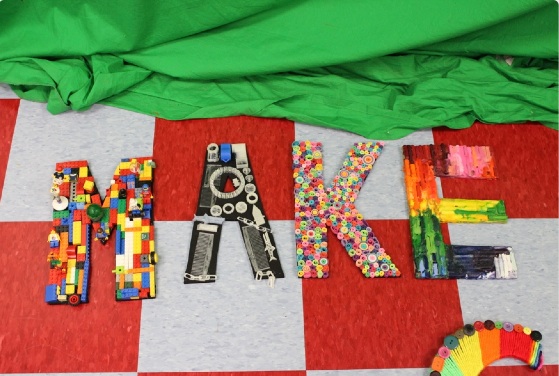 On the evening of January 15, the Scarsdale PT Council led a session on technology in Scarsdale school classrooms. Presenters included Jerry Crisci, Director of Technology and co-Director of the Center for Innovation (CFI), Lisa Yokana, art teacher at Scarsdale High School and John Calvert, technology teacher at Quaker Ridge. Scarsdale educators and administrators devote a lot of time, energy, and resources to ensure that students are technologically competent, skilled and safe as they move through the school system and graduate. The speakers discussed how they now incorporate technology into both the classroom and overall school experience for students and what's ahead in the future:
Jerry Crisci spoke about reimagining future learning spaces in terms of personal learning versus teacher-directed learning, traditional instruction versus modern learning, individual achievement versus collaboration, and how the school system is working to create physical workspaces that are conducive to group work. He discussed the ideal elements necessary for future classrooms:
1. "Anywhere, anytime" technology access for students: Currently, fifth graders have use of Chromebooks. Everything is saved on Google Docs and it allows students to work anywhere, anytime.
2. A way to present and share work within the classroom: such as the use of Smartboards.
3. The ability to use both old and new technology.
4. Flexible, collaborative space as the standard within the schools: Scarsdale is currently experimenting with moveable chairs and desks with some success.
5. Opportunities to design and create: The ability to innovate is frequently touted as an essential skill a student should have upon graduation. Fox Meadow is using its Center for Innovation (CFI) grant to implement rhw Makerspace. Students are learning how to program, do robotics, and are being trained how to do 3-D printing. Additional grant money will be used by the other elementary schools to develop their own Makerspace in each school.
Lisa Yokana spoke about innovative educational spaces, their potential benefits, and Scarsdale's goal to be on the leading edge of this trend. A CFI grant was awarded for a study to determine if Scarsdale students were learning "21st century skills," or skills needed for success in the real world outside of a school setting; skills such as information literacy, collaboration, communication, citizenship, and creativity/innovation. Scarsdale schools are working to provide innovation education via "design thinking" where students learn to empathize, define, ideate, prototype, and test an idea or problem. With design thinking, students learn, for example, that there may not only be one correct answer; there may be several possible solutions. This type of learning is problem and challenge based. Results of students surveyed showed that students were most inspired when they could see how schoolwork related to the real world. A course called "City 2.0" is going to be offered in the near future where kids can collaborate to solve a real world problem using design thinking.
Finally, John Calvert, a Google-certified technology teacher at Quaker Ridge, spoke about virtual learning spaces, or "learning beyond the classroom walls" and their place within a student's formal education. He described these spaces as collaborative, flexible, and powerful connectors. "As devices become smarter," he said, "access to data increases and what you can do with this data increases. More information is being created than ever before," he continued. "The amount of new technical info doubles every two years, and this will only increase and only become a more complex challenge for our students." Mr. Calvert used the term "the second age of mobile" to discuss that information is readily available and extensive, but what matters is what one does with it. "In the digital space, our students need to be able to connect with peers and experts," voiced Mr. Calvert. "They need to be able to evaluate and synthesize information, produce novel information and expression, and manage their online identities." An online identity is a "digital footprint" or a lasting history one makes every time the Internet is used. Mr. Calvert emphasizes online safety with his students and has them make a list of online rights and responsibilities. Finally, Mr. Calvert discussed how our world is becoming ever more technologically advanced, and our students need to be prepared for this. "Soon we will have 'smart appliances' that will text us when the washer has 10 minutes left of a spin cycle," he said, "and Intel Edison is making a onesie that can house a computer chip to tell mom that baby needs to be changed."
Maggie Favretti, a history teacher at Scarsdale High School responded to an audience question about the potential for students to listen to lectures online. "People who have used it find it useful some of the time, but it still doesn't replace the variety of lesson types I think our students benefit from. The only thing worse than being lectured at," she continued, "is being lectured at online."
Another audience member asked, "How do you find the time to teach digital technology when kids still have to learn everything else to be prepared for college and life?" Ms. Yokana responded that many already know it, as this is the world they grow up in. Ms. Favretti added, "One of the great things about design thinking is that it incorporates this."
Diane Greenwald, PT Council Chair of Programming, asked, "In the current climate, do you feel any pressures to continue your efforts and what can we do to support you?" Ms. Yokana answered, "We feel incredibly supported both by administration and parents here. Every classroom is filled with all different types of learners, and we need to remember this. Students have different ways of thinking and learning," she added, " and there is a tremendous benefit to these kids being in a space together collaborating." Mr. Calvert also indicated that he feels tremendous support from the community. As a father of three, he hopes that "his own kids will be curious and unafraid of making mistakes, as correcting mistakes is the shortest path to success." He also wishes for them to be "empathetic and resilient, and believes Scarsdale helps kids develop these attributes." Mr. Crisci responded that he wants his son "...to have a passion for what he's doing and learning, and the ability to effectively collaborate. Remember," he adds poignantly, "this is a skill many people rank above intelligence."
It's still under development, but check out the new Innovate Scarsdale website:
Also, if you're interested in free online courseware to hone your own thinking skills, Jerry Crisci recommends Coursera, EdX, UDacity, OpenCulture, and iTunesU, although he warned that data shows that only 4% of people complete the courses they start!
View the entire presentation on the Scarsdale Schools website here:
(Pictured at top: Sign for the Makerspace at Fox Meadow School)