







The Business of Busing- A Transportation Report from the Scarsdale Schools
- Details
- Written by: Stacie M. Waldman
- Hits: 8992
 Assistant Superintendent for Business Linda Purvis presented the business of busing in Scarsdale on October 21, 2013 to the Scarsdale community and the Board of Education at Fox Meadow Elementary School. Ms. Purvis discussed the different types of busing services that Scarsdale can opt into, the pros and cons of each, New York State Education Department requirements for transport, and how the transportation budget is currently being used.
In Scarsdale, students who live at least 1.5 miles from school qualify for transportation though New York State law mandates that only students who live more than 2 miles from an elementary or middle school, and more than 3 miles from a high school require transportation, so Scarsdale is relatively generous in this respect. Students must be offered transportation if they are attending an out-of-district private school, parochial school, or special education program.
There are three types of transportation that Scarsdale schools can choose from to provide to students who qualify:
1. Service delivery- This is an in-house service and is self-operated. Although it offers the highest level of service and the most flexibility, it is also the most costly.
2. Contracted services- The costs are lower at the beginning, but there is cost volatility down the road. There are no employee benefits with contracted services, although this will change with the implementation of the affordable care act.
3. Mandatory use of public transport- This is the most cost-effective means of transportation for students, but there is very high customer dissatisfaction.
Until 1991, bus service in Scarsdale was provided by a private company and the State of New York covered 90% of all costs associated with transporting students. After 1991, New York State lowered its contribution to only 6% of the cost of student transport. There are no monitors on the buses unless a special education student mandates it. The buses, to note, also transport senior citizens in the community and transport campers to Scarsdale summer camps.
In Scarsdale, 1,824 students live 1.5 miles or more from their schools and are offered bus service. This equates to 38% of students in the village.
Ms. Purvis was quick to point out the two-thirds of the dollars spent on transportation was spent busing students out of the district to non-public schools, while only one-third of the transportation budget was spent busing students to Scarsdale public schools. There are 364 students that attend 67 different private, parochial, or special education programs and are required to be offered a bus to these alternative schools. Of these 364 students, 103 are special education students that attend 37 different programs and require a total of 29 drivers during school hours. There are 261 private and parochial students that attend 30 different programs requiring 18 drivers. Ms. Purvis noted that due to similar drop off and pick up times and not wanting children to wait for long periods of time or spend more than 45 minutes on the bus, many buses and drivers are needed to perform the bus routes to all the various private, parochial, and special education programs.
The total current transportation budget is $5,419,371. Cost cutting is ideal but not necessarily realistic given the ramifications that would result. Ms. Purvis said that students could be assigned longer bus routes and would experience increased ride times; parents would likely not be in favor of this. She also suggested that there could be a central meeting spot for students riding out-of-district. However, given that the bus is one of the only services that taxpayers who send their children to private and parochial schools get, it is likely to be met with strong opposition. It is estimated that these cost cutting measures could save up to $200,000.
Board member Jonathan Lewis said, "Out of district is the most expensive. Linda will be giving us the likely budget scenario in November for how much over the cap we might be and $200,000 is a significant chunk."
What is Your Child's Teacher's APPR Score and Does it Matter?
- Details
- Written by: Stacie M. Waldman
- Hits: 7948
 After a lovely rendition of "Over the Rainbow" by the Fox Meadow Strings orchestra, Dr. Michael McGill, Superintendent of Scarsdale Public Schools, gave a briefing on New York State's Annual Professional Performance Review (APPR) mandate and how Scarsdale schools fulfill this state requirement. Also presented was how parents can access their child's teacher's and principal's scores.
New York State's APPR mandate requires that Scarsdale schools grade and score all teachers and principals on performance using a standardized method. They are assigned a numeric score (between 1 and 100) and a grade of H (highly effective), E (effective), D (developing), or I (ineffective), also known as HEDI based on the numeric score.
The objectives of the Scarsdale schools, in terms of the APPR, are to root out effective versus ineffective performance, continuously improve teacher and principal performance, and address substandard performance with support and/or discipline if deemed necessary. Teachers earn performance points in the following ways:
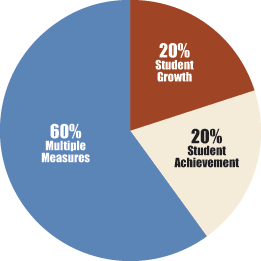
- Up to 20 points for state test scores- Lynne Shain, Scarsdale's Director of Curriculum, explained that teachers are assigned a numeric score based on testing: ELA/math scores in grades 4-8 are used for ELA/math teachers; all other teachers are rated by test score average by school which is then converted to points. (Counselors, psychologists, and speech teachers are excluded.)
- Up to 20 points for locally selected standardized measures- This is based on state test averages, by school, and is converted to points.
- Up to 60 points for classroom observations and other evidence of performance- Teachers and principals are rated using HEDI. They are observed and evaluated by a supervisory-level individual in the classroom, and score is based on lesson planning, instruction, and professionalism, for example. Their HEDI rating is then converted to a numerical score.
Dr. McGill cautioned that a teacher may have an H or E rating in one area, and a D or I rating in another area. "It's more an art than a mechanical operation like the way the State is trying to make it," said Dr. McGill. The district approach to this is to try to improve teacher performance in the underperforming areas as much as possible, and to keep the APPR non-competitive between teachers. Factors out of an individual's control may account for part of their rating. For example, Kenneth Bonnamo, Principal of Scarsdale High School, will receive a lower score this year due to a low test score rating. Dr. McGill warned that the state formula itself skewed the principal's rating lower than it should be based on factors such as number of student's taking the regents exam, which is less applicable in this case.
Dr. Joan Weber, Assistant Superintendent for Personnel, discussed the newly implemented, standard protocol for handling parent requests for a teacher's or a principal's APPR score. A parent may request the APPR score of their child's current teacher, but Dr. Weber reminded people that the available score is based on the previous academic year. Parent access to the principal's scores will be a composite score and HEDI rating. The process to request a score will be posted online. According to Dr. Weber, parents should be aware that they must call or email her to request a form that they will need to fill out if they wish to know their child's teacher's APPR score. The form will need to be submitted in person and the parent or guardian will need to show ID such as a driver's license. They will be required to sign attesting that they will not disclose the score to anyone who does not have a right to this information in order to respect teacher and principal privacy. Once approved, Dr. Weber's office will call the parent with the information they are seeking.
Board Member Lew Leone asked if parents could request several teachers' scores at once and if an online request process could be used. Weber said that parents can request several scores at once provided their children are currently in these teacher's classes. She said she did not know of any other districts that were disseminating this information online.
A discussion ensued about whether or not the local assessments that were developed by Scarsdale would be used in addition to the state's standardized test results to evaluate teacher effectiveness. The administration said that some of the information gathered from the local assessments would be utilized for the portion of the APPR that is determined by the district.
Board member Mary Beth Gose asked who was doing the evaluations and McGill replied that supervision comes from principals, assistant principals and teachers in charge. In the past, principals had more latitude to respond to specific situations. Now supervisors have to spread out their time and observe all classrooms, whether or not the teacher needs supervision.
In other Board business, PT Council President Pam Rubin thanked the members of the Board of Education for their dedication in recognition of Board of Education Appreciation Week and presented the Board with copies of the book, "The Death and Life of a Great American School District" by Diane Ravitch.
In the public comments section, Vivienne Braun asked for an explanation of the decision-making process to determine how funds from the Scarsdale Education Foundation would be allocated. She also questioned how the Board of Education developed the list of capitol projects that was provided to architects who are currently being interviewed by the district.
 Amy Paulin Urges the NYS Board of Regents to Discontinue CCLS Assessments:
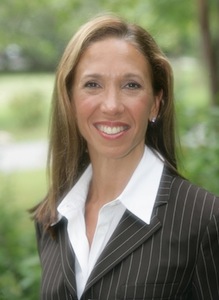
Assemblywoman Amy Paulin along with Assemblymen Abinanti and Buchwald sent the following letter on October 21 to the State Board of Regents regarding the common core and state testing. It is a strong letter regarding what they believe to be the flaws in the program.
Chancellor Merryl H. Tisch
NYS Board of Regents
89 Washington Avenue
Albany, New York 12234
Dear Chancellor Tisch: We believe the current testing program has the potential of doing more harm than good for both students and teachers. While we support the new Common Core Learning Standards (CCLS) and recognize that it must include an assessment component, we believe the shift in the assessments to measure the CCLS is not working. For the following reasons, we urge you to discontinue the current use of the Common Core English Language Arts (ELA) and math assessments and develop and pilot an assessment program that will improve the quality of teaching and learning in our schools.
1. The current ELA and math assessments are not a valid indicator of college or career readiness. This year, most school districts saw a passing rate  inconsistent with the expected achievement of their students. If you looked at the passing rate on the 8th grade math and ELA scores you would conclude that most students will do poorly in high school and struggle in college. Historically, this has not been the case. For example, Pelham, a school district that has spent the past two years diligently aligning instruction and curriculum to the CCLS, saw its scores drop by about 20% in ELA and math, leaving the impression that its students are not prepared for a challenging curriculum. However, a similar cohort of students have traditionally performed very well on the algebra and English regents and have been successful throughout their high school career, taking advanced placement and college level courses, engaging in scientific research, and excelling in academic competitions. This past year, 95% of Pelham's seniors were accepted into four-year colleges, 66% of which are ranked as "most," "highly" or "very" competitive.
The only conclusion we can draw is that these new tests are not a valid measure of whether a student will succeed in college or in a career.
2. The new tests are not improving learning. The shift to align the assessments with the common core curriculum has led to longer tests (i.e. an increase in the number and complexity of multiple-choice questions on the ELA tests). Also, teachers have reported that many of the questions were too vague and did not align with the common core curriculum/content. Students who do not have the stamina to take longer tests or who get frustrated when faced with new material often just give up (which could be skewing the results). While students everywhere are exhibiting test anxiety, we are especially concerned about low performing students who get frustrated more easily. This could result in an antipathy toward learning.
These recent test results have presented our schools with an additional significant challenge. Academic intervention services (AIS) were historically provided to any student in grades 3-8 who scored below proficiency on math or ELA. This year, districts reported that there just was not enough money in their budgets (nor was any forthcoming from the State) to cover the rise in the number of students eligible for AIS. Further, districts' staffing needs were established during last year's budget process. There is no way they could have anticipated the additional staffing needs required to support the many more students who now need AIS.
Granting school districts greater leeway in determining which students should receive remedial help by setting a "threshold" score begs the questions: if the tests are a valid measure of student achievement then why do districts need to manipulate the scores and why are we denying low-scoring students the support services they truly need?
3. The new tests are not improving instruction. Currently, teachers are not allowed to see the completed tests for each student; they receive only an aggregate score. Districts require more than just sampling or model questions to improve instruction. Individual test items must be provided so that meaningful programmatic adjustments can be made for each child and for the entire class. Also, as it stands now, teachers receive the test results well into the following school year denying them the opportunity to adjust lesson plans for the entering class. Teachers need to receive the results before the start of the school year.
Just recently, we read that NYC schools had not received the new English and math text- books and other materials which match the tougher CCLS, presenting yet another reason to slow down the shift in assessments.
There is a lot at stake – a child's self esteem and a teacher's reputation and perhaps career path are tied to these tests, putting a lot of pressure on both teachers and students to do well. We feel that teachers need this valuable time to teach critical thinking skills in an unpressured, stimulating environment.
4. The new tests are not a reliable measure of a teacher's ability. While the aggregate number of teachers falling into the State's "effective" and "highly effective" categories has remained constant for two years, the rating system is less reliable when applied to an individual teacher. Too many teachers who were rated "highly effective" or "effective" last year were rated "ineffective" this year. Teachers do not change dramatically in one year. Receiving a low grade, especially after receiving a high grade in the prior year, is demoralizing and is not a reliable indicator of performance. Fortunately, most districts have adopted evaluation plans that minimize the impact of any one score. However, once the information is made public, a teacher is branded.
5. The cost of testing is creating financial hardship especially on school districts with fewer resources. Two districts, Locust Valley and Scarsdale, have estimated the cost of testing at between $2.5 and $2 million (includes the cost of data collection and lost teaching time), respectively. The cost may be higher for a larger district. While most school districts are struggling to stay within the tax cap, poorer districts have found it an even greater challenge and have already cut staff and programs, increased class size, and eliminated extra-curricula or enrichment programs. Running out of options, they will have to dig even deeper to meet their financial obligations to the detriment of the students.
The mandate to use computers for on-line testing by 2015 is another financial and educational dilemma for most school districts. Many districts, but especially the poorer ones, just do not have the technical capability nor the financial resources to implement this mandate by 2015. Also, all districts will be forced to give up instructional time by using the computer lab exclusively for testing. Schools and students have come to rely on computer labs for instruction, homework, and research assignments, all of which will be curtailed by this mandate.
We believe that State Education Department is moving too fast. We urge you to take the time to design an exemplary testing program that will be used as a model for improving teaching and learning for many years to come.
Thank you for your consideration and for all that you do for the students of New York State.
Sincerely,
Amy R. Paulin
Thomas J. Abinanti
David Buchwald
See an interview with Chancellor Tisch on the Common Core Learning Standards here:
Commenting on Paulin's letter, Schools Superintendent Michael McGill said,
"The Assembly members' letter to the Board of Regents outlines concerns about how the State Education Department is implementing its testing and teacher evaluation policies. It's a well-considered and thoughtful effort to address issues of immediate concern.
The longer term problem is the underlying assumption: that you can improve schools in some meaningful way through a process of audit and compliance. That's basically what all the testing and all the metrics are about.
Instead of using tests as they should be used -- to help teachers and schools learn how to do a better job -- the state is using them mainly for accountability. Because it's so obsessed with rating teachers on the basis of students' scores, for example, it's made a huge priority of test security. As a result, educators don't have access to critical information -- like which questions a student got right or wrong -- that would help them improve learning.
The best the state's approach can do is drive schools -- Scarsdale included -- toward an education that's low average in quality."
How to Create a World Class Education
- Details
- Hits: 7072
 Dr. Yong Zhao Presidential Chair and Associate Dean for Global Education, University of Oregon will present the second annual Tom Sobol Lecture at the College of New Rochelle on Tuesday October 29 at 4 pm.
Zhao is an internationally known scholar, author, and speaker whose work focuses on the implications of globalization and technology on education. He has designed schools that cultivate global competence, developed computer games for language learning, and founded research and development institutions to explore innovative education models. He has published over 100 articles and 20 books. His most recent book is World Class Learners: Educating Creative and Entrepreneurial Students.
Two other leading educators will respond to D. Zhao's comments:
Dr. Tom Rogers, District Superintendent of Nassau BOCES, an organization of over 4,200 employees serving 56 school districts, and Former Executive Director of the New York State Council of School Superintendents (NYSCOSS).
Dr. Carol Corbett Burris, NYS High School Principal of the Year and co-author of the NYS Principals letter regarding evaluation of teachers by student test scores with more than 8,035 signatures.
The event is free and open to the public and takes place at The College of New Rochelle at 29 Castle Place New Rochelle NY 10805. Tom Sobol was Scarsdale Superintendent of Schools and NYS Commissioner of Education.
For further information contact Anne Hull, [email protected].
Kindergarten: Where Six is the New Five. Or is it?
- Details
- Written by: Stacie M. Waldman
- Hits: 19349
 Anyone with a preschool-age child whose birthday is from mid-summer onwards is used to this familiar refrain, "Are you sending your child to kindergarten?" Parents who never thought about not sending their child to kindergarten when eligible find that they may be questioning whether or not their child is developmentally, socially, physically, and emotionally ready for school, and these parents may assume the responsibility of making that decision themselves.
The cutoff date for Scarsdale schools is December 31st, which means that if your child turns five by the end of the year, he is eligible for entry into a Scarsdale kindergarten. However, the Scarsdale schools do not mandate entry, so the cutoff is more of a guideline. Why would parents want to delay entry in to kindergarten when it often means paying upwards of $15,000 for a "transition year", (a program offered by preschools specifically for children whose parents are delaying their kindergarten start date)?
The idea is called "redshirting," a term used in college athletics to describe an athlete benched for a year so they will be bigger and stronger when they actually play. Borrowed by educators, this term is now used to describe children whose entry to kindergarten is being delayed by a year for one of a number of reasons.
Redshirting in Scarsdale is ultimately the decision of the parents (or guardians) of the child. My conversations with many local parents led me to sort parents who redshirt into three different categories:
1. The Compassionate Parent - This parent is genuinely concerned about their child's kindergarten readiness and has sometimes been advised by a professional to hold their child back based on the child's developmental needs. Some experts believe that children of this type may benefit from special services offered in public schools more so than a kindergarten delay, and that delaying kindergarten may also mean delaying services.
2. The Competitive Parent - This parent has often reviewed some literature and believes that the data shows their child will have a competitive edge over his classmates if he begins kindergarten at an older, rather than younger, age. The theorized edge can be academic, social, and/or athletic.
3. The Coerced Parent - This parent holds their child back because of pressure from other parents in the community, or adult peer pressure. This parent is less likely to take their individual child into consideration when making the decision to delay school, and more likely to redshirt their child because others are doing it and they don't want their child to be the youngest by sometimes up to 18 months.
So, how do you decide what to do with YOUR child? Is there data to show that redshirting a child gives them a distinct advantage as early as five years-old or even earlier? Yes. And No.
Initially, redshirted children outperform their peers academically, socially, and athletically. This has been termed the "early boost" that you may hear echoed at playgrounds when parents are explaining to other parents why they are redshirting a child for kindergarten. Overall, older children in kindergarten through third grade have higher test scores, are more likely to be leaders in their class, and perform better physically.
However, that advantage decreases as a child's age increases, and by as early as third grade, the differences begin to even out. Some educational experts report that redshirted children don't do as well as their younger peers once they reach eighth grade, and do no better as adults in terms of wages or educational attainment. A 2008 Harvard study concluded that redshirted children academically stagnated in high school. Some in the field think that this is because of younger kids feeling the need to catch up to their more advanced peers, ultimately outperforming them. A New York Times opinion piece (published 9/24/11) favored earlier entry into kindergarten, discussing how parents concerned about their child's emotional readiness may realize that their emotionally immature yet older kindergartener will be hanging out with mostly less mature peers. In fact, data from the Scarsdale school district itself reveals that seniors at Scarsdale High School with later birth dates are more likely to have higher GPAs (see chart below). Numerous factors could explain this difference, but it is interesting to note nonetheless, and parents should be aware of this data if they are on the fence about whether or not to redshirt their child.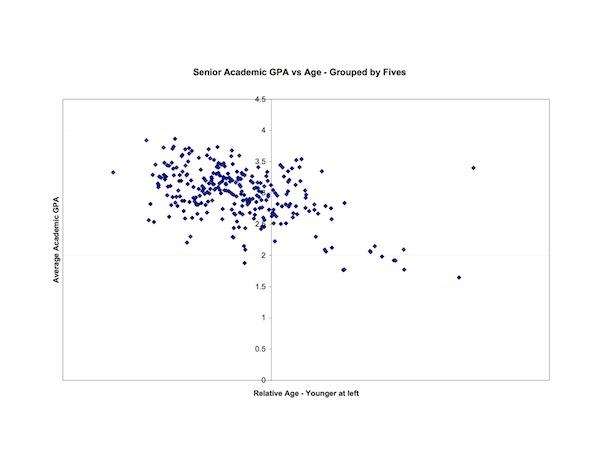
Lynne Shain, Assistant Superintendent for Instruction in the Scarsdale Schools said that even though some parents know the potential academic advantage to being younger within a grade, there is still a perceived advantage to having a child be older among his or her peers, such as social maturity, athleticism, and even being the first among friends to drive. Ms. Shain emphasized that there are developmental differences among children born on the same day, not just 17 months apart, and the Scarsdale school system is prepared, and has the resources, to deal with this. She said that some parents cite Malcolm Gladwell, author of "Outliers," who discusses the athletic advantage of Canadian hockey players born in the first few months of the year versus younger hockey players. Intrigued that Gladwell had influenced so many parents to redshirt their kids in school based more on talking points than data, she shared with him the cluster data from Scarsdale High School showing that Seniors with earlier birth dates had lower GPAs compared to their younger classmates. He responded to her, rather surprised at the data, and said that he may include this if he writes a follow-up to "Outliers." Ms. Shain does not think a parent should make the leap to there being an academic advantage to redshirt a child based on Gladwell's book.
One Scarsdale mom of a child just entering kindergarten and turning six in November described herself chiefly as compassionate but partially coerced. She decided when her son was three that he would be redshirted. "He was a shyer child, and when I asked his preschool teachers about holding him back, they said there would be no harm in doing so." He repeated the threes program at a preschool and she is satisfied with her decision. A mom in Edgemont sent her son, a second child with an October birthday, to school this September when he qualified for admission. She trusted her own instincts and those of teachers and professionals consulted. She brought him in for his kindergarten assessment and the school testers confidently told her he was ready. Born in September herself, she felt like there were benefits to being younger in her grade, including drinking less and driving less. She says she had no true, proven reason to hold her child back and if someone qualified suggested she hold him, she would have done it without thinking twice. She feels he'd be bored if he had to sit through another year of preschool- he is reading at age four. She terms herself a compassionate parent, evaluating her child as an individual rather than by a set of arbitrary rules or trends. She resisted being coerced by other opinionated moms. She has advice for other parents wrestling with this: "No playground conversation should ever make a decision for you and no other parent should even imply that they know what the right thing is for your child." A mom in Edgewood feels confident with the decision she made to send her daughter (an October birthday) to Kindergarten this year, but she isn't going to be the youngest by 10 months, she will be one of the youngest by up to 18 months. What bothers this mom is that many of the moms she speaks with never consult with the school psychologist or have their child assessed. She feels like it's the competitive parent in Scarsdale that holds their child back, and feels this isn't fair to children of parents "following the rules." She wishes Scarsdale would come up with a hard cut-off and stick with it, allowing the schools to assess whether or not a child is school-ready. She thinks it puts too much pressure on parents to make the decision, and ultimately may lead to redshirting for the wrong reasons.
A Scarsdale Preschool Director and 3's teacher said most parents who ask them for help in making their decision feel like they fall into the "coerced" category. They, like the Edgewood mom, also feel like the schools themselves should take charge of the situation rather than leaving it up to the parents. "Kindergarten should be ready for children whether or not all children are ready for kindergarten." There will always be a youngest and an oldest, but it is increasingly difficult for teachers to effectively teach a class when they youngest and oldest students are sometimes up to 18 months apart, especially at the earlier grade levels. They believe that children always have different levels of socialization, athletic ability, and academic readiness, and the schools should be prepared for this. Mostly importantly, parents should support their children and work with the school to ensure that their child has a positive experience, no matter what their age at entry.
As someone who has been a leader in education for many years, Lynne Shain emphasized that it is the parents decision at this point whether or not to delay Kindergarten for a child, but the parents should feel confident that they are doing it for the right reasons, taking the individual child into consideration, and reviewing all data available. She does not think a parent needs to redshirt a child based simply on a birthdate; they need to think about the real potential for a child to be bored, and consider the message they may be inadvertently sending to the child, such as "Why did my parents hold me back?" or "What's wrong with me?"
This year in Scarsdale, close to one-third of kindergarten-eligible children born in the second half of the year (July 1, 2007-December 31, 2007) were held back by their parents. Boys comprised 70% of this redshirted population. Only 41% of children currently enrolled in Kindergarten were born in the second half of the year. One would expect 50/50 with a hard cutoff date for enrollment. If broken down by a September 1 cutoff, which many parents cite as their arbitrary date for deciding to redshirt, only 22% of children in this year's class were born after September 1. Without optional redshirting, this would number would be closer to 33%. Although this data is interesting, since 2005 the incidence of redshirting has not significantly increased. This may suggest that many parents are aware of the downsides of redshirting or are determining that factors other than their child's birthdate may determine that their child will succeed as a younger student among older classmates.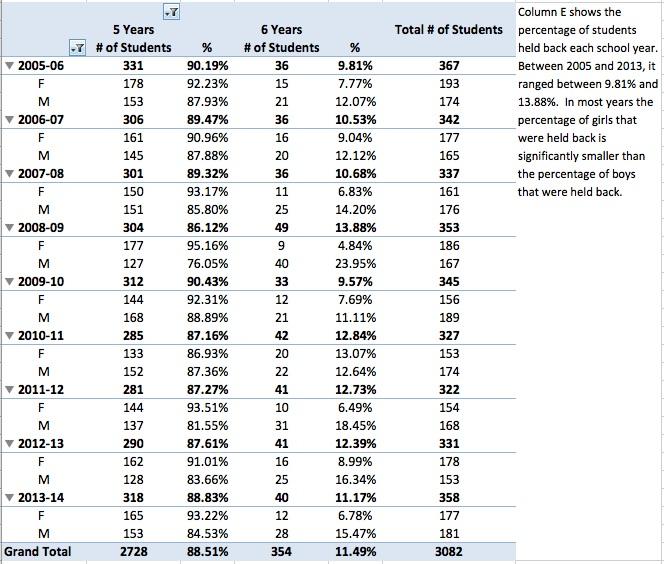
There are pros and cons to redshirting a younger child. There are strong opinions, there are studies to read and consider, and there are educators and psychologists who can advise a parent one way or another. Ultimately, studies look at populations and pool data for trends, causation, and statistical significance, and in the case of delayed school entry, the conclusions drawn from the same data is sometimes different. Some kids are being held back with birthdays as early as July, and there is no formula for telling which children may benefit and which children may not benefit from being redshirted. The bottom line is that we each know our own child and his or her needs and abilities best, and decisions for our children must be made with the best interest of the child in mind. The compassionate parent is the parent who does this; the competitive and coerced parents are the most likely to regret their decisions at some point down the road.
New Security System Now in Place at Scarsdale High School
- Details
- Hits: 4766
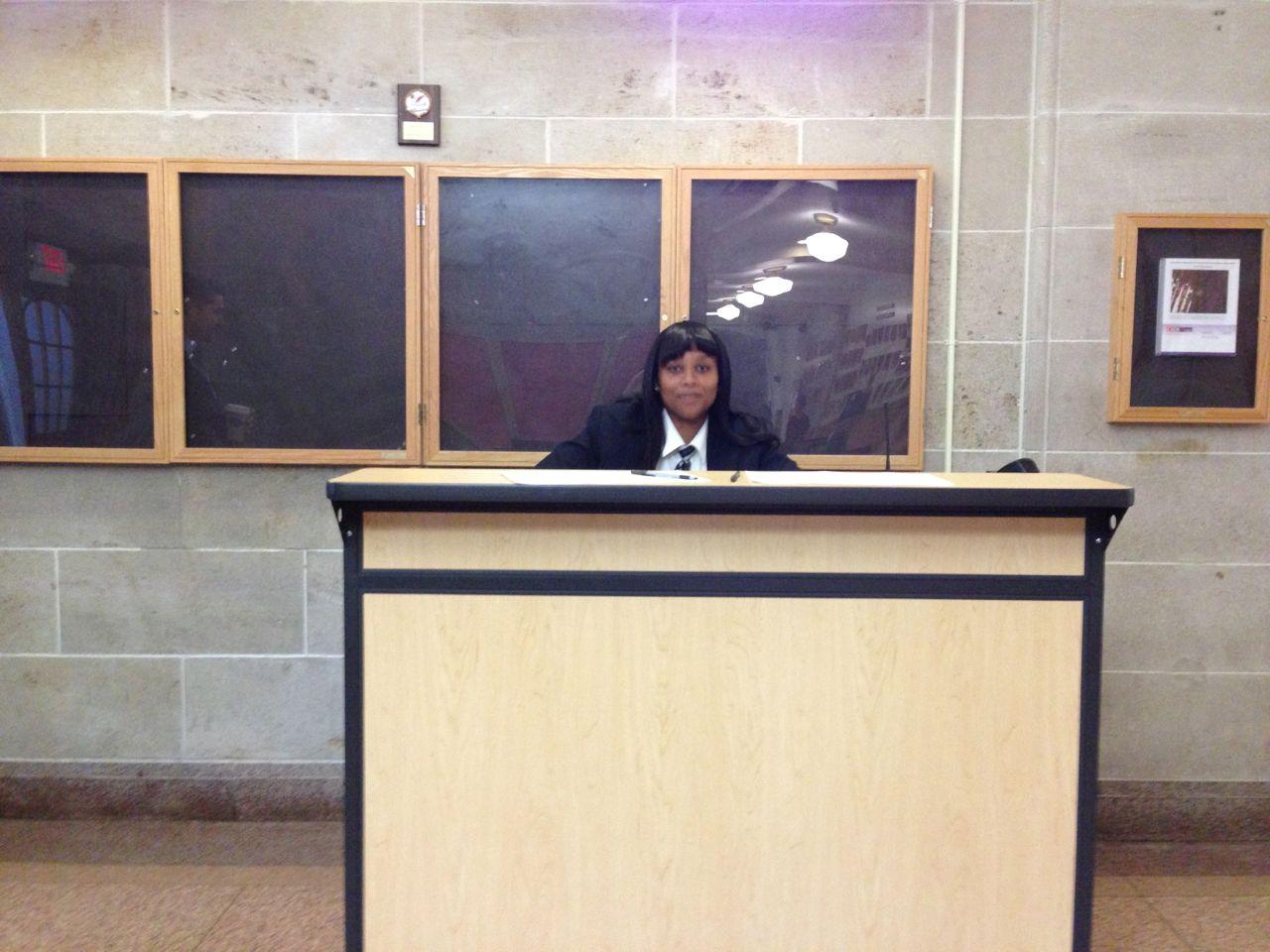 You can no longer wander in and out of the scores of entrances to Scarsdale High School anytime of the day. In response to community concerns about school safety, a new security system is now in place at the school. Security guards from an outside firm have been retained to monitor three entrances to the school. At times the guards ask students to see their identification cards and visitors are now required to sign in. Everyone we have asked has found the new personnel to be friendly -- and from all reports the transition from an open campus to a more secure campus has gone smoothly.
We asked SHS Principal Kenneth Bonamo to share some information about the new system with Scarsdale10583 readers and here is what he said:
Please describe the new system - how many entrances/exits are open to the school, at what hours?
We now have 3 entrances open from 8 to 3: on Post Road by the nurse's office, and on Brewster Road by the auditorium and by the gyms.
Who is manning these doors?
Security monitors
Are there security cameras at the school to monitor the entrances?
We have for several years had a camera system in place that monitors different areas of the building.
How are the security guards interacting with students and staff?
We have had good feedback from all corners--students, staff, and parents--about the new procedures and the new personnel.
Have there been any incidents so far this year?
No.
Are visitors and parents having trouble accessing the school?
No.
How is drop off and pick up going? Are the entrances crowded?
Whenever you have 1500 children being dropped off in a ten-minute time frame, there will be issues. We have traffic patterns, signage, and communication in place to minimize problems, and so far those seem to be working as well as they have in the past.
Has the new system helped to reduce crime around in the school in the parking lots?
We haven't had any issues in that regard.