







Let's Forego State Aid and State Mandates
- Details
- Hits: 5394
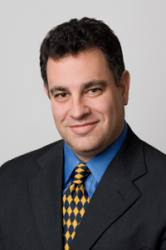 Former President and Member of the Scarsdale School Board Jeff Blatt has contributed the following comments on state aid and state mandates, which first appeared in print. If you are interested in education, I have a question for you. What do the Race to the Top, the Tax Cap, and all the downstream effects of both have in common? Answer: none of it makes any sense for Scarsdale.
When a government fails to serve its citizens properly, revolt is always a possibility and I say, let’s do it. Or at a minimum, let’s seriously examine the possibility. Let’s secede from the system. Let’s ignore the state and federal government.
Why should we evaluate our teachers based on ridiculous criteria that make no sense for our district? Why should we annually face an arbitrary tax cap number when our budgets regularly pass with overwhelming citizen approval? Why should we submit to an ever increasing schedule of standardized testing that dulls the mind and curriculum?
We do these things now because we are told we must. And we do these things because if we don’t, $6 million of annual state aid (much of this a pass through from the federal government) would likely be withheld. These dollars are the weapon the state wields to enforce its will and its ability to legislate with one size fits all policies.
There are about 6,000 tax paying households in Scarsdale. I have heard whispers of back of the envelope estimates that as much as $5 million of costs could be cut if we could ignore silly state mandates. In that circumstance, we’d be talking a tax bill of an incremental $167 per average household if we lost state aid. I think many of my neighbors would see the wisdom of paying this marginal cost for freedom and local control. For government by the people and for the people.
A partial list of some advantages of secession:
- An end to the ill-conceived notion of evaluating teachers based on standardized test scores. Our district has steadfastly refused to teach to standardized tests. But in a world where performance evaluation and pay is at least partially based on test results, it isn’t a given that our teachers will continue to ignore the tests. Would you?
- Additional weeks of productive teaching when you subtract ten days of Regents testing, 2-3 hours of testing in English and math in every grade 3-8, plus science and social studies tests in a couple of elementary grades and middle school. In addition, you gain back class time lost to test correction and teacher training to correct the tests.
- The development of a budget based on what is best for Scarsdale, as opposed to endless hours spent trying to react to an arbitrary tax cap.
- Terrific, national press as a high performing district taking a stand on behalf of educational excellence.
There are many unknowns, particularly legal. The district is obligated by law to follow the commissioner’s regulations. As mentioned, to date the instrument of law enforcement has been state aid. So what would ensue? Would the license of the superintendent be revoked? Would the state move to dismiss and replace the elected Board of Education? I’d love to see some of the great legal minds in our town think this through.
The primary responsibilities of the Board of Education are to pass an annual budget that funds program, and to see to it that the district is run as well as possible by the best professional team we can employ. Importantly, it also falls to the Board and the Superintendant to think and dream and invent. In my eleven years in Scarsdale, I have consistently witnessed a district that does all of these things. Let’s continue our long tradition of innovative thought and leadership, even as many (both near and far) make it difficult to do so.
Have a comment? Please include your name.
Scarsdale and Edgemont Students Score High on SAT's
- Details
- Hits: 10978
 For those actively engaged in the debate over school budgets, here’s some new data about Scarsdale and Edgemont high schools. In a comparison of Westchester High Schools published by Westchester Magazine on February 27, 2012, Scarsdale and Edgemont students come out on top for performance on the SAT’s, but the districts’ spending per pupil did not.
Of the 46 schools in the survey, which includes six schools in Yonkers, here are the mean SAT scores for the top five schools:
- Scarsdale 1935
- Horace Greeley Chappaqua 1904
- Edgemont 1887
- Bronxville 1866
- Blind Brook/Rye Brook 1842
However, in gross per-pupil spending, for the schools where data is available, Scarsdale comes out # 7 on the list at $26,688 per student, behind top-ranked districts such as Bronxville at $28,062 per pupil and Ardsley at $27,691. Edgemont is 15th on the list with the spending of $24,052 per pupil.
Another interesting fact quantified on the chart is the median household income in the high school’s zip code or village. That’s another category where Scarsdale came out #1, with a median household income of $237,135, followed by Chappaqua at $217,773 and Bedford at $207,426. Edgemont is eighth in that category with a median household income of $146,723.
For some schools, the report shows the percentage of teachers at the school with master’s degrees or PhD’s. According to the chart, 100% of Edgemont teachers and 97% of the teaching staff at SHS fall into that category.
And for those tracking average class size, according to the chart, the average class size at Scarsdale High School was 21 students, with an average of 20 students per class in Edgemont putting both high schools among the schools with the fewest students per class.
You can parse the numbers however you like with this clickable chart that sorts the districts by sixteen sortable characteristics.
More Budget Talk at the School Board Meeting: An Internet Café at Issue
- Details
- Hits: 5656
 The budget saga continued at the Scarsdale Board of Education meeting on Monday night 3-19 at Scarsdale High School. The board maintains that the budget for the upcoming year is fiscally responsible, coming in within the confines of the tax cap, and maintains and enhances current programs. Board President Jill Spieler noted in her opening remarks that many assumptions have been made that do not hold up under analysis. She says that it is widely assumed that there will be continued draw-downs of $500,000 in surplus each year to come in under the cap. She says that no decision has been made about subsequent years and decisions will be made on a year-by-year basis. She says that it is widely assumed that state aid will be constant, though that is also a variable. In fact, many of the board members speaking on Monday who spoke agreed and said that this year’s actions would not necessarily be repeated in future years. Factors such as healthcare, heating and capital costs vary from year to year for example and could affect the surplus as well as the need for funds.
Board member Lewis Leone said the budget must be transparent and fair to the schools as well as the taxpayer. He said that the schools are fully reserved and continually adding to the surplus implies that we are asking for more money from the taxpayer than is necessary. He mentioned that there is no line on the budget for a surplus and that it is time for the board to wean itself from this practice.
Board member Suzanne Seiden remarked that the roller coaster ride of the budget this year could have been a reality television show (maybe on C-Span) but said that thanks to skill, hard work and some luck the board came in under the cap after initially predicting it to be millions over. She believes the residents are smart enough to consider each year’s budget separately and to vote accordingly.
Some community members saw things a bit differently:
Gayle Hutcher of the PT Council urged the board to always do what is best for the students, and said that this year should not be a guide for the future. She said that cutting into the surplus this year may be okay but cautioned against doing this in the future and urged the board to review this practice for next year.
Art Rublin, Chair of the Coalition for Scarsdale Schools read prepared remarks, saying that the board should reconsider departing from the proposed budget in the area of planned surplus, noting that the proposal would mean a 40 percent reduction in the surplus that could impact future budgets. (See his remarks below.)
Meanwhile, Scarsdale resident Robert Berg took issue with spending. He said while he was pleased that the budget technically complies with the tax cap law he is troubled by two items in the current budget: turning the old high school auto shop into an ‘internet café’ and the construction of a new high school fitness center. He urged the board to remove these items from the proposed budget. This was not the first time the internet café came up that evening. Earlier that night, when the board met with high school parents, the issue of overcrowding in the cafeteria and bottlenecks on the lunch line for the younger grades were discussed.
Superintendent McGill and Spieler explained to that the internet café is a bit of a misnomer as the new space is intended to not only alleviate some of the overcrowding in the cafeteria but to also serve as a work space for the kids outside of the class room. It was also noted at the meeting that reconfiguring the old auto shop is less expensive than adding an addition onto the cafeteria.
In fact, the new fitness center was on the books since 2008 and scrubbed due to the economic downturn. The current fitness center is overcrowded and poses safety risks.
That evening there was a presentation on Mandarin in the high school- a hot button at last year’s budget meetings. Sylvie Corten, the high school’s world language chair said there were 51 students in all three levels of the course and reviewed their growth this year. She along with Ms. Gu, the Mandarin teacher, presented a short film showing the remarkable proficiency of the students in the Mandarin classes.
There was also a report about the East-West Center and the Interdependence Institute which is a social studies program that works with schools in APEC nations. This was funded with grant money and the report showed the progress made there.
The night wrapped up with Chief Finance Manager Jeff Martin giving a financial report for January and February. With factors such as high oil prices, but low heating needs it was difficult to make accurate projections about those costs this year. Due to the mild winter, the district wound up with a surplus for energy costs. Other surpluses are anticipated for health care costs and capital expenditures. The question then becomes what to do with the surplus? Hand it back to the taxpayer or save it for a rainy or in this case, a snowy day? To be continued….
Remarks from Art Rublin, Chairman of the Coalition for Scarsdale Schools:
GOOD EVENING, ART RUBLIN, CHAIR OF THE COALITION FOR SCARSDALE SCHOOLS.
CSS CONTINUES TO APPRECIATE THE BOARD’S INVITATION OF COMMUNITY INPUT ON THE BUDGET. I WANT TO FOCUS TONIGHT ON OUR PROPOSAL FOR AN ADJUSTMENT ON PLANNED SURPLUS.
WE RESPECTFULLY SUGGEST THAT WHILE THE BOARD IS OF COURSE BY NO MEANS BOUND TO WHAT WAS IN THE DISTRICT’S PRELIMINARY PROPOSED BUDGET, THE BOARD SHOULD RECONSIDER DEPARTING FROM THAT PROPOSED BUDGET IN THE AREA OF PLANNED SURPLUS. THAT PRELIMINARY PROPOSED BUDGET BUDGETED FOR A PLANNED SURPLUS FOR NEXT YEAR OF $3.87 MILLION. THAT WOULD BE A REDUCTION OF ALMOST 40% -- 40% -- FROM THE $6.2 MILLION BEING APPLIED AS PRIOR YEAR SURPLUS THIS YEAR. AND IF THE BOARD RETAINS ITS PROPOSALS TO CUT $550,000 FROM THE HEALTH CARE AND UTILITIES BUDGET LINES FOR 2012-13, THE ACTUAL SURPLUS APPLIED NEXT YEAR FOR 2013-14 LIKELY WOULD NOT BE MUCH, IF ANY, MORE THAN THE $3.87 MILLION. SO THE ACTUAL REDUCTION, YEAR OVER YEAR, OF PRIOR YEAR SURPLUS, WOULD LIKELY BE VERY CLOSE TO THAT 40% REDUCTION IN THE BUDGET.
WE BELIEVE THAT THE BOARD’S EXPRESSED DESIRE TO USE THIS YEAR TO BEGIN A DETERMINED EFFORT TO REDUCE SURPLUS SHOULD BE MORE THAN SATISFIED BY A REDUCTION AT THIS VERY SIGNIFICANT LEVEL OF APPROXIMATELY 40%. IN SUM, WE BELIEVE THE APPROACH TO PLANNED SURPLUS THAT WAS SET FORTH IN THE PRELIMINARY PROPOSED BUDGET IS NOT ONLY PRUDENT BUT ALSO VERY REASONABLE.
IF THE BOARD DETERMINES THAT IT IS NOT SATISFIED WITH A PROJECTED CUT OF 40% FROM PLANNED SURPLUS, I RESPECTFULLY ASK THAT THE BOARD TAKE ANOTHER CLOSE LOOK AT THE ONE-PAGE PROPOSAL THAT MS. PURVIS PROVIDED TO THE BOARD AT ITS SECOND BUDGET STUDY SESSION, IN RESPONSE TO QUESTIONS FROM BOARD TRUSTEES ABOUT SURPLUSES. I HAVE PROVIDED COPIES TO THE BOARD FOR EASE OF REFERENCE. YOU WILL RECALL THAT MS. PURVIS PROPOSED CUTTING PLANNED SURPLUS FOR 2012-13 BY $700,000, RATHER THAN CUTTING INDIVIDUAL ITEMS, SUCH AS HEALTH CARE OR UTILITIES, THAT MIGHT OR MIGHT NOT PRODUCE SURPLUSES. AND YOU WILL RECALL THAT WHEN ASKED ABOUT THE
DISTINCTION BETWEEN CUTTING PLANNED SURPLUS AND CUTTING UTILITIES AND HEALTH CARE SPENDING, MS. PURVIS AND MR. MARTIN RESPONDED THAT IT WAS SIX IN ONE, HALF DOZEN IN THE OTHER.
THUS, IF THE BOARD ADOPTED MS. PURVIS’ PROPOSAL FOR HOW IT MIGHT CUT $700,000 FROM DR. MCGILL’S BUDGET, THAT COULD BE THE $350,000 THE BOARD CUT FROM HEALTH CARE COSTS, $200,000 FROM UTILITIES, AND THEN $150,000 FROM PLANNED SURPLUS.
MS. PURVIS, TO HER CREDIT, DID NOTE THAT HER PROPOSAL OF A $700,000 CUT WOULD LIKELY MEAN AN INCREASE IN THE TAX LEVY FOR 2013-14, AND ALSO WOULD LIKELY MEAN, 1) “EXCEEDING THE TAX CAP,” WHICH OF COURSE MEANS SEEKING A 60% TAX CAP OVERRIDE VOTE, 2) “ELIMINATING PROGRAMS,” OR 3) USING RESERVES. AND CSS EXPRESSED CONCERNS LAST MONTH ABOUT MS. PURVIS’ PROPOSAL WITH THOSE RISKS IN MIND.
BUT IF BOARD TRUSTEES DETERMINE AS YOU HAVE THE POWER TO DO, NOTWITHSTANDING THE CONCERNS WE HAVE EXPRESSED, THAT YOU WANT TO USE THIS YEAR AS THE FIRST YEAR OF A DETERMINED EFFORT TO REDUCE OR ELIMINATE SURPLUSES AS A REVENUE SOURCE FOR THE DISTRICT, WE RESPECTFULLY ASK THAT YOU REVISIT MS. PURVIS’ FEBRUARY 8TH PROPOSAL.
I WILL NOTE THAT IF YOU ADOPT THAT PROPOSAL FOR CUTS OF $700,000 FROM DR. MCGILL’S PROPOSED BUDGET FROM A COMBINATION OF PLANNED SURPLUS, HEALTH CARE, AND UTILITIES, IT APPEARS THAT THE RELATED TAX LEVY WOULD BE SLIGHTLY OVER THE TAX CAP. WHILE, TO BE CLEAR, WE DO NOT THINK IT WOULD MAKE SENSE FOR THE DISTRICT TO BUDGET SIMPLY TO EXCEED THE TAX CAP IN THIS BELLWETHER YEAR, WE ALSO THINK IT WOULD PUT THE DISTRICT IN THE BEST POSITION FOR FUTURE YEARS – THE YEARS DR. MCGILL AND MS. PURVIS VERY RIGHTLY REFERRED TO IN THEIR PROPOSALS TO THE BOARD LAST MONTH, THE YEARS DURING WHICH WE KNOW YOU ALL ARE VERY COMMITTED TO SUPPORT SCARSDALE EDUCATION FOR TOMORROW. AND AT THE SAME TIME, THE TAX RATE FOR SCARSDALE WOULD BE SUBSTANTIALLY LOWER THAN IT WAS LAST YEAR WHEN THE BOARD CONSIDERED BUT DECIDED NOT TO APPLY ADDITIONAL SURPLUS, AS WE WILL DISCUSS IN MORE DETAIL IN A FOLLOWUP SUBMISSION TO YOU.
THANK YOU.
Scarsdale SBNC Selects Gose and Leone to Serve Additional Terms
- Details
- Hits: 8834
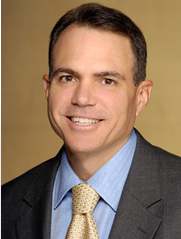 The 2012 School Board Nominating Committee (SBNC) has nominated Mary Beth Gose and Lewis Leone, Jr. to fill their respective seats as each completes an initial term on the Board.
Gose, a former investment banker has been an active volunteer for many years. She was a trustee of the Village of Scarsdale from 2003-2007, Co-President of the League of Women Voters of Westchester and Treasurer of the TVCC, now the Scarsdale Forum. She has an undergraduate degree from Dartmouth and an MBA from the University of Chicago. She was elected to her first term on the school board in 2009.
Lewis Leone, Jr. was elected to the Board of Education in 2010 to fill a seat vacated by Joel Gurin who resigned from his position due to a job relocation to Washington D.C. Leone is a Scarsdale native who played football for the Raiders before attending Princeton where he graduated with a degree in economics. He has served on the Boards of the Maroon and White and Scarsdale Youth Football and coached football, baseball and lacrosse. Currently an executive with Fox5, both Leone and Gose bring financial expertise to the Board of Education.
The School Board Nominating Committee is comprised of 30 voting members (six from each of the five elementary school  areas) and four non-voting members (one appointed community representative each from the Scarsdale Neighborhood Association Presidents (SNAP) and the Scarsdale Forum, as well as a vice chair and a chair selected from among the previous year’s outgoing SBNC members). The SBNC met over six Sundays to select candidates based “solely on their qualifications to serve the community” as prescribed by the SBNC resolution. The SBNC thanks all the applicants for the time and effort put forth in their candidacies.
A press release from the SBNC it says, “Scarsdale is privileged in its ability to maintain a nonpartisan election process for our school board that selects board members based on their qualifications, not on their campaigning abilities. Yet, this process cannot endure without the effective and continuous participation of its citizens in each part of the process. It takes a village of dedicated Scarsdalians to make our nonpartisan process so effective. Moreover, we can ensure the highest quality school board only through a dynamic election process thereby safeguarding the continued success of our schools. We therefore encourage all residents to consider running for the 2013 SBNC and think about suggesting candidates for the school board next year." Learn more about the SBNC on their website: www.scarsdalesbnc.com.
The election for the school board candidates and the 2012-13 school budget will be held on Tuesday, May 15.
Scarsdale 2012-13 School Budget: Too Little or Too Much?
- Details
- Hits: 6459
 In a two-hour presentation on March 5, the Scarsdale Board of Education presented their proposed 2012-13 budget for the Scarsdale Schools, which avoids any cuts in the educational program and comes in below the mandated cap. The $141,634,884 budget is 2.3% higher than the 2011-12 budget and translates to a 3.81% tax increase for Scarsdale residents and 2.64% for those in the Mamaroneck strip. The district was able to propose this very modest increase due to several factors:
1) This year the district spent less than anticipated as a result of more teacher retirements than expected, fewer long term faculty leaves, energy cost savings of $765,000 as a result of the warm winter and savings in health care costs. A projected surplus of $6,195,354 from the 2011-12 budget will be used to fund the 2012-13 budget.
2) Next year costs are projected to go down as enrollment in the elementary schools is expected to decrease. The district will enroll 60 fewer students and the number of elementary school sections will drop by five, decreasing from 113 to 108 classes. Therefore, five fewer elementary school teachers will be needed. This is the fifth year in a row that elementary school enrollment has dropped.
3) Following lengthy discussions, the Board also decided to reduce fund balances for electricity and health insurance resulting in an additional $500,000 in revenues for 2012-13.
Despite economic pressure, the Board was able to maintain class sizes of 22 students in grades K-3 and 24 students in grades 4-5 and to retain the third assistant principal position at the high school. Two unassigned teaching positions are now in the budget to be used to staff classes where needed, depending on enrollment and class selection.
What’s New?
The budget includes $1.92 million for plant improvements, a budget line that was severely cut in the past few years. The funds will be used for required repairs and safety upgrades as well as the transformation of the auto shop at the high school into an internet café and satellite cafeteria to relieve crowding in the high school cafeteria. Also under consideration is the expansion of the fitness center at the high school, an item that has been under consideration since 2008.
In the transportation budget $205,000 has been allotted for two new large school buses and two smaller vans that will be purchased to replace equipment that is beyond repair. 1,900 of the district’s 4,700 students live more than 1.5 miles from their schools and use the buses for transportation.
A new Center for Innovation will be formed to explore how technology can transform instruction. The $100,000 in start-up funding will be allocated for project proposals, consultants, speakers, conferences and site visits.
Board President Jill Spieler reiterated that Scarsdale has managed to hold the line on costs without compromising the Scarsdale education. Last year, 99% of Scarsdale graduates went to college and of those, 95% attend four-year colleges and 62% enrolled at the most selective colleges and universities in the country. She asked the community to provide feedback on the budget by email to [email protected] or by attending the next Board meeting scheduled for March 19. The complete budget document can be reviewed on the School Board website at http://scarsdaleschools.org/Page/17
Last, she reminded everyone to exercise their right to vote on Tuesday May 15th.
Despite what appeared to be a reasonable compromise between economic and educational concerns, some still voiced reservations about the budget.
Speaking on behalf of the PTA Executive Board, President Vivienne Braun reiterated her concern about class sizes at the high school and asked the Board to plan for the future and hire more teachers for the older students. Citing the lost of 8 full time teachers at the high school since 2008 she said that classes are larger and teachers have less time to spend with individual students. In response to the Board’s offer to hire teachers in the summer, she said, “how can we hire at the last minute?”
Both Spieler and McGill resassured her that they have looked into the issue and will continue to monitor class sizes as students select courses for next year. Spieler contended that only 9.4% of high school classes now have more than 25 students, in line with historic norms. She added that hiring more teachers to reduce class sizes at the high school would be a policy decision.
Members of the Coalition for Scarsdale Schools also had concerns about the Board’s proposed budget which is more than $1 million less than the original budget proposed by Dr. McGill. They took issue with the decision to wean the district off funding operating expenses with surpluses from previous years. Speaking about the Board’s move to reduce planned surpluses, Art Rublin said, “The Boards current proposal for reductions in planned surplus and the health care and utility lines would contribute to a revenue deficit of $2.4 million” at this time next year. He presented a rollover analysis demonstrating the long term affect of reducing the surplus by $500,000 per year and warned that the plan would produce “revenue holes” and eliminate the Board’s ability to hedge against “future mandates. pension and health insurance growth, a difficult economy, inflation and state politics.”
Jim Dugan, also of the Coalition for Scarsdale Schools seconded Rublin’s comments and said that complying with the tax cap this year “sets a dangerous precedent.” He feared that “in the future, coming in under the cap will trump other concerns and weaken our ability to attract young families to the community.”
Speaking last, Miriam Pop Seely said the tax cap “is the gorilla in the room that you can’t ignore. If we come in under the cap this year, we’re setting ourselves up for failure in the future.” She urged the Board to use the surplus next year rather than this year. Referring to the Board’s decision to comply with the cap, she added, “ It’s my fear to such an extent that I am already looking at private schools.”
Spieler promised to review the rollover analysis and answered that the surplus had grown in the past few years and the Board had moved to level it out and reduce reliance on the surplus to fund operating expenses.