







Another Strong Year for Scarsdale Debate
- Details
- Hits: 9830
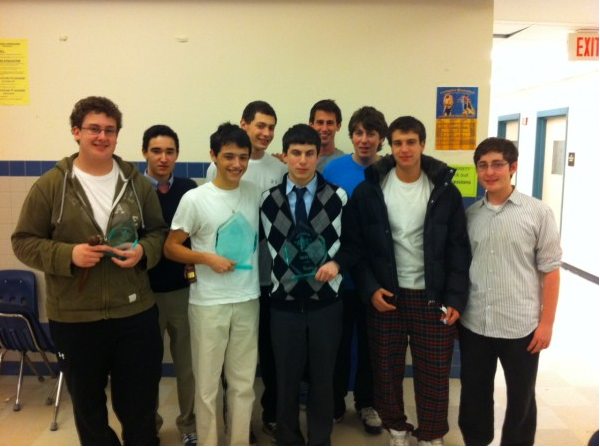 With words like “spike” and “break”, being thrown around, the uninformed listener might think that the kids in Mr. Vaughan’s physics room are engaged in a varsity sport rather than a Lincoln-Douglas debate.
For those unfamiliar with this competitive form of verbal engagement, Lincoln-Douglas, also known as LD, is a style of debate in which two individuals face off in a series of timed case presentations and rebuttals to objectively determine which participant has the better debating skills. The activity is incredibly intense, with top debaters averaging over 250 words spoken a minute to squeeze every argument in their arsenal into a debate round.
So what exactly is the advantage of having a team in such an individual activity? The amount of work that goes into preparing a topic is immense, and by working together to research, prepare and write positions, the SHS LD debaters can be fully prepared for their rounds. December’s issue or “resolved case” was “It is morally permissible for victims to use deadly force as a deliberate response to repeated domestic violence”. The team spent more than 12 hours a week studying the case to come up with a 95 page, single-spaced document that covered every affirmative and negative argument they could construct.
Currently, Geoffrey Kristof is ranked No. 1 in Lincoln-Douglas debate. He achieved this ranking when he won the Blake Tournament in Minneapolis in mid-December. He moved from third to first in the country and has held onto this ranking with the semifinalist standing at the Harvard Invitational Tournament that took place during President’s Week. For Kristof, a debate is more than just a competition: it’s a forum in which all possible arguments for and against an issue can be explored.
Perhaps even more interesting than Scarsdale’s tournament results however is Fantasydebate.com, a website created by Senior Alon Daks, which is  recognized by debate coaches nationwide as the official ranking system for LD. Daks, who comes from a family of top debaters, started to develop the website during his sophomore year. Prior to Fantasydebate.com, there was no real fair way to determine who was the best debater in the country. Rankings were determined by tournament results, but the system did not take into account the level of difficulty of the debater’s bracket. For example, if a debater defeated 8 unranked opponents to reach the final round, as opposed to beating top ranked opponents, they would receive the same number of ranking points. Fantasydebate.com fixed this issue by using an Elo based ranking system. The Elo system, developed by Arpad Elo, a physics professor, was originally used to rank chess players. In the Elo based ranking system, each debater has a number rating which increases and decreases based on the results of individual debate rounds rather than the results of overall tournaments. The winner of a debate between two debaters gains a certain number of points in his rating system and the losing debater loses the same number of points. The number of points won or lost in a debate depends on the difference in the ratings of the debaters; therefore, a debater gains more points by beating a higher-rated debater than one who is lower-rated regardless of in what round they achieve their victory. Daks’s site is visited 33,000 times per month, and has collected data from over 32,250 individual debate rounds in the three years it has been running.
In addition to Kristof and Daks this year’s team has several strong debaters including Zach Edelman, Ben Fife, Sam Natbony, Grant Reitler, and Larry Millstein all who are ranked in the top 100. Five of Scarsdale’s debaters have already qualified for the Tournament of Champions, the most prestigious LD tournament of the year which takes place the first weekend in May at the University of Kentucky.
Pictured at top: Grant Reiter (Junior), Stephen Friedman (Junior), Zach Edelman(Senior), Doug Meyers (Senior), Alon Daks (Senior), Jared Young (Class of 2011), Sam Natbony (Junior), Ben Fife (Senior), Josh Annex (Sophomore)

Contributor Will Heffner is a senior at Scarsdale High School and has been a lifelong resident of Scarsdale. In his free time, he enjoys acting, and playing music. If you would like to contact Will for any questions or comments, he can be reached at [email protected].
Proposed Scarsdale School Budget to Comply With State Cap
- Details
- Hits: 6856
 Those who decry high Scarsdale school taxes may be appeased by the latest news from the Scarsdale Board of Education now indicating that the proposed school budget for 2012-13 will comply with the 2% New York State tax cap. However, the irony is that the 2% cap has now been adjusted to 2.99%.
According to the law, the 2% cap can be adjusted for the growth rate, increases in pension and retire payment above 2%, capital improvements and equipment purchases. Due to this change in the formula for the cap and the Board’s decision to utilize surplus funds and decrease reserves, the proposed budget now falls within the allowable increase.
The total proposed school budget for 2012-13 is now $141,634,884, representing a 2.30% increase over the 2011-12 budget. This will translate to a 2.89% increase in the tax levy and tax increases of 3.81% for Scarsdale residents and 2.64% for those in the Mamaroneck strip.
The first proposed budget was $1.2 million above the cap but this gap was eliminated when a change in the rules for the school’s tax cap calculation permitted Scarsdale to exempt $300,000 for the purchase of new school buses from the cap. In addition, the Board opted to add $500,000 in surplus funds to the 2012-13 budget,decrease the health insurance reserve by $300,000 and to reduce the reserve for electricity by $250,000.
For the past several years, the budget surplus has been growing, and the Board felt comfortable to begin spending it down. After lengthy discussions the Board decided that a portion of the large surplus should be spent to fund next year’s budget and that the reserves for the health plan and electricity could be reduced. Discussing the surplus, Board President Jill Spieler said, “After careful review the Board decided that it would be in the District’s best interest to cut back on our planned year over year fund balance by $500,000 for 2012-13. The Board feels confident that we are still leaving ourselves with a responsible level of reserves in both designated and undesignated categories.” Board member Jonathan Lewis said we are “adequately reserved,” and Lew Leone said it was “time to be less conservative with our rainy day funds.” He cited decreasing enrollment and a flattening out of future expenses as reasons to reduce the amount held in surplus and reserve funds.
Since funding for capital improvement projects are not included in the cap, the Board discussed including funds for some needed improvements to the schools and decided to add $350,000 to the budget for these projects. Though they have not yet decided what will be done, here are some projects under consideration:
- Renovations of the high school auto shop to create a satellite cafeteria and work area for students to alleviate crowding in the cafeteria and provide space for group activities and learning.
- A new fitness center at the high school, which had been approved in 2008, but put off due to budget constraints
- Renovations of the serving area of the high school kitchen
- Bathroom renovations at the middle school
- Replacement of the seating in the high school auditorium
- Construction of a bathroom in Choice at the middle school
- Replacement of the kindergarten playground at Fox Meadow
- Replacement of the flywheel or curtain rigging on the middle school stage
- Regrading of Dean Field at SHS where the northwest corner of the field is often under water.
The Board will need to finalize their thinking on capitol projects by early March and submit proposed projects to the state for approval.
In addition, to the $350,000 for capitol improvements, the Board also designated $100,000 for a new Center for Innovation for the district. The center will develop models of instruction and explore how technology can transform learning. The funding will be used for speakers, site visits, and research to investigate how the schools can integrate new technologies into the educational system. As part of the process, the district will look into partnering with universities and corporations and will work with community members who are knowledgeable in the field. Findings will be published in an e-journal and shared both inside and outside the district.
In discussing the school budget, Superintendent Mike McGill restated his belief that Scarsdale taxpayers want a quality education and are willing to pay a reasonable amount to fund it. He feels that the proposed budget is the right budget for Scarsdale and he added, “My sense is that the large majority of people believe that is what we should be doing.”
Now that the budget no longer exceeds the cap, the community will not need to pass it by a 60% super majority vote in May. Budgets that comply with the state cap need only pass by a simple majority vote.
Community Provides Feedback on 2012-13 Proposed School Budget
- Details
- Hits: 6618
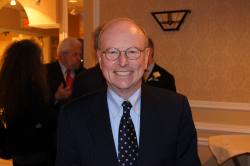 Parents showed out in force to the Scarsdale School Board meeting on Monday night February 13th to voice their support for the proposed 2012-13 school budget. Though the proposed budget does not include cuts to programs or staff, residents were encouraged to attend the meeting in emails from the PTA’s and the Coalition for the Scarsdale Schools.
Before residents took the mike to state their views, Superintendent Michael McGill announced that the state is now making clarifications to the tax cap formula for school districts. McGill suggested that the new calculation may favor Scarsdale in that it would allow for additional exemptions from the cap. Preliminary calculations showed that this change could mean that the $1.2 million gap between the proposed budget and the capped amount would decrease to just $900,000.
In addition, Joan Weber provided an update on the progress of the search for a new high school principal to replace John Klemme who retired last year. Weber announced that the district ran extensive advertising for the position and now has a broad pool of applicants including principals, assistant principals, department chairs, headmasters and even a candidate from West Point. An advisory committee has been assembled to review the candidates and the first round of interviews will be done via SKYPE, as this will allow the group to meet candidates without flying them to New York. Though the advisory committee will make a recommendation, the decision ultimately falls to the Superintendent who will make the final recommendation to the School Board.
Here is a recap of some of the comments about the budget made at the Board meeting by community members:
Suzanne Glaser, speaking for the PT Council Executive Committee urged the Board to “allow for enough flexibility for unforeseen circumstances, not only this year but in the years to follow,” and asked them to “establish a budget that is fiscally responsible; not one that meets an arbitrary cap.”
Mike Blumstein, an SHS grad and a father of three warned that “If the system loses its reputation for excellence it will be hard to hire good teachers and we will spiral down to mediocrity.” He commended the Board, saying, “You are approaching this the right way."
Scarsdale High School PTA President Vivienne Braun said that high school parents are concerned with staffing at the high school where seven full time teachers have been lost since 2008. She cited overcrowding in math sections and said that 16.9% of math classes have more than 25 students. With more demanding teaching schedules, teachers no longer have time to meet with students on an individual basis and students wait in long line for individual help. Though she “applauds fiscal restraint,” she said, “maintaining the current staff level at high school is not the place to hold the line.”
She also spoke in favor of maintaining three assistant principals at the high school and credited them with ensuring the smooth running of the school. They handle scheduling, meet with students with academic problems, and serve as a resource for students in need or in crisis. Acccording to Braun, the assistant principals have run programs that seek to reduce stress, provided an orientation program for freshman and have created numerous travel opportunities. Though “many have said that four top administrators is one too many,” she favored retaining the four positions.
Penny Bauersfeld Vice President of the Board of Scarsdale Family Counseling spoke in support of funding for SFCS saying that “SFCS serves as a safety net for developmental issues,” Bauerfeld said that many kids seek out the outreach workers, parents participate in the parenting groups and “the outreach workers are here for us and for our kids.” She called the youth outreach program “an excellent value for the community.”
Anne Moretti, also on the Board of SFCS spoke in support of the group and provided quotes from five students who benefit from their programs. Tracy Jaffe, said that she “is grateful for the funding for SFCS in the budget.”
Art Rublin of the Coalition for Scarsdale Schools commended Dr. McGill and the Board, saying, “the proposed budget is good for Scarsdale, as it sustains our district and maintains the program.”
Josh Weisbrot told the group that he moved here seven months ago because of the schools. As a healthcare consultant for Bain, he found the district’s 2% growth in healthcare costs remarkable and warned that one bad outcome could easily eat up the $900,000 healthcare reserve.
Mary Beth Evans said that the “proposed budget is a realistic plan to ensure that students are well prepared for tomorrow’s challenges” and said that it “responds to current economic reality without sacrificing educational quality.” She added, “Since the 1920’s the community has demanded private school results from our public schools and it does so at less than half the cost of a private school education.”
Robert Berg was the sole speaker to advocate for a budget that complied with the 2% NYS tax cap. He said he found the $300,000 to convert the SHS auto shop to a lounge “offensive as a taxpayer,” and that “excising that from the budget would go a long way toward bringing the budget in line with the tax cap.
The Board also approved a $1,000 gift for prom buses from Scarsdale Task Force on Drugs and Alcohol and a $5,802 gift from the Greenacres PTA to purchase iPads for the school.
The Scarsdale School Board will hold their next budget study session at 6:30 pm on Wednesday February 15 in rooms 170-172 of Scarsdale High School.
School Board Nominating Committee Seeks Candidates
The School Board Nominating Committee is seeking candidates for nomination to the Scarsdale Board of Education. In 2012, the SBNC will nominate two candidates to the board to fill the seats of Mary Beth Gose and Lewis Leone, Jr., both of whom will be completing their first terms and are eligible for re-nomination.
The SBNC invites all residents to propose candidates for the school board. A candidate must be at least 18 years old, a U.S. citizen, a Scarsdale resident and a qualified voter in the Scarsdale school district for at least one year prior to May 15, 2012, the date of the school board elections.
Candidates should complete a biographical information form and submit it via e-mail to [email protected] as soon as possible, but no later than 5:00 PM on Monday, February 27, 2012. Forms are available at www.scarsdalesbnc.com
For more information on the SBNC, including the governing Resolution, the non-partisan system, and current members, please visit the SBNC website.
Clarifying Scarsdale School Budget Reserves
- Details
- Hits: 5074
 At the second budget forum on Wednesday night February 8th, the Scarsdale Board of Education and the administration got into a complex discussion about finances, focusing on budget reserves. Specifically, several Board members questioned how much the district should hold in reserve and whether or not these funds should be used to pay for the 2012-13 budget.
As many numbers were discussed, we spoke to Assistant Superintendent Linda Purvis to clarify what is currently being held in reserve and how these funds are used. It should be noted that New York State allows the district to retain a reserve of 4% of the entire school budget in an "unassigned reserve" which is available for unanticipated costs that may occur. For the 2011-12 school year that unassigned reserve totals $5,537,757.
In addition to the $5.5 million, there are a number of reserves that are designated for specific purposes. Here is an accounting of the funds held in reserve as of June 30, 2011 and why the funds were there:
Tax Certiorari: $2,026,429 is held as a reserve for outstanding legal claims against the district by those who grieve their property tax assessments. It represents an estimate of potential payments against actual claims filed with the Village Assessor and the District.
Debt Service: $440,777 - this represents the remaining balance of borrowed funds for capital projects. This money is invested and the interest is used to pay the district's debt service.
Health Insurance Reserve: $2,695,427 is held in reserve for health insurance claims. The district has a self-insured health plan and relies on a healthcare consultant to estimate this number.
Reserve for Retirement System Contributions: $903,135 is available to reduce the impact of future significant growth in mandated state retirement system contributions.
Repair Reserve: $435,127 is held for emergency repairs to the district's buildings, which include almost 1,000,0000 square feet of space. This reserve was established many years ago.
Reserve for Encumbrances: $2.268 mm was held to pay outstanding invoices for items ordered but not received during the 2011/12 school year. It is similar to an "accounts payable" line on a corporate balance sheet, and is therefore not really a hedge against uncertainty.
The June 30, 2011 balance sheet also shows an amount of $6,867,380 million that was previously designated by the Board of Education to fund the 2011-12 school budget. As of July 1, 2012 this number is no longer a "reserve."
So how does this total up? Of the $21 million shown on the June 30, 2011 balance sheet, the $6.8 million applied to the 2011-12 school budget was designated by the Board for the following year in order to offset a larger tax increase for residents. This is a practice that the Board has relied on for many years. The reserve for encumbrances of $2.6 million is a year-end accounting convention rather than a true reserve. This leaves approximately $12 million in actual reserves.
For the 2012-13 budget, the Board could decide to reduce the budgeted amounts for estimated items such as health insurance, heating oil, and repairs. They could also decide to only hold the required 4% in reserve. If so, residents may see lower tax increases in some years, and larger ones in years where costs rise unexpectedly. The Board will continue to discuss the issue of the use of reserves at subsequent meetings.
Your comments on the school budget are welcome - but please include your first and last name.
Proposed 2012-13 Scarsdale School Budget is Unveiled
- Details
- Hits: 6015
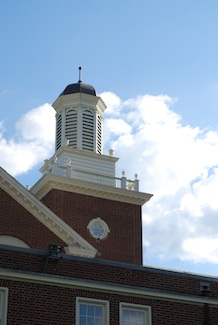 At the first community budget review session on Tuesday February 6, the Scarsdale School administration presented their initial draft of the 2012-13 proposed school budget. Ending months of speculation about whether or not the budget would exceed the 2% New York State cap, the proposed draft does include an increase that is .94% above the cap, bringing the total tax levy increase to 3.62% for a proposed school budget of $142,884,284. For the average Scarsdale taxpayer, the .94% increase above the cap would mean an additional payment of $220.
The proposed budget for 2012-13 exceeds the prior year’s budget of $138,443,938 by $3,840,946 or 2.77%. The largest contributing factors to the increase are teacher salaries, pension and health care payments and plant improvement funds. However, due to a projected dip in enrollment in the elementary schools, the district plans to reduce staff by five full time employees, saving about $500,000 in salaries and another $200,000 in benefits.
The “2% cap” is actually a misnomer, as certain items are exempt from the cap by law. The administration is permitted to add Scarsdale’s growth rate of .0057% to the two percent and to eliminate $1,570,000 in proposed capitol expenditures from the cap calculation.
Enrollment trends from the demographer suggest that 62 fewer students will enter elementary school next year. This is the second year in a row that enrollment will drop from a high in 2010-11. Since the numbers at the middle school and high school will remain constant, no changes in the number of teachers at these two school will be made. However, a very large class of 409 students now in the seventh grade will move through the high school in the coming years, and therefore the administration does not anticipate any cuts in high school staffing for the foreseeable future.
The proposed budget includes the use of $3.87 million from the fund balance, a figure that will be discussed among Board members at a later meeting. It was noted at the session that the school has been experiencing surpluses in the past few years. For 2011-12 the administration again expects that revenues will exceed expenses as there have been savings for fuel due to the warm winter, teachers salaries and health care costs.
Assistant Superintendent Linda Purvis outlined projects that would be financed with the $1.570 million plant improvement budget which is $500,000 higher than 2011-12 but still 25% lower than the 2008-9 number. Almost all of the line items are for repairs or safety compliance. On the list are the following:
- Ventilation system replacement at Edgewood
- Asbestos removal and lighting upgrade in the Heathcote auditorium
- Exterior stair replacement at the Middle School
- New oil tank and column repairs at Choice
- Emergency generator connection at the High School
One new project will be undertaken. At Scarsdale High School the former auto shop will be converted into a satellite lounge/cafeteria for small group instruction.
In the community comments portion of the meeting, High School PTA President Vivienne Braun asked the Board if they are addressing high school staffing issues following the reduction of the staff by eight full time positions since 2008. Superintendent McGill responded that Assistant Principal Kelly Hamm has reviewed class size numbers several times and found that the number of sections that exceed 25 students are within historical averages.
Discussion of the proposed budget will continue on Wednesday night February 8 in rooms 170-172 of Scarsdale High School. The public is invited to attend.
Comments? Please include your first and last names along with any comments you have on the school budget.
(Photo courtesy of Nan Berke)