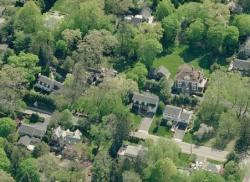







Architectural Historian Recommends Preservation of 26 Circle Road, Saying, "Don't Throw Out the Baby with the Bathwater"
- Details
- Written by: Joanne Wallenstein
- Hits: 1105
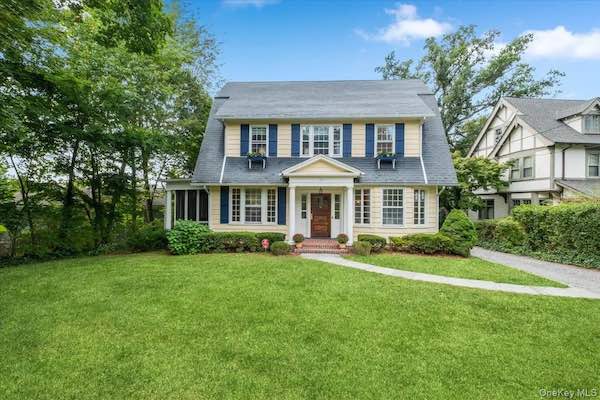 The owners of 26 Circle Road have withdrawn their application to raze their Dutch Colonial.
The owners originally applied, saying that the home had deteriorated and providing a structural assessment that showed that an addition of a sunroom over a porch was settling and unsafe.
They retained the law firm of Cuddy and Feder along with consultants Emily T. Cooperman and Kyle Toth at PS&S to provide evidence that the home did not meet Scarsdale’s criteria for historic preservation.
However, at the request of the Committee for Historic Preservation, the Village asked their consultant Andrew Dolkart for his assessment and he concluded that the home did meet the criteria for preservation.
In his opinion Dolkart wrote a lengthy history of the Overhill subdivision, where development began in 1905. Reviewing the history of the Overhill neighborhood, Dolkart argues that 26 Circle Road meets the first criteria, which is, “The house is representative of the broad patterns of Scarsdale village history.”
Dolkart says, “As noted previously, it is the suburban development of Scarsdale in the early decades of the twentieth century that is the most significant historical pattern in the creation of the Village and 26 Circle Road is representative of the earliest phase in this broad character defining trend … “What is significant about Overhill is that it is a residential subdivision that marks the beginning of the transformation of Scarsdale into one of the premier suburban communities in the New York metropolitan area.”
Commenting on the homes integrity he concluded, ”The house retains its integrity to a high degree. It has "integrity of location, design, setting, materials and workmanship," to quote a necessary finding in Scarsdale's preservation ordinance. It is on its original site (a relatively small lot in the Overhill Tract); its design is unchanged except for the rear addition that occupies approximately one-third of the rear elevation; its setting is intact (the houses of Overhill are largely unchanged since their construction; its materials are intact; and its workmanship remains untarnished.”
Dolkart also contested Dr. Cooperman’s findings saying, “In her report submitted by Cuddy & Feder, Dr. Emily Cooperman states that in order to make this finding for a property it "must be distinguished in its historic time period as important relative to other properties. There must be some evidence that the individual property in question was historically important within the context of the time in which it was created."
Dolkart corrects her saying, “The criterion in the Scarsdale ordinance does not say this; this is not the standard on which a property should be judged under criterion 1. The criterion states "that the building is associated with events that made a significant contribution to broad patterns of Village, regional, state or national history.” The criterion says nothing about a property being "distinguished in its historic time period." It concerns a broad pattern of history which encompasses the early twentieth-century suburban development of Scarsdale.”
He also notes that one of the home’s owner, Rollin Kirby was a prominent editorial cartoonist who won Pulitzer prizes but he do so after he sold the house.
Last Dolkart commented on the report about the structural integrity of the addition in the back. He said, “As noted, 26 Circle Road retains its architectural integrity to a high degree. The only evident change to the exterior is the rear addition. The engineering report completed by Martos Engineering finds that this porch is structurally unsound. It is clear that the weight of the second-story sunroom has destabilized the addition. This is the argument being made for why the entire house must be demolished. To me, this appears to be a case of "throwing out the baby with the bathwater." The porch and sunroom could either be removed, rebuilt, or shorn up. The bulk of the house would not be impacted by this work. I would recommend that the Village retain an engineering firm that specializes in the preservation of old buildings (Old Structures Engineering or Silman/TY Lin, for example) to assess whether the entire house should be demolished because of the condition of the rear porch and sunroom. This would aid in determining if a demolition permit should be issued.”
Following the submission of the report, the Village received a letter from Cuddy and Feder withdrawing the application to tear down the house.
Despite Inventory Shortage, Homes Continue to be Razed in Scarsdale
- Details
- Written by: Joanne Wallenstein
- Hits: 2126
An appllication has been filed to demolish 26 Circle Road, built in 1908Despite code changes to strengthen Scarsdale’s land use code to curb the size of new homes and preserve setbacks and open space, builders and property owners were busy this summer filing applications to raze Scarsdale homes, at both the Committee for Historic Preservation and the Planning Board.
This may be contributing to the shortage of home inventory for new buyers, as it often takes years to get approvals to demolish homes and replace them. In that time, buyers are frustrated and lots stand empty.
Here’s the most recent activity:
At their July 28 meeting, the Committee for Historic Preservation approved the demolition of:
41 Secor Rd – Demo house built in 1950
2 Coralyn Rd – Demo house built in 1930
And at their upcoming meeting on Tuesday September 15 at 7 pm, they will consider these applications:
26 Circle Road– Demo house and detached garage built in 1908
54 Park Road – Demo all structures built in 1918 (Original house already razed.)
5 Cohawney Road – Demo house built in 1927
387 Heathcote Road – Demo house built in 1955
At the Planning Board meeting on August 5, 2025 demolitions were also considered.
-At 7 Mayflower Road a demolition along with site disturbance and incursion into the property buffer was approved.
-An application to subdivide a lot at 19 Woodland Place was held over. (The home was already demolished.)
-Also held over was a proposal to demolish 16 Cooper Road and for approval of incursions into the property buffer and site disturbance.
Plans to demolish 43 Church Lane along with a site disturbance and incursion into the property buffer were referred to the Board of Architectural Review and were also held over to the September meeting.
Follow these applications here
https://www.scarsdale.gov/AgendaCenter/Search/?term=&CIDs=4,&startDate=&endDate=&dateRange=&dateSelector=
Letter to the Editor In Support of Code Changes Regarding Wetlands, Watercourses and Buffers
- Details
- Written by: Joanne Wallenstein
- Hits: 987
 The following letter was written by Yingying Na and Wei Zhou of Rock Creek Lane:
Dear Chair and Members of the Planning Board,
We write as residents of Scarsdale, and as neighbors who have spent the past several months following the application at 0 Spier Road (tax parcel 19.01.375), to express our strong support for the amendment to Chapter 171 of the Village Code now referred to your Board for review here. We respectfully urge the Planning Board to recommend adoption of the amendment as drafted, without weakening any of its protections for wetlands, watercourses, and their buffers.
The amendment finally puts into law what our community has understood for decades. The draft adds new findings to § 171-1 recognizing that wetlands and their buffers control flooding by slowing overland runoff and absorbing and storing sheet flow; that they trap sediment and filter stormwater-borne pollutants — fertilizers, pesticides, heavy metals, and septic leachate — before they reach a stream; and that undisturbed buffer areas are themselves critical, irreplaceable habitat, not just leftover space around a wetland. These are not abstract principles. They describe exactly what is at stake whenever a steep, wooded, stream-adjacent lot is cleared and excavated for construction.
The amendment closes a real loophole in how "wetland" is defined. Under the current code, wetland status turns heavily on the Village's Freshwater Wetlands Map, adopted in 2011. A lot can lose protection simply because it was never accurately reflected on that map, whatever its actual ecological condition. The proposed definition instead identifies a wetland by the presence of hydric soils and hydrophytic vegetation, using the federal delineation standards the Army Corps of Engineers applies nationwide. This change means the Village's protection follows the actual, on-the-ground condition of the land, not a fifteen-year-old drawing, and it removes the incentive for an applicant to argue a technicality rather than the facts.
The amendment closes a gap on tree removal near wetlands and watercourses. New § 171-6(B)(7) requires Village Engineer or Director of Planning review before any tree within 50 to 100 feet of a wetland or watercourse can be cut in a way that involves stump removal or the use of motorized equipment. Mature trees on steep, stream-adjacent slopes hold soil in place and slow runoff; removing them at scale, without any Village review, is precisely the kind of activity this chapter exists to prevent.
The amendment makes buffer protection and mitigation real, not just aspirational. It requires a mitigation plan whenever a controlled activity within a wetland buffer is approved, with genuine replacement of the disturbed area on at least a one-to-one basis, and it raises the maximum penalty for violations from as little as $250 to up to $1,500 a day. Protections that cannot be enforced are not protections; this amendment gives Chapter 171 actual teeth.
The amendment ensures that approved plans stay the approved plans. New § 171-8 provides that permits expire twenty-four months after approval and, importantly, that there shall be no changes, additions, modifications, or revisions to any plans, applications, or permits without approval. This provision addresses a pattern our neighborhood has watched closely: a project reviewed in one form, then revised afterward in ways that expand its footprint, its height, or its disturbance of protected areas. Under the amendment, those revisions come back for review rather than proceeding by default.
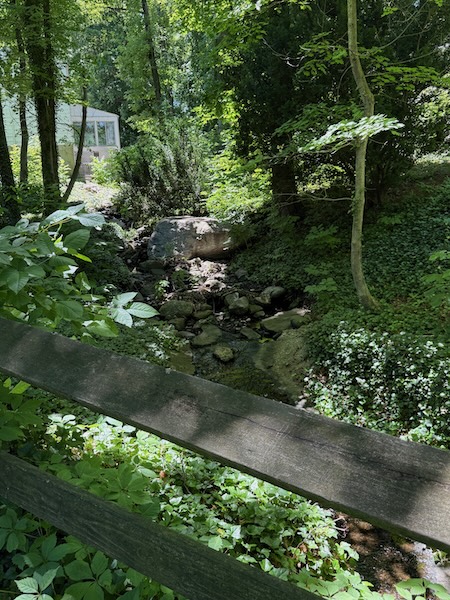
We ask the Board to consider why this matters using a case this Board knows well. The parcel at 0 Spier Road has been recognized by the Village as environmentally constrained wetland since its creation in 1968. It borders an active stream on one side and an open storm water drain on the other, sits on a slope with a 20-foot elevation drop, and the proposal calls for removing 13 mature trees plus substantial excavation and grading to fit a new house onto an irregularly shaped 7,538-square-foot lot. This is, almost precisely, the profile of site the amendment's new findings describe: a wetland-adjacent, steep, buffer-dependent parcel where flood control, sediment trapping, and habitat connectivity are not incidental benefits but the reason the land was recognized as wetland in the first place.
We recognize that this Board approved that application with conditions on May 27, and we are not asking the Board to revisit that decision in this proceeding. We do ask the Board to note what has happened since. The application was referred to the Board of Architectural Review, and the BAR has now denied it twice — in June and again in July — finding that the lot is small and irregular and that a structure of this height on a footprint this small is incompatible with the character of the neighborhood. The applicant may well return to the BAR with a revised design.
The community response has been substantial and sustained. The petition opposing the 0 Spier Road development has now gathered 410 signatures (stopzerospier.org), and it continues to grow. Residents have appeared before this Board and before the BAR repeatedly over the past several months. We raise this not as a headcount but as evidence of something relevant to your recommendation: the concern here is not confined to the handful of households that border this particular lot. Village-wide, residents are telling their boards that land the Village has recognized as wetland should not lose that protection at the moment it becomes profitable to build on. The amendment before you is the Village's opportunity to write that expectation into enforceable law.
That sequence is the strongest argument for adopting this amendment now. The May 27 wetlands review was conducted under Chapter 171 as it currently reads: a map-dependent definition of wetland, no review requirement for tree cutting near a watercourse, and mitigation standards that the amendment now makes specific and enforceable. Had the proposed provisions been in effect, this Board would have had materially better tools — a definition grounded in actual site conditions, explicit findings on flooding and erosion to weigh, a required mitigation plan with real replacement ratios, and clear authority over any later revisions to approved plans. On a lot where any redesign necessarily means further excavation, grading, and disturbance near the stream, those tools matter for what comes next, and they matter for every similarly constrained parcel in the Village.
One clarification we respectfully suggest. Proposed § 171-15 provides that "any existing encroachment into a freshwater wetland controlled area as of the effective date of this amendment shall not be subject to the requirements of this article." We support grandfathering genuinely pre-existing physical conditions. We would ask the Board to consider recommending language confirming that this provision reaches encroachments that physically exist as of the effective date, and is not read to exempt approved-but-unbuilt projects or future revisions to them. Without that clarity, the provision could be invoked to place precisely the projects this amendment targets outside its reach.
Our request. We respectfully ask the Planning Board to review and recommend the proposed Chapter 171 amendment to the Board of Trustees for adoption without narrowing its definitions, weakening its buffer and mitigation requirements, or diluting its tree-removal, permit-revision, and enforcement provisions. Considerable acreage of Scarsdale's wetlands and watercourses has already been lost or impaired by draining, filling, excavating, and construction disturbing natural buffer areas; without stronger protection, what remains stays at risk. This amendment is a meaningful step toward ensuring that Scarsdale's remaining wetlands, watercourses, and the neighborhoods that depend on them are protected not just on paper, but in practice.
Thank you for your time and consideration, and for your service to our community. Please include this letter in the public record for the proposed Chapter 171 amendment.
Respectfully,
Yingying Na and Wei Zhou
230 Rock Creek Lane
Note: Scarsdale10583.com reached out to Village Manager Alex Marshall to find out if the proposed code would affect plans to build a home at 0 Spier Road. Here is her reply:
0 Spier received a Wetland Permit from the Planning Board for proposed activities within the Wetland Controlled Area and Wetland Buffer. This information along with the Wetland Report that was provided by the Wetland Scientist is available in the Drop Box for the May 2026 Planning Board Meeting, the link to which can be found here.
The BAR does not have site plan or wetland permit approval authority so if the applicant deviates from the approved plans, they may be sent back to the Planning Board to amend their proposal and existing wetland permit. The plans will be checked by staff when the applicant submits for a building permit to ensure consistency.
Rocah Says Acting AG Todd Blanche Has Prioritized the Interests of Trump Above Those of the American People
- Details
- Written by: Joanne Wallenstein
- Hits: 1325

We caught up with former Westchester District Attorney Mimi Rocah and learned that she is teaching at Fordham Law School and is working on a booked called Justice Still Stands about the attack on the Department of Justice by Trump and his enablers and the heroes fighting back. It will be published by Harper Collins in January 2027.
In June 2026 Rocah participated in a discussion in Scarsdale on “Justice, Democracy and the Rule of Law” at the Scarsdale Adult School.
During the talk, she revealed that she was baffled by Acting Attorney General Todd Blanche’s refutation of the principles that he shared with his colleagues in the office of the U.S. Attorney’s Southern District where Rocah worked as an Assistant U.S. Attorney for more than 16 years. The mantra in that office was “do the right thing, at the right time, for the right reason.” Rocah and Blanche worked closely together and eventually became co-chiefs of the White Plains office.
“What about Todd?” she kept asking herself. Where are his loyalties? After Blanche served as Trumps personal attorney in the “hush money” case concerning the falsification of business records related to reimbursements paid to Michael Cohen, brought by the Manhattan DA, Trump brought Blanche to Washington, first as Deputy Attorney General and now as acting Attorney General where he has chosen loyalty to the President over defending the rule of law for the American people.
Here are just a few of the examples Rocah has cited on Blanche’s willingness to carry out the President’s partisan plans:
-Blanche conducted an unprecedented interview with convicted sex trafficker Ghislaine Maxwell where “he let her lie and did not push back.”
- Brought a failed indictment against NYS Attorney General Letitia James for mortgage fraud.
-Sought to indict James Comey for placing seashells on a beach.
-Dismissed charges against members of the Proud Boys for their conduct during the riots on January 6, 2021.
-Attempted to arrange a settlement to create a $1.776 billion “anti-weaponization” fund that Trump pledged to share with supporters.
-Fired career prosecutors and FBI agents with stellar records, turning his back on many colleagues who Trump perceived to be enemies.
Rocah says, “His conduct in a position that I held in such high regard has been upsetting for me on both a personal and professional level.”
Why had Blanche chosen to take on Trump’s personal agenda, even when the law did not justify the cases?
Rocah could only surmise that Blanche had been lured by access to power. Based on loyalty and affection for the President Blanche transformed himself into someone who was willing to sacrifice his integrity to carry out the President’s agenda.
More recently we have seen Rocah on MS Now, sounding the alert about Blanche who is being questioned by the Senate Judiciary Committee in his quest to get their approval for his bid to be the Attorney General of the United States. This is the first time a president’s criminal defense attorney has come before the Senate to be confirmed as Attorney General.
Why is Rocah speaking up? She says, “I feel obligated as former officers of the Justice Department to speak plainly — as did more than 1,200 other DOJ alums opposing his nomination. Our concern is not political; all presidents are entitled to appoint senior Justice Department officials who share their law enforcement priorities. Our concern is institutional: whether the Justice Department will continue to exist to serve the American people and whether Americans will have faith in its decisions and actions.”
She says, “Todd Blanche has shown himself unable or unwilling to stop prioritizing the interests of Donald Trump above all else. … One of the most important qualifications is that the Attorney General understands that their role is not to serve the man and the president’s political agenda before the interests of the American people.”
Greenacres Celebrates July 4, 2026
- Details
- Written by: Cynthia Sanossian
- Hits: 754
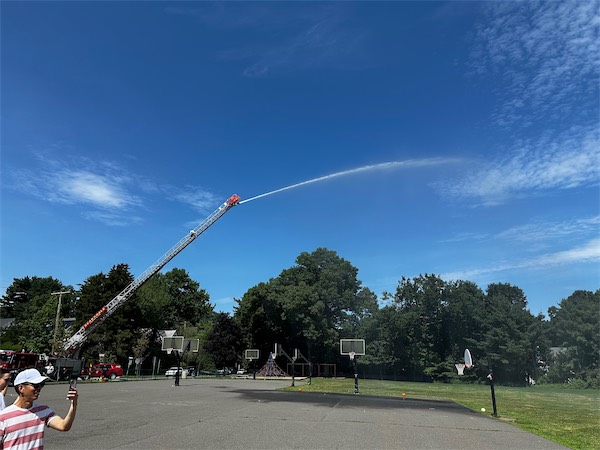
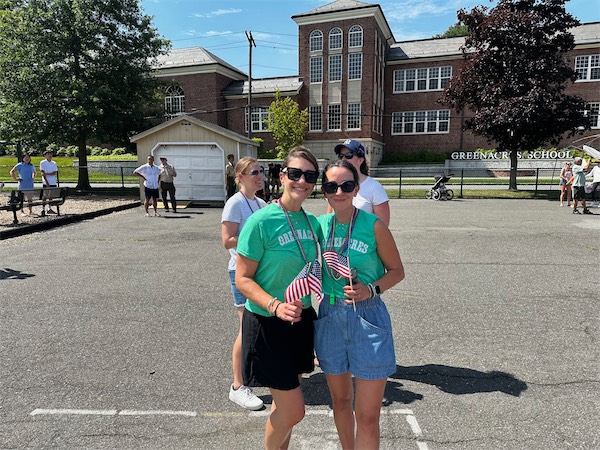
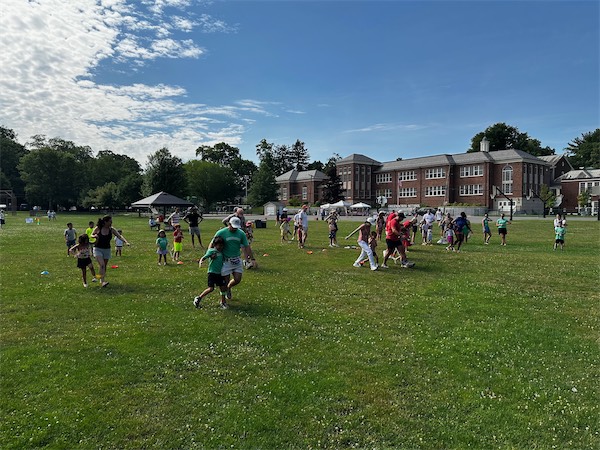
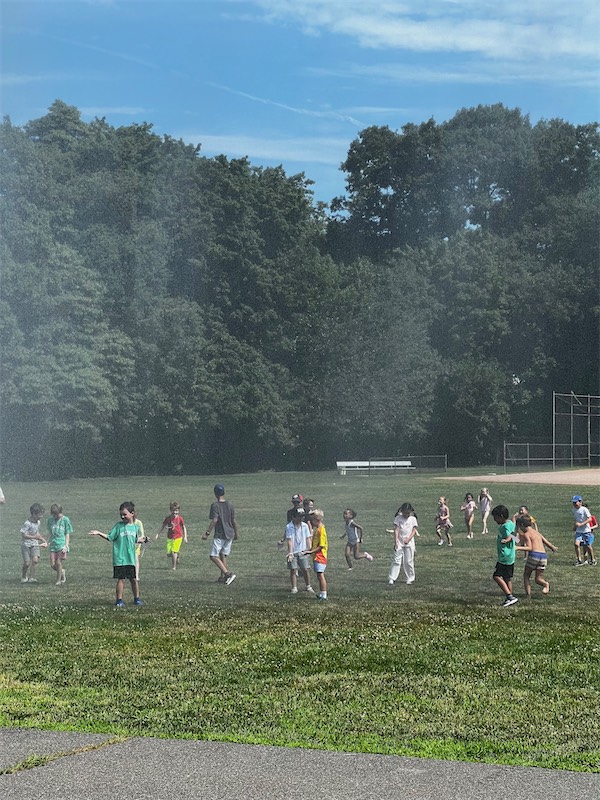
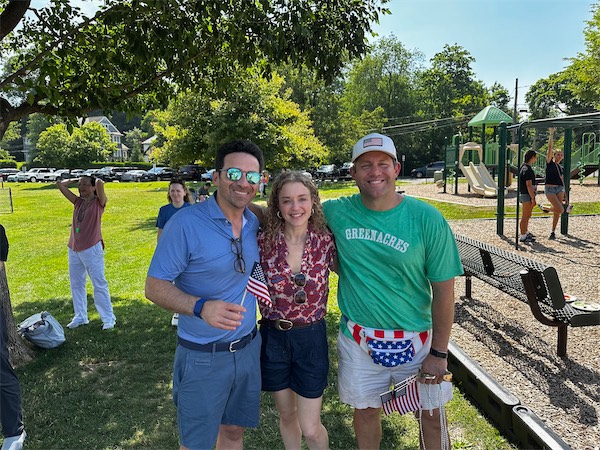
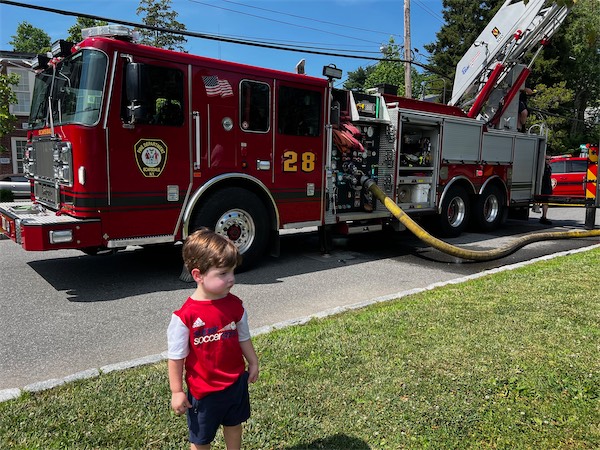
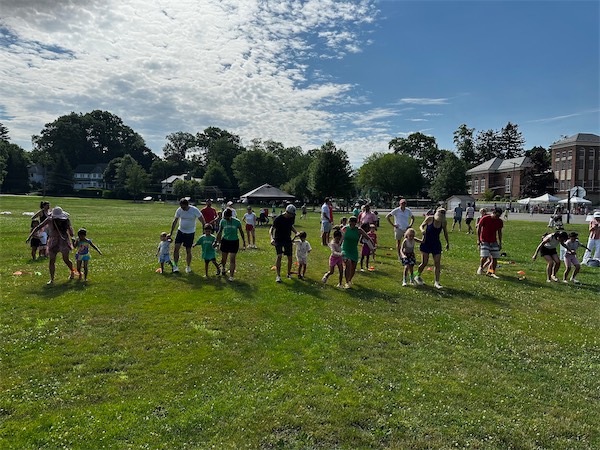
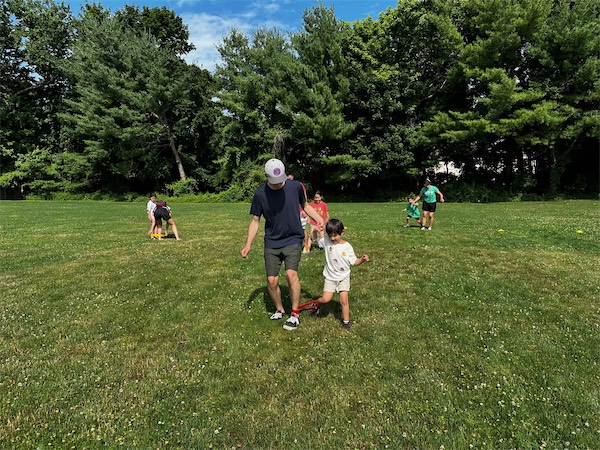
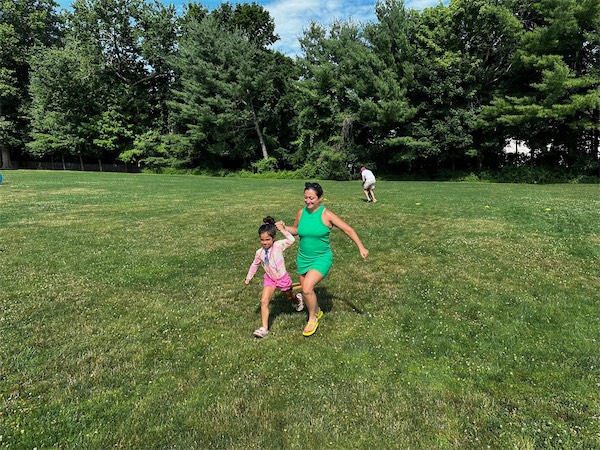
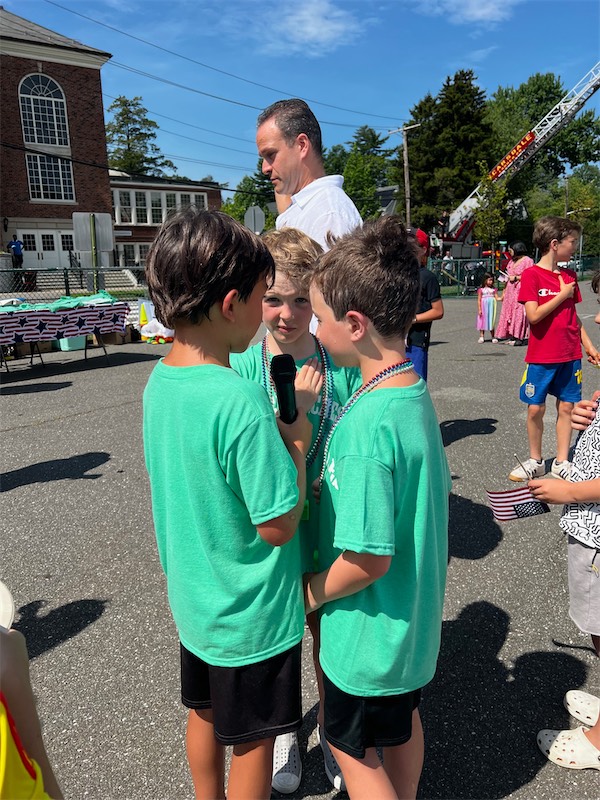
 The hot and humid weather did not stop over 100 kids and adults from joining in the fun filled festivities on Saturday, July 4th at the Greenacres Neighborhood Association’s July 4th event. The morning included breakfast, games and races for all ages, a patriotic program and concluded with a visit by the Scarsdale Fire Department where they doused attendees with a very welcomed water display for the Greenacres Gallop!
Greenacres’ own Jack Binder performed “To The Colors” on the bugle and the American Flag was presented by Ted Mazza and members of Troop 4 Scouts. Mayor Justin Arest and Deputy Mayor Dara Gruenberg were also in attendance to celebrate with the community.
This year, rising 3rd graders Sebastian Crowe, Ford Easton and Colton Zakierski led the crowd in the Pledge of Allegiance.
Over two dozen Greenacres residents volunteered to support the games, set up, food preparation and t-shirt sales at the event.
Given the milestone birthdays of both America and Scarsdale this year, the Greenacres Neighborhood Association celebrated with the addition of something a little closer to home and brought back the vintage 1990s Greenacres Elementary School t-shirt. Shirts are available for sale in youth and adult sizes with a personalization option to put a name and number on the back, just how it was done in the ‘90s!
The Greenacres Neighborhood Association works to advocate for residents and brings the Greenacres community together through much anticipated events throughout the year.






For more information about placing a t-shirt order or for general information about the GNA, please visit greenacres10583.com.