







Kindergarten and Transportation Registration Information from the Scarsdale Schools
- Details
- Written by: Joanne Wallenstein
- Hits: 5320
 Information from the Scarsdale School District About Online Registration for Kindergarten and Transportation to Private and Parochial Schools.
Kindergarten Registration: The Scarsdale School District offers a registration system which allows parents/guardians to enter student information online. The registration window for incoming kindergarten students for the 2018-2019 school year will open on Tuesday, January 16, 2018, and will remain open through Wednesday, January 31, 2018. Children whose fifth birthday falls on or before December 31, 2018, may be registered for the 2018-2019 school year.
Before you begin the online registration process, please gather all documents for uploading. For further information about the documents that you will need and for access to the system, click here:
Enrollment in one of the five elementary schools (Edgewood, Fox Meadow, Greenacres, Heathcote, and Quaker Ridge) is determined by the neighborhood in which you reside. If you do not know which elementary school serves your neighborhood, please call the District Registrar, Maria Miraglia, at (914) 721-2444, or send an email to [email protected].
Transportation:
Requests for 2018-19 transportation to private and parochial schools accepted starting February 1, 2018:
Transportation is provided to all students in the District to the District schools, and to schools outside the District, provided that the student resides within the Scarsdale School District and resides more than 1.5 miles from the school s/he attends, up to a distance of 15 miles. The distances in each case are measured using the nearest available publicly maintained route from home to school.
Applications for transportation to private and parochial schools for the following school year can be submitted online between February 1 and April 1; new residents must apply within 30 days of establishing residency in the District. To request transportation, click here.
School Board Approves Bond Referendum For Greenacres Expansion and District Wide Facilities Needs
- Details
- Written by: Joanne Wallenstein
- Hits: 10553
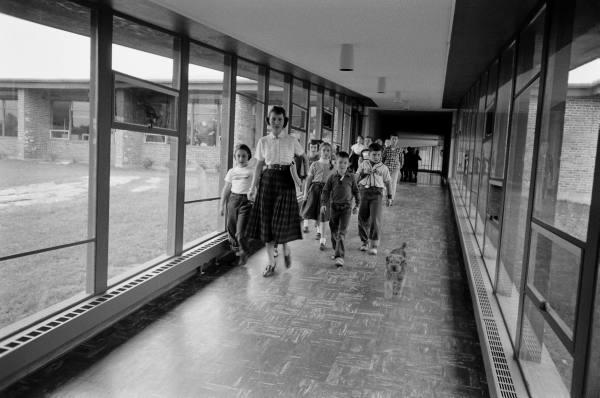 For anyone who hasn't yet heard, the big news from the Scarsdale Schools is that the Scarsdale Board of Education approved a referendum for a $64,867,577 bond for facilities work. All seven of the board members voted "yes" to hold the community-wide vote on February 8, 2018 though one did not support the plan, saying he was "certainly not convinced this is the right package of spending."
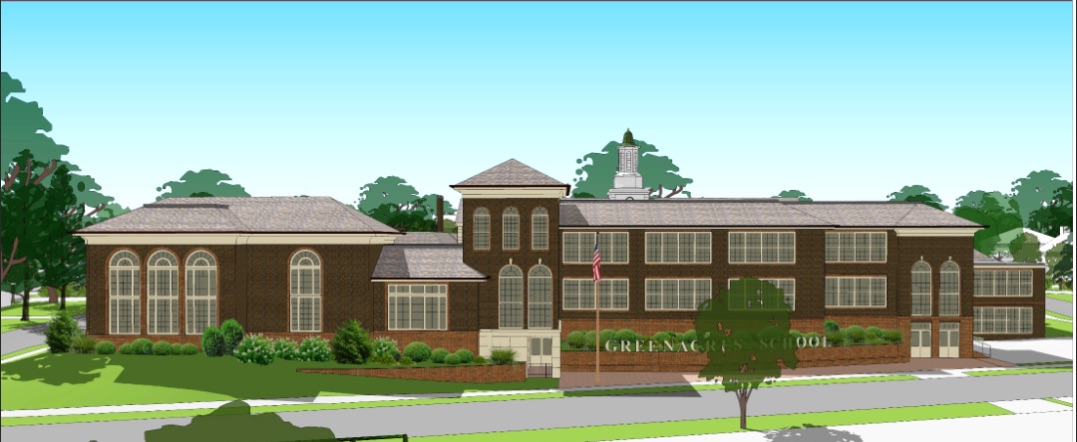
The scope of the project includes $34.1 million for a renovation and expansion of Greenacres Elementary School and facilities work at the six other Scarsdale Schools. Plans at Greenacres call for a cafeteria and learning commons and a two-story addition with eight new classrooms. After recommendations from the Greenacres Building Committee, the board agreed to extra air and noise monitoring during construction as well as air conditioning in the library and old multipurpose rooms, where the windows will need to be closed during construction.
The high school, which is currently under renovation, will receive $9.6 million dollars of the bond, with the biggest ticket items being $3mm in unit ventilators and exhaust systems, $1.7 mm for roofing, $1.6mm to replace boilers and burners and $1.4 million for improvements at Dean Field.
The biggest items on the lists for the other schools are as follows:
Edgewood Elementary School: $2,500,000 to replace abandoned forced air systems
Fox Meadow Elementary School: $2,500,000 to improve ventilation in the classrooms
Heathcote Elementary School: $2,412,000 to replace BUR roofing
Quaker Ridge Elementary School: $750,000 to provide mechanical fresh air and $660,812 to replace BUR roofing
Scarsdale Middle School: $3,506,579 to replace EPDM roof
Here is a topline summary of the meeting, but you can watch the full board meeting online here.
In his opening remarks, Board President William Natbony called the process "open and transparent" and thanked the executive committees of the PT Council, the Greenacres PTA and the Edgewood PTA for their statements in support of the project. He said, "We have a significant opportunity" to invest in our schools district's facilities, enhancing the safety, security and educational experiences of students and staff." He said he is "proud of the work we have done" and the collaborative process that allows for disagreement."
He warned about "inaccurate reporting" and charged words used to incite public emotions," and asked the public to "be good and educated consumers of the real facts behind the bond."
The subject of the meeting then turned to air quality, water infiltration and remediation.
Dr. Hagerman reviewed the results of the air quality testing at Greenacres School, where mold was found in October 2017 and said that all tests came back "normal at this time." He proposed a plan for air quality testing at all district schools to be included in the 2018-19 budget.
The four-pronged plan includes:
- Immediate Response: Testing and remediation of any suspected air quality issues with follow up testing one month later and six months later.
- Annual Testing: This calls for randomized room testing on a two year cycle for all district schools.
- Vulnerable Areas: A list of vulnerable areas will be developed and closely monitored. They are vulnerable due to "excessive moisture, dampness, exposed soil, non-circulating air, outdoor detritus and the like." Annual testing will be done on these areas along with remediation and retesting one month and six months later.
- Water Infiltration: A list of areas that have water infiltration, both one-time and chronic will be identified. They will be closely monitored, leaks will be repaired and testing will be done.
Dr. Hagerman said that the cost estimate for this testing is $20-$25,000 per year for each elementary school and $40 -$45,000 per year for the middle and high schools. Therefore, the total annual cost will be $180,000 to $215,000 per year.
Bill Natbony announced that two of the dehumidifiers in Greenacres were found to be "not working" and may have contributed to the moisture levels. Mattey said the two broken dehumidifiers did not help with the circulation and dehumidification of the basement and that two residential dehumidifiers had been purchased and placed into the unoccupied basement area. He said courtyard stairwells have been cleaned out. A contractor has been called in to make a recommendation for ventilation work. (It is interesting to note that the district also recently reported that the ventilation system in Greenacres gym is also not operating correctly. The reports show high humidity in the gym.)
Board member Nina Cannon asked about gutters filled with leaves and Dr. Hagerman referenced a video the district had received showing clogged gutters.
Mattey invited Facilities Director John Trenholm and hygienist Ernest Coon from Regulatory Compliance to discuss the facilities work done at Greenacres over the years. Coon has done Scarsdale's air quality tests for many years.
Trenholm explained that the gutter leak was in 2014 and that the video had been delivered to Ms. Purvis. The gutter was "mis-hung" and has been replaced. He said, "We have done extensive work on water infiltration at Greenacres, dating back to my tenure in 1998 all the way to the present. Starting with water infiltration in the courtyard back in 1998 and in 2001 on the northwest corner of the courtyard we added new leaders and gutters and storm drainage and we also dug down the whole foundation and waterproofed that area to prevent water infiltration into the stairwell. Over the years, on four different years, we have done gutter replacement and snow guard replacement to improve the water coming onto the façade of the building. We did have an issue last year on the Putnam side of the building. It took us almost 4 months to find the leak way up in the valley we had to rebuild the whole roof. There was a water infiltration issue, some of the plaster was damaged. We thought we had it fixed through some pointing work, but it took us three months to get to the final issue. Since then, no issues there."
Trenhold continued, "We do work at all the buildings. Though we may have taken a pause at Greenacres to decide what we were doing with the bond, the building was maintained. You can see that the buildings are maintained in very good shape. Do we address them, yes. We address issues right away."
Lee Maude asked if other districts have an annual plan to do air quality testing. Coon said, "no" ... not the entire building in one or two years, but in select areas."
Art Rublin inquired about mold findings at Greenacres. He asked hygienist Coon, "Are the positive mold findings now and in the past normal in your experience?" Coon said, "I am not certain what normal is, but I work with 10-15 districts in Westchester alone and I have commonly been called back to the same school twice– but typically it is not in the same area (of the school). There is nothing abnormal about me going to Greenacres the several times I remember." Asked if there were mold findings in other district buildings, Coon said, "yes." He said he found other air quality issues in the buildings at one time or another. Trenholm said, "We have had mold scores above the 150 level at Fox Meadow and at Edgewood School before," and added, "You haven't heard about this because this has been normal procedure. We have tested and remediated."
Rublin said, "Let's say the bond passes and we install industrial dehumidifiers plus vigilance about water spills. I know you can't rule out recurrence. It sounds to me that this is a viable building. Is it fair to think that those are long term fixes?"
Fred Seeba, the engineer from BBS responded, "From an engineering standpoint, if you look at the areas where high mold was found, there will always be water in the boiler room. Blowing the boilers down once a week means water will find its way to the drain. There is going to be live steam coming back into the room because all of your steam traps are not perfect. To find elevated counts, I am not surprised. In the other basement areas, it's a damp humid condition if you are not moving air around. The two other areas were sink cabinets. I am not surprised. There is water everywhere. Unless you are vigilant it is a high water area. I don't think these are constant issues. Am I willing to say that you will never have mold issues again in Greenacres? Obviously not. You can have leaky roofs or unit ventilators. There is no way to prevent that. Continue to monitor, continue to test."
Mattey said, "We have been on top of it." Since the early 2000's we have not had evidence of water coming up from the foundation. We have had roof leaks and water through a window well."
Seeba said that the firm "looked at the foundation on three occasions and other than cracks in walls they saw nothing. They looked at areas where there had been previous water infiltration but there was none during their inspection. The inside of the building had been repaired as well. The boiler room has not been repaired and the district is looking into doing that in January. A structural engineering company walked the foundation and provided minor recommendations. They examined areas that had previous water infiltration and concluded they were no longer leaking. They prepared a list of items to include in the bond referendum. There is some cracking. There is $160,000 to repair cracking. There is a site number of $500,000, some of which will be used to slope the building to make sure we draw water away from the building. There are light wells; the rain gets in there over time, we will cover those. We feel all the issues will be rectified."
The Board adopted the SEQR findings which you can review on the district website here. Natbony said the "board has gone above and beyond" what it is right to do, not just "checking boxes." Silberfein said that the revisions incorporated comments from the public.
Dr. Hagerman presented a 94-page review that tells the story of the bond process including comments from the public and the SEQR review that you can review here. He encouraged everyone to read it. He presented the bond resolution.
The board conducted other business and later returned to vote on the referendum.
Here are excerpts from their comments:
Art Rublin introduced the resolution and spoke at length providing a robust defense of the plan. He looked back at the history of the Scarsdale schools and likened the situation today to 1904 when the district debated whether to renovate the district's school building or build new. In the 1950's residents debated the construction of the Heathcote School and a resident questioned building a super duper school. Rublin said, "Voters have generally supported the bonds" and this has been to the benefit of thousands of school children. Within a few years of the construction of the school, Life Magazine called Heathcote a forerunner of the schools of the future. A school board member said that the new Heathcote School had "Increased Scarsdale's prestige and enhanced the value of all homes in the Village." Rublin recounted the long history of the development of the bond and said, "I am confident we will push through the debates to conclusion. ...I think now is the time for us to bring this bond to the voters in February 2018." He said that the existing fourth and fifth grade classrooms were among the smallest in the district, averaging 633 - 639 square feet. He said new 800 square foot classrooms would benefit the children. He said that none of the older classrooms would be less than 756 square feet. "No plan for Greenacres would satisfy everyone, but I think we have a plan that if implemented would provide significant improvement to the experience of thousands of elementary school students for decades to come."
Nina Cannon: "I feel that we have had a transparent process. I think there are those that are not happy. ...We have had quite a journey to get to this point. There will be additional facilities needs that will present themselves to us.... It does address the pressing needs and concerns of the Greenacres Elementary School as well as necessary facilities needs across the district while staying true to this board's concern with tax neutrality. I am pleased to cast my vote in favor of the bond referendum."
Pam Feuhrer said the board and administration "have listened to and explored hundreds of inquiries and suggestions from a broad and deep representation of school organizations and individuals.... The bond proposal has been "fully framed" by this input.... (it) promotes and supports exceptional teaching and learning in excellent facilities."
Chris Morin was the only board member who did not support the bond. He said "I agree with many of the comments and some about the outcome. I remain concerned that we are missing a responsibility and even an opportunity to take all the good work from KGD and BBS and understand what it's implications are....I am certainly not convinced this is the right $65 million package of spending.... I think the constraints upon us may be quite severe in the next 10 years. We have done all this work to compile the facilities needs. The right thing for us to do is to distill that into a real vision for what we want the district to look like, to agree on some principals, on values and goals and from that to create a context to make the right decision about Greenacres and the rest of the district and to integrate instructional planning with that and to consider what the financing implications are for that. I don't know why we're not doing that. As much as an awful lot of time has passed and so much work has gone into this, I don't feel like we're at the finish line. I am persuaded that given where the community and the administration are, it's fine with me to present it to the community. So I will support the resolution as written, although I do not support the plan itself."
Lee Maude said, "Dr. Hagerman and Mr. Mattey have placed the children of this district first. They have been completely transparent in their work and their communications with the public. It is the administrations work, their community engagement, their planning and their recommendations that lead me to support this bond referendum. .... Small classes and the time children spend with their teachers are where the bulk of our tax dollars go. Prior to 1999 I believe the district had underinvested in its facilities. Enrollment increases forced the district to finance significant bond projects to build additional classrooms around 1999 and 2000, and unfortunately we saw those 9% tax increases..... This current bond finally assesses the true infrastructure needs dictated by code and by safety and technology for all of our buildings. I applaud the administration for finally studying that issue."
She continued, "Greenacres is 100 years old – but according to engineering reports it is a structurally sound building. Having sent my kids to Fox Meadow, I have observed that Greenacres classrooms actually look bigger and brighter than Fox Meadow's... I fully support the renovation/expansion and I am excited about BBS's design. I do not believe we will endangering the students. If I did, I would not be supporting this proposal. While we may hear from people in the community engaged in the "construction industry" about risks during construction I don't believe that most of these people have worked under NYS environmental rules that are specifically for public schools. Please make up your mind based on the facts. Be careful when you listen to people in this community. There have been a number of remarks that are emotional and speak negatively about this project. Don't rely on the loudest people in the room, or people with access to the media or your home emails."
Scott Silberfein said, "We value critical thinking and creative problem solving... I think that this bond referendum is something we can be proud of. We got to a good place tonight. I learned from everyone I was involved with in this process. I am pleased to be casting my positive vote for the bond."
Natbony echoed the comments he made in his opening statement about an open, fair and collaborative process, the excitement about this opportunity and the need for this community to be good consumers of the facts and make their decision based on the facts.
Speaking during the public comments section, Mayra Kirkendall Rodriguez commented on a traffic survey done by the Municipal Services Committee of the Scarsdale Forum. Rodriguez is a co-chair of the Scarsdale Forum Education Committee and said that she had received many emails and phone calls asking when she would be writing a report about Greenacres. She said, "All of these issues about Greenacres are important but in the surveys we were told that the priorities were to write about a long term financial plan. The second priority is writing about a world-class education and how we know if we have it. It's not that I don't think that Greenacres is important, but there's only so much of me and my co-chair Carlos to go around. Also, the Education Committee members are deeply divided. There are those that are deeply unhappy with the communications process and many of those wanted a new school. But we also have those that are grateful that the bond will be tax neutral and for the information you have been giving. I invite members of the community to join the Education Committee and take the lead on writing a report."
Greg Loten of 6 Montrose Road commended the board on an excellent job. He said, "The devil is in the details," and you provided the details. ..You have been open to the community and I thank you very much."
Bob Berg of 2 Tisdale Road said, "This is Scarsdale and no good deed goes unpunished. You have been subject to a lot of flack from the community, mostly through anonymous comments on various blogs. You have provided the community with the opportunity to speak. You have studied this for three or four years. I think the bond is ready to be presented to the community. I don't know where it will go. I wish you good luck. But I think certainly you should send it out for a vote in February. I think the time is right."
Dr. Hagerman said the district had retained consultants to make the information about the bond more readily available on the district website. The bond referendum will be held on Thursday February 8, 2018. Watch the meeting in its entirety here.
School Board Hears Comments, Pro and Con, On Proposed 2018 School Bond
- Details
- Written by: Joanne Wallenstein
- Hits: 10581
 The Scarsdale Board of Education is speeding toward the adoption of a $64,867,577 million bond resolution, with a vote on the project's SEQRA determination and the adoption of the bond resolution scheduled for their December 11 meeting. The district wide vote is planned for February 8, 2018.
On Monday evening December 4 a public forum was held to get community feedback on the largest school bond in Scarsdale's history. The proposal calls for a $34mm renovation and expansion of Greenacres Elementary School as well as facilities and infrastructure repairs at the district's six other schools.
The scope of the bond has undergone many revisions, with projects and estimates changing almost weekly since the introduction of the plan in June 2017 after a six month pause in discussions about Greenacres School and the bond. At one point the proposal included new learning commons/cafeterias in three additional elementary schools and the construction of a large cafeteria at the middle school. Those plans, in addition to a proposed $10.8 million Energy Performance Contract are no longer in the proposal, which does include $11.9 million for ventilation, $9.6mm for roofs and $4.8 million for boilers.
The dizzying pace of the planning confused many people and advocacy groups that attempted to follow the process. However, the executive committees of two community organizations, the Scarsdale PT Council and the Greenacres PTA came out in support of the bond referendum at the forum on December 4. Others were concerned about the construction, the condition of the original building, recent reports of mold and the buildings sustainability.
Diane Baylor, President of the PT Council thanked the district for including them in the process and for being responsive to their questions. She said they appreciated the delay in the schedule for the bond vote to allow for candid and "messy" deliberations and said they appreciated the civil discourse.
She said that the members of the PT Council have differing opinions and due to the shifts in the proposal they had difficulty coalescing, but said they support the proposal for a tax neutral bond. They recommended that the district do a study of all playing fields to determine needs and said they support the Greenacres renovation and expansion, recognizing that the school has not received funding and needs significant work. She said the plan addresses the school's key spatial needs. The PT Council requested a master facilities plan in an easily digestible format with an itemization of long term needs vs. wants to help the community analyze upcoming work. Baylor said they look forward to the deliberations about air conditioning. Read the full statement here.
Megan Simon, spoke on behalf of the Greenacres PTA Executive Committee in support of the bond proposal including the health and safety recommendations. She said the construction will "enrich the lives of students through a much-needed addition of space." She stressed the school's present scheduling difficulties as one multi-purpose room is used for lunch and the other for music. She said the addition would give the school back their multi-purpose spaces and also said the additional bathrooms were much in need.
Simon did ask that the Board include air conditioning for the gym which will be adjacent to the construction and will no longer have windows. She asked the administration to come with a feasible plan for additional parking as the streets around the school are constantly congested.
Speaking for the League of Women Voters of Scarsdale, Linda Doucette Ashman said that the League had closely followed the discussion but was not able to schedule a consensus meeting about the bond without the entire proposal. She said there have been "constant amendments since this process began, and that the timeline has shifted forward twice." Therefore, though a consensus statement has always been presented in the past, they were not able to provide one.
Addressing the safety of the children during the construction process, David Cooper, an attorney from Zarin and Steinmetz who was hired by the Greenacres Task Force, gave the board feedback about the SEQRA filing and expressed concerns about asbestos, lead and mold.
He said, "SEQRA is not box checking exercise. The "hard look" standard requires that the Board demonstrate it has considered all of the concerns raised by the community, and articulate how it will address them. The Task Force was troubled after the Board's 11/27 meeting, because JC Broderick recommended that the Board need not commit to addressing the community's concerns relating to Human Health risks (Box 16 on the EAF Part II). JC Broderick advised that Box 16 of the EAF Part II only addresses sites near brownfields, and therefore, did not apply to this project. This advice was incorrect. The DEC publishes a "Workbook" for lead agencies, indicating how best to answer every question on the EAF Part II form (for your information, it is available on the DEC's website). The DEC expressly provides in the Workbook that the Human Health section covers "potential impacts from exposure to any solid or hazardous substances and contaminants." DEC Regulations include asbestos and lead in the definition of "hazardous substances." Should the Board simply check the "no impact" box on question 16 it would be doing the community a disservice, and more importantly, violating the procedural mandates of SEQRA to identify the precise methodology it will use for addressing asbestos, lead and other potential contaminants found in the building such as mold."
Cooper commented, "We would recommend that the Board prepare a separate document for the community to review outlining the measures it will incorporate into the bond project to address all of the concerns about human health raised throughout the review process, and committing the District to implementing them. This document can support any final SEQRA determination the Board makes, and more importantly, would go a long way to putting the community at ease that the Board has heard their concerns, and will ensure that the contractor addresses them."
Ernie Wechsler of 5 Putnam Road said, "I have great concerns about health and safety. According to the plan, any of the work regarding lead and asbestos will be done in the summer. Not anyone believes this can be done in a summer. There will be a lot of pressure to get the kids back in school on time. Injecting a degree of human error into safety and our children are at risk. You took out the use of the modular. Never had a project of this size been done on such a small building."
He continued, "Did you consider a full modular school on the field? It would take only 2 out of 6 acres. Kids would be away from the construction and would be safer completely outside the classroom.... I applaud that you are spending the money wisely but my child's safety is more important than tax neutrality. (If you used modulars you) could scale down the size of the extension and scale back overtime if kids were out of the building. This is a self-imposed deadline. It deserves more exploration."
Mona Longman of Varian Lane questioned the value of the investment in the school. She said, "As a Scarsdale taxpayer, in order to vote in favor of this proposal, I want to see that the board has done a thorough analysis of this project. Newton MA spent $37 million for a brand new elementary school. Why are we putting in $40 million into this 100-year plus building that has known mold issues? The mold test results from testing done right after remediation are worthless. Teachers and children, as young as 5 years old spend 6 hours a day in this building. Put their safety above all else. We should be doing better for our residents."
Diane Greenwald reviewed the original project drivers for Greenacres, discussing the high water table, mold, the size of the school, site location, instructional spaces and the deferred maintenance that will be required on the old building. She questioned whether the plan addresses those needs and said, "Whether addressed now, or later, whether a bond package passes now or not, all these issues – and likely more -- will remain a part of future capital investment conversations. They are not going away."
She asked why decisions about food service and air conditioning were postponed and if facilities needs like roofs and boilers could be tucked into operating budgets. She said there were too many remaining questions to move forward with a referendum vote now and asked the board to allow time for "holistic review, reflection and reconsideration." She questioned whether Scarsdale taxpayers would step up if needs were greater than what could be funded in a tax neutral bond. Read her full statement here:
Greenacres resident Michael Levine said, "Today, I am talking about mold. Basically, and I am just speaking for myself, I do not have confidence that this whole Greenacres moisture and mold situation is under control.
At last week's meeting, Mr. Ed Maguire of J.C. Broderick said a few things about mold at Greenacres. He said, "I do not know all of the specifics of where mold may have been found." [To solve the problem], "remove the mold and then correct the moisture problem." "What you want to avoid is when it becomes a chronic mold problem ("laugh"), a building-wide systemic mold problem .... Buildings that are not maintained, not checked and where you have moisture issues over vast areas of your building.... It's at those levels, over chronic conditions, that you're going to have a, you know, widespread condition known as Sick Building Syndrome...."
Also, in these past few weeks, Joanne Wallenstein published school district documents that certainly suggest to me that Greenacres does have or could have a chronic and pervasive moisture and mold problem.
With moisture penetration likely coming from under slabs and through walls that are significantly below grade it is difficult to imagine a cost‐effective method of repair."
"For comprehensive remediation, it would be necessary to drill monitor wells in order to pinpoint excavation. The moisture problem is greater at Greenacres than in any other District building."
There were multiple teacher complaints about health problems and there has been ongoing mold remediation activities back to 2001.
And I trust Anne Moretti, who said this. "Mold can usually be effectively remediated; however, if there's an entrenched issue -decades ongoing-caused by old construction techniques, a high water table, and active mold creeping up through porous drywalls and unchecked for decades, that could be a much larger problem to fix. No one will know the extent of this until the walls are opened and construction begins. That's not how to begin a community project of this importance. We need to know all the facts, and it seems to me that the District must revise its cost analysis in light of these findings. Then our community can decide, once all the facts are known."
Now, I feel a little bad about coming up here and pointing this out without being able to recommend a solution, but I have to say that the path you are on is not a solution. Don't try to convince yourselves – and don't let anyone convince you – that this moisture and mold situation is not a problem or that it can just be buried in the basement for the next 20 or 50 or whatever years. In retrospect, this probably should have been identified as a Category 1.
Don't put $35 million of new improvements on top of a Sick Building, or even if there is a risk that it is a Sick Building.
As Mr. Maguire said, you have to eliminate the moisture. There is no other way to make this building healthy again.
Now, I know there are constraints – financial, not putting a new building on the field, time, etc. But it is pretty apparent to me that the work that is necessary to make the existing parts of Greenacres healthy again will take more than a summer. Which means it is probably necessary to go back to some sort of plan that relocates the students and faculty for a year.
And then you can consider what else to do for the existing parts of Greenacres, such as moving walls and making classrooms bigger, and so forth. I think everyone would understand cutting back on the scale of the current new expansion. Put the same amount or even less into a project that assures the health of the existing parts of Greenacres and improves it, make air conditioning a part of this, and do it in 15 months with the students and faculty relocated.
Maybe the bond will pass as is. Maybe it won't. Maybe it is too late to reconsider anything as broad as what I am suggesting. But certainly if the bond does not pass, I really urge you to consider an alternative along these lines."
Tony Corrigio was also concerned about construction with kids inside the school. He said, "Since the decision not to pursue a new school we turned our attention to safety of the renovation process. Did you consider busing the kids to other schools? Why not? How many classes are available? The mitigation plan is to get the work done over the summer. BBS urged the board for their own version of modulars and the board deleted those. All the bathrooms will be renovated. What is the feasibility of completing all this work in the summers?"
He asked for third party testing of the building after the summer to be sure the building is safe. He questioned whether all interior work would be done without the kids in the school. Not during the school year? Nights and weekends – lead and asbestos done on the weekend – how do you get clearance? An environmental testing firm needs to be hired – a third party to test – after the work has been done."
About the mold, he said there are "Chronic moisture and mold problems. No levels are deemed to be safe. How is the board comfortable without knowing if we have an irreparable problem? How have you gotten comfortable with adding $30 million to that building?"
Rona Muttner said, "My silence is due to frustration. The new mold report adds to that. I worry about adding on this gigantic addition that misses the teaching part of the school. It's putting something big on something that is crumbling. I worry we are missing a part of making the current building sound. There has been rumblings about mold for years and years. Perhaps we should pay attention to this. It's a rotten investment. Let's look at this foundation. How is that going to be sustainable?"
David Schwartz said, "We are spending a lot of money on the project. Are we doing enough on the old building? There will not be an appetite to go back to Greenacres for years to come so put more money into the existing part of the building. We certainly want to know that this building will be healthy, strong and suitable to last for 50 years. After this plan is done will these smaller classrooms be able to house the configurations that we want for the next 30, 40 years? Look at the smallest classrooms ...look to see if these spaces are suitable."
He urged the board to look at the rear playground of the school which has a large slope where there have been many injuries. He said, "It's not a great space for young kids." He also asked the board to consider beginning the project in June, 2020 and having it span that summer, the school year and a second summer."
He said, "Why are people in Greenacres concerned about health and safety?" He then read a comments from a former Greenacres teacher who had worked in the basement of the school for 27 years. It said, "It upsets me to write this response. But, it is something I need to do for myself and my colleagues. I am a retired teacher from Greenacres school that spent 27 years in the basement teaching. I spent most of those years expressing my concerns to school administration about the smell, mold, dampness and humidity in my room. Water would come in from the outside door and floor. Custodians would kindly mop it up but I knew the water was still under the linoleum. Bathrooms would leak into the hallway. Sometimes clean ups were done as a band aid to the problem. Years ago I remember an Asbestos cleanup that took place in my room. Most windows in my room were inoperable. Need I say more! Three years ago, I was diagnosed with cancer. And it started in my lungs. Do I need to say more!"
Lesley Shearer followed Schwartz and thanked the Board for their time. She said, "People get sick, sorry to hear about that. Now is the time to update the school. The irony is that many people who are advocating for a new school live in old houses that they renovate."
It was not clear if the administration and board would have time to adjust the proposal in response to the community forum. They appeared to be amenable to changes to the SEQRA submission, but questions about the timing of the vote, safety during construction and the condition of the existing building seemed to be too far reaching to address at this late date.
You can watch the entire meeting on Scarsdale Cable television here. The Board will meet again on Monday night December 11 to make a SEQRA determination and vote on the adoption of the bond resolution.
Plans for Greenacres Fail to Address Infrastructure Issues and Educational Adequacy
- Details
- Written by: Joanne Wallenstein
- Hits: 6997
 (This is the opinion of Scarsdale10583 site founder Joanne Wallenstein) The recent findings that there is indeed mold in the classrooms at Greenacres Elementary School highlights fatal flaws in the decision-making process and raises serious questions about the current plan to expand the building. It's now abundantly clear that the administration and architects knew about the moisture and mold issues at the school for years, but chose to downplay the severity of the issues in order to come up with a cost-saving renovation plan.
Looking back at the work of two Building Committees from 2014 and 2015 moisture and humidity were repeatedly identified as the key issues to be addressed. The high water table on the property and the dirt foundation were perennial problems at the school and parents often remarked on the persistent odor on the lower level. Materials stored in the basement ended up covered in mildew and often needed to be discarded.
From the minutes of prior meetings of several iterations of Greenacres Building Committees and architects and engineers reports, it's evident that the faculty and former district architects KG&D were well aware of the moisture and humidity problems at the school:
Reviewing notes on the building, water intrusions and moisture are frequently mentioned:
Here is an excerpt from the minutes of a November 19, 2014 Greenacres Building Committee that included former district architect Russ Davidson, former Assistant Superintendent for Business Linda Purvis and Board member Scott Silberfein:
"According to Russ Davidson, there is no guarantee that waterproofing the building would solve all the water issues due to the high water table under the school. More exploratory work would have to be done to understand the nature of the water table, perhaps in March when the water table is considered to be at its highest level."
The April 2015 Greeenacres Feasibility Study from architects KG&D says,
Ground water intrusion & high water table – The northern corner of the building has a lower level that routinely has odors and other evidence of some water intrusion. Despite several attempts at repairing the condition there does not seem to be any easy answer to this problem. It is likely the result of a high water table which varies seasonally and has many sub‐surface points of entry into the aging structure. With moisture penetration likely coming from under slabs and through walls that are significantly below grade it is difficult to imagine a cost‐effective method of repair. The condition could be made more tolerable with improved ventilation and air conditioning but will still require monitoring and could continue to make this portion of the building uncomfortable or inappropriate for student use. This area is currently used for Art, Music, Instrumental Music, Art Storage and mechanical support spaces.
Minutes from a October 27, 2015 Building Committee Meeting discuss both moisture and humidity:
A major challenge facing Greenacres renovation is the high water table at the school's location. The dirt crawl spaces underneath the building generate significant humidity, combatted by constant use of dehumidifiers. For comprehensive remediation, it would be necessary to drill monitor wells in order to pinpoint excavation. The moisture problem is greater at Greenacres than in any other District building.
Furthermore, when the Building Committee completed their work in December 2015, one of the conclusions of their report was that "There was a lot of concern by staff about updating the heating and ventilation systems in the existing building."
The district did publish one air quality report from October 2015 and said that the problems were resolved, but given the building history, and the big decisions that were being considered to expand the school, it's curious the district did not regularly monitor the building and conduct further air quality tests earlier than now. For the past two years, despite repeated questioning from the community, we are not aware that any additional testing has been done.
Raising more questions is the fact that Scarsdale10583 filed a FOIL request in July requesting air quality reports, work orders for mold remediation and complaints about mold since 1996 but has not received the requested information. Is there something to hide?
In reviewing these building committee and feasibility reports, we found that the architects raised another significant concern about the building that was also ignored in the renovation plan, and that is the issue of class size.
The April 2015 Feasibility Study says, "This highlights one of the major issues with the Greenacres building – there is not adequate space for the full student program. Perhaps the most serious manifestation of this issue is the size of the core instructional classrooms themselves."
The October 27. 2015 minutes say, "One of the most problematic is the small size of classrooms, relative to state requirements and also in comparison with other Scarsdale elementary schools. Teaching approaches have changed significantly in the last 100 years; for example, classrooms are no longer set up in rows but in clusters; extra room is needed for science and other projects and use of technology; and special needs inclusion practice requires adequate space for both the children and their aides."
Similar to moisture, the issue of class size was ignored and ultimately denied by the administration, the Board of Education and architects from BBS when they formulated their plans for a large addition to the school, while leaving the old portions of the building as is.
Superintendent Hagerman claims that the current renovation proposal addresses the needs identified by the 2014 and 2015 building committees. But this is not what the record shows.
In a memo recommending the 2018 proposal presented by Dr. Hagerman at the November 13, 2017 meeting he points out that the 2014-15 Building Committee concluded that the "Focus of future discussion would be building condition and educational adequacy." It states further that the Greenacres Feasibility Committee that was re-convened in 2015- 16 using the "same data factors, recommendations of the Committee remained consistent with the initial committee: focus on building condition and educational adequacy.
So how is it that the current plan addresses neither the building conditions nor the size of the classrooms that were identified as THE TWO PRIMARY PROBLEMS with the building?
The school administration has spent six months -- and who knows how much money --pushing a plan that addresses neither need. They claim the school is safe and the classrooms will do. Instead, funds have been earmarked for far less pressing district-wide needs. Now that the mold study has finally been done and the report has been shared, it appears that their obstinacy has caused far more than a waste of funds: they have potentially put the school population at risk.
It's time for parents to demand a transparent administration and a Board of Education that demands the appropropriate studies before making decisions and puts children's health, safety and education first. Don't let the discussion about expanding a moldy school with inadequate classrooms and lead pipes go on any longer. It's time to call in environmental engineers and green architects to address the needs of the community now and for the decades to come.
November 20 School Board Meeting: Air Conditioning Is Out, Safety Measure for Greenacres Construction Are In
- Details
- Written by: Joanne Wallenstein
- Hits: 8552
 The Board of Education and Scarsdale Schools administration continued discussions of the proposed 2018 bond referendum at the November 20 meeting and came to agreement on including many of the extra measures recommended by the Greenacres Building Committee in the bond. Furthermore, they reviewed the proposed cafeteria at Greenacres as well as the proposal for a second bond to air condition all district classrooms and install ceiling fans in large group spaces and came to the following decisions:
The estimated cost for air and noise monitoring was reduced from $140,588 each to $100,000 each and the Board voted to include these measures in the plan.
The Board discussed the proposed cafeteria in Greenacres vis a vis parity with other elementary schools that do not have food service. Ultimately they decided that the construction offered the opportunity to include food service at Greenacres and voted to keep the cafeteria in the bond. They said the kitchen at Greenacres would serve only the children at the school and would not be outfitted to cook meals to be transported to other schools, as was suggested at a prior meeting. A district wide food service committee is currently researching food service at all schools and will make recommendations when they complete their work. Board member Art Rublin suggested that the current bond proposal be revised to include cafeterias at Edgewood, Fox Meadow and Heathcote, but the sentiment was that this would delay the referendum date.
Though the Board decided not to include $100,000 for security monitoring of children and construction equipment during school hours, they did state their intention to look into hiring a traffic/security employee to assist with children at drop off, pick-up and crossing to the playground and the fields for recess during the day. This would be funded out of the general operating budget.
Other savings from the previous draft of the proposal were $960,917 for modular classrooms and $597,498 for additional parking.
The board discussed the installation of modular classrooms on the field across the street at a previous meeting and voted against including them as they did not believe they would be needed if the construction went according to plan. Principal Sharon Hill and the teachers at Greenacres preferred to keep the children in the building during the construction rather than use modular classrooms, which they felt would be an inconvenience.
Funds for parking were eliminated after a plan to install 18 parking spaces on Huntington Avenue was nixed because the spaces could cause a safety hazard for emergency vehicles. Though the administration has not shared the reasons, a subsequent plan to build additional spaces elsewhere was also not feasible. As of now, no additional parking spaces are provided for in the bond.
The Board elected to include $168,705 for air conditioning of the old multipurpose room and library at Greenacres as windows in these rooms will need to be kept closed during construction. Concerning air conditioning in the gym, which will now have no windows, Mr. Mattey said there is currently a mechanical fresh air exchange system in the gym that was previously not working correctly but is "currently being addressed." It was noted that the high school gym does not have air conditioning.
Having agreed on the proposal for Greenacres, the Board then turned to a discussion on a recommendation from the district-wide facilities committee to air condition all district classrooms at a cost of $23.935 million and install ceiling fans in large group spaces at a cost of $1.248 million. Assistant Superintendent Mattey estimated that these measures would mean a $350 increase to the tax levy of an average Scarsdale homeowner. The proposal was to do a second referendum for $25,183mm to fund these cooling options.
Scott Silberfein who served on the district wide facilities committee said that he believed that the board should assess all their priorities before proposing air conditioning. He advocated weighing the need for air conditioning vs. food service and other identified facilities needs that will not be funded in the current proposal. Pam Feuhrer agreed, saying we shouldn't rush the decision for "something so big," and Nina Cannon spoke in favor of tax neutrality and said people are concerned with high taxes.
The Board agreed unanimously not to propose a second bond to fund air conditioning and ceiling fans.
In public comments Megan Simon, President of the Greenacres PTA spoke on behalf of the PTA Executive Committee. She advocated for a security monitor at the school to help children safely cross to the playground during construction. She said, "this should not be the responsibility of school aids, and they should not be directing traffic." She asked for air conditioning for the large group spaces at the school including the multipurpose room, library, and the gym so that they would "continue to be usable spaces." She said, "If modular classrooms are not there for contingency, what is the alternative to continue construction?"
Mary Beth Evans, Chair of the LWVS Study Committee clarified her role on the League and asked for the rationale of installing security cameras inside the school. She also asked why the security vestibules at the middle and high schools were removed from the plan. She asked about funding items through the operating budget vs. funding them in the bond and asked for historical spending on capitol and plant improvements. She said, "When will we be able to view the asbestos, lead and mold tests online?" She asked if architectural renderings of the interiors of Greenacres and the courtyard will be available before the bond vote. She also asked about the demographers enrollment projections.
Patricia Schwartz, who served on the Greenacres Building Committee said she was glad that Board had come to consensus on these safety measures. She discussed the construction staging area and advocated for security personnel to help aides with managing children at the playground. About the contingency plan, she asked what will happen if the space is not completed when school opens. She said overtime for construction workers is not a contingency plan and added, "There needs to be a well thought out plan. ... Will the children be moved to other schools? Is there a budget for this?"
Bob Berg said he was glad that the air conditioning is getting "kicked out of the bond." He said air conditioning was the "least green" thing you could do." He said over the past two years there were only two days in June where the temperature went over 90 degrees. He said it is infrequent to "hit those highs." He said, school is out at 2 or 3 o'clock when temperatures peak and advised the board to "Only focus on south and west facing rooms." He said he was shocked that NYC would "air condition 11,500 classrooms for $28 million."
I (Joanne Wallenstein) asked the following:
"Will variances be needed from the State Education Department to build this building to the curb? Why did former Assistant Superintendent Linda Purvis continually say that the building site had been maxed out.?"
"If the basement moistures problems will be remediated with a dehumidification system, why will it not be safe to use the space in the basement? Where are the environmental reports we were promised?"
"Why has a FOIL request that I submitted in July received no response?"
"I echo Pam and Chris's comments that the building committee was not given the opportunity to vet this plan. It was delivered to us in June and since that time there has been no opportunity to vet the building plan. We were told that this was a done deal. We were not given a choice to replace the lead pipes in the building, or to renovate the 100 year-old gym. It would have been good to have some choices about creating a sustainable, environmentally safe space rather than doing the large addition."
About the cafeteria: "Where will there be room for food delivery trucks and a loading dock? Where will the dumpsters go? How will these extra kitchen personnel park?"
Here are a few responses to some of the public comments. Watch the meeting in its entirety here:
About the contingency plans, Stuart Mattey said that contractors will be held to the dates in their contracts, and if they got behind there would be funds for overtime on nights and Saturdays.
When Bill Natbony said, "Come Day 1, if rooms are not ready, what is the contingency,?" Mattey responded, "(Greenacres Principal) Sharon Hill would work with teachers to make sure that all students would have a place to go."
Discussing security cameras, Dr. Hagerman responded that they would be focused on school entrances and record activity around the school. He indicated that cameras were recommended by security consultants and law enforcement.
About the results of the environmental tests, Mr. Mattey said, "Testing results will be out soon." Dr. Hagerman said, "We have been conducting and following up on the original testing and doing a second wave of testing and as soon as those are available we will present them to the Board of Education."
About air conditioning in NYC schools, Mattey said that they are using window units that do not bring in fresh air and would not be permitted by SED during a renovation. He also said that a large electrical upgrade will be required.
In response to my questions about variances, Fred Seba of BBS said, "SED has reviewed it – there are no requirements. We are not bound by local ordinances. We can build right to the property line. We don't have to comply with local code."
Stuart Mattey responded to questions about the cafeteria and parking saying, "Food delivery will be as it is now. Parking will be as it is now... Parking is not part of this project. $600,000 came out of the bond. The second scheme wasn't possible. There is no need for a loading dock and garbage would go where it currently goes."
As of the conclusion of the meeting, the total amount of the bond stood at $64,720,576, down $1.7mm from the previous estimate. The board will meet again on Monday night November 27. On the agenda is an educational report on assessments as well as the SEQRA review for the Greenacres project.
Watch the November 20 meeting here:
And see more questions and answers about the bond proposal on the League of Women Voters of Scarsdale website here: