







Board Extends School Superintendent's Contract Despite Community Objections
- Details
- Written by: Joanne Wallenstein
- Hits: 5881
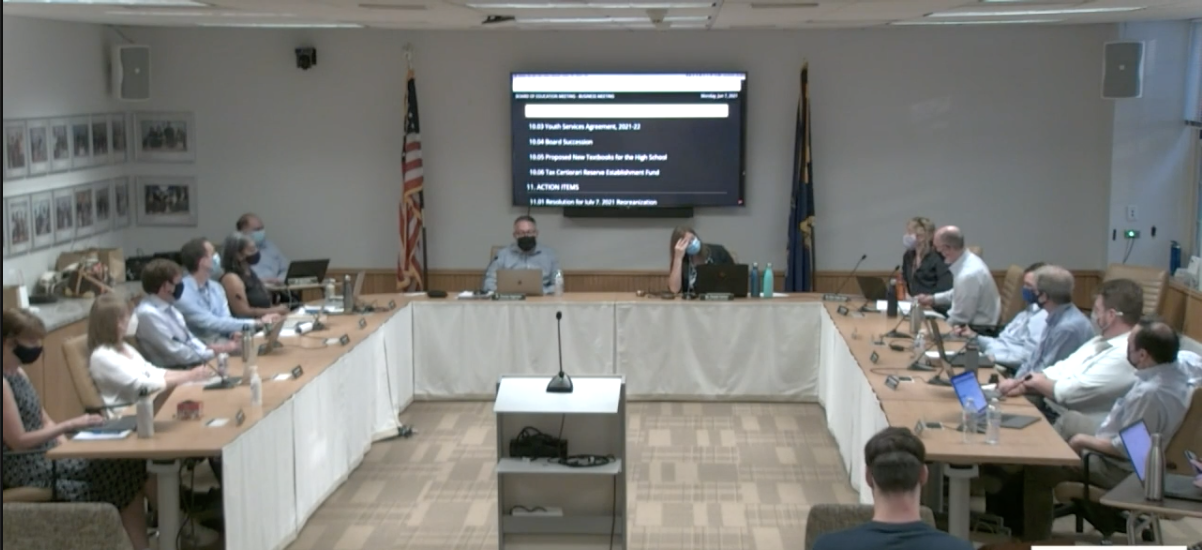 Disregarding vocal community opposition, the outgoing Board of Education approved an extension to the School Superintendent’s contract, including a bonus and raise, at their final meeting of the 2020-21 school year. Under the new agreement, the Superintendent’s salary will increase by 2.75% to $356,543 per year and he will receive $5,000 on July 1, 2021. The new agreement extends his three year contract to four years, to end on June 30, 2025.
Residents only became aware of the memorandum when the board meeting agenda appeared online earlier in the day.
The Memorandum of Agreement’s position on the Consent Agenda precluded any discussion, so the contract would have been approved along with a long list of other perfunctory resolutions. By definition, “a consent agenda is a board meeting practice that groups routine business and reports into one agenda item. The consent agenda can be approved in one action, rather than filing motions on each item separately. Using a consent agenda can save boards anywhere from a few minutes to a half hour. A consent agenda moves routine items along quickly so that the board has time for discussing more important issues.”
During public comments some came to the high school to make their thoughts known and others called in via Zoom.
Speaking first, Roger Neustadt stated what many others echoed later on. He said, “The election is over and the voters have spoken. There are a few conclusions you can draw. First, to the current Board, the results are meaningful. Voters had a choice between endorsing the approach of the past year, under current leadership, or voicing their preference for a change. Their voice should be heard loud and clear. The approach of the past year was not supported by a majority of the voters. That is a fact, not subject to interpretation as the current Vice-President did not garner enough support to remain on the Board. Regardless of the specific topic or approach, maintenance of the status quo was rejected. Please respect the voters, who chose not to re-elect current leadership, and make no significant decisions today before the current term ends. To do so would be to replace your judgment for that of the electorate, the Oxford definition of authoritarianism - “lack of concern for the wishes or opinions of others.” The majority of “others” have spoken with their votes. You were not elected to cram a significant decision into the last meeting of the current term. You were elected to represent us, not replace your judgment for ours."
"The Board President is tasked with selecting items for the consent agenda. Her term is soon over. She will leave the Board forthwith. Despite this Ms. Fuehrer is seeking to extend the superintendent’s contract one additional year. This is a violation of the public trust. We have elected two new Board members and rejected the leadership of Ms. Singer. Again, that is factual. By electing Jessica and Jim, we have expressed our desire to have them included in major decisions regarding our schools. They may not agree with my opinion, which I will purposefully not share, but that is democracy. By extending Thomas’s contract by one year, the Board will remove Jessica and Jim from impactful discussion of superintendent performance. This is precisely the type of decision they were elected for. I hope that you will recall the action of two years ago when the current Board extended Thomas’s contract for a total of 5 years. The just elected Board members, three of whom sit there today, felt that was wholly inappropriate and the decision should have been held until they were sworn in. I hope your memories are not that short."
"The most pressing questions is why? There are three years left on the superintendent’s contract. What is the urgency to extend his contract now, today? Once again, I will not opine on Thomas’s performance as that is truly not the concern here. The timing is suspect. Board members have just been elected, and are about to take office, but their voice may be muted before they even arrive."
"The voters have spoken and it is time for our Board to listen.”
Following Neustadt, there were a steady stream of comments in agreement.
Among them were Will Brennan who said, “If this item was considered and passed it would do only more to break down trust at the local level.” Shirley Salmeron said, “We have had issues with the community feeling disenfranchised.” She asked the board to “Think critically about the feedback you have received from parents.” Jereny Gans said, “I urge the board to table this so that it can be considered by the future board. It should also be removed from the consent agenda so it can be discussed and the public can hear the rationale for any decision that is made.”
Claire Paquin said, “I am feeling a lot of mistrust. You are supposed to represent the community. How do you represent us if you don’t allow us to engage? This last minute addition to the agenda seems suspicious. We don’t need to do this tonight. This is not good oversight.
This is not transparent. It is not what the community wants. The lack of transparency and communication has been abysmal. Open it up to the community. Let’s hear what they have to say about administrators who have not been transparent.”
David Benderson said, “This should not be on the consent agenda. There should be an opportunity for the stakeholders to speak. There is no necessity to extend a contract. There should be performance evaluations. This could lead to votes of no confidence and recalls.”
Stephanie Patch urged the board to “Wait on decisions regarding contracts and staffing to allow detailed governance and review.”
Irin Israel asked the board to take a clear look and “state why they think this is important at this time.”
Robert Berg called in from the New Orleans airport. He said, “I rarely agree with Roger (Neustadt) or Jeremy (Gans.) I am flabbergasted that the board has put the contract extension of the superintendent and the physician on the consent agenda. It is an abuse of the positions of the outgoing board members. It is not good governance.”
Anirudh Bansal said, “The community has roundly rejected the way things went. The board has not allowed sufficient time for the community to comment.”
Melissa Pecullan said, “I object to the last minute addition of these contracts to the agenda.”
Kate Delorenzo said, “This last minute addition erodes trust. Though its procedurally okay it is not in good faith. It makes me feel blindsided and disrespected.”
Sarah Bell Wechsler said, “We chose you to make decisions for us based on what is best.
Our elected reps are not in the room. Jessica and Jim are not in the room – it is not fair to make personnel decisions without them. We want good governance. We want to all agree… that people are coming together on this shows that.”
Judith Eforo said, “Right now we need leadership. We don’t need someone to take over the ship. We don’t need a mutiny. I believe you have an obligation to the people who elected you
There is no emerging situation here. I object it to being placed on the consent agenda and I would ask the committee to take this off the agenda. This procedurally does not belong here.”
Christine Weston said, “Summer is here. We should all be able to trust our board to tie up the year easily and quickly. We should not have to monitor the board. It’s ridiculous and we should not have to do this.”
Jonathan Lemley expressed his “displeasure with the last minute addition to the consent agenda.” He said, “it lacks transparency and can create mistrust. Dozens reached out to me this afternoon to discuss this. An individual has a contract extended in the middle of a term, without getting input from the community at large… is this needed? The Pandemic has caused acrimony and fracturing of our community in regard to the schools. This will get worse if we pass this. We should be working toward bringing this community together.
Board of Education President Pam Fuehrer defended the new contract. She explained, “This was not a last minute addition to the consent agenda. This is on the agenda every year at the end of the year. These agreements are always on the consent agenda as they are a right and responsibility of the board. Any changes to the executive agreements go on the consent agenda.”
“We receive an entire year of input from the entire school community. We hear about assessments, facilities, food service and every area of operations and management of this district for a full year. That goes into an entire year’s evaluation process. The template is posted online by law. There are 29 professional practices. One of our most important responsibilities is to assess a superintendent on these 29 practices. All of the input we received was discussed and considered. We are required to do this work. We are certainly not required to make any changes, but if we do, they go on the Consent Agenda. This is best practice. This is a board decision, not a public decision. It would make no sense to have a new board make this evaluation.”
Carl Finger concurred, saying, “Pam, you outlined the process we go through.” He then read a long list of factors the board considers when evaluating the superintendent, including: Implementation of the strategic plan, the facilities plan, the professional development plan, performance goals, use of formative assessments, graduation rates, the percentage of student attending college, student performance goals and more.
He said, “The board evaluates the success of the cabinet, principals and assistant principals and collective bargaining, agreements with other organizations and participation in community events. It evaluates communications including newsletters, and efforts to build consensus and outreach.”
He continued, “in this last year, we specifically looked at the strategic plan and implementation, education reports, the focus on diversity, equity, inclusion and belonging and leveraging of communication opportunities. We looked at professional development alignment with the strategic plan, and at the quality and performance of the cabinet and the principals and assistant principals. He said, “this is an ongoing and thorough evaluation that we have been doing since I got on the board. When we look at the superintendents contract, it is a reflection of all of that. It is disconcerting obviously to hear people object to the way we are making this decision, but it is our responsibility to make the decision. It is dangerous to start ascribing a community instruction based on an election result. We were elected to do this evaluation and to look at what’s best for the students.”
“I understand that it feels like we are doing it at our last meeting. I was initially surprised but I tried to keep an open mind and understand. It is not the last minute. It would not make sense to make these decisions in a few months with people who have not gone through the process. We have plans, goals and directions that we have given to the Superintendent and the cabinet. I am comfortable with this because I think it’s the right thing for the students and I hope you can understand that. I have to use my best judgment. I made the motion and support the motion. There are so many good things happening here that got lost. If passed, this will provide stability that will benefit the community.”
Amber Yusuf said, “We have received input but heard that communication could be better. I am not sure how we address that.”
Bob Klein said, “I feel a responsibility to explain how I came to my conclusion. For me, it’s simple. What is in the best interest of the students? What is in the best interest of delivering the goals that are in place. There is sincere passion out there in the community. How much is out there, I don’t know. I hope people will be respectful.”
Board Member Ron Schulhof moved for the memorandum to be removed from the consent agenda and voted on separately. When the motion was voted upon, it passed with four yes votes from Fuehrer, Singer, Finger and Klein. Yusuf abstained, Schulhof voted no and Ceske was not at the meeting.
Other Agreements:
Non-union administrators including the cabinet, received a similar agreement to Dr. Hagerman’s, with a 2.75% salary increase for the coming year and one time payments of $5,000 in July 2021.
In addition to the superintendent’s agreement, Assistant Superintendent Andrew Patrick announced that the district had reached agreements with several more groups through collective bargaining, and these agreements were shared in the agenda and agreed up by the Board:
A three year agreement with the teachers provides for a 1.7% increase in the first year, and then an increase of 1.25% to 1.750% in years two and three using a Salary Range Adjustment Model dependent on the CPI and the change in contribution to the Teacher’s Retirement System.
Principals and Assistant Principals have similar salary increased and will also receive bonuses for longevity after 10, 15, 20, 25 and 30 years of service.
The secretaries will receive a 1.7% increase in year one, 1.7% in year 2, 1.6% in year 3 and 1.5% in year 4.
Last, the District Physician, who came under fire from some during this past year, received a renewal of his contract. Dr. Louis Corsaro will be paid $35,000.
A Prom Like No Other
- Details
- Written by: Jamie Robelen
- Hits: 6491
 The prom must go on!
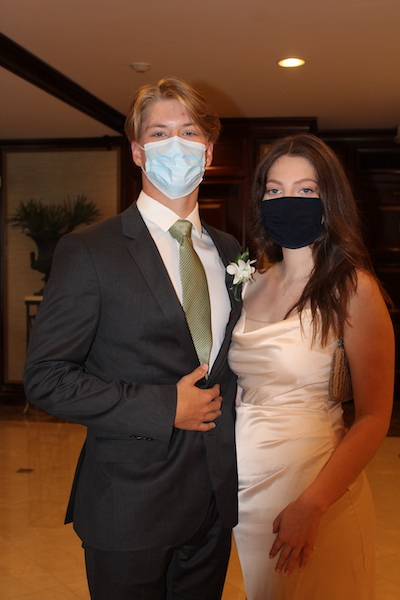
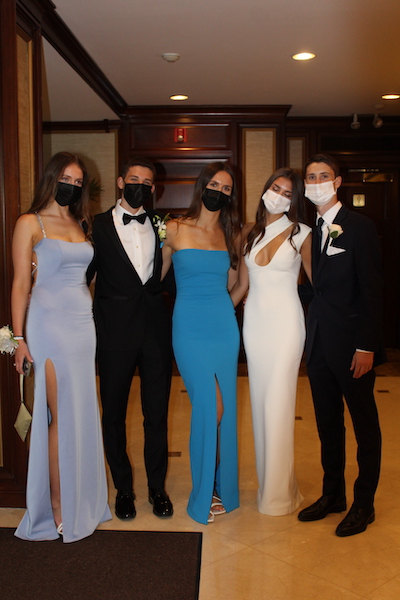
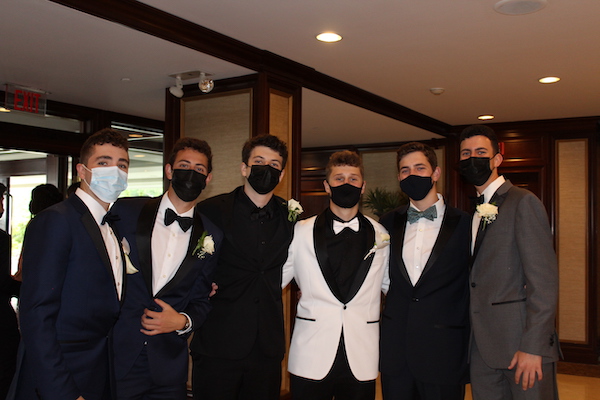
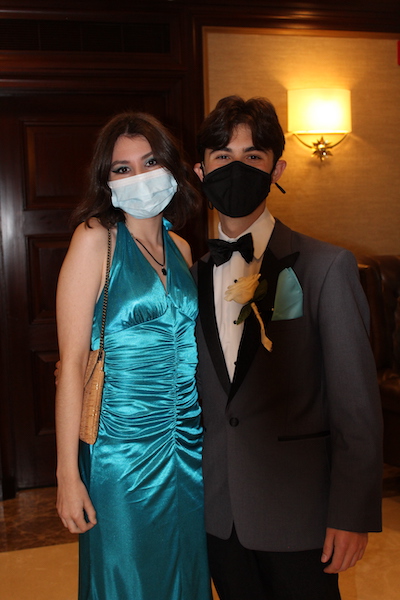
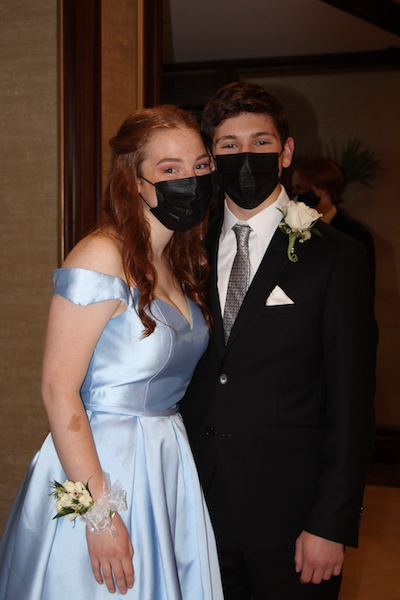
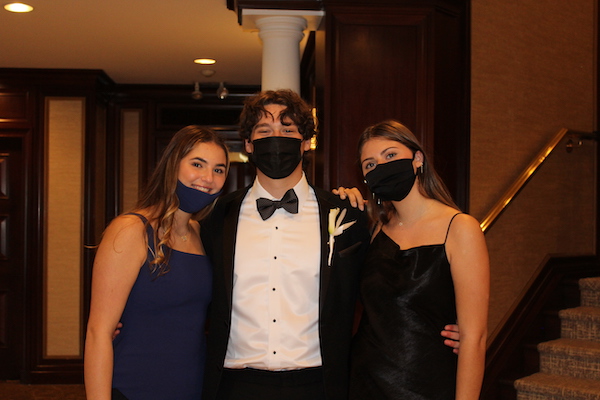
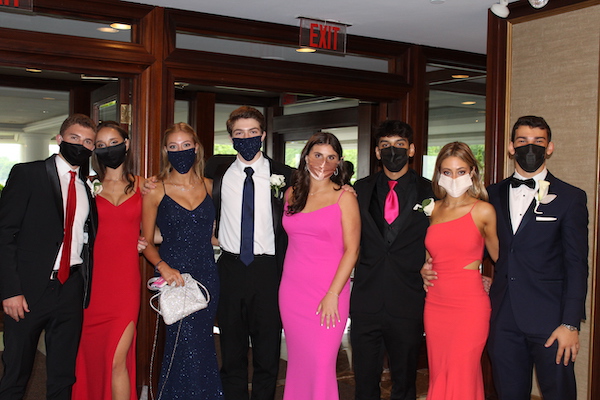
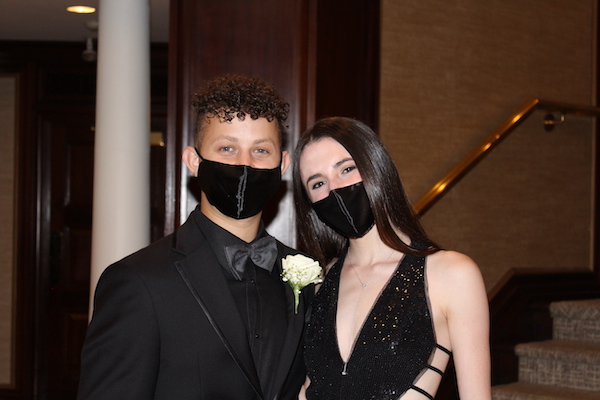
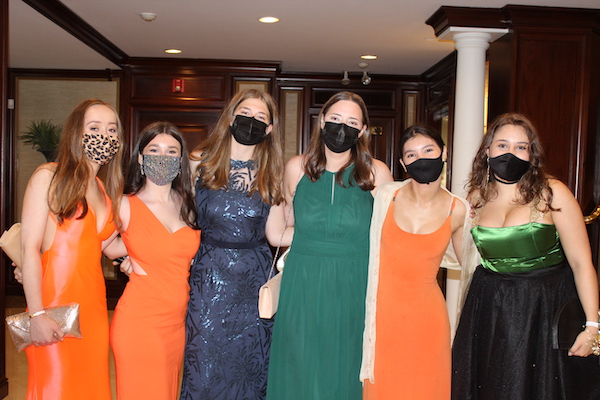
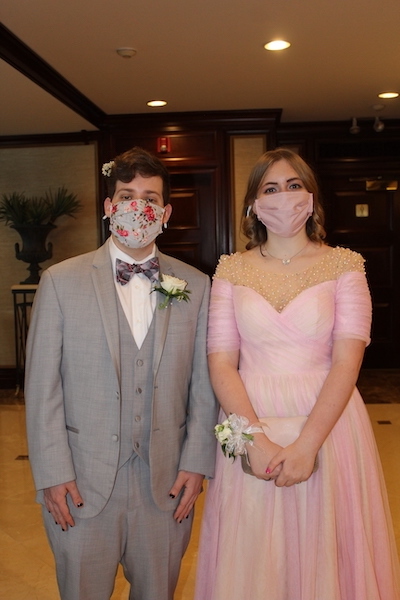
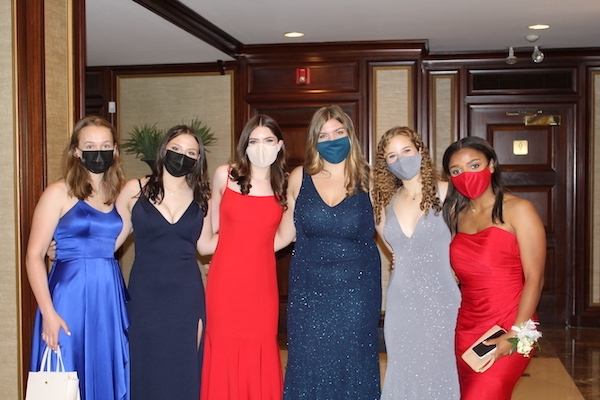
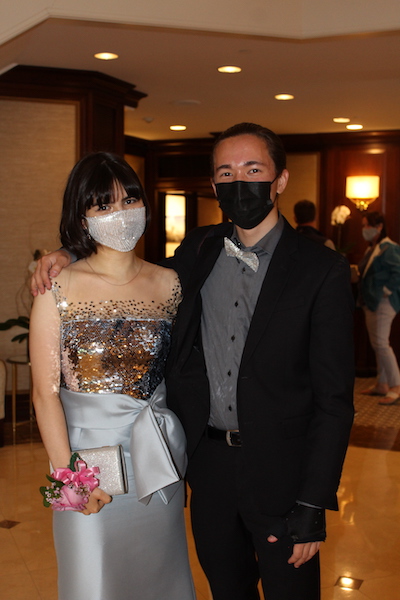
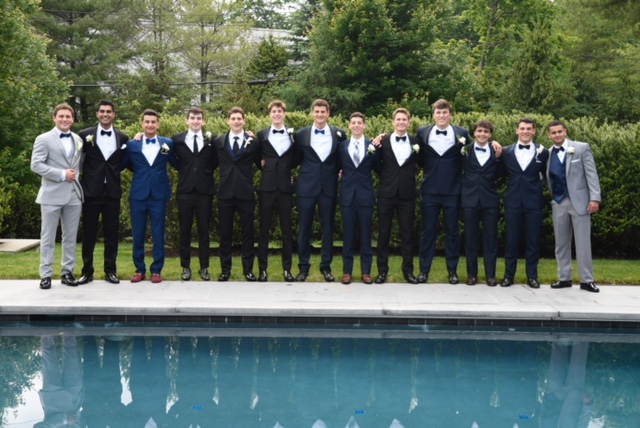
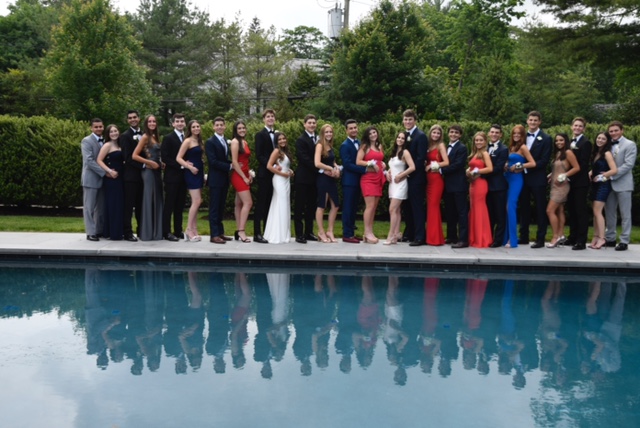
Though the circumstances were different this year, the Scarsdale High School Class of 2021 still got all dolled up to dance the night away at the Glen Island Harbor Club on Thursday, June 3.
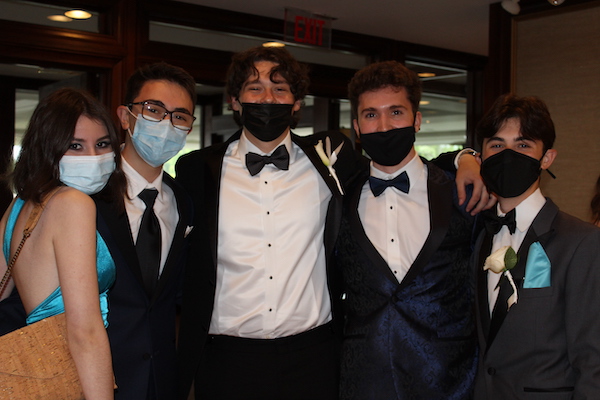
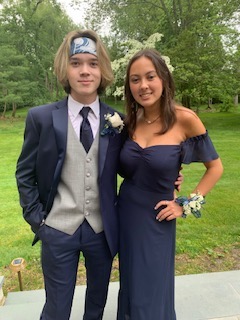
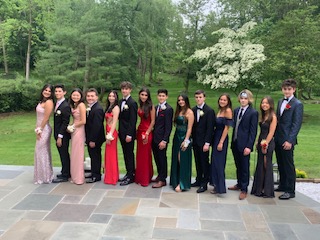
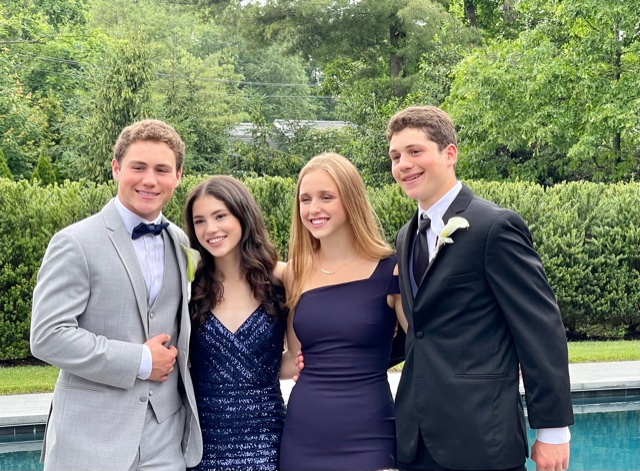
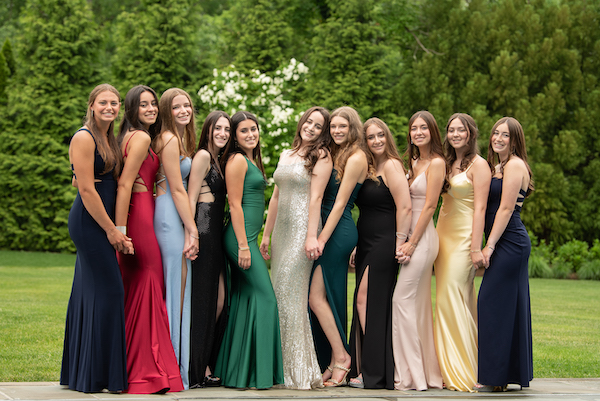
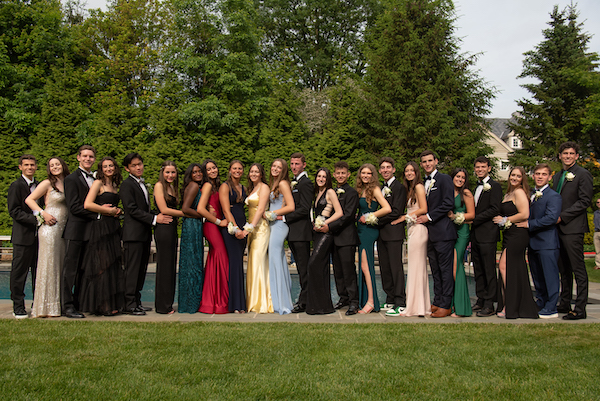
Despite the stormy skies, the rain held out long enough for prom-goers to enjoy pre-prom celebrations outside with their friends and families. Each senior chose a dress or a suit that they felt expressed themselves, which was reflected in the variety of styles seen. The style this year was silky, bold, primary color dresses, with hair worn long and curled. All of the dresses were floor length, which in Scarsdale is a style traditionally reserved for seniors, as this year only seniors were invited, and there were suits spanning every color of the rainbow.
An added accessory this year was, of course, a mask. Some wore basic surgical masks, while some found masks to match the color of their outfit, and some people even constructed masks out of the same material as their dress.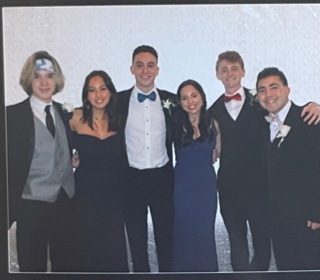 Scarsdale Varsity Skiers
The first two hours of the gala were devoted to dinner and socializing. Tables were pre-assigned, but the seniors were able to hang out with their friends from all tables. In lieu of appetizers and the typical buffet, attendees were served a three-course meal. For the final hour, everyone was invited to the dance floor where a DJ played today’s top songs and some throwback hits.
While there may not have been a red carpet, or a prom bus, the pillars of the prom stood strong: seniors looked beautiful and celebrated the end of a year they will never forget.
Commenting on the successful event, SHS Assistant Principal Andrea O'Gorman said, "We were thrilled to see the Class of 2021 come together for their Senior Prom. The event was planned with thoughtfulness and care by the senior class government officers, along with their faculty advisors, Carlos Bedoya and Vinny Licciardello. Our seniors were radiant and happy and the evening was a wonderful celebration after a challenging year."
(Photo at top by Aggie Photography)
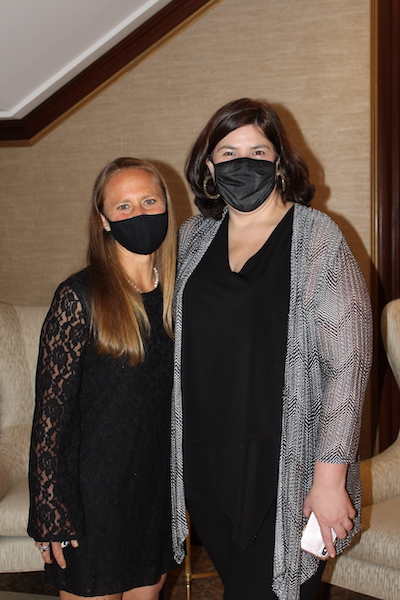
See below for pre-prom photos from local photographer Andi Schreiber:










Plus more photos by SHS grad Jamie Robelen









And more from you our readers:



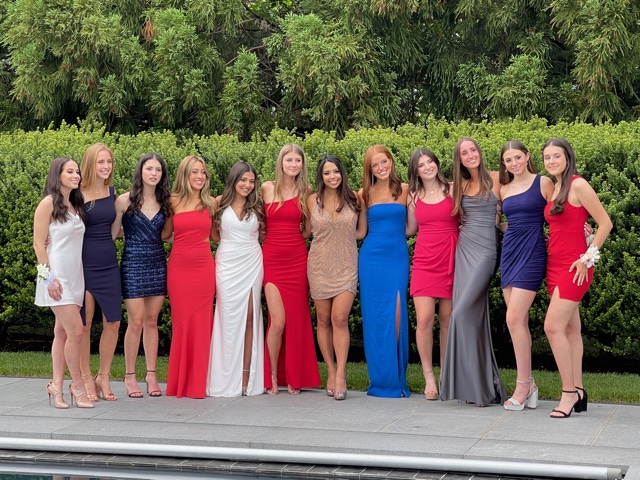



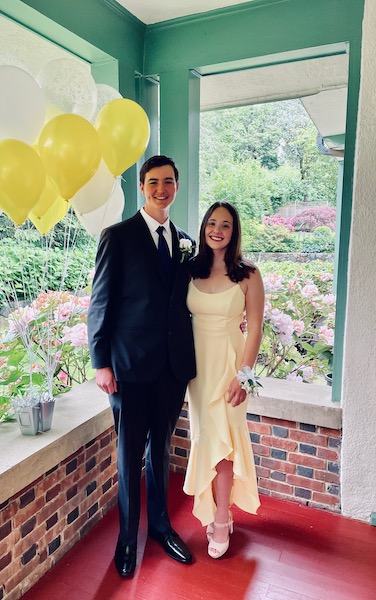

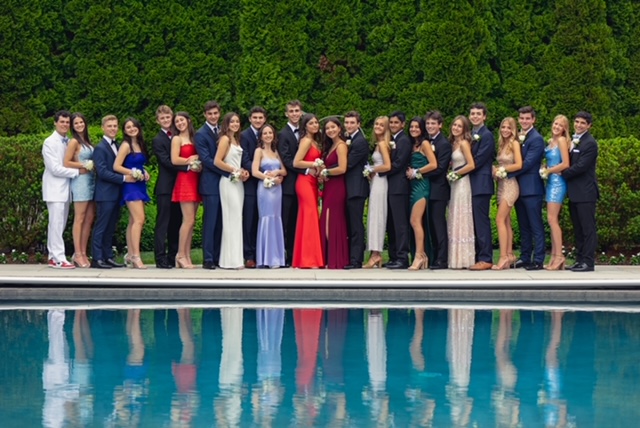

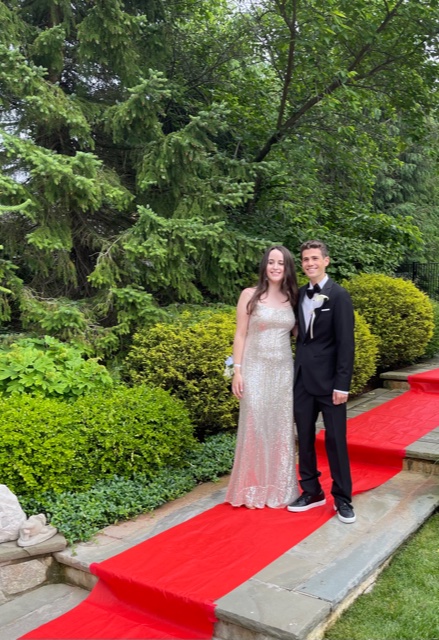
Send your prom photos to [email protected] and we will post them in our gallery.


This prom photo gallery is sponsored by Elise Flagg of Houlihan Lawrence in Scarsdale.
Some Caught by Surprise with Tuition Bills from the Scarsdale Schools
- Details
- Written by: Joanne Wallenstein
- Hits: 14017
 In the past few weeks we have received a few letters from people who were asked to pay tuition to the Scarsdale School district due to non-residency. One family moved out of the district six weeks shy of their daughter’s graduation and another was from a family where the parents were separated and after an investigation the district found that the child was staying with the mother, out of the district.
Though we don't know how many students are involved, revenues from non-resident tuition has grown dramatically from $3,957 in 2017-18, and $13,560 in 2018-19 to $79,560 in 2019-20.
There is a policy regarding tuition from non-resident students, but a few important decision remain at the discretion of the superintendent.
First, if parents have joint custody of a child, and one lives in and one outside the district, how much time needs to be spent at the in-district home to qualify for the schools? In response to this question, the district responded, “In cases where parents are separated or divorced, they are asked to contact the District to determine enrollment eligibility.”
What about families who own a home in Scarsdale but move out temporarily during a renovation? If they are still paying taxes in Scarsdale, can their children attend Scarsdale schools? Here is the response we got to that question: “According to state law, students may only attend public schools in the district they are residents in. If there are specific residency questions, people are encouraged to contact the District to determine their specific eligibility.” Again, this matter seems to be at the Superintendent’s discretion.
Below find the questions we sent to the registrar and the response we received. Note that several questions were not answered.
(Q) In cases where the district finds an issue, are families given an opportunity to make adjustments to meet your requirements before a child is no longer permitted to attend?
(Q) How many children were forced to leave the district this school year and last due to residency issues?
(Q) We understand that private investigators are used to follow students and their families. For how many students were private investigators used this school year?
(Q) What was the total expense to the district for PI’s for this school year and last school year?
(Q) How much in attorney’s fees did the district pay these past two school years to pursue residency claims?
(Q) If families are in need, does the district negotiate the tuition fees that are charged?
Here is the response from the district:
"At the Scarsdale Public Schools, our first and highest priority is the excellent education of Scarsdale residents' children. The District allows non-resident students to attend on tuition only in rare circumstances. Tuition is set annually by New York State and is non-negotiable. The 2020-21 Tuition Rate was $23,764/year for grades K-6 and $27,990 for grades 7-12.
The rare exceptions when the District allows a student to attend with the payment of tuition are:
When parents are under contract to buy or lease an apartment, home or condominium within the District, a student may attend for up to three months upon prepayment of tuition. If the student and parents have not moved to the District within three months, the student may not attend District schools, unless an extension is granted by the Superintendent.
A student who moves out of the District after the semester has started may finish the semester, upon prepayment of tuition.
High School students who become nonresidents after they finish eleventh grade may be allowed to attend for their senior year, with permission from the Superintendent and upon prepayment of tuition.
In cases where parents are separated or divorced, they are asked to contact the District to determine enrollment eligibility.
It is important to note the NYS Education Commissioner has ruled that according to Education Law §310, a student who lives with someone other than a parent solely to attend local schools is NOT considered an established resident, and is not entitled to attend.
As a rule, the District does not disclose the methods and tactics used to investigate this fraud, as doing so would diminish their effectiveness.
Families who are not Scarsdale residents but send their children to Scarsdale Schools are committing residency fraud, something we must take seriously as stewards of District resources. The District does pursue false residency claims and the repayment of tuition whenever warranted. Our attorneys work closely with the District in all of these matters.
The need to pursue legal remedies to recover tuition owed is uncommon, but does occasionally happen. Typically, when families are informed they are not eligible for a Scarsdale education, they remedy the situation quickly by moving to the District, paying tuition owed, and/or finding alternative schooling for their children. In the last two years, fewer than $10,000 has been spent on legal fees annually, and only one family has been subject to removal from the District.
Information on how to register children for school in the District can be found here.
Board Policy 5152 regarding admission of nonresident students can be found here.
The Board resolution for 2020-21 tuition rates can be found here."
We followed up with a few more questions, and here are the questions and the response:
(Q) If someone is renovating their house - (paying Scarsdale taxes) but has to move out the district during the work, are they charged tuition?
(Q) How much revenue does the district collect from non-resident tuition each year? I see that the budget shows $87,000 from 2020-21 and it is not itemized though it says that this includes tuition for one special education student. Can I assume that the balance is non-resident tuition from other students?
Response:
"According to state law, students may only attend public schools in the district they are residents in. If there are specific residency questions, people are encouraged to contact the District to determine their specific eligibility."
"This falls under the 'miscellaneous revenue' budget line. Here is the Actual Revenue for the last three years for non-special education tuition students. This year's actual number will not be available until after we close/reconcile the books June 30.
2019-20: $79,560
2018-19: $13,560
2017-18: $3,956
Conclusions:
From our inquiries we were not able to find out the following:
-How much does the district spend on private investigators?
-Are people given a warning that they are being investigated and time to remediate before their child is expelled?
-If a home is in need of renovation that requires the family to move out, how can families avoid paying tuition?
-If there is a separation or a divorce, how much time needs to be spent in Scarsdale to qualify as a resident?
Perhaps the Board of Education should re-examine their policy and come up with clearer terms so that people moving to Scarsdale, current residents, and non-residents, know where they stand.
What Was the "Perceived Threat" That Closed Scarsdale High School?
- Details
- Written by: Joanne Wallenstein
- Hits: 3363
 Though parents and community members received many emails about the lockout at Scarsdale High School on Friday May 21, they still don’t know the nature of the “perceived threat” that caused the incident.
Apparently, on Friday morning school personnel contacted the Scarsdale Police about a perceived threat. In response at 11:11 am the school was placed in a lockout status though staff with ID’s and students were permitted to enter and exit through specific doors.
At 1:05 the administration made the decision to dismiss all students and police were present on campus. Rumors were circulating about a bear in the area, but those proved to be false.
Subsequent emails from Dr. Hagerman and the Police Chief were sent out, explaining that the secrecy about the nature of the threat was essential to give Police time to investigate. According to Chief Andrew Matturro, “The limited nature of communication between the Scarsdale Police and the public during an unfolding event of Friday’s nature is by design, as a potentially harmful actor may use access to official communications to be more effective in either executing a plan to harm others, to evade police, or to destroy evidence that the parallel investigation is seeking to discover.”
On Sunday, Dr. Hagerman announced that schools would open on Monday with a continued police presence.
Both the district and the police said they were following protocols to ensure the safety of students and teachers, but some parents were angered by the mysterious tone of the communications and the district’s refusal to share the nature of the “perceived threat.”
In response, the SHS PTA said they will meet with Principal Ken Bonamo to review “the communication procedures, protocol implementation and hear feedback.” They said, “We recognize that in a crisis there are specific details that ought not to be and will not be shared with the community. However Friday’s crisis has left room for improvement.”
School Board Reviews Implementation of the Diversity, Equity, and Inclusion Policy
- Details
- Written by: Sammy Silberberg
- Hits: 2950
 On April 12, 2021, the Scarsdale School Board adopted a district-wide Diversity, Equity, and Inclusion (DEI) policy. During the May 10 School Board Business Meeting, Superintendent Thomas Hagerman and Assistant Superintendent Edgar McIntosh provided the Board with the first update of how the administration plans to implement the policy and foster diverse and inclusive learning environments across Scarsdale schools.
To begin, Hagerman stated that “as we embark on this work… we want to be very clear, we want to be thoughtful, we want to be deliberative as we share out this information with the broader community… we want to ground this work in something that is meaningful. We want to make sure we are not bringing in some kind of liberal agenda into the district, but this work is very much grounded in the state guidance being provided for us as well as our local school board policies.”
The pillars of the DEI policy are to create positive and inclusive learning environments, foster broad representation in curriculum, create professional development on historical injustices and inequalities that have led to institutional education barriers as a means to eliminate them, develop curriculum and instructional materials that will reflect educational equity, and establish goals and metrics for this policy work.
Currently, the work of implementing this policy sits with the Compact Committee. This committee will review and adopt the education framework, select annual goals based on the framework, determine measurable metrics for these goals, create a communication plan for the work, and advise the administration on choosing district consultants to assist with implementation. Board Member Ron Schulhof pressed the administration and asked how confident they are that the Compact Committee is the right fit for managing the DEI initiative. Hagerman stated that the administration will evaluate and potentially designate the work to a different committee next year, but for now, they believe that this will be the most efficient way to implement the policy for the remainder of this school year.
Moving forward with DEI, the administration plans to coordinate with district partners, including the Scarsdale Teacher Institute (STI), the Parent-Teacher conference, Parent Teacher Associations, school-based multi-cultural committees, and Scarsdale Village. For the 2021-2022 school year, the goals are:
• Ensure the entire school community has access to and understands the New York State Diversity and Inclusion framework and principles
• Use Board of Education policy to guide goal setting and priorities
• Implement Compact Committee goals
• Review curriculum through the lens of DEI
• Design district-wide professional learning
• Integrate into the strategic plan and set long term goals
Dr. Edgar McIntosh reviewed how DEI is already being implemented across Scarsdale.
-On a district-wide level, there is a continuation and enrichment of STI professional development, employment of level-specific consultations, innovation and sharing of best practices, and multilingual library sections in every school.
-In the elementary schools, there are multicultural classroom libraries, special recognition events that celebrate multiculturalism, and the “One Book, One School” program that highlights themes of acceptance and belonging.
-In the middle school, they are using the structure of CORE to support team building and belonging, expanding reading choices, holding Human Rights Day, and hosting Level Up Village, a program where middle schoolers partner with and learn from students all over the world.
-In the high school, student surveys and committee participation is helping shape the conversation. In addition, there is Global Citizenship Day and the Global Learning Alliance, where students analyze complicated issues of belonging and identity with international students and present their findings.
The presentation was well received by the Board, and President Pam Fuehrer emphasized that in addition to addressing multiculturalism, the DEI policy will work to address differences across the spectrum, from race, sexual orientation, ability, and much more. Board member Carl Finger pointed out that while the Board feels very comfortable discussing this topic, many parents in the community may not know how to broach these discussions with their children. He highlighted the need to do effective outreach on the DEI policy so that what students learn in the classroom can also be reinforced at home.
Vice President Alison Tepper Singer also noted that while there has been a lot of national media coverage claiming that these types of policies can stifle student voices, this is the “opposite” of Scarsdale’s intent, and it will not be the outcome of DEI. Fuehrer also inquired how regularly the administration plans to update the Board on the progress of this policy, and Hagerman stated that the administration plans to carve out a specific time to provide updates so that DEI remains a priority. Board member Robert Klein added that some in the community may not agree with the policy, and these topics may not be widely accepted, and therefore the administration should “err on the side of over communicating rather than under communicating.”
- District Grants Tenure to 21 Staffers, Announces Retirements and New Hires
- Use Your Vote to Send a Message to the Scarsdale School Board
- Former School Board President and Current Board Member Say Singer’s Knowledge and Experience Are Needed on the Scarsdale School Board
- Introducing Journalist, Author, Community Volunteer and Candidate for Scarsdale School Board Jessica Resnick-Ault