









2024 Procedure Committee Invites Residents to Run for CNC
- Details
- Written by: Joanne Wallenstein
- Hits: 2027
To the Editor:
The Procedure Committee (PC) invites Scarsdale residents to run for a position on the nonpartisan Citizens Nominating Committee (CNC). Thirty voting members on the CNC, six representing each of the five elementary school districts, will interview, evaluate, and select candidates running on the nonpartisan slate for open Village offices in the March 18, 2025 Village Election.
A candidate for membership on the CNC must be a qualified voter (18 years of age or older) and a resident of Scarsdale for at least two years. The CNC application is simple, consisting of a biographical form and a 10-signature petition signed by the applicant’s neighbors. Instructions for filing can be downloaded on the PC’s website at www.scarsdaleprocedurecommittee.org. The deadline for submitting the CNC application is Monday, September 30, 2024. The CNC election will be held on Tuesday, November 12, 2024 from 7 am to 9 pm or by mail-in ballot.
The CNC meets 5 or 6 times on weekday evenings at 8 PM at the Scarsdale Library.CNC meeting dates for 2024-2025 are Wednesday, December 4th, 2024 (Organization Meeting); Wednesday, December 11, 2024; Wednesday, December 18, 2024; Wednesday, January 8, 2025; Wednesday, January 15, 2025; and if necessary, Wednesday, January 25, 2025. All meetings begin at 8 PM.. By its last meeting date the CNC will nominate a nonpartisan slate of candidates for the open positions on this year on the Scarsdale Board of Trustees.
For more information contact PC Chair Heath Sroka, [email protected] or PC Vive Chair Ralph Geer, [email protected] . The other members of the 2024-2025 Procedure Committee are: Elaine Weir, Manisha Maria, Rohini Shani, Rebecca Chase, David Peretz, Jeremy Perelman, Nikki Dragisty, Christopher Burrows, Matt Chesler, Andrew Gorrin & Andrew Sereysky.
Heath Sroka, Chair Ralph Geer, Vice Chair Procedure Committee
Despite Frequent Flooding, Developer Is Undeterred From Plans for an 8 Home Subdivision on Garden Road
- Details
- Written by: Joanne Wallenstein
- Hits: 5633
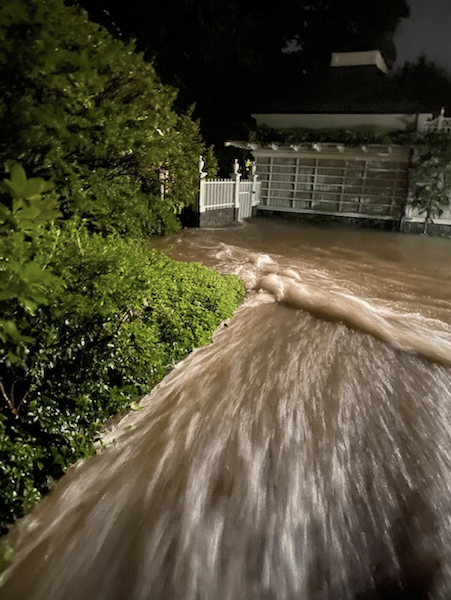 Even as the Village contemplates millions of dollars in stormwater remediation projects, the Scarsdale Planning Board continues to entertain highly controversial development projects in a flood-prone areas. On the agenda for a special meeting on September 19 is a proposed 8 home development at 80 Garden Road that has been the subject of meetings and substantial objections from property owners since 2018.
The fact that homeowners adjacent to the site already experience significant flooding seems to do nothing to dissuade the Board Chairman and the Village Engineer from continuing to invite the applicants to additional hearings and even specially-scheduled additional meetings to entertain their proposal. Why a special hearing for this application? Acting Village Manager Alexandra Marshall explained, "Special meetings are typically held for complex applications, especially if extensive public comments are anticipated. If such applications were added to regular meetings, it would be inconvenient to other applicants and members of the public waiting to be heard regarding other applications."
As recently as July 18, 2024, the Village Board held a work session to review plans for a major public works project to alleviate flooding in the Sheldrake Watershed, just downstream from the proposed development. Furthermore the Village Engineer and Superintendent of Public Works announced that on Cushman, Garden, Sheldrake and Willow Roads, streets that lie directly behind and downstream from the Garden Road site the Village is doing an analysis of the stream, creating a hydraulic model and is close to making some recommendations for work to be done.
So why is the Planning Board continuing to hear claims that an 8-house subdivision in a soggy area with a high water table will not exacerbate the issues?
As described in our previous article in March 2024, “The eight-home development would be on a private road in a cul de sac. Each home would have its own water well as the Village does not have adequate water to supply the homes with water when there is also demand for water during a fire emergency. Each home would also have a swimming pool.
Since the area has a high water table, the developer, Steve Kessner, is proposing to truck in tons of landfill to raise the ground level by four feet, and contain the fill with four foot high retaining walls on the north and south sides of the property. This will allow the builder to place the underground pipes in the fill, rather than deeper underground where they could be infiltrated by groundwater.
Due to the high water table, the builder can’t use drywells for water retention so he is proposing to build an underground retention system with a slow release system to allow water to be time released.”
The latest reports from the applicants seek to answer questions about the quality of the tons of landfill, about the stormwater runoff and about the removal of hundreds of trees. They also address how downstream neighbors would be affected by runoff during the potential construction. You can see the reports from their experts here.
Over the course of six years of meetings, neighbors have written detailed letters about why the plans would put their homes at additional risk. As we have seen with other applications that will negatively impact neighborhoods, local residents are called on over and over again to attend lengthy meetings to voice their concerns. Sometimes public comment is not even permitted.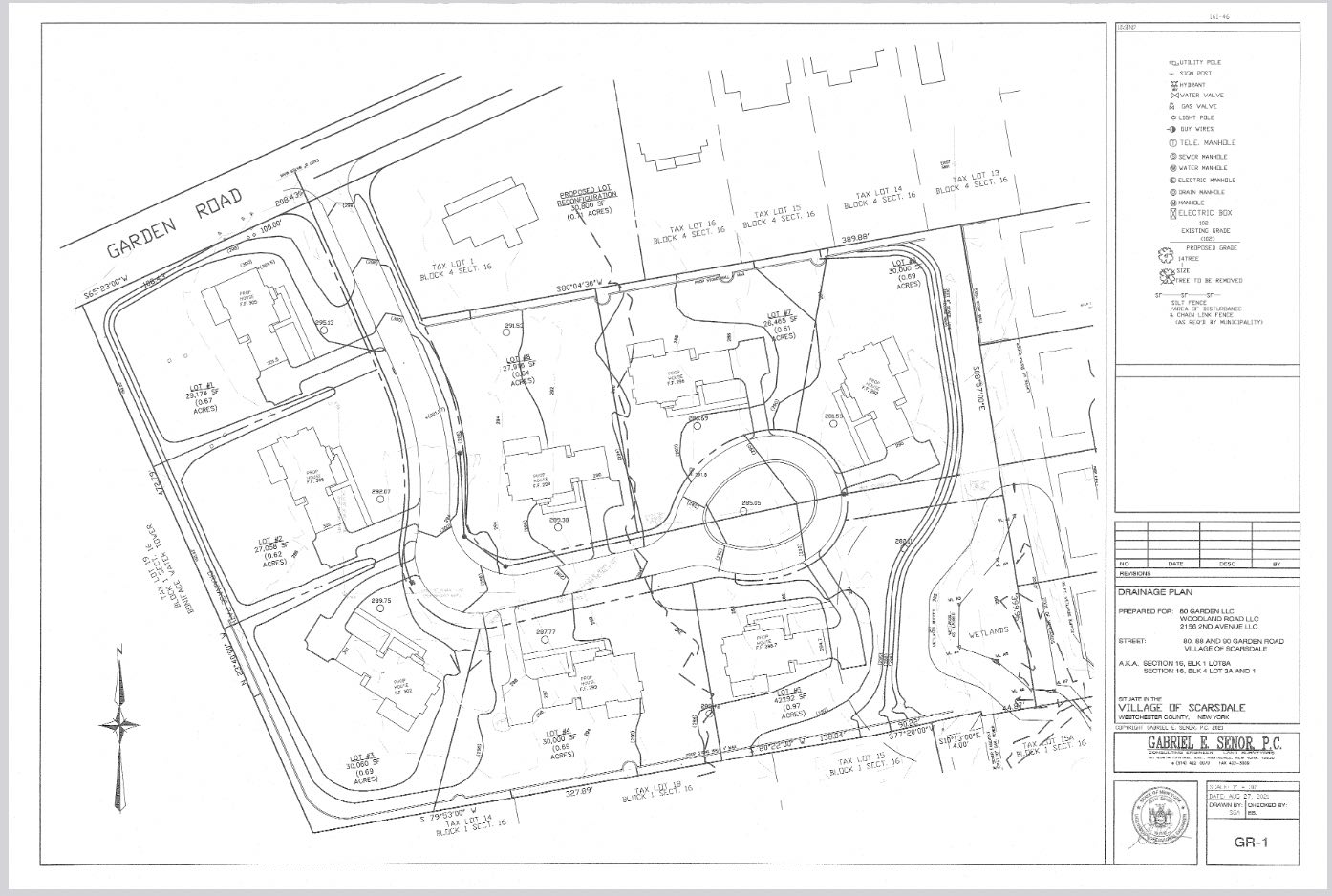
Here are comments from Helen Maccarino of Cushman Road who has studied the proposal. She says, “Any multi-home development should be discouraged in a flood prone area and this includes 80 Garden. The Village stormwater management infrastructure in the Garden/Cushman/Willow area has been designated as a high priority for remediation because the system struggles to handle the current runoff volume. But it is years away from being improved. Given this situation, I am stunned that the Village seems willing to consider an 8-house subdivision here before the infrastructure is fixed.
In addition to being in a flood-prone area, the site is simply unsuitable for development. Not only does a portion of the site include wetlands, the ground water table is so high that it is impossible to build 8 new houses on the site as is. The developer’s solution: clear cut the entire 5+ acres of all 424 trees, have 25 truckloads of fill brought in each day for 3-4 months to raise the terrain by 4 feet, and erect a 4-6 ft high retaining wall (placed inside the required minimum setback) to hold all the fill in place. The NYS Dept of Conservation cautions that these same exact actions can change drainage patterns and exacerbate flooding. The new homes won’t flood because they will sit 4 feet higher than all the neighboring homes in the area. This engineering decision dumps the flooding risk on rest of us. Once all the trees are gone and the terrain is raised, there is no going back. The damage is irreversible.
We talk about climate change and what we can do to better protect our environment but we lack the will to make the hard decisions. Large subdivisions in flood prone areas will not bring us closer to that goal. This project is so big and our infrastructure is so inadequate that there's not even enough water to meet the demand of the proposed new houses so wells have to be dug for each house. This is an ill-conceived project that must be more thoughtfully designed, have a smaller footprint, be less destructive and more respectful of the environment. We deserve better.
Not to mention the quality of life issues that we will have to endure during the years it will take from start to finish. Just clearing and prepping the site will take a year. Constant noise, dirt, fumes, traffic, etc. every day except Sundays. It is unfair for the neighbors to have to live under these conditions for so long. Maybe we can get a property tax rebate during the life of the project?”
Having attended many of these meetings we are waiting for the Chairman of the Planning Board to call for a vote. There is ample evidence that this proposal will put neighbors at additional risk and do nothing to improve a very dicey situation downstream. And if the Village fears a lawsuit from the developers, the Village should weigh that concern against the prospect of a lawsuit from neighbors who will be left with few options to preserve the value of their homes. The Planning Board would then have time to consider infrastructure improvements to safeguard the Village rather than spending years evaluating the negative impacts of potential development.
The Planning Board has the authority to permit or deny subdivision applications. In this case, the Village’s infrastructure cannot support the homes, so no water service can be provided. There are well documented incidents of flooding on and around the site which demonstrate that it is unsuitable for development. Furthermore, in six years of meetings the applicants have failed to prove that the subdivision will not cause further harm. What does it take for the Planning Board and Village Engineer to simply say “No?”
The Sidewalk Sale Is On, Thursday-Saturday in Scarsdale Village
- Details
- Written by: Joanne Wallenstein
- Hits: 2676
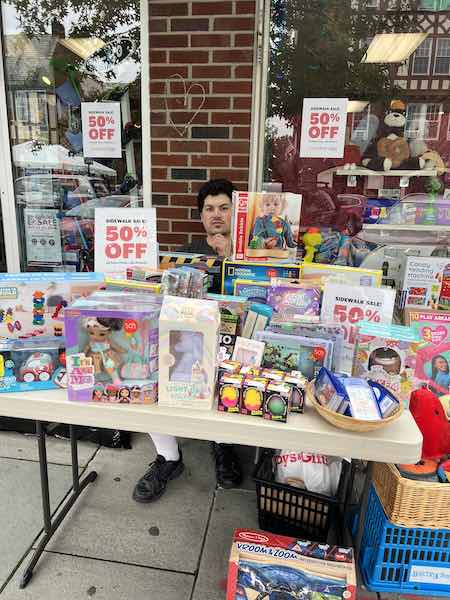
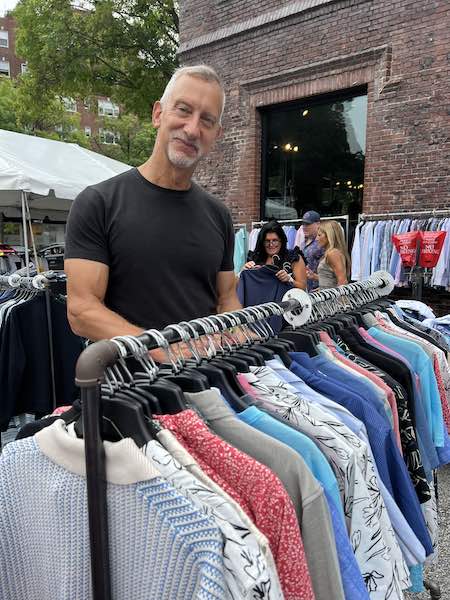 The long-anticipated Scarsdale Sidewalk Sale is on from Thursday to Saturday from 10 am to 6 pm and the Village is alive with shoppers and deals.
Buyers lined up in front of Pamela Robbins before the 10 am opening on Thursday to get first dibs on designer clothing bags and shoes. Next door at Rothmans, racks were filled with sports jackets and shirts, and there were great prices to be had on designer swim trunks, shorts and more.
Another hub of activity was I Am More Scarsdale, where racks and tables spread down Spencer Place and onto Harwood Court. There were bags, hats, jeans, tops, cover-ups, shoes and more, also at bargain prices.
Along Boniface Circle, vendors who don’t have bricks and mortar stores in town set up tables. We sampled macaroons from Woops at the Westchester, chatted with “educationist” Kristen Zakierski who was featuring her new line of learning materials for young children, admired the colorful artwork of Amanda Arbeter, and spoke to representatives from Audio Help who just opened a new store on Popham Road with hearing aids and other audiology devices.
At 44 East Parkway we met the team from Contour Med Spa Services who are opening at new location in September, offering a full range of facials, fillers, threading, microneedling and more. We saw lots on sale at Bronx River Books and Learning Express too.
Be sure to bring children to the Village on Saturday July 27 between 11-2 when there will be facepainting, a balloon artist, music, games and more for kids on Spencer Place. The games will be run by the Scarsdale Youth Business Alliance.
Parking is tight so plan to walk, cycle or catch a ride to the Village.








Trustees Consider Plan to Alleviate Flooding in Sheldrake Watershed
- Details
- Written by: Joanne Wallenstein
- Hits: 3383
 What’s going on with plans for improving drainage in Scarsdale?
One of the big ticket items in this year’s budget was spending to relieve flooding in many troubled areas of the Village -so on Tuesday July 16, the Mayor called a work session to review the progress of the Department of Public Works and Village Engineer on a long list of projects.
Before turning to an analysis of flooding across the street from the Scarsdale Middle School, Supervisor Jeff Coleman ran through a list of smaller projects that are now in process.
Among them are:
-Improvements at George Field Park, Cambridge and Rugby Roads to alleviate flooding are underway.
-On Cushman, Garden, Sheldrake and Willow Roads the Village is doing an analysis of the stream, creating a hydraulic model and is close to making some recommendations for work to be done.
- Replacement of a culvert at the end of Griffin Road.
-Stormwater remediation in Fox Meadow at the intersection of Ogden and Paddington Roads, and also on Chesterfield Road between Brite Avenue and Oak Lane.
-Library Pond where bidding for a project to address flooding at the pond will start in a month or so.
-Hutchinson River Stormwater: The Village is working with the City of New Rochelle on improvements to the Hutchinson River with the project to go out to bid in August and work to begin in the fall.
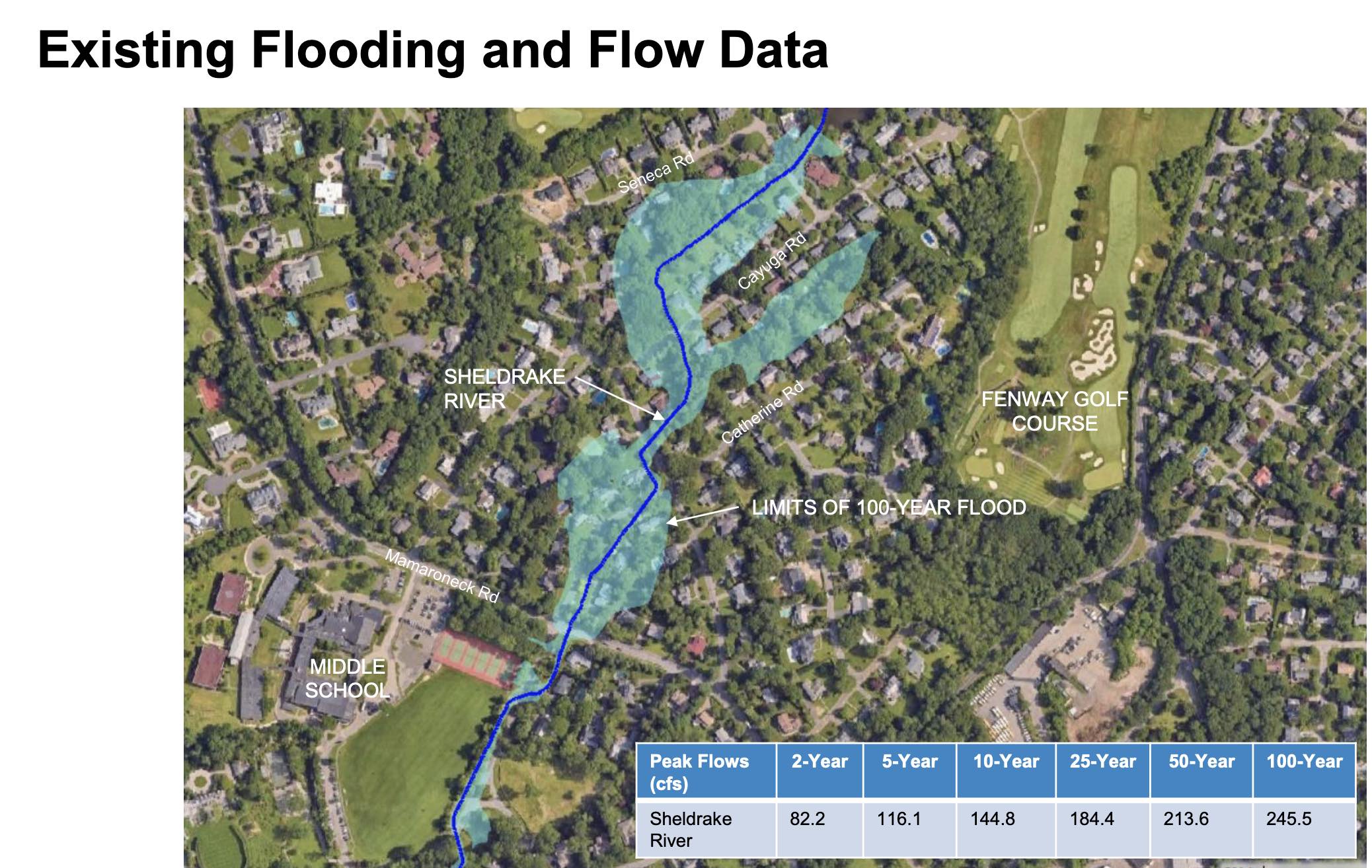
However, the reason for Tuesday’s meeting was to review possible solutions to extensive flooding in the neighborhood across from Scarsdale Middle School at Catherine, Leatherstocking, Oneida and Cayuga Roads. Coleman said this neighborhood “was one of the hardest hit,” and engaged engineering consultants to look for possible solutions. Residents have been lobbying the Village for more than a decade to do work to safeguard their homes which flood extensively when there is heavy rainfall. They estimated that the flooding affects about 20 homes which were built in a FEMA flood plain. Here is an article from 2012 on Scarsdale10583 discussing the flooding:
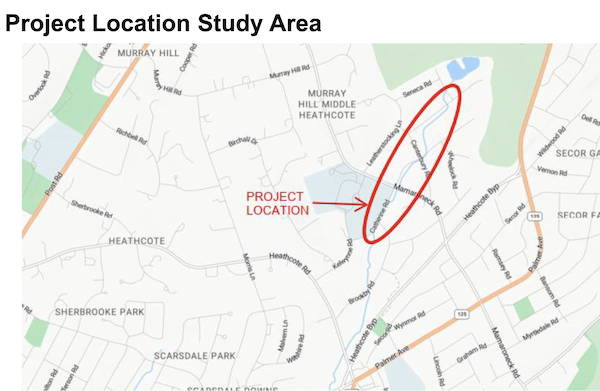
John Ruschke, an engineer with Mott McDonald explained that a 700 acre watershed of the Sheldrake River drains into this area causing substantial flooding on Catherine and Cayuga Roads. The engineer presented a study that examined three alternatives to significantly improve the situation, in what has been designated a FEMA flood plain.
The three alternatives were:
Replacement of Catherine Road Culvert: They looked at enlarging the culverts and lowering the channel between them. However, their analysis did not show that this would provide an improvement.
Second they looked at upstream drainage improvements and examined the effects of eliminating a 50 acre portion of the drainage area in the rear of properties on Catherine and Cayuga Road. They would create a bypass culvert and redirect the flow. However, this proposal was also found to have an Insignificant benefit. to removing 50 acres.
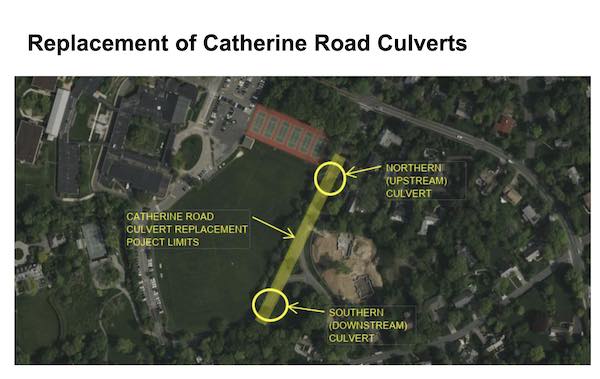 Last, they analyzed the effect of a total replacement of the Cayuga Road culvert and the installation of a 10 foot by 4 foot bypass culvert that would run from Canterbury Road between Cayuga and Catherine Roads that will extend downstream in the vicinity of the middle school, just downstream of Mamaroneck Road with a replacement of the Cayuga Road culverts with a new 10’ wide by 4’ high culvert.
In this proposal, water flows would be redirected deposited at the middle school where retention basins may need to be installed under the fields. This would eliminate all the chokepoints and the bottle neck and should yield significant benefits.
Additional work needs to be done to determine the size of the culvert. Cost analyses will also be needed to determine how much it will cost to do the installation which will interfere with the water, gas and sanitary lines that run underneath Catherine Road.
In the discussion that followed trustees asked if the project would affect neighbors downstream. The Mayor asked if there are existing maps of Scarsdale’s stormwater infrastructure and the response was that there is not a complete map, but that the Village is working on building one as a part of the process of designing these projects. The Mayor said, “We have $6 million in this year’s budget for drainage improvements – would it help if we allocated some of that to mapping? Would that speed things up?”
A resident from Cayuga Road said, “It is not just backyard flooding – it affects our homes. We sustained $120,000 during Hurricane Irene and $100,000 during Ida – it is a significant amount of damage. Any fix you make will impact all of us. We have a vested interest in this project. Any small improvement that you make will benefit us.”
A doctor from Cayuga Road said, “The patient is dying, Scarsdale is not a wildlife preserve. The last storm cost me $200,000. Do you know which homes were flooded and to what degree? We are talking about people. You are disrupting people’s lives when you get 5 feet of water and stool in your basement. It disrupts our lives every time in rains. See who is being affected by the flooding – and where you can store the water.”
Supervisor Coleman assured him, “I appreciate that you are passionate about. But you are preaching to the choir – we are all looking for the same solutions. We are going to move the water downstream to the middle school. We need to analyze how much storage is needed.”
Asked how long it would take to get this done, Coleman said plans would need to be finalized by the end of the year. Then the Village would apply for grants which might take several years. So it did not appear this would be quickly.
As the project could cost millions to implement, one trustee asked if it might be best for the Village to take a few of the flooded homes by eminent domain rather than spend millions protecting them. This enraged one of the residents assumed that he would not receive fair market value for his home.
At the close of the meeting, Village Engineer Dave Goessl explained, “Scarsdale is surrounded by three watersheds, the Sheldrake River, Hutchinson River and Bronx River basins. We are shedding water to our neighbors.”
Discussions about alleviating stormwater inundation in flood-prone areas are taking place at the same time that the Planning Board is considering applications to build in more flood prone neighborhoods. On their agenda is construction of a new home over an area that was formerly a pond at 46 Lincoln Road. In addition, applicants are continuing to seek approval to build up to eight homes, with swimming pools, in a swampy watershed next to the water tower at 80 Garden Road.
Given the Village’s experience with allowing construction in wet environs, it’s not clear why the trustees don’t take measures to prevent future building in areas that have historically flooded.
Customer Attacks DeCicco's Manager
- Details
- Written by: Joanne Wallenstein
- Hits: 7381
 As if things at DeCicco’s in Scarsdale Village aren’t hard enough, a crazed customer on a scooter made things even more difficult a few weeks ago.
First rumors were swirling that the store was going out of business. Shelves grew emptier and even essentials like milk, eggs and butter were scarce. Though locals wanted to support the store, it was tough to be loyal when they were unable to find what they needed.
Manager Walter Wadwick was busy reassuring customers that shelves would soon be stocked and the store would return to normal when a bizarre incident shook him to his core.
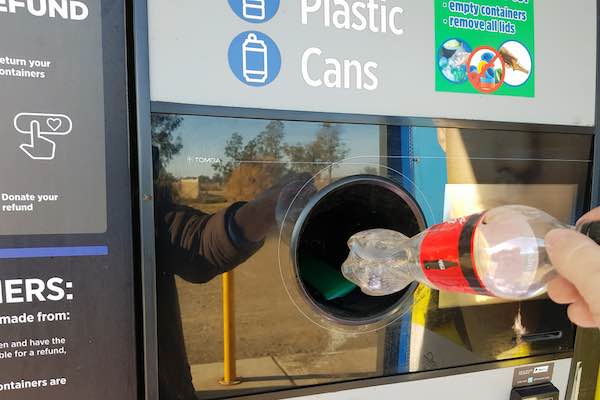
It started on Tuesday June 4 when a customer on a scooter arrived with cans and bottles on board to get credit for his returns. He put the bottles and cans in the machine outside and then came inside with his receipts in hand to give to the cashier for credit. The cashier was unable to scan the bar codes and had to input each code by hand. The customer got antsy and then angry and started to berate and curse the cashier. Another customer was on line behind the man was in a rush and attempted to give $5 to the cashier for her coffee so she could leave. The angry man took her on, yelling “Shut the fxxx up – you don’t know who the fxxx I am.” The cashier was frightened but eventually gave the man his money and he left the store.
The following day, Wednesday June 5, the man on the scooter returned, but this time the cashier was able to alert Walter, the manager.
Walter went to the front of the store and pretended to be a customer. The angry customer was cursing into the air and Walter turned to him and said, “It sounds like you are having a bad morning. Please leave the store.”
More agitated, the man yelled at Walter, saying “Who the fxxx are you? You don’t know who you are talking to.”
The manager again urged him to “Please buy your stuff and leave.”
The man then moved into Walter’s face, until their noses were touching. Walter pushed him away. Then the customer spat on him twice. Walter turned around to call the other store manager and when he turned around again the customer took him by surprise, clobbering him in the face with a closed fist and throwing Walter to the floor. Walter hit his head hard and passed out from the impact of the assault. Fortunately, his glasses flew off rather than breaking and cutting his face.
When he came to, he found himself sitting in a chair at the back of the store. SVAC arrived and took measures to revive him and guided him into the ambulance to take him to the hospital. The man left quickly on his scooter before he could be apprehended.
After leaving the hospital Walter signed an order of protection against the man which would bar him from entering the 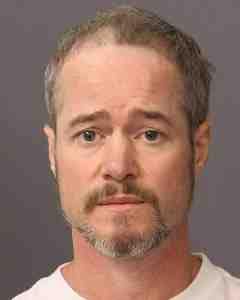 store.
But a few days later, on June 10, the assailant appeared again on his scooter. This time Walter called 911 immediately. Police arrived quickly, arrested him, and put him into the police cruiser. He was brought to headquarters, arrested for assault in the 3rd degree and given a court appearance date. He was identified as Robert Mahoney, age 47 of Yonkers and has been seen around Scarsdale on his scooter since the assault.
Walter says, “At 61 I have never had anyone spit on me. I am alive and it could have been a lot worse.” About Mahoney he warned people to steer clear of him and said, “He should get help.”