






LWVS Implores BOE to Turn Down Proposed Guidelines that Limit Free Expression in the Schools
- Details
- Written by: Joanne Wallenstein
- Hits: 1251
 In the wake of a few events at Scarsdale Middle School and Scarsdale High School, where students made political statements or demonstrated their beliefs in their selection of what they wore, the Scarsdale School District issued new proposed guidelines for student expression at school sponsored activities.
In short, the guidelines would limit freedom of expression at school sponsored activities. The proposal says, “…school-sponsored activities are not intended to serve as platforms for political advocacy or messaging. Unauthorized speech, clothing or symbols that promote political positions, causes, or viewpoints that may reasonably be expected to create disruption, division, or controversy within the school community may not be permitted at these events.”
Intended to address the kinds of expression that some found troubling, these new guidelines may be equally as troubling to those who value free speech and expression in the schools.
Some have expressed concern about the potential interpretation of the new guidelines: i.e. what constitutes a school sponsored event? And how can one define the word “reasonably” in the ban on attire “that promote political positions, causes, or viewpoints that may reasonably be expected to create disruption, division, or controversy within the school community may not be permitted at these events.” Furthermore, the new guidelines could be difficult to enforce equitably as they leave much of the authority to the teacher, coach or staff member supervising the students at the time. And perhaps paramount is the potential to impede the expression of ideas that one student or another might find uncomfortable.
Addressing these concerns, the League of Women Voters of Scarsdale sent the following letter to the Board of Education and the Scarsdale School District. The proposed guidelines are expected to be discussed at the meeting of the Scarsdale School Board on Monday night June 8 at 6:30 pm.
Here is the letter from the League:
June 5, 2026
Dear Members of the Scarsdale Board of Education and the Scarsdale School District Administration:
The Board of the League of Women Voters of Scarsdale (LWVS) believes the proposed Guidelines for Student Expression are unnecessary and problematic. We urge the Scarsdale School District Administration to withdraw the proposed guidelines. The existing Scarsdale School District Code of Conduct for students along with established policies and procedures sufficiently address disruption, harassment, bullying, threats, and other conduct that may interfere with the educational environment without the need for additional restrictions on student expression.
The League of Women Voters has a long-standing commitment to the principles of free expression, informed civic participation, and the open exchange of ideas. To that end, the LWVS Board implores the District to abandon plans for implementing the proposed guidelines and to foster a school environment where students may learn to think critically, engage respectfully with differing viewpoints, and negotiate exposure to what may be unpopular, unwelcome, or controversial beliefs.
Sincerely,
Beth Cukier
Here are the new proposed guidelines:
Guidelines for Student Expression at School-Sponsored Activities
The purpose of these guidelines is to help ensure that school-sponsored activities remain focused on students, learning, and community, and are free from disruption or controversy. While we respect students’ rights to express themselves, school-sponsored events are not a forum for messaging that may distract from or detract from the shared experience. These expectations are grounded in the District’s Dress Code as outlined in Board of Education Policy 5300, specifically within Regulation 5.
Guiding Principle
Our goal is to maintain school-sponsored activities as inclusive, respectful experiences that celebrate students and their work while minimizing distractions or issues that may detract from the experience for others.
Alignment with District Dress Code
As stated in District policy, responsibility for dress and general appearance rests with students and parents; however, student attire must meet standards related to health, safety, and maintaining a positive and inclusive environment. This includes ensuring that attire does not:
Advocate illegal or violent activities
Interfere with learning or the purpose of the activity
Students may not wear attire or engage in speech that is obscene or libelous, or that denigrates others based on race, color, weight, religion, national origin, ethnic group, religious practice, gender (identity or expression), sex, sexual orientation, or disability. Attire or speech may also not promote, endorse or encourage alcohol, tobacco, or controlled substances.
Political Advocacy and Messaging
While students have the right to personal expression, school-sponsored activities are not intended to serve as platforms for political advocacy or messaging. Unauthorized speech, clothing or symbols that promote political positions, causes, or viewpoints that may reasonably be expected to create disruption, division, or controversy within the school community may not be permitted at these events.
Application to School-Sponsored Activities
These expectations apply to all school-sponsored events, whether they occur during or outside of the regular school day. This includes, but is not limited to, performances, sporting events, club events, graduation, prom, etc. In addition:
Students must follow any activity-specific expectations set by advisors, coaches, or staff (e.g., performance attire, athletic uniforms, safety gear, deviations from approved scripts or speeches).
Footwear and any required protective equipment must be worn when appropriate.
Adults responsible for supervising school-sponsored activities have the authority to set and communicate reasonable expectations for student expression that may not be explicitly outlined in the dress code or other printed guidelines, based on the nature and purpose of the activity.
Enforcement
In accordance with District policy, a student may be required to remove, cover, or replace attire that does not meet these expectations. Student speakers or performers may be required to withdraw from participation in activities when speech does not meet these expectations. Refusal to comply with these guidelines may result in removal from the activity and/or progressive discipline, up to and including suspension.
Boys Varsity Lacrosse Team Advances to Section A Final
- Details
- Written by: Dave Taber
- Hits: 1080
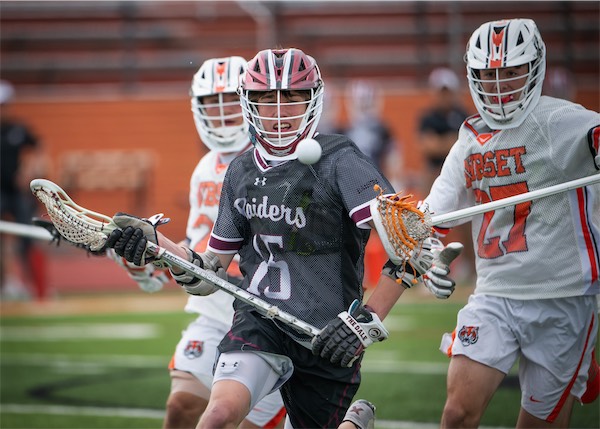 Junior Luke Iasiello (#15) chases down the ball after a faceoff.The Scarsdale High School Varsity Boys Lacrosse Team advanced to the Class A Section 1 final with a 10-7 win over White Plains in the semifinals on Friday, May 29th.
 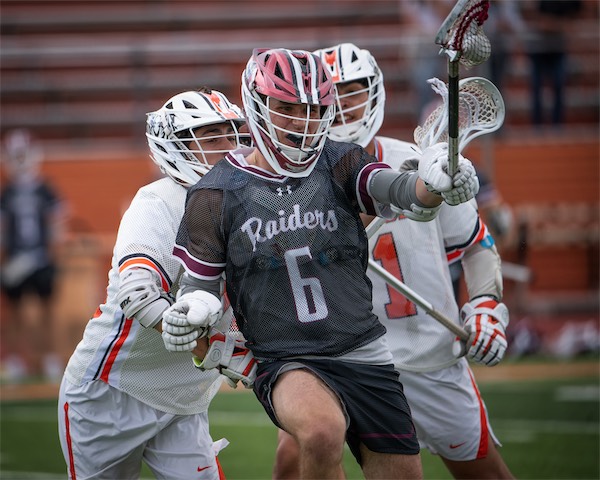 Junior Jordan Jahrmarkt (#6) works to control the ball against White Plains defenders.
The Raiders, seeded third, controlled enough of the game to stay ahead of the second-seeded Tigers throughout. The game was close, but White Plains never got within two goals in the second half. Scarsdale now faces a major challenge in the Section 1 final, taking on Mamaroneck — the consensus top team in Section 1 — at Yorktown High School on Tuesday, June 2nd at 7:00 PM.
Photos by Dave Taber of Shots of the Game. To see more game photos and/or download photos, please visit https://www.shotsofthegame.com/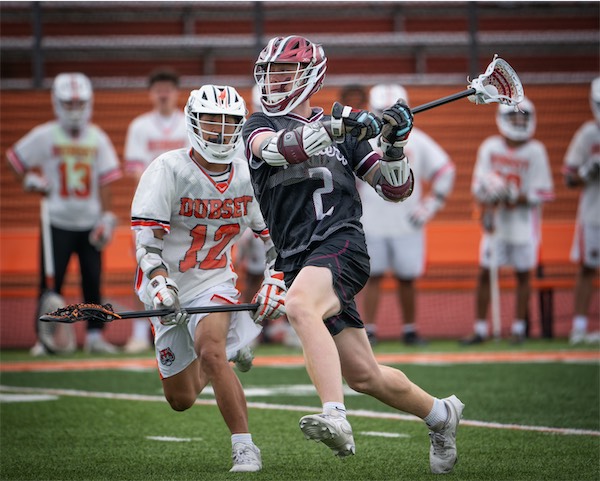 Sophomore Shane Kelly (#2) winds up to take a shot on goal.
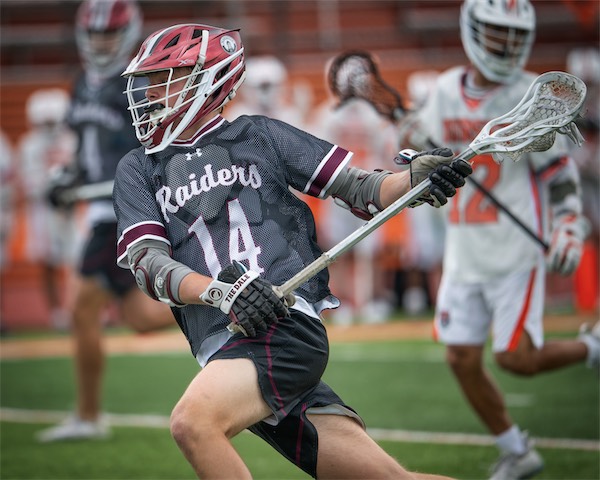 Junior Turner Mauro (#14) charges up the field.
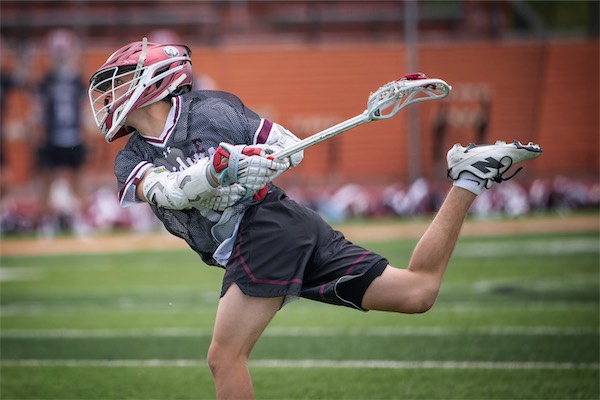 Freshman Chase Horowitz (#10) follows through on a powerful shot.
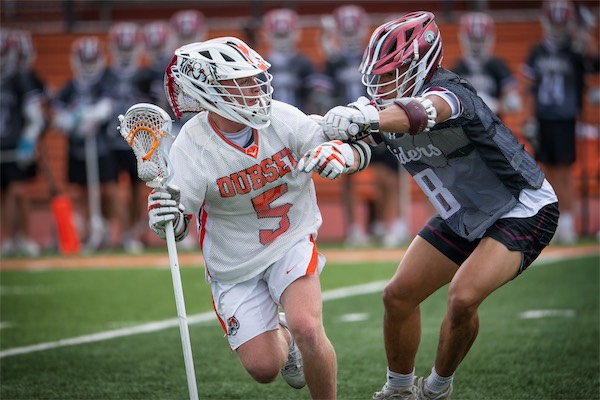 Junior Connor Coakley (#8) delivers a stick check on a White Plains ball carrier.
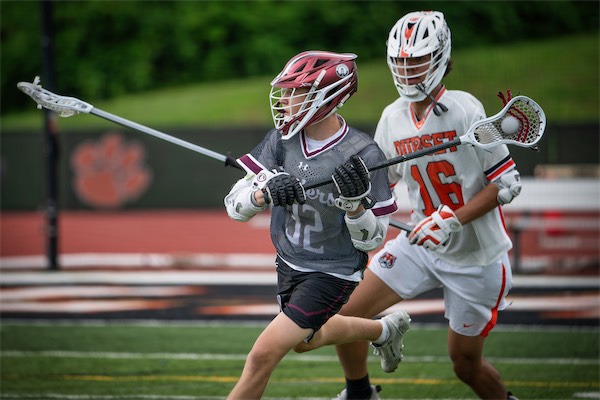 Sophomore Bennett Brooks (#32) moves upfield with a White Plains defender in pursuit.
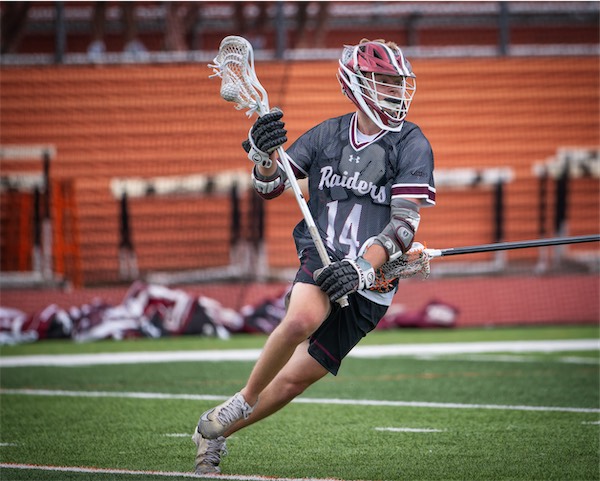 Mauro (#14) drives toward the goal looking for an opening.
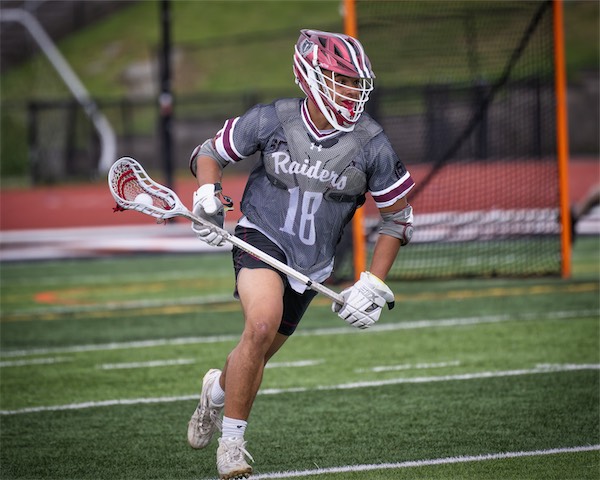 Junior Lars Burrows (#18) heads upfield with the ball.
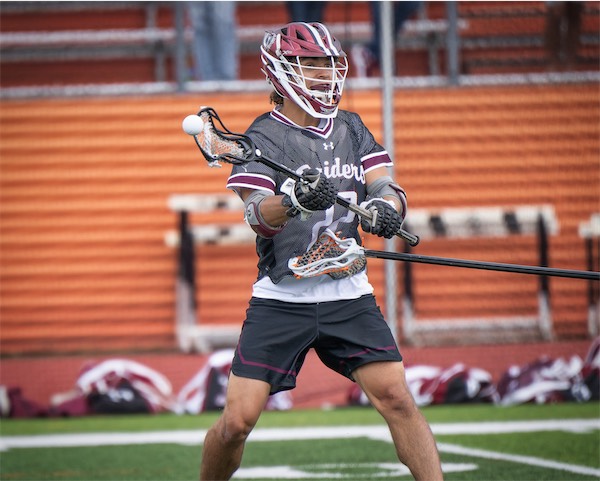 Senior Colin Brennan (#22) fires a pass downfield.
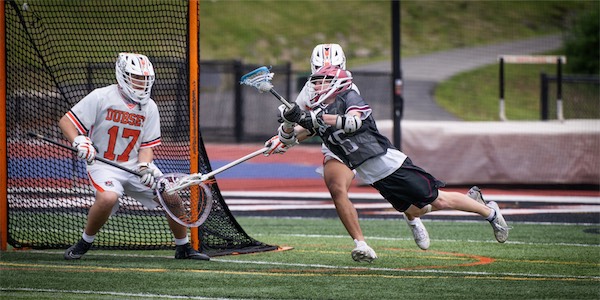 Iasiello (#15) goes airborne with an acrobatic shot that finds the back of the net.
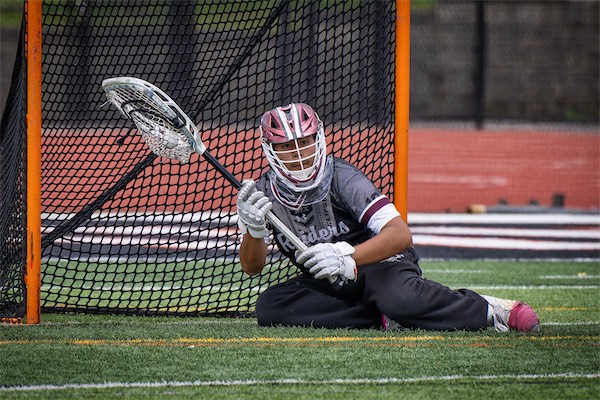 Junior Bryant Puktun (#19) makes a save in goal.
SHS Student News: Junior Olympics and the A-School Fair
- Details
- Written by: Stacey Liew
- Hits: 1178
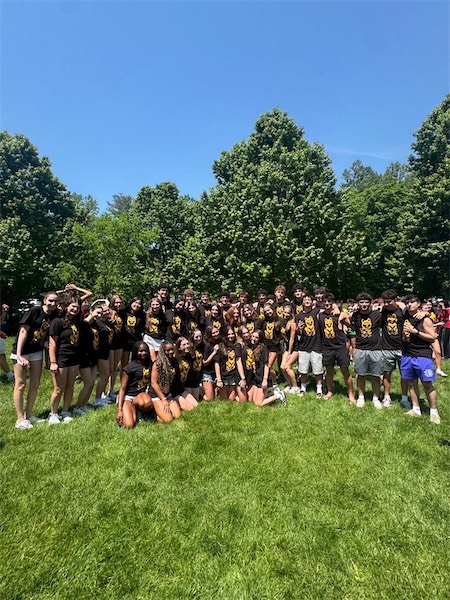
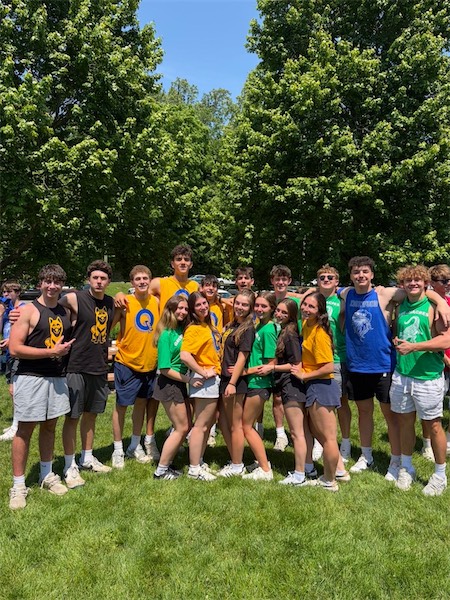 With clear skies and temperatures hitting over 90 degrees, the Scarsdale High School Class of 2027 geared up for the yearly Junior Olympics on May 18, 2026. Every year, the friendly competition is hosted on an undisclosed, but typically sunny, day in May. Students are only told on the day of the event that it is happening, though many eagerly await the day.
Teams for the games were divided by which elementary school each junior attended, resulting in five teams: Edgewood, Fox Meadow, Greenacres, Heathcote, and Quaker Ridge. Students donned new shirts with colors and lettering corresponding to their school. If a student did not attend elementary school in Scarsdale, they were allowed to choose which team they wanted to join. Dividing students by neighborhood allowed them to catch up with their friends from years past and share old memories.
 Each team had five captains, voted for by their peers prior to Junior Olympics. Edgewood team captains were Jai Chandarana, Lucas Knopp, Margot Lombaerde, Bernie Ofori, and Hunter Ross. Fox Meadow team captains were Daisy Bennett, Amelie De Cataldo, Benjamin Foster, Michael Margolin, and Lance Simon. Greenacres team captains were Lars Burrows, Caitlin Jeremiah, Ava Pappalardo, Patrick Simon, and Samuel Stahler. Heathcote team captains were Rachel Barr, Ved Dundon, Roan Forray, Aaron Lichtenstein, and Jonathan Shawn. Quaker Ridge team captains were Jacob Grossman, Lily Josephs, Eduardo Lima, Grant Marcus, and Nicolas Toosi.
Through events like capture the flag, relay races, trivia, tug of war, and steal the bacon, juniors demonstrated their teamwork and dexterity. At the end of the event, the winners of the 2026 Junior Olympics were announced. First place was earned by Fox Meadow, Edgewood took second and Quaker Ridge, third.
Several juniors shared their thoughts on how the day went:
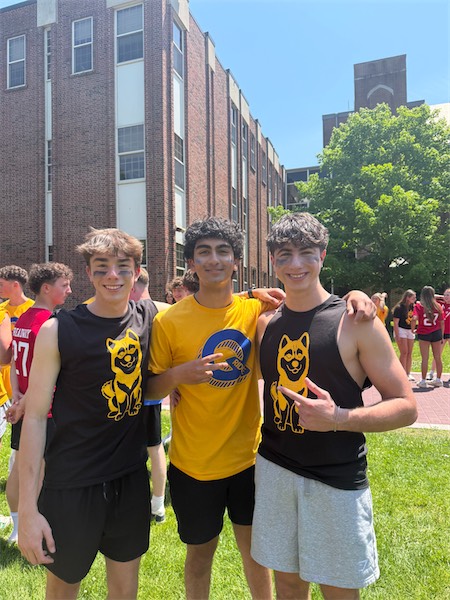 Jonathan Shawn said, “It ran really smoothly. Everyone had fun. It was a very sunny and nice day. I brought eye black and face paint so people put that on. People were very passionate.”
Emily remarked, “It was pretty hot and you could feel it through your shoes on the turf field. It was super rowdy, but positively rowdy because everyone was hyped up.”
Raphael S. commented, “It was a great surprise. I didn't expect it at all and it was a really fun break away from the classroom especially during the peak of stress of junior year. I loved that we got to represent our elementary schools and it was very nostalgic and high energy. I liked the variety of games we had the opportunity to play and the time we got to spend outside in the wonderful weather.”
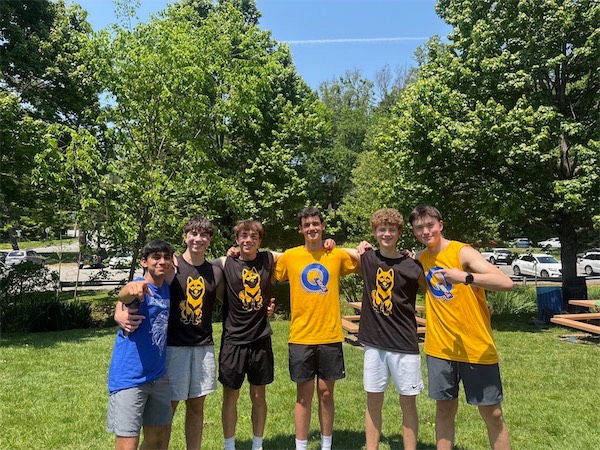 Jack Capobianco told us, “Junior Olympics was a very fun day/experience. I was very happy to have a chance to finally take part in it as a Scarsdale high school student. Being able to work and compete with people that I don’t normally as well as interact with people that I haven’t before made for an awesome experience. I really enjoyed spending time with all of my friends and class members. Junior Olympics brought out school spirit and brought our entire grade together. I enjoyed being able to work together with so many different people. This is an event that I am sure to remember for a long time.”
(Photos by Theo Kertesz and Jonathan Shawn.)
A-School Fair
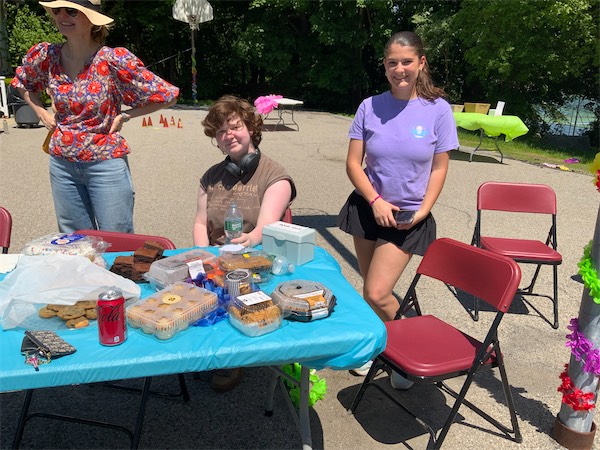
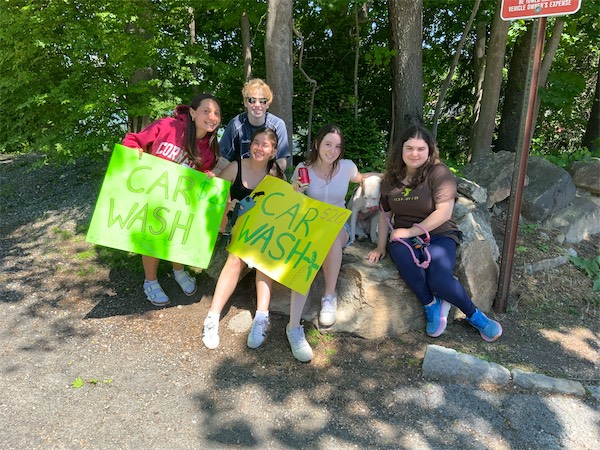
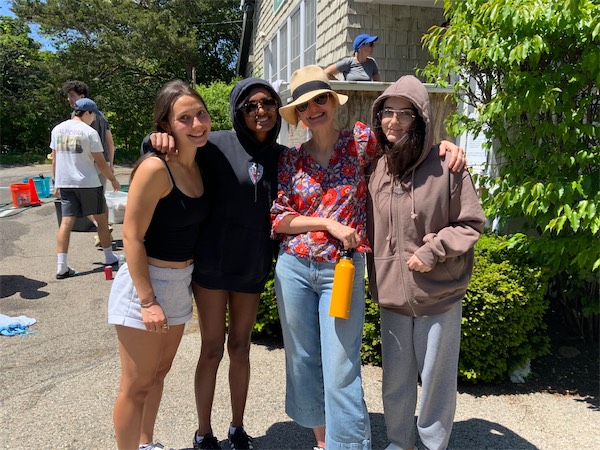
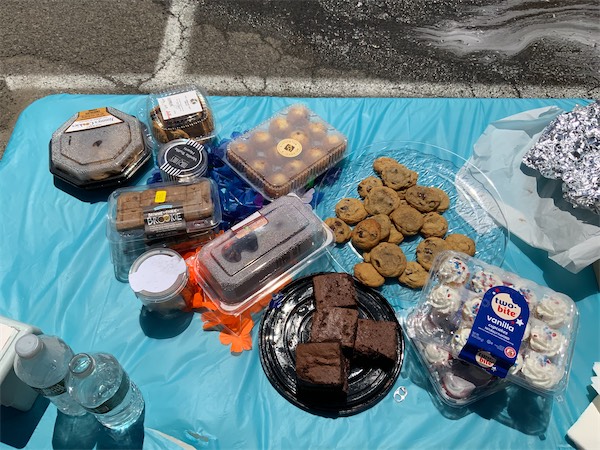
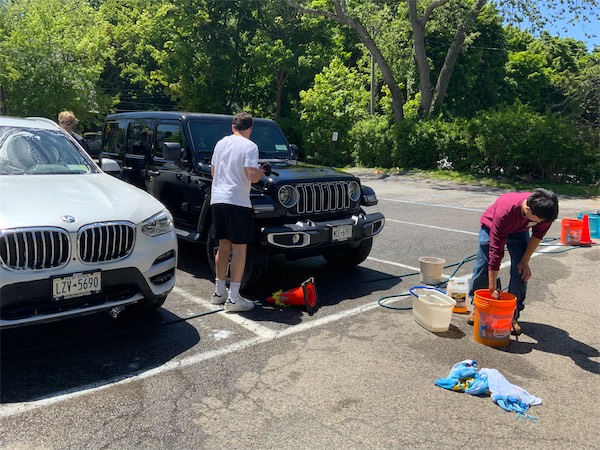
Why were A-School students trying to lure cars into the A-School parking lot on Saturday? It turns out the annual A-School fair, and famous car wash, was taking place on May 16, 2026. Similar to previous years, it was composed of a car wash, games, raffle baskets, and bake sale.
All revenue from the event will be donated to an organization selected by the A-School community. This year, the Ocean Cleanup was the chosen non-profit. The organization works to remove the plastic that is already present in the water while also preventing the further flow of plastic from rivers.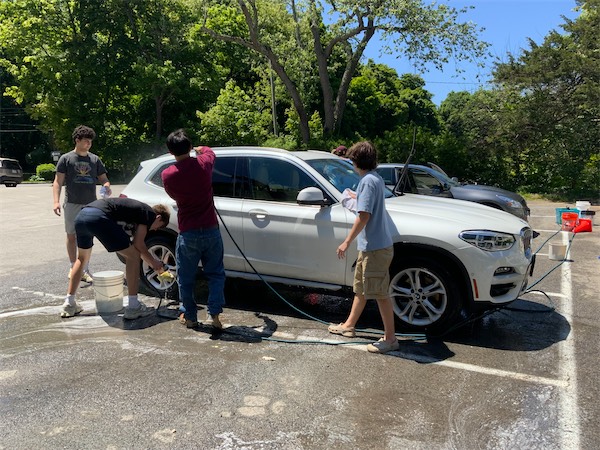
Candidate For School Board Omer Wiczyk Says He Will Serve with Humility and an Open Mind
- Details
- Written by: Joanne Wallenstein
- Hits: 1684
 Omer Wiczyk has been nominated by the Scarsdale School Board Nominating Committee to serve on the Scarsdale School Board. The contested election will be held on Tuesday May 19, 2026 at Scarsdale Middle School, with voting from 7 am to 9 pm. Wiczyk answered questions posed by Scarsdale10583 below:
How long have you lived in town and what do you value about the community?
My family and I have lived in Scarsdale for ten years, and during that time this community has become a very important part of our lives. Our two daughters have grown up here, attended our public schools, and many of our closest friendships and experiences are tied to the community.
What I value most about Scarsdale is the combination of civic engagement, educational excellence, and genuine community involvement. People here care deeply about the schools, the Village, and about one another. One of the things I’ve especially appreciated through my volunteer work is that so many residents, with differing but incredible backgrounds, are willing to devote their time and energy to improving the community, often behind the scenes and without recognition.
I also love that Scarsdale is a place where people are thoughtful and engaged. Residents ask hard questions, bring different perspectives, and are dedicated to maintaining the strength of our institutions. I think that culture of engagement is one of the reasons our schools and our community are so strong.
What professional skills do you bring to the Board of Education?
I’m an attorney, and my career has been spent analyzing and investigating complex issues, reviewing large amounts of information carefully, asking focused questions, and working collaboratively with other individuals and organizations to solve difficult problems. I spent 20 years as a prosecutor including several years running a team of attorneys conducting complicated investigations. I am now working as a civil rights attorney, focusing on issues involving education. My experiences have taught me the importance of preparation, judgment, communication, and thoughtful decision-making under pressure.
One of the most important skills I would bring to the Board is the ability to listen carefully and work constructively with other people who may have different viewpoints. Throughout my professional career and my volunteer work in Scarsdale, I’ve frequently worked in team settings where collaboration, respect, and consensus-building were essential.
Tell us about your volunteer experiences.
Volunteer service has been an important part of my life. Over the years, I’ve been fortunate to serve in roles that have given me the chance to work closely with many different members of our community and to understand how our local institutions function. I served as President of the Scarsdale Forum, which brings residents together to study local issues and develop thoughtful, non-partisan recommendations on matters affecting the Village and schools. I’ve also served as a member and then Chair of the Citizens Nominating Committee, which is responsible for helping identify and vet candidates for Village offices, as well as on the CNC Election Committee. Currently, I serve as Chair of the Judicial Qualifications Advisory Committee and on the Village’s Advisory Council on Communications.
My experiences have reinforced the importance of listening, preparation, and teamwork. Most of our community’s work is done quietly and collaboratively. You work with people who have different perspectives and backgrounds, try to build consensus when possible, and focus on strengthening institutions rather than advancing personal agendas. I have come to appreciate how many members of our community devote extraordinary amounts of their time and energy simply because they deeply care about Scarsdale. That is one of the things that makes Scarsdale so incredibly special, and I’ve been humbled and grateful to play a role in it.
As a parent, what do you feel are the strengths of the Scarsdale schools? What, if anything, would you like to see changed or improved?
Scarsdale schools offer a combination of academic excellence and the genuine dedication of the teachers, administrators, and staff to students’ overall growth. Our schools challenge students intellectually but also provide tremendous opportunities in the arts, sports, extracurricular activities, and community engagement.
I also appreciate that the district is willing to innovate. We cannot stand still, especially considering how quickly the world is changing. At the same time, I think strong institutions should always remain open to feedback and continual reassessment. From conversations with parents, students, and educators, I know there are areas where people would like clearer communication and broader opportunities for community input; they want to be heard. I hope to help be a conduit for the community and for the district to ensure innovations and programs are both understood for their merits and align with community values.
Why did you decide to run for school board at this time?
I care deeply about this community, our schools, and most importantly, our children. As a parent with children in the district, I’ve seen firsthand the tremendous impact the schools have not only academically, but socially and emotionally as students grow and develop. I feel that this is the right time in my life to give back in a meaningful way. Serving on the Board requires a significant commitment both in time and energy, and I have the ability right now to devote myself fully to that responsibility
I would approach this position with humility and an open mind. I don’t view Board service as a way to advance a personal agenda. I think effective governance and public service requires listening to the community – students, parents, teachers, administrators, and fellow Board members, and then working together with the best interest of Scarsdale’s children
Share any thoughts about Scarsdale’s non-partisan election system.
Scarsdale’s non-partisan system is one of our community’s greatest strengths. It encourages people to focus less on ideology, political affiliation, or personal status, and more on qualifications, temperament, and judgment. It seeks those with a genuine commitment to public service and seeking the wellbeing of our students.
Having served as both a member and Chair of the Citizens Nominating Committee, I’ve seen firsthand how seriously members take their responsibility of evaluating candidates. The process is thoughtful, rigorous, and time intensive. Committee members devote significant effort to outreach, interviews, deliberation, and due diligence in an effort to identify candidates who are prepared to govern collaboratively and responsibly. They ask detailed questions of the candidates and follow-up on several answers through the interview.
One aspect of the process that people may not fully appreciate is the amount of due diligence that occurs beyond the formal interviews themselves. Committee members speak with people who have worked with or know the candidates in different settings to better understand qualities that may not fully come across in a presentation or résumé — things like temperament, judgment, work ethic, ability to work with others, openness to differing viewpoints, and how someone handles disagreement or difficult situations. In my view, that reference checking adds real value because effective board service depends not only on experience or credentials, but also on a candidate’s ability to work constructively as part of a governing body.
No system is perfect, but I believe the non-partisan structure has helped Scarsdale maintain stability, strong civic engagement, and a focus on long-term stability rather than political division. Particularly in matters involving children and education, I think there is incredible value in trying to approach issues thoughtfully, collaboratively, and outside of a partisan framework.
In your view, what are the biggest challenges facing the Scarsdale Schools?
Among the biggest challenges facing our schools is the speed with which our world is changing, making it hard for our educators to ensure that students are prepared academically, socially, and emotionally for the future. Technology, AI, and social media are evolving rapidly, and schools are constantly being asked to adapt thoughtfully while still maintaining the values and academic strengths that define our district. Balancing academic excellence with student wellness is a difficult challenge. Scarsdale is rightly known for our high standards and strong achievement, but it is equally important that our students also feel supported, connected, and able to thrive emotionally and socially.
Another challenge we currently face is maintaining strong communication and trust between the district and the broader community. Both our Board and our residents care deeply about the wellbeing of schools and bring a wide range of perspectives and experiences. We need to continue to engage with parents, students, teachers, and community members, particularly during periods of change or controversy, in safe and productive dialogues.
Finally, Scarsdale faces long-term financial and facilities planning challenges, including rising costs and significant capital needs. I think it’s vital to approach those issues thoughtfully and transparently, always with students and the district’s long-term health at the center of the discussion.
If you do serve, what are your hopes for the schools in the next six years?
I hope Scarsdale continues to be recognized for its academic excellence, and as a district where students feel supported, engaged, and prepared to succeed in an increasingly complex world. I also hope we continue to evolve and innovate where appropriate, while remaining grounded in the core values and strengths that have long defined our schools — like critical thinking development and non sibi, not for self alone. I also hope to see continued improvement in building strong partnerships among students, parents, educators, administrators, and the broader community; the district is strongest when people feel heard, respected, and invested in a shared mission.
What are your thoughts on the district, board and community response to the recent antisemitic incident at SHS?
The recent incidents were deeply upsetting. Antisemitism is one of the world’s oldest and most enduring hatreds, and throughout history it has repeatedly adapted and resurfaced in new forms and in different societies. That reality makes it especially important that we remain vigilant and respond thoughtfully, while fostering an environment grounded in respect, understanding, and inclusion. Of course, any incident involving hatred or bias directed at students should be taken seriously, and schools must remain places where every student feels safe.
I respect the district and board efforts to respond thoughtfully and appropriately in addressing the seriousness of the incident and supporting affected students and families. I also know that many members of the community wished the response had come more quickly and more directly at the outset. Moments like this only reinforce the importance of continuing to foster a school environment built on respect, empathy, and open communication.
Town Hall Discussion Examines How AI is Affecting Education and Our Futures
- Details
- Written by: Stacey Liew
- Hits: 2124
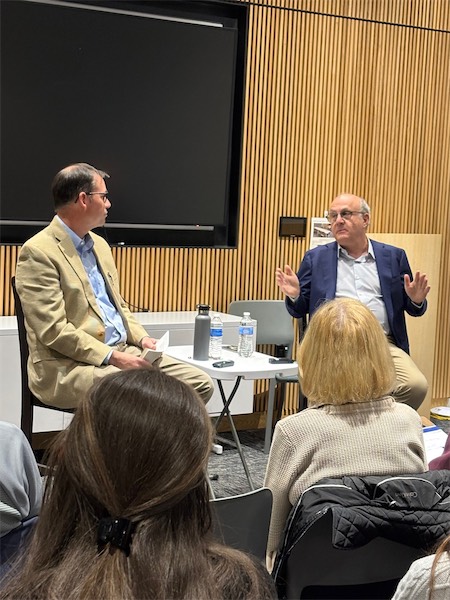
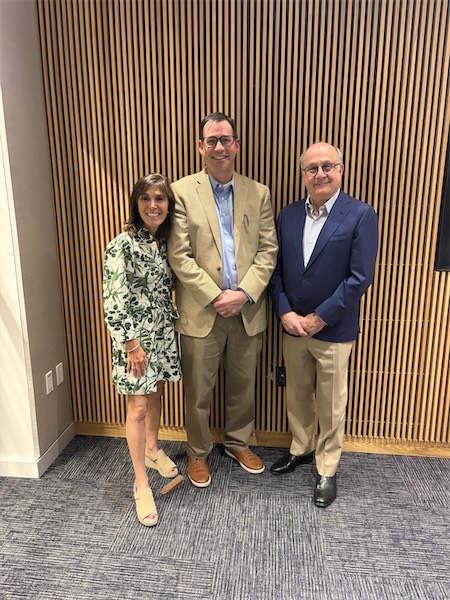 SAS Director Jill Serling, Superintendent Andrew Patrick, and David SiegelWhether Artificial Intelligence becomes a useful tool for students or a detriment to their learning in the long-run, there’s one factor that will remain critical to education and careers: human collaboration.
That was the takeaway from a Town Hall session featuring David Siegel and Drew Patrick, hosted by the Scarsdale Adult School on April 28, 2026 at Scarsdale Library called “AI and the Future of Education.”
David Siegel is a Princeton trained computer scientist and entrepreneur with a PhD from MIT where he did research at the university’s Artificial Intelligence Laboratory. He spent the early days in his career working on applying technology to financial services, and eventually created his own company, Two Sigma, in the early days of the internet. Two Sigma was made on the premise that innovative technology and data science can unlock meaningful insight on the world’s data. Siegel has also served on the board of Khan Academy and the Cornell Tech Council and co-founded the Scratch Foundation and the FIRST Robotics organization in New York City. He also happens to be the proud parent of two Scarsdale High School graduates.
He sat down with Scarsdale’s Superintendent of Schools Andrew Patrick to discuss AI in the schools, challenges for public schools in this new age, how AI has affected teachers, how to prepare children to “get ahead” of AI, career goals for students and prioritizing the process of obtaining an answer versus simply having the correct answer.
Current Practices With AI
Patrick explained that schools are currently working through the best ways to manage screen time, AI, and software, following a red-orange-green light model, where there’s certain actions students can take and can’t take, but also some gray areas.
Siegel added that best practices are widely debated, and that no one truly knows what the best practices are in the end. He said that the source of the issue comes from the timing of the outcome in education, which only occurs a decade or two after completing education. There are questions surrounding successful outcomes, including what parents want for their children: Ensuring they earn enough money? Emotional happiness? And how would these outcomes be measured? Siegel urged a return to basics, as trying to tackle these tough problems all at once may just result in blindly enacting plans without thoroughly considering them.
Challenges for Public Schools
Due to the widespread usage of technology today, Siegel suggests that the “social fabric” is unraveling. Rather than students working with each other, they treat Chat-GPT and other chatbots as their teammates. He calls it an “open issue” that has to be handled. Though, he notes that no one is certain of how to best handle it, even if the problem has been identified. Since technology tends to cause people to work in isolation, Siegel indicates that perhaps two decades from now, it will be discovered that something extremely concerning has happened to the next generation.
At Scarsdale High School, the Design Lab, the AT Entrepreneurship class, and the robotics team all share a common element, according to Siegel. In all these places, students build creations together, which ultimately teaches them to work with each other. He considers collaboration a critical focus and a philosophy to be followed.
SAS Director Jill Serling noted that this is one of the reasons why the Scarsdale Adult School exists: to strengthen a sense of community.
AI’s Effect on Teachers
Patrick calls the present moment a period of struggle where faculty are attempting to figure out what AI means for them. Some teachers are worried that any time a student uses AI, they are missing out on learning properly.. Others feel that there are thoughtful ways to utilize it, especially since it will be a factor in their lives after leaving Scarsdale. They consider it a tool that can enhance learning. Inquiry groups are actively working to answer questions about the uncertainty and the effects of AI.
The topic evidently impacts university faculty as well. Siegel mentions that the faculty don’t want to have to police students. After all, they’re there to teach and connect with students. He said that parents play an important role: children shouldn’t go to school with a mindset that it’s acceptable to engage in behaviors that will harm education. Instead, parents should encourage kids to learn, not just to obtain desired grades. Siegel implores parents to help children to understand that the most significant part of education is learning.
 Best and Worst Cases When AI is Involved
In Siegel’s opinion, the most likely case is that students will learn much less. The worst case begins when students continuously use AI to do thinking for them. At some point, they’ll no longer know what they’re even writing. He reiterated that the prompts students feed to AI don’t capture what they're actually thinking, and that chatbots won’t know what students are thinking. Rather, chatbots can only expand on student input.
The best case is if AI is utilized the same way any other tools are, he asserts. After all, it can be useful to help increase productivity. Siegel’s main point is that people have to do the work themselves, or else they won’t end up learning anything.
“Getting Ahead” of AI
“We’re not getting ahead of AI,” Patrick disclosed to the audience. He says institutions move much slower compared to the pace of AI’s development. However, he does think that elementary schoolers are in a bit of a different scenario. With a framework around digital competencies, media literacy, ethics, and the way to judge sources, the district aims to expose elementary schoolers to prerequisites before encountering AI.
Ideal Career Areas
When asked about what’s next for students after high school and college, Siegel revealed that he is not that worried about the loss of jobs. He argues that AI isn’t exactly doing anything in particular. That in the end, it’s just generating words, and that words alone can’t solve issues. He affirms that any work that will move society forward requires people and collaboration, and that the reason why AI companies say there won’t be any jobs left is to drive up their sales. Most work doesn’t involve writing a report, meaning that AI may speed up only around ten percent of a job.
Bringing up professional programmers as an example, Siegel explains that only twenty percent of their time is spent on coding. The majority of their time is spent working with sales teams and others, designing, planning, and figuring out solutions. Consequently, AI doesn’t speed up the entirety of a job, only a portion.
According to Siegel, even if the market years from now looks very different from today’s market, every year it only changes by a bit. He implied that currently people are struggling since they think their future will be worse than their parents’ experience. A factor that may have led to this view is the rapid rate that the market has evolved. People who expected to have the same career their whole lives are disappointed when it goes away. He highlights that for many jobs, you stagnate if you don’t evolve as an individual and “keep reinventing yourself.”
Siegel notes that many will find the process exhausting as education didn’t teach them the agility needed for reinvention. He also acknowledges that not everyone has enough time to invest in frequently developing new skills. In his view, a lot of people in the US are unable to do this, which results in them struggling the most as AI will take away their jobs. He expresses that there’s improvement needed to be made by society in this realm.
The Process Versus the Result
Siegel regards the process of determining an answer is to define what truly matters, not to find the “right” answer. He believes people can sometimes learn much more by working through something and getting an incorrect answer than just instantly getting the right answer. In the end, education is about the journey, not obtaining the correct answer.